Agentic AI for P2P Analytics - Transformation Through Intelligent Insights
Why autonomous, decision-making systems are redefining procure-to-pay and replacing traditional workflow automation.
There's a conversation happening in boardrooms, finance departments, and technology labs that doesn't yet get the mainstream attention it deserves. It's quieter than the splashy headlines about generative AI replacing jobs, more nuanced than the usual "digital transformation" talking points, and frankly more consequential than either.
It's a conversation about what happens when artificial intelligence stops being a reporting tool and starts being an active participant in financial operations, one that reads invoices, enforces policy, detects anomalies, and closes the loop on procurement workflows without waiting for a human to catch up.
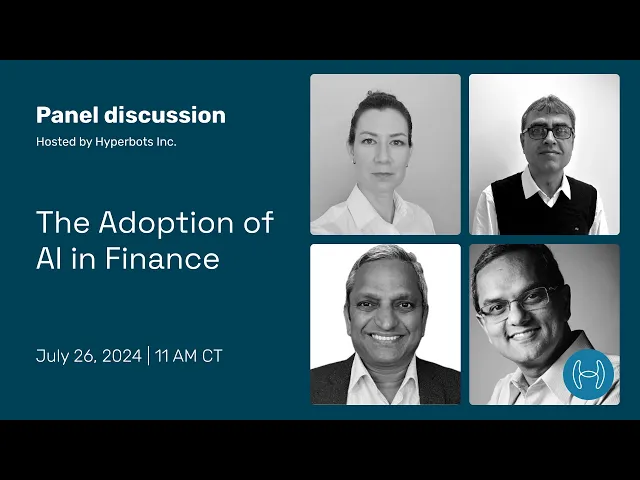
This is the world of agentic AI in procurement-to-pay, or P2P. And a recent panel discussion brought together some of the most credible voices at the intersection of finance and AI technology to unpack what it actually means in practice.
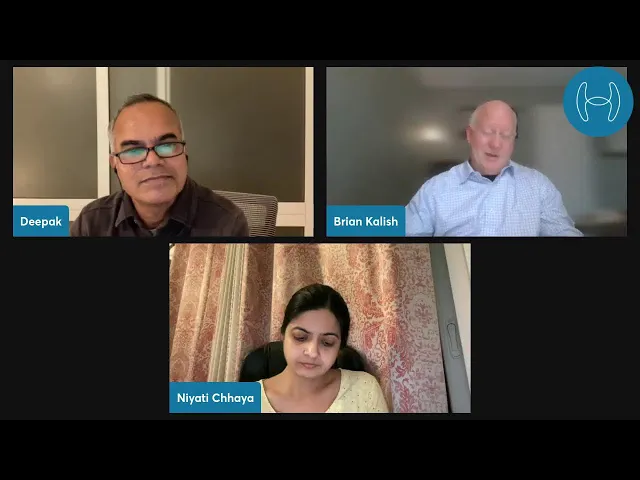
The panelists: Jon Naseath, CFO and founder of Cantu Capital, with a background in AI and machine learning at Google; Michael VanPatten, a seasoned CFO with deep expertise across M&A, IPOs, fintech, and SaaS; and Niyati Chaya, our co-founder with a PhD in machine learning from the University of Maryland, over 40 patents, and more than a decade at Adobe pushing the boundaries of NLP and computer vision. Deepak, VP of Design, moderated.
What emerged from their conversation was a detailed, ground-level view of where P2P processes stand today and a credible, specific picture of where agentic AI is taking them.
The Uncomfortable Truth About P2P Today
Before anyone can appreciate where agentic AI is taking finance, they need to understand what the current state of P2P actually looks like inside most organizations. And the picture isn't flattering.
Jon set the scene with characteristic directness. The P2P function, procurement, invoice processing, payment authorization, vendor management, is riddled with inefficiency not because finance professionals aren't capable, but because the systems they work with weren't built for the data environment they now operate in.
"Purchase orders can be good, solid raw data to help facilitate better forecasting," Jon noted, "but when you're trying to forecast and manage cash flow, the data you need is often fragmented, delayed, or locked inside systems that don't talk to each other."
This is the core structural problem. Finance teams in mid-market companies and many large enterprises, are running P2P on a combination of ERPs, email inboxes, spreadsheets, and manual approval workflows that were never designed to work together coherently. The result is a function that consumes enormous human energy on low-value coordination work while simultaneously leaving significant value and significant risk on the table.
Michael painted a vivid picture of what this looks like at the operational level. In most AP functions, a small team is managing hundreds of vendors and thousands of invoices. Vendor onboarding happens over email, with information passed around in Excel attachments. At every point in that chain, every email forwarded, every file attached, every field manually entered, there is an opportunity for error, manipulation, or fraud to enter the system.
"In the absence of significant human oversight in these manual transactions," Michael said, "there is scope for risk virtually at every place in the processing pipeline."
The problem isn't the people. It's the architecture. And the architecture is fundamentally not equipped for the volume, speed, and complexity of modern financial operations.
What "Agentic" Actually Means and Why the Distinction Matters
The term "agentic AI" gets used a lot right now. It's worth being precise about what it means, because the distinction from earlier forms of AI and automation is the whole point.
A traditional rule-based system does what it's programmed to do: if invoice amount exceeds X, flag for review. If the vendor is not on the approved list, reject. These systems are useful, they reduce certain categories of error, but they're brittle. They can only catch what they were specifically programmed to catch, and they can't adapt when circumstances change.
A predictive model is a step up: it uses historical data to calculate probabilities. But as Michael explained, it still ultimately hands off to a human. "A standard predictive model spits out a probability. At that point, a human gets involved to close the loop."
Agentic AI owns the closed loop. It doesn't just flag, it interprets, decides, and acts, all within a defined policy framework. "The agent can use policy, make decisions based on that policy, figure out what's right and what's wrong, and then take action," Michael said. "It prevents that action in real time." The analogy he reached for: it acts like a junior accountant or financial analyst, executing based on all available inputs except it works at machine speed, across every transaction simultaneously, without fatigue.
Jon extended the analogy in a direction that speaks to how sophisticated these systems are becoming: "I sometimes refer to AI agents as like a college intern you hire, sometimes you get good value. The trick is stacking them together." His observation about combining specialized agents, one for invoice reading, one for PO matching, one for GL coding, points to the real architecture of effective agentic P2P systems: not a single general-purpose agent, but a coordinated network of purpose-built agents, each expert in its domain, each checking the work of the others.
The P2P Transformation in Concrete Terms
Let's get specific, because the panel did and specific is where the impact of agentic AI in P2P becomes undeniable.
Invoice processing and fraud prevention. Michael walked through what an agentic invoice processing pipeline looks like end-to-end. An intake agent reads incoming invoice emails, cross-referencing the sender against the approved vendor list and ignoring anything that doesn't match. It performs duplication checks, scans for signs of document manipulation, and validates core fields against expected parameters. If the invoice passes those checks, a matching agent pulls the corresponding purchase order and goods receipt note from the ERP and performs automated two-way and three-way matching. Any discrepancy between the invoice and the ground truth in the system gets flagged immediately.
"If you design a robust agent pipeline doing tasks from email reading through to matching, GL coding, and posting," Michael said, "the chances become close to zero for fraud or any anomaly to slip through into your books." That's not a theoretical claim, it's a description of what's architecturally possible when you replace a fragmented human-driven process with a coordinated set of intelligent agents.
Cash flow visibility and forecasting. Jon highlighted an underappreciated angle: the value of P2P data for financial planning. Purchase orders, when captured and structured properly, contain forward-looking information about committed spending that can dramatically improve the accuracy of cash flow forecasts. Agentic systems that process this data in real time, rather than batch processing it at month-end, give finance leaders a continuously updated picture of where cash is going and when. The implications for liquidity management, working capital optimization, and budget variance analysis are substantial.
Spend analysis and supplier performance. When invoice and payment data flows through an agentic system that structures, classifies, and analyzes it automatically, the output isn't just processed transactions, it's intelligence. Which suppliers are delivering on time? Which categories are showing cost drift? Where are contract terms being honored and where aren't they? The spend analytics that used to require a dedicated analyst and a three-week data pull can become a continuous, automated output of the P2P system itself.
Tax compliance. This is an area where the gap between what standard ERP tax engines can do and what agentic AI can do is particularly stark. ERPs validate against tax dictionaries, they know the rules. What they can't do is understand context. Michael gave the example of an expired vendor exemption certificate: the ERP has no mechanism to flag that the certificate is outdated, so invoices continue to be processed as tax-exempt when they shouldn't be. An intelligent agent that continuously monitors exemption certificate validity and automatically flags or blocks non-compliant invoices, eliminates an entire category of tax liability that currently costs organizations thousands of dollars in preventable penalties.
Getting Implementation Right: Lessons from the Field
The panel's third section moved into the practical, and this is where the conversation became most valuable for finance leaders thinking about where to start.
Data hygiene is non-negotiable. Jon's advice on prerequisites was clear and consistent: before any agentic pilot, clean the master data. "The biggest way you can run into trouble is if your databases aren't able to talk to each other and compare data together." Customer IDs, vendor IDs, account codes if these aren't consistent and clean across systems, any agentic system built on top of them will produce unreliable output. This isn't glamorous work, but it's foundational. Audit trail logging should also be activated wherever the risk profile justifies it.
Start where the pain is. Michael's advice on where to deploy the first agent was refreshingly pragmatic: go where the problem is loudest. High transaction volume, high manual effort, documented history of errors or losses, these are the signals. The ROI case is easiest to make when you're solving a known, quantified problem rather than a hypothetical one.
Think in two ROI dimensions. Michael offered a framework that most cost-focused ROI analyses miss: the difference between cost takeout ROI and risk prevention ROI. A tax verification agent deployed in a function with relatively low headcount might not deliver significant cost savings. But if that function has historically generated substantial tax penalties, the risk prevention ROI can dwarf the cost savings calculation. "It has to be a conscious decision, balance your risk prevention ROI with your cost takeout ROI, and decide which agent to adopt first based on that combined picture."
Positioning is everything. Change management in finance is a real challenge, and the panel addressed it directly. Michael's insight here was elegant: nobody in a finance team wants fraud or risk to exist. So position agents as guardians, fraud-preventing, anomaly-detecting sentinels and the buy-in practically handles itself. For the productivity dimension, frame agents as amplifiers: the AP clerk who processes 100 invoices a day with an AI partner can process 500. They don't feel replaced; they feel empowered. "It's all about positioning," Michael said. "Position it as a productivity enhancer, and I see no reason why AP or any other finance team should dislike agents."
Jon added a reframe that stuck: "Let's use these same techniques to justify the business value and get the business value. Fraud prevention is a nice byproduct." Don't make the case for agentic AI purely on a fraud-prevention platform. Make it on operational efficiency, data quality, forecast accuracy, and strategic insight and let the fraud prevention benefits speak for themselves.
The Governance Layer: Building for Auditability
Any conversation about autonomous AI taking action in financial systems has to address the question of governance and the panel didn't shy away from it.
Jon's approach to auditor comfort was, characteristically, to invert the question. "Don't build your controls around what will satisfy an auditor. Build them around what gives you genuine confidence that your data is clean." The internal threshold should be higher than the external requirement. Audit trail logging at every agent action, hash-based data verification, snapshotting of system state, clear documentation of the policies each agent enforces, these aren't just compliance measures. They're the architecture of trust that makes autonomous financial AI operationally reliable.
Michael reinforced the technical requirement: the value of agentic AI's ability to bridge siloed systems, to correlate data across AP, AR, ERP, warehouse management, and tax systems simultaneously, is precisely what makes it so powerful for anomaly detection. But that same connectivity demands that every action be traceable. "Agents can prevent and detect in real time," he said, "and make sure that big anomalies don't happen." The flip side of that capability is the obligation to know exactly what the agent did and why.
What Finance Professionals Need to Develop Now
As agentic AI absorbs the routine, rule-bound majority of P2P work, the humans working alongside it will need to evolve their skills. Michael identified the core competencies: exception handling intelligence, the ability to calibrate trust in AI-generated outputs, and the judgment to know where to maintain close human oversight and where to extend autonomy to the system.
"It's like having kids at home," he said. "You need to decide where to give independence, where to monitor moderately, and where to monitor very deeply." That calibration, knowing which processes are mature enough to run autonomously and which still require human judgment, is itself a sophisticated, high-value skill. It's what the next generation of finance professionals will be hired for.
Niyati, drawing on her background building AI systems at scale, underscored that this isn't just a finance skill, it's a design challenge. Effective agentic systems in finance need to be built with explainability and human oversight as first principles, not afterthoughts. The goal is augmentation, not replacement: AI that makes finance professionals more capable, more strategic, and more valuable to the organizations they serve.
The Bottom Line
The panel painted a picture of a finance function in genuine transition. Not the incremental, "let's automate this one process" transition that finance has been promised for decades, but a structural shift in what P2P looks like from a labor-intensive, error-prone, siloed set of manual workflows to an intelligent, integrated, continuously learning system that handles the operational layer autonomously while surfacing the strategic insights that drive better decisions.
The technology is not speculative. It exists now. The use cases are proven. The ROI frameworks are clear. What remains is the organizational will to implement thoughtfully with clean data, clear policies, robust governance, and the right framing for the people who will work alongside these systems.
For finance leaders reading this: the question is no longer whether agentic AI will transform P2P. It already is, in organizations that are moving. The question is whether your organization will be among the ones leading that transformation or the ones catching up to it.