Business Software Company Guide: Cloud Solutions & AI Boost
Discover cloud software, automation, and AI solutions to streamline finance, procurement, and business growth.
Executive Summary
Choosing the right business software company or platform has become a mission-critical decision for SMEs and enterprises alike. This 6,000-word guide explores the landscape of business services software, from cloud-based business management software to on-premise enterprise business management software, and shows how Hyperbots AI Co-pilots unlock next-level automation on NetSuite, QuickBooks, Microsoft Dynamics, and more. We compare leading business software solutions brands, outline must-have features, ROI benchmarks, and practical steps to align software with growth goals.
1. Introduction: Why Software Strategy Is Core to Growth
In a data-driven economy, company software programs are no longer back-office luxuries; they’re growth engines. The right business management platform orchestrates sales, finance, supply-chain, and HR—transforming fragmented operations into real-time intelligence.
2. Defining Business Software & Key Categories
ERP & Accounting (financial backbone)
CRM & Marketing Automation (pipeline)
Inventory & SCM (operations)
HRIS & Payroll (people management)
Analytics & BI (insights)
Collectively, these form a modern business management system software, often delivered in a unified cloud stack.
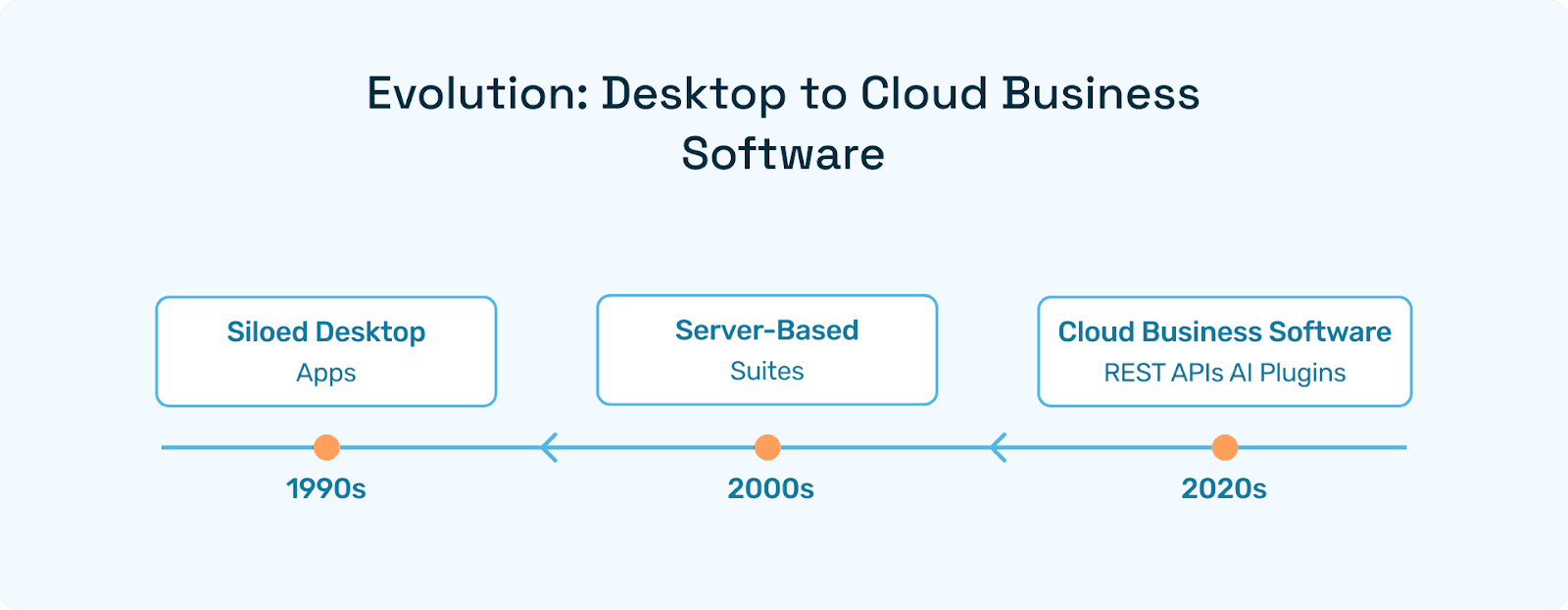
3. Evolution: Desktop to Cloud Business Software
1990s: siloed desktop apps → 2000s: server-based suites → 2020s: cloud business software with REST APIs, AI plugins, and consumption-based pricing.
4. Must-Have Features Across Company Software Systems
Single data model
Role-based dashboards
Low-code customization
Native API economy (for Hyperbots)
Compliance & audit trails
These features guide the search for any business software purchase.
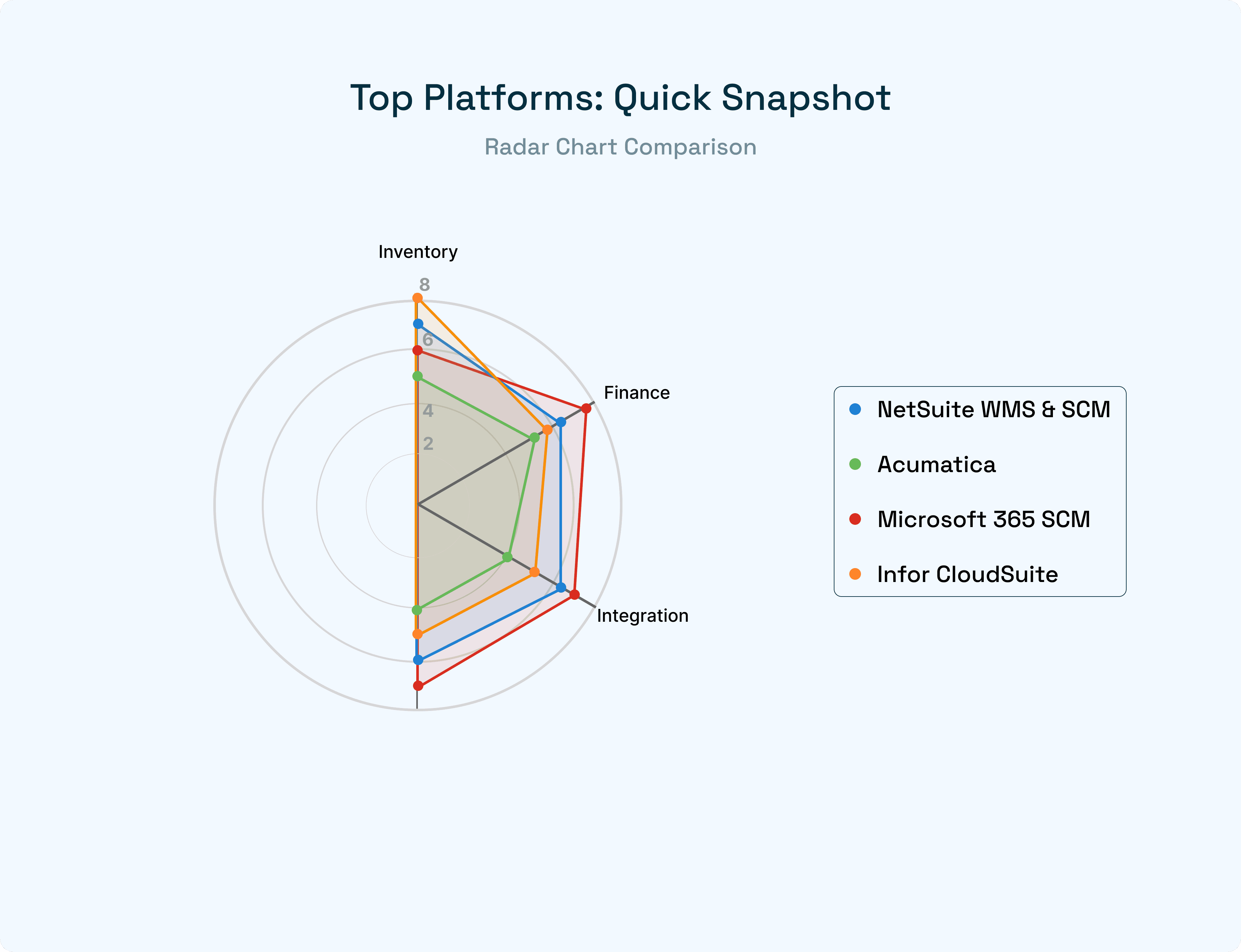
5. Top Business Software Solutions Brands (2025 Snapshot)
Brand | Target Market | Strengths | Watch-outs |
20-1,000 emp | Unified ERP/CRM | Setup complexity | |
10-300 emp | Office 365 synergy | Customization cost | |
5-100 emp | Ease & banking feeds | Multi-entity limits | |
Zoho One | <50 emp | All-apps bundle | Deep finance gaps |
50-500 emp | Manufacturing depth | UI learning curve |
6. Deep Dive: Cloud-Native Business Management Platforms
NetSuite—A Full Enterprise Business Management Software
Pros: Multi-subsidiary, real-time KPIs. Cons: Manual AP/PO flows (fixed by Hyperbots).
QuickBooks Online Advanced—Small Business Favorite
Pros: Affordability, ecosystem. Cons: Manual accruals & tax coding (Hyperbots solves).
Microsoft Dynamics BC—Microsoft Stack Cohesion
Pros: Seamless Teams & Excel links. Cons: Implementation partner dependency—Hyperbots plugs in quickly.
7. Hyperbots AI Co-pilots—Supercharging Finance & Procurement
Co-pilot | Cloud Pain Point Solved |
|---|---|
80 % STP, 99.8 % field accuracy | |
AI requisitions → policy-compliant POs | |
Auto month-end close | |
ACH & check timing, fraud checks | |
Multi-state validation | |
One-click onboarding + portal |
These agents integrate via secure APIs with any cloud-based business management software, delivering autonomous finance.
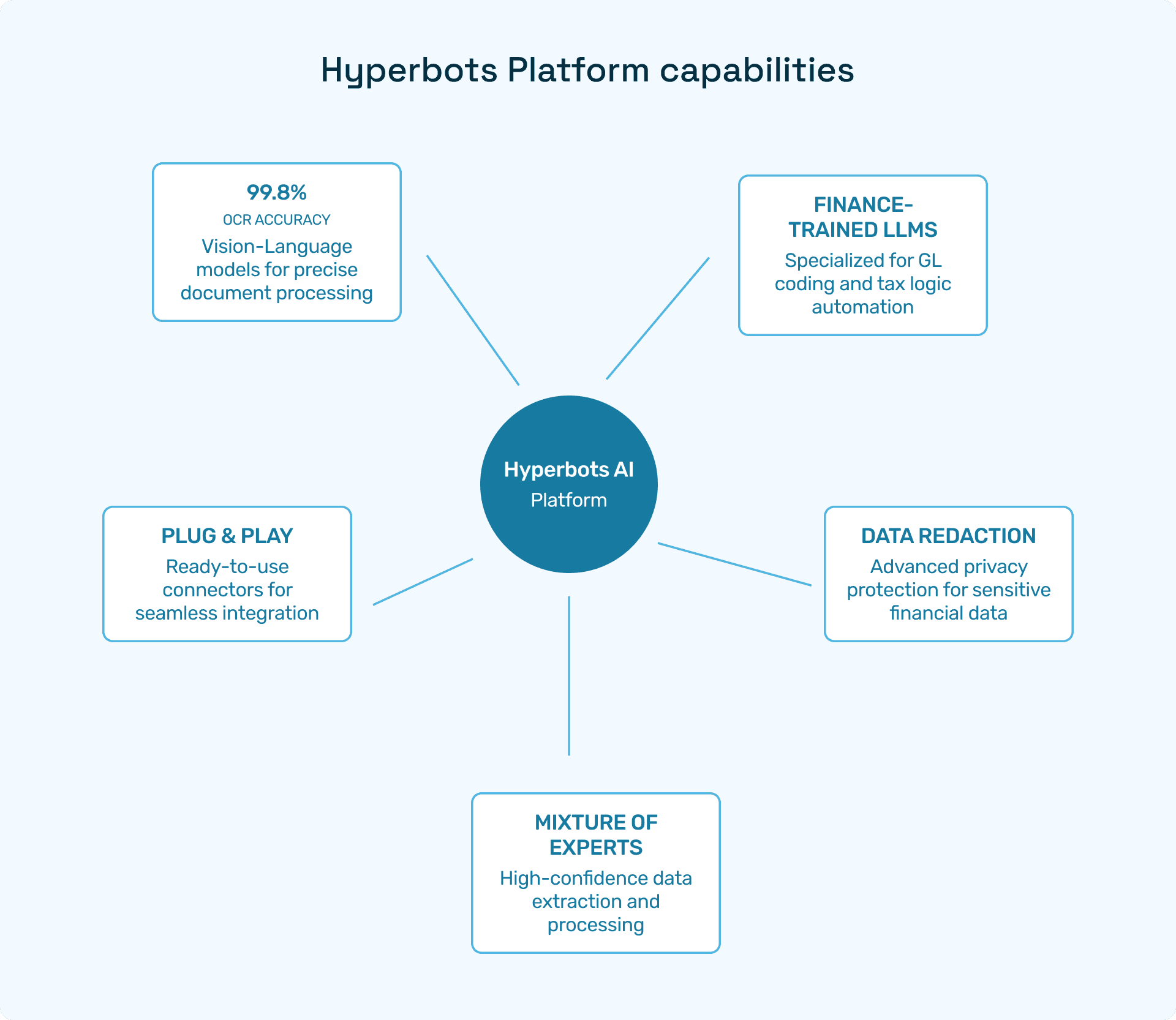
8. Hyperbots Platform Capabilities
Redaction · OCR with VLMs · Finance-trained LLMs · Mixture-of-Experts · Reasoning Engine · On-prem & Cloud Connectors. Hyperbots thus complements enterprise business management software and SMB suites alike.
9. Implementation Best Practices & Pitfalls
Phased module rollout (Finance → SCM → CRM)
Data hygiene before migration
Hyperbots are early to avoid manual re-work
Executive KPIs for adoption tracking
10. Industry-Specific Considerations
Sector | Unique Need | Hyperbots Edge |
eCommerce | Multi-channel tax | |
Manufacturing | 3-way match | |
SaaS | ASC 606 rev-rec | |
Non-profit | Fund reporting | NetSuite + Hyperbots |
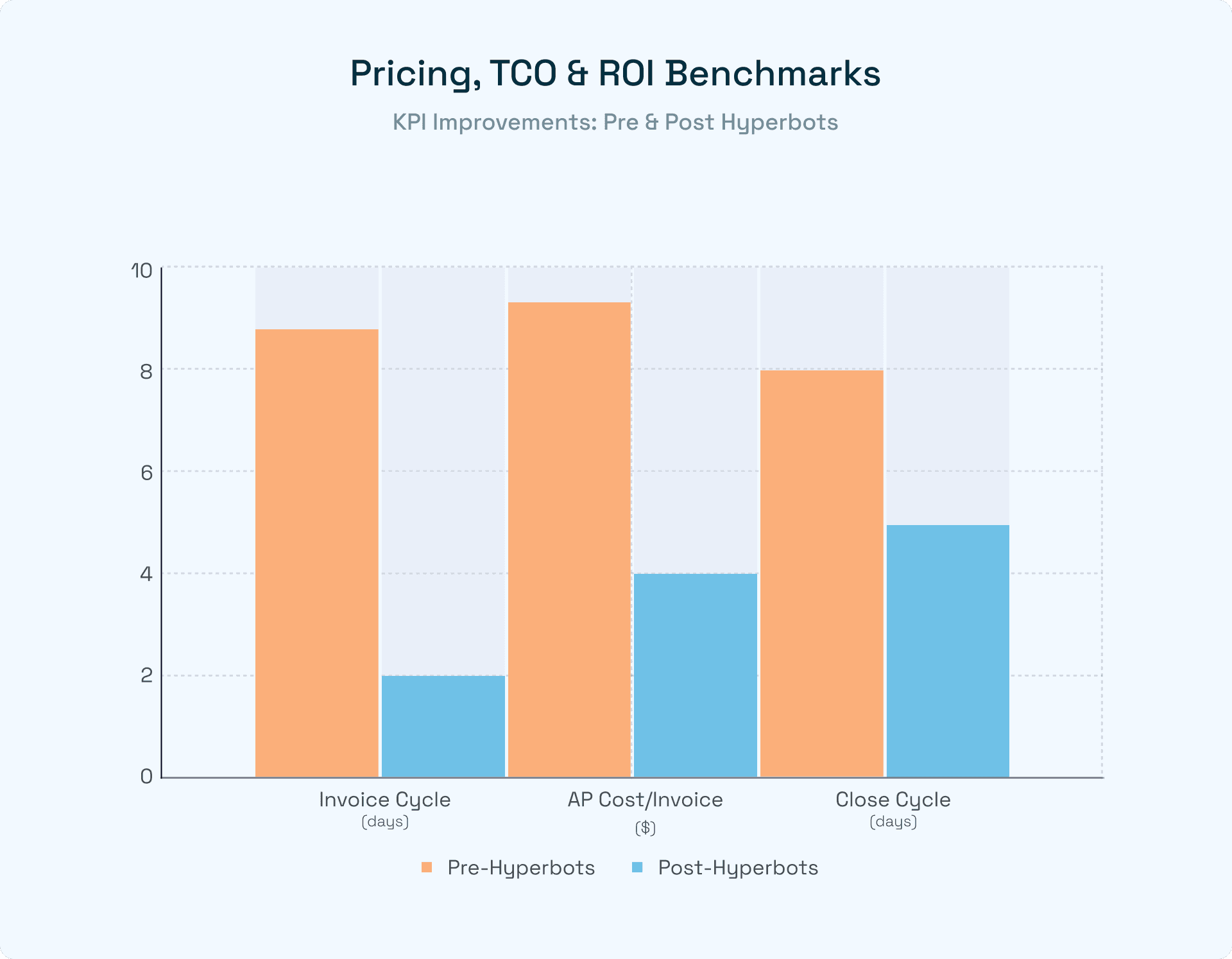
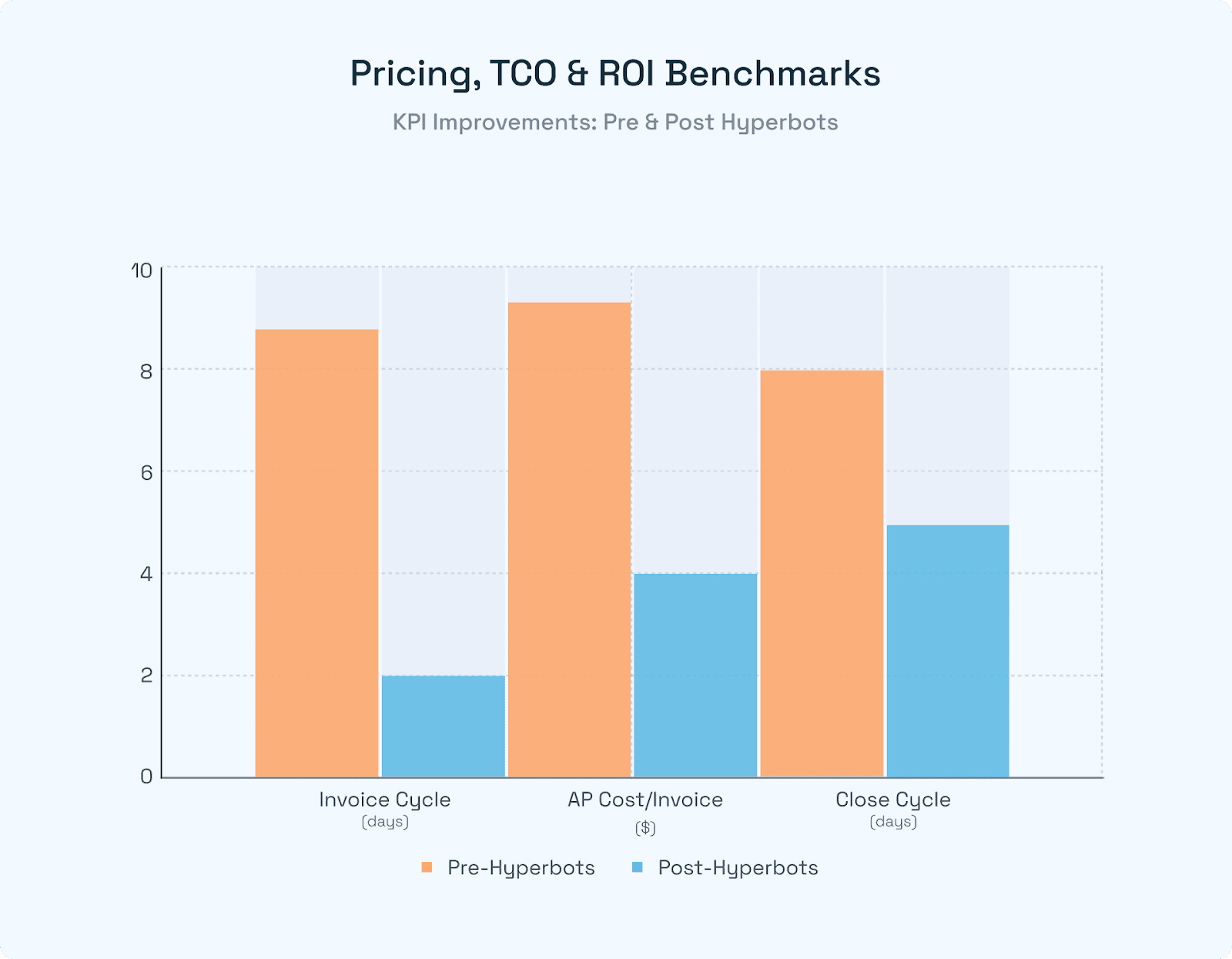
11. Pricing, TCO & ROI Benchmarks
Metric | Pre-Hyperbots | Post-Hyperbots | Delta |
Invoice cycle (days) | 9 | 2 | –78 % |
AP cost/invoice | $9.50 | $2.10 | –78 % |
Close time (days) | 8 | 5 | –37 % |
12. FAQs
Q1. What defines a business software company today?
Vendors delivering integrated, cloud-first suites with open APIs.
Q2. How does Hyperbots differ from RPA?
Hyperbots are domain-trained AI agents that reason, not just “record and replay” clicks.
Q3. Do Hyperbots replace native ERP workflows?
No—Hyperbots augments them via read/write APIs while preserving audit trails.
Q4. Implementation timeline?
Most Co-pilots go live in 2–4 weeks for SMBs; 6–8 weeks for mid-market.
13. Conclusion
Whether you’re evaluating cloud business software for a startup or enterprise business management software for a multi-subsidiary firm, the right choice delivers unified data, scalability, and AI readiness. Hyperbots takes that foundation further, transforming finance and procurement into autonomous workflows. Ready to elevate your business software company strategy? Book a Hyperbots demo and experience AI-powered finance today.