Construction & Retail Purchase Order Systems: Requirements and Workflows
Streamline construction and retail procurement with AI-driven purchase order systems that cut costs by 80% and accelerate approvals.
Executive Summary
Managing procurement efficiently is one of the biggest challenges in both construction and retail industries. From ensuring materials arrive at a worksite on time to handling thousands of SKUs across multiple retail locations, the construction purchase order system and retail purchase order system form the backbone of financial and operational control.
Traditional workplace purchase order systems often rely on manual processes, which create inefficiencies, errors, and compliance risks. Modern finance leaders are turning to AI-driven procurement automation platforms like Hyperbots Procurement Co-pilot to shrink cycle times, cut operational costs by up to 80%, and deliver real-time spend visibility.
This blog will cover:
Functional requirements of purchase order systems for construction and retail.
Common workflows, integration capabilities, and operational challenges.
How AI-powered co-pilots from Hyperbots are redefining retail purchase order management systems and construction purchase order systems.
ROI improvements and strategic advantages of automation.
Why Construction & Retail Need Specialized Purchase Order Systems
While every industry uses purchase orders to control spending, construction and retail face unique challenges:
Construction Purchase Order System Requirements:
Frequent high-value material orders.
Coordination between contractors, vendors, and project managers.
Strict compliance and audit requirements.
Multi-project tracking with shared resources.
Retail Purchase Order System Needs:
High-volume, low-value transactions across thousands of items.
Inventory alignment with multiple store locations.
Vendor relationship management across diverse supply chains.
Seasonal and promotional purchase planning.
Understanding Construction Purchase Order Systems
Core Features of a Purchase Order System for the Construction Industry
A purchase order system for construction industry must provide:
Project-level budget allocation tied to specific POs.
Automated approval workflows based on project thresholds.
Three-way matching between PO, goods receipt, and invoice.
Integration with ERP and project management tools.
Real-time tracking of materials across sites.
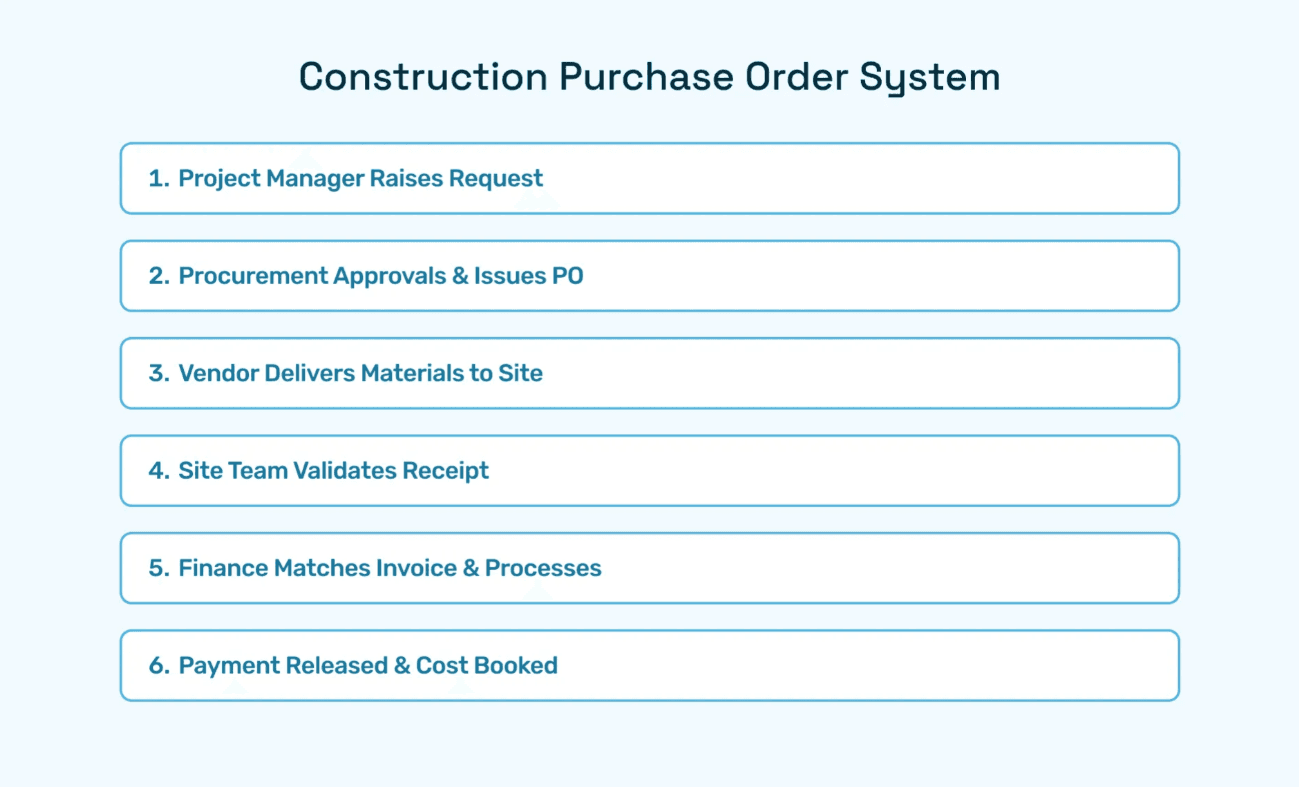
Typical Construction Workflow
Project manager raises a purchase request.
Workflow routes request to procurement head for approval.
Purchase order issued to vendor.
Materials delivered to site; goods receipt validated.
Invoice processed and matched; payment released.
Costs booked against project budget.
Retail Purchase Order Management Systems
Core Capabilities of Retail Purchase Order System
A retail purchase order system is designed for volume, speed, and inventory control:
Bulk PO creation for seasonal procurement.
Vendor catalogs integration for quick item selection.
Multi-store and multi-location tracking.
Automated replenishment triggers from POS/inventory systems.
Discount and promotional pricing integration.
Workflow in Retail Purchase Order Systems
Store-level demand triggers replenishment request.
Central procurement consolidates requirements.
PO issued to multiple vendors simultaneously.
Deliveries tracked across warehouses and stores.
Vendor invoices reconciled automatically.
Spending patterns analyzed for supplier negotiations.
Workplace Purchase Order System: Common Gaps
Despite ERP adoption, many workplace purchase order systems face these gaps:
Manual approval chains causing delays.
Errors in vendor master data entry.
Lack of predictive demand planning.
Limited audit trails for compliance.
Disconnected workflows between PO, invoicing, and payments.
This is where AI-driven automation becomes a necessity, not just an efficiency booster.
AI-Powered Procurement Automation for Construction & Retail
Hyperbots Procurement Co-pilot
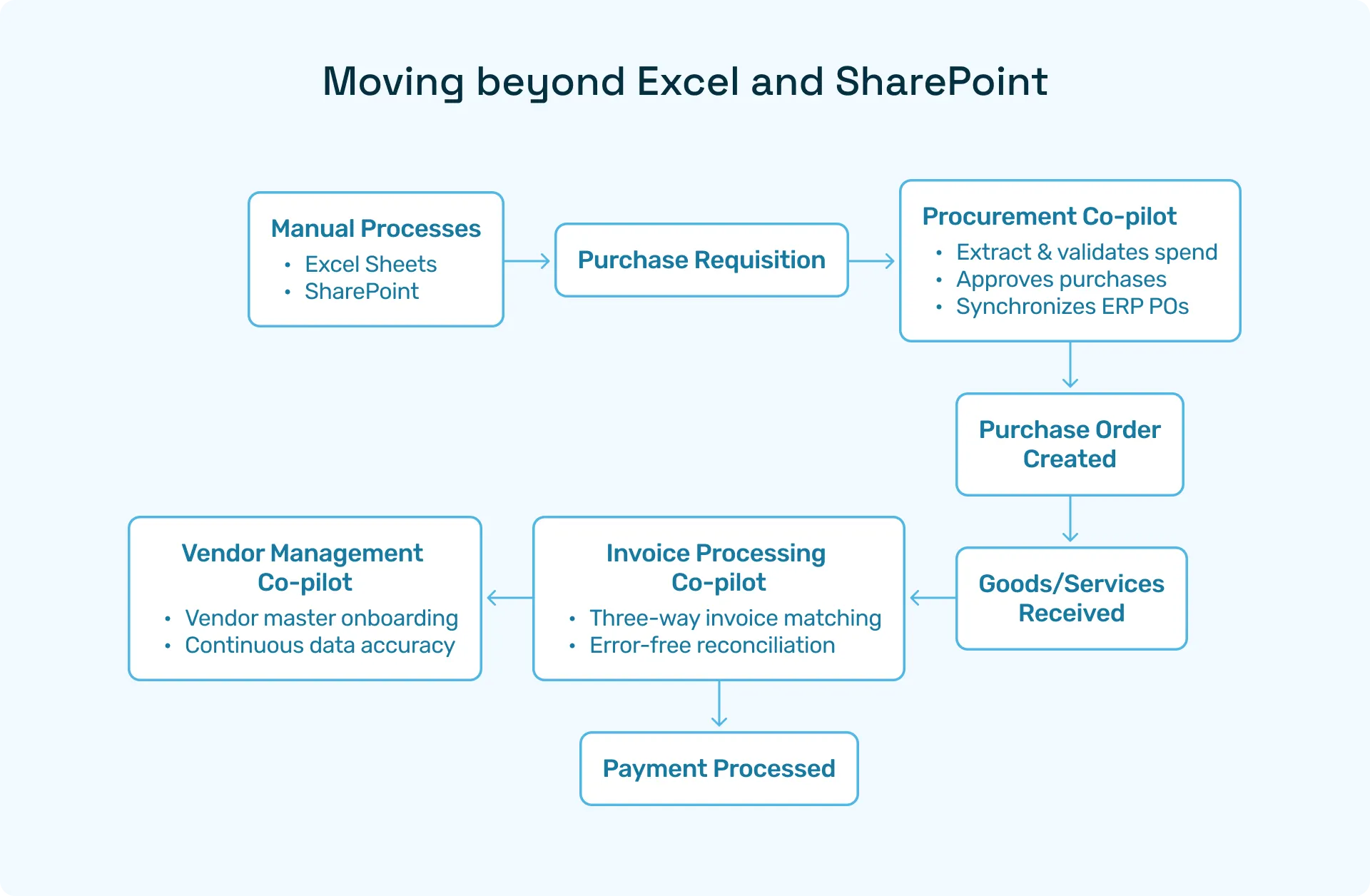
Hyperbots Procurement Co-pilot transforms procurement with:
ERP-synced approvals in real time.
Request-to-PO cycle reduced from days to hours.
Intelligent compliance monitoring and audit trails.
Real-time spend visibility for CFOs and Controllers.
Supporting AI Co-pilots
Invoice Processing Co-pilot: Automates three-way matching, prevents duplicates, and handles exceptions.
Vendor Management Co-pilot: Automates onboarding, validates tax IDs and banking details, and monitors vendor performance.
Hyperbots Platform Differentiation
Unlike traditional ERP add-ons or RPA tools, Hyperbots AI Co-pilots deliver:
End-to-end procure-to-pay automation (vs. single-task tools).
Machine learning accuracy up to 98.8%.
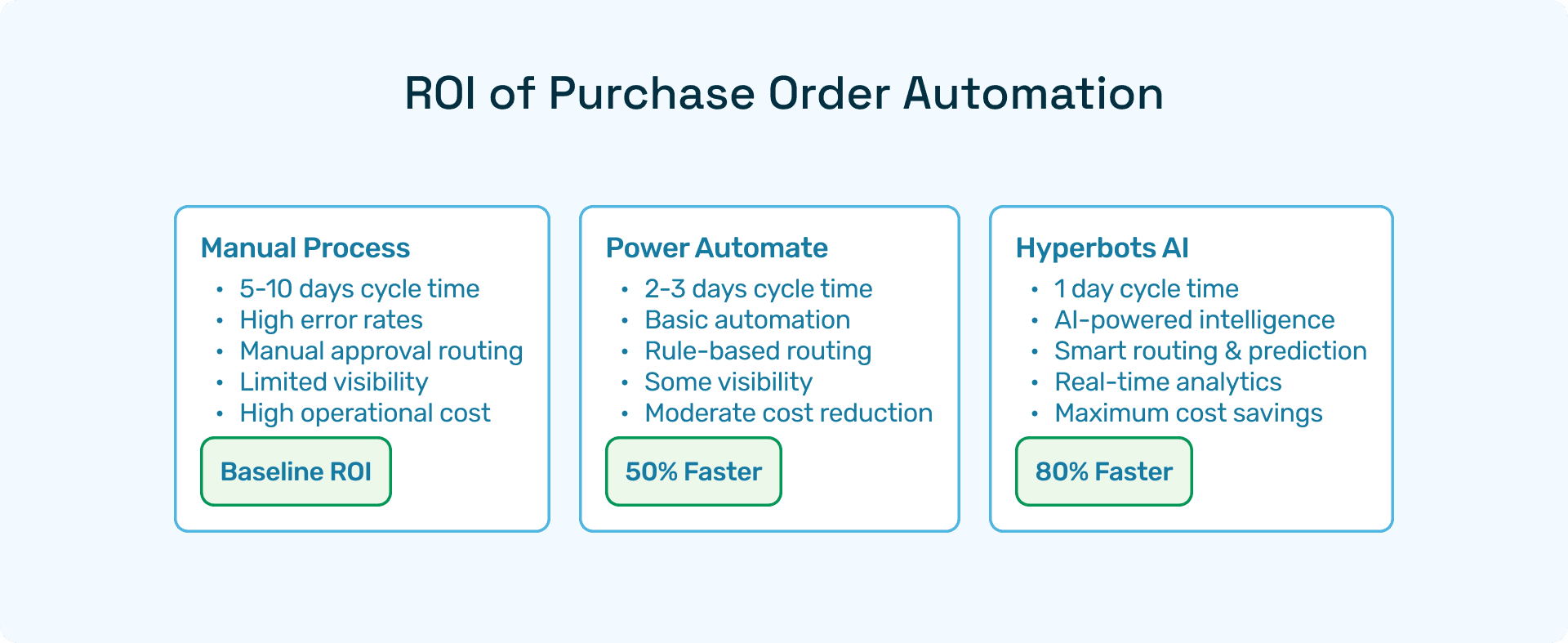
80% reduction in operational costs.
Faster procurement cycles.
Enterprise-grade security: SOC 2 Type II, ISO 27001 compliance.
ROI of AI-Led Purchase Order Automation
Quantifiable Results:
80% lower processing costs.
Fewer errors via automated validation.
Less vendor communication time due to auto-updates.
Strategic Benefits:
More time for negotiation and cost-optimization.
Better supplier relationships with consistent payments.
Improved financial forecasting with predictive analytics.
💡 External Reference: Deloitte CFO Signals Report notes that automation-led finance teams report 25–30% higher productivity.
Implementation Considerations
For Construction: Align with project management software (Procore, Buildertrend).
For Retail: Sync with POS, inventory, and supplier networks.
For Both: Ensure ERP-native integration (QuickBooks, NetSuite, SAP, Sage, Xero).
Future of Purchase Order Systems in Construction & Retail
AI & Predictive Analytics → Demand forecasting.
Cloud-first Workflows → Remote, real-time collaboration.
Sustainability Metrics → ESG-focused supplier selection.
Mobile Approvals → Workplace purchase order systems optimized for mobile-first use.
Transform Your Purchase Order Operations
Whether you’re managing a construction purchase order system or overseeing a retail purchase order management system, the limitations of traditional approaches are clear. Hyperbots’ AI-powered Procurement Co-pilot offers a paradigm shift: cutting costs, accelerating cycles, and providing strategic value beyond transactional processing.
👉 Explore Hyperbots Procurement Automation to see how your finance team can achieve transformational ROI.
Frequently Asked Questions (FAQs)
1. What is a construction purchase order system?
A: It is a procurement platform designed for the construction industry to manage materials, vendor contracts, and compliance through automated purchase order workflows.
2. How does a retail purchase order system work?
A: It automates inventory replenishment, vendor communication, and invoice reconciliation across multiple stores and warehouses.
3. What makes Hyperbots different from other procure-to-pay solutions?
A: Hyperbots provides end-to-end automation using AI co-pilots, unlike OCR or RPA tools that only solve partial workflows.
4. Can Hyperbots integrate with ERP systems like SAP or QuickBooks?
A: Yes. Hyperbots supports universal ERP connectivity across QuickBooks, Sage, NetSuite, SAP, Xero, and more.