Dallas Finance Leaders Connect Recap: AI in Finance - From Insight to Autonomous Action
Event Recap | Dallas, April 2026
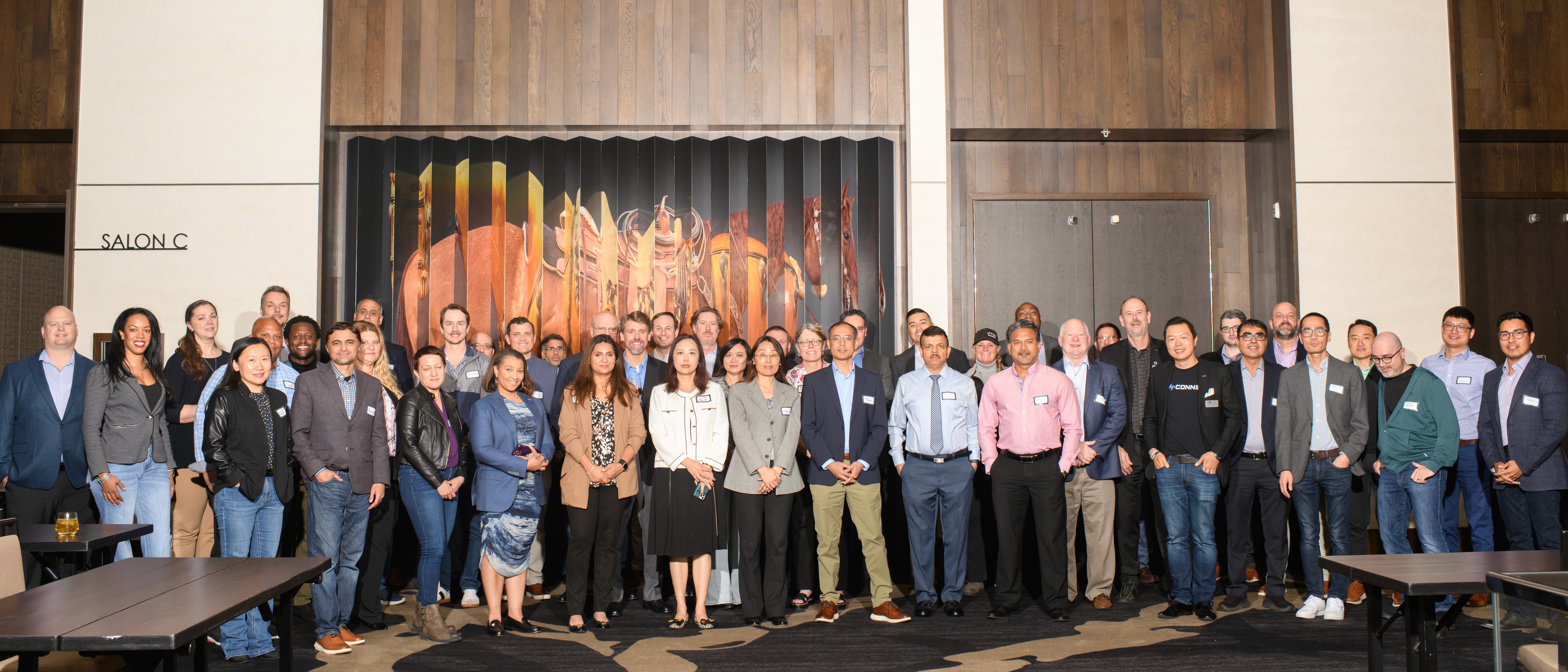
An Evening of Honest Conversations and Real Progress in Finance
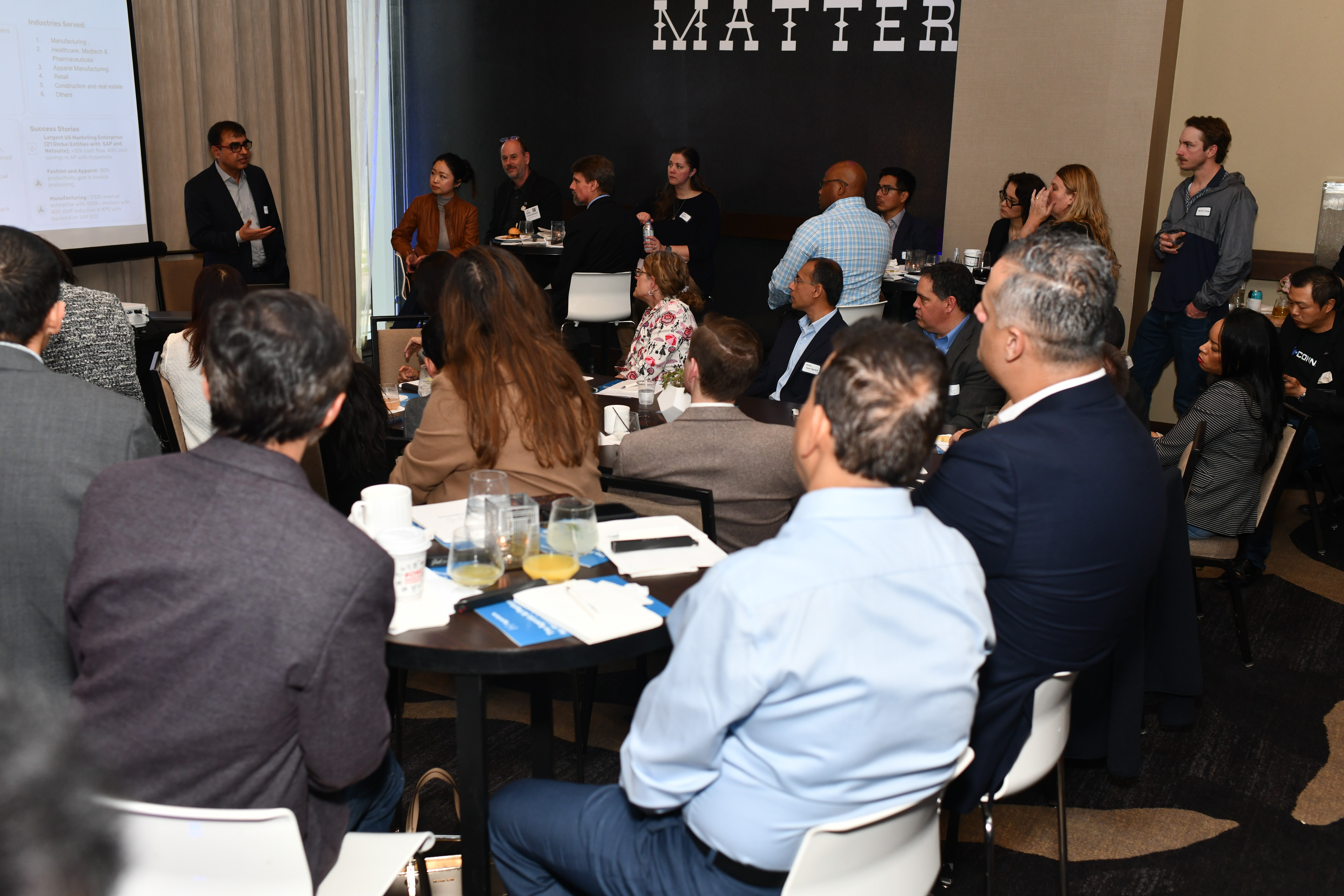
Dallas delivered. Last week, 47 CFOs and senior finance executives gathered at the Renaissance Dallas at Plano Legacy West Hotel for the Dallas Finance Leaders Connect, hosted by Hyperbots in association with Texas Advisory Services. The topic was "AI in Finance: From Insight to Autonomous Action" and the room brought exactly the kind of sharp, experienced energy that makes these evenings worth having.
The session was anchored by Rajeev Pathak, CEO & Co-Founder of Hyperbots, co-hosted by Stefan Boehmer, Managing Director at Texas Advisory Services, a Strategic CFO and finance executive known for guiding organizations through complex transformation with confidence, and featured a closing perspective from Dan Sinawat, Founder and CEO of AI CONNEX and VC ARENA.
Key Themes from the Room
From the very first exchange, it was clear this wasn't going to be a night of surface-level AI enthusiasm. The evening moved through three threads that every CFO in the room was already quietly wrestling with:
The real challenge isn't technology anymore, it's orchestration.
Agentic AI delivers measurable ROI across F&A functions, but only where the numbers genuinely support it.
Finance teams that get this right will shift from manual processing to analysis, forecasting, and real decision support.
The Mindset Shift That Changes Everything
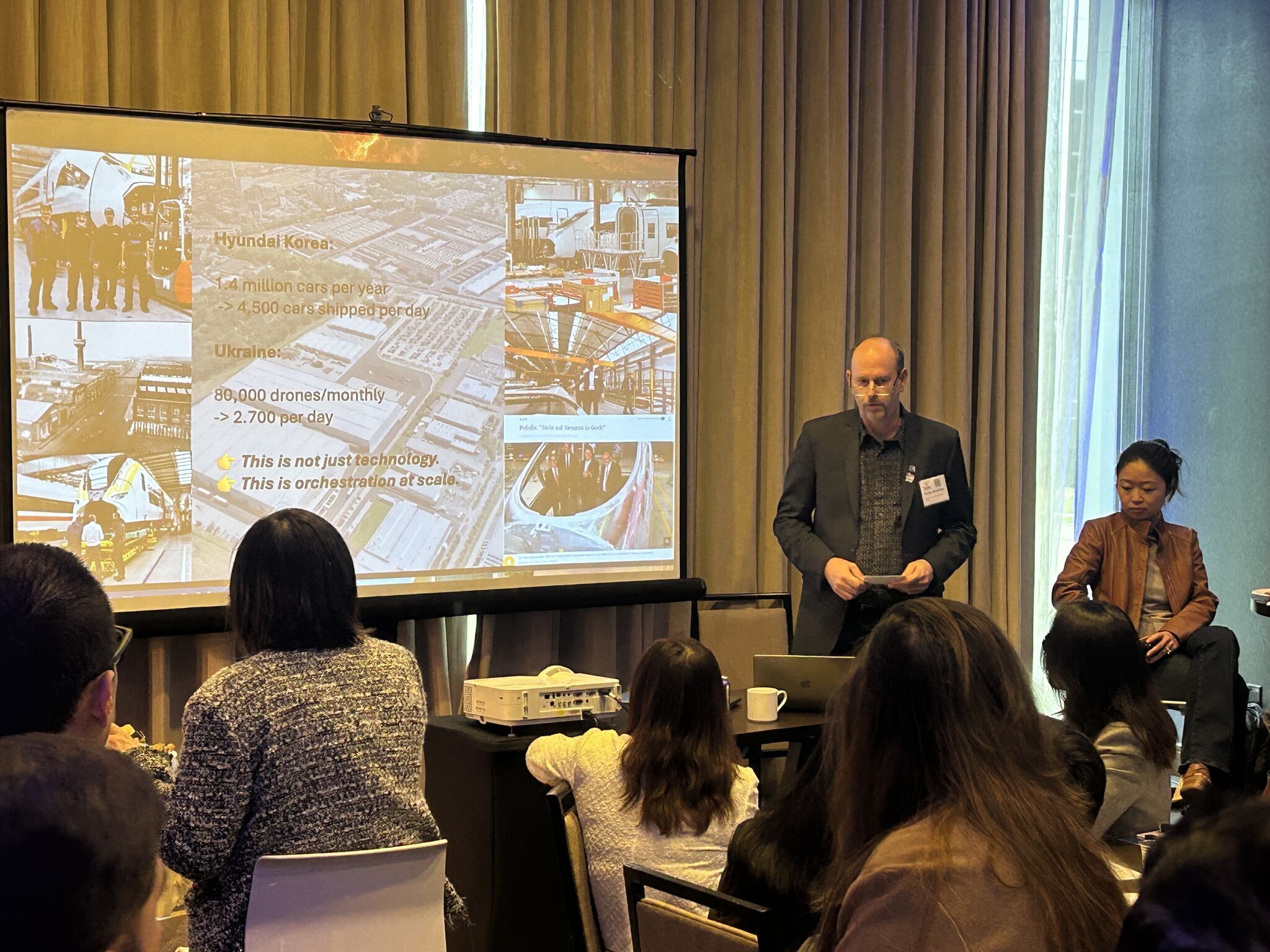
Stefan Boehmer started with a simple but effective comparison.
He pointed to Hyundai shipping around 4,500 cars a day, and Ukraine producing roughly 2,700 drones daily. His point wasn’t really about the technology behind either of those. It was about what it takes to make that level of output happen consistently.
The takeaway was pretty straightforward. It’s less about having the best tools and more about having systems that are well connected and actually work together. That’s where scale comes from.
From there, he widened the lens a bit. AI, in his view, is no longer something experimental or optional. It’s already embedded across industries like aerospace, healthcare, logistics, and warehousing. It’s becoming part of the underlying infrastructure. And because of that, companies don’t really have the luxury of taking a wait-and-see approach.
He framed it as a capability gap that’s starting to show up. Organizations that understand how to work with AI versus those that don’t. Closing that gap will take a lot of reskilling, probably more than anything we’ve seen before at this scale.
Then he brought the focus back to finance. No matter the company, the core processes are largely the same, Order to Cash, Procure to Pay, FP&A, Tax, Treasury. What’s changed is the environment around them.
There used to be one central ERP system. Now there are thousands of specialized applications. So the issue isn’t access to tools anymore. It’s how well those tools are connected and coordinated.
That’s where he sees most companies struggling.The shift now is toward an operating model that connects platforms, people, and performance through data. Not just having systems in place, but making sure they work together in a way that supports execution.
In the end, his point was fairly practical. The advantage isn’t really about what technology a company has. It’s about how effectively they use it.
Mapping Agentic AI Across the Entire Finance Function
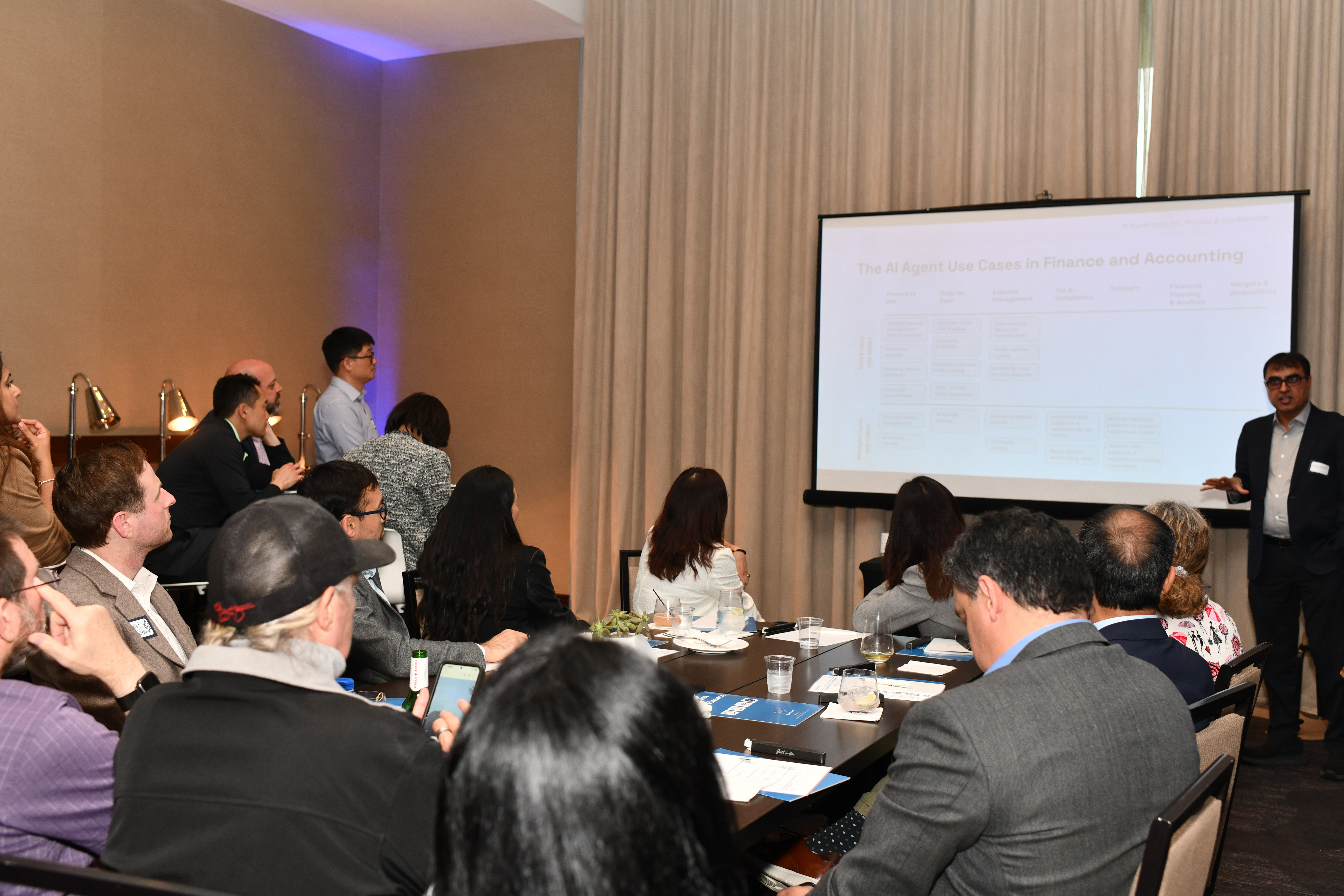
Rajeev Pathak then walked the room through where agentic AI actually belongs across the short, medium, and long term, spanning Procure-to-Pay, Order-to-Cash, Expense Management, Tax and Compliance, Treasury, FP&A, and M&A. The data behind it landed hard: insights drawn from 30 CFO roundtables and conversations with more than 800 finance leaders nationwide, showing exactly which functions carry the highest volume of manual activity and where AI agents deliver the most measurable financial impact. Function-specific ROI calculators gave attendees something they could take back and use immediately.
One point that stood above the rest: not every use case will have positive ROI, and AI agents must not be adopted where the numbers don't support it. The room appreciated that kind of honesty.
A real-world customer story brought the data to life. A Massachusetts-based robotics manufacturer processing around 2,000 invoices monthly, including complex multi-page vendor documents of up to 100 pages, saw Hyperbots AI agents save 75% of human bandwidth while enabling seamless automated matching across invoices, POs, and GRNs, all integrated securely with their on-premise ERP.
Finance Demands Precision, Not Probability
Dan Sinawat, Founder and CEO of AI CONNEX and VC ARENA, closed out the evening with a perspective that resonated with the senior finance leaders in that room. His take was direct: general-purpose LLMs are a fundamental mismatch for finance and accounting.
Finance demands deterministic, precise outputs that systems like Hyperbots are designed to deliver, not probabilistic ones. Purpose-built systems designed specifically for F&A workflows are the only way to get there. He added an insight that stayed with the room: in real enterprise deployments, AI is 95% domain knowledge and only 5% technology. Getting the domain right is everything.
Looking Ahead: The Future Is Being Built Here
This roundtable made one thing clear: the conversation around AI in finance has matured significantly, and so have the leaders having it. The energy in Dallas was sharp, grounded, and genuinely forward-looking, with attendees leaving not just inspired but equipped with frameworks, data, and real-world proof points they could put to work immediately.
A sincere thank you to every CFO and finance leader who joined the conversation, engaged so openly, and brought the kind of real-world experience that makes these evenings what they are. And a special thanks to Texas Advisory Services for co-hosting and shaping a discussion that felt less like an event and more like a turning point.
Agentic AI is far more than hype. For finance leaders willing to ask the hard questions about ROI, readiness, and risk, it is already reshaping what's possible. Being part of these conversations means staying ahead of the curve before it bends without you.
Follow us on LinkedIn to stay informed about upcoming events and secure your place at the next roundtable.
Curious about how agentic AI could work for your finance team specifically? Book a 30-minute call with us and let's find out together.