How to Set Up a Purchase Order System (People, Process, Tech)
A practical guide for CFOs and procurement leaders on setting up a purchase order system with clear people, process, and technology requirements and why Hyperbots leads in automation ROI.
Executive Summary
Setting up a purchase order system is no longer a back-office exercise, it’s a strategic decision for finance and procurement leaders. Manual requisition-to-PO workflows create errors, increase processing costs, and delay purchasing decisions.
This blog offers a comprehensive framework for how to set up a purchase order system, covering:
People: Roles and responsibilities across finance, procurement, and vendors
Process: Steps for requisition intake, approvals, and compliance
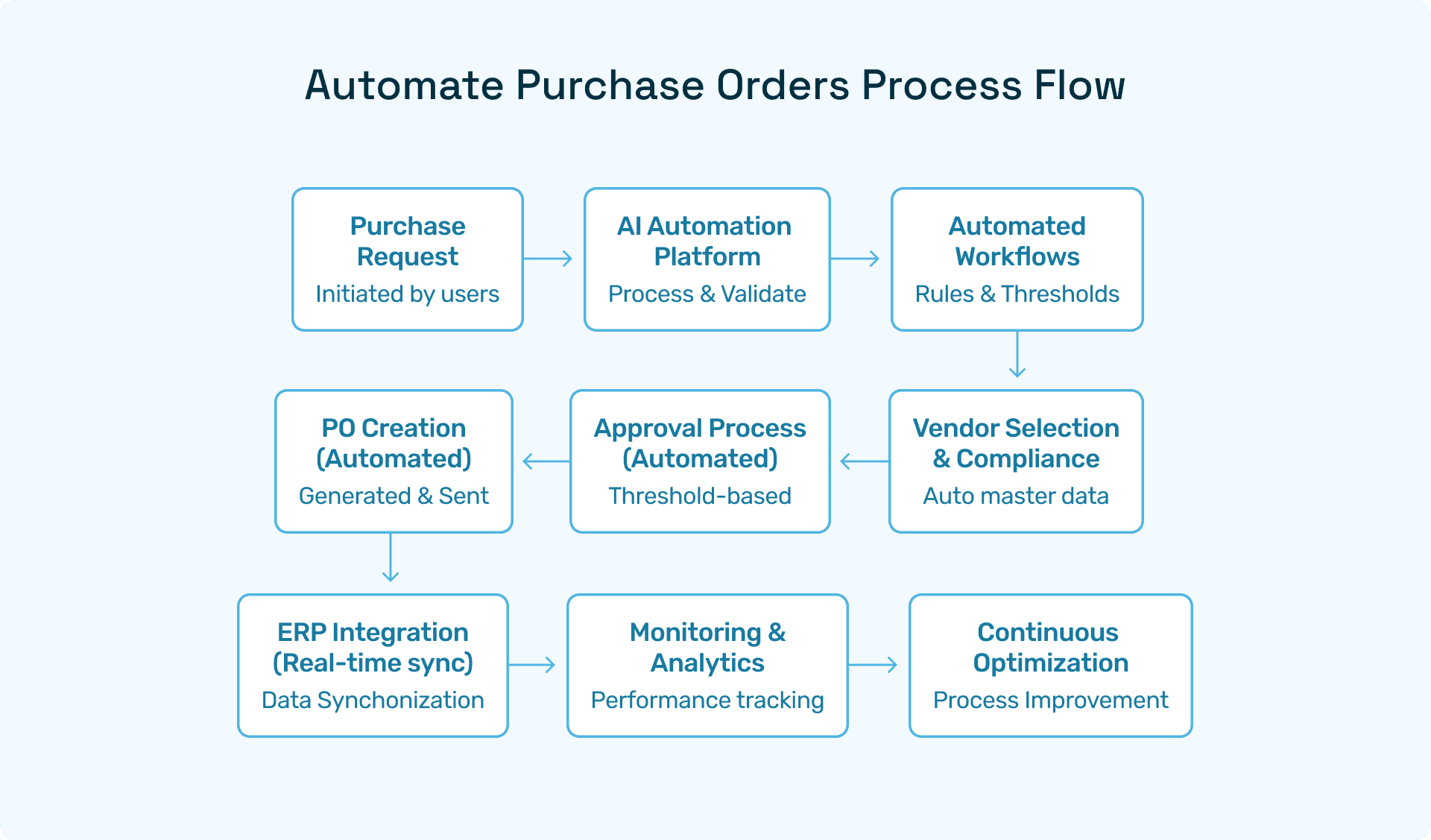
Technology: Automation platforms like Hyperbots’ Procurement Copilot that cut cycle times by 80%
We’ll also explore purchase order system requirements, adoption strategies, and ROI benchmarks from Hyperbots AI Co-pilots, the most advanced solution suite in procure-to-pay.
By the end, CFOs, Controllers, and Procurement Heads will know how to design and implement a system that improves compliance, speeds cycle times, and drives measurable ROI.
Introduction: Why a Purchase Order System is Mission-Critical
A purchase order (PO) system standardizes how organizations request, approve, and pay for goods or services. Without one, enterprises face:
Lack of spend visibility
Manual errors in requisitions and invoices
Delays in vendor payments
Compliance gaps that create audit risks
According to Gartner, top-performing procurement organizations use automation 2x more often than peers, cutting approval times by over 50%.
Implementing a purchase order system allows finance teams to scale operations, strengthen controls, and reduce costs - while delivering a better experience for employees and suppliers.
People: Who Owns the Purchase Order System?
Any effective system starts with people. Setting up a purchase order system requires clarity on ownership:
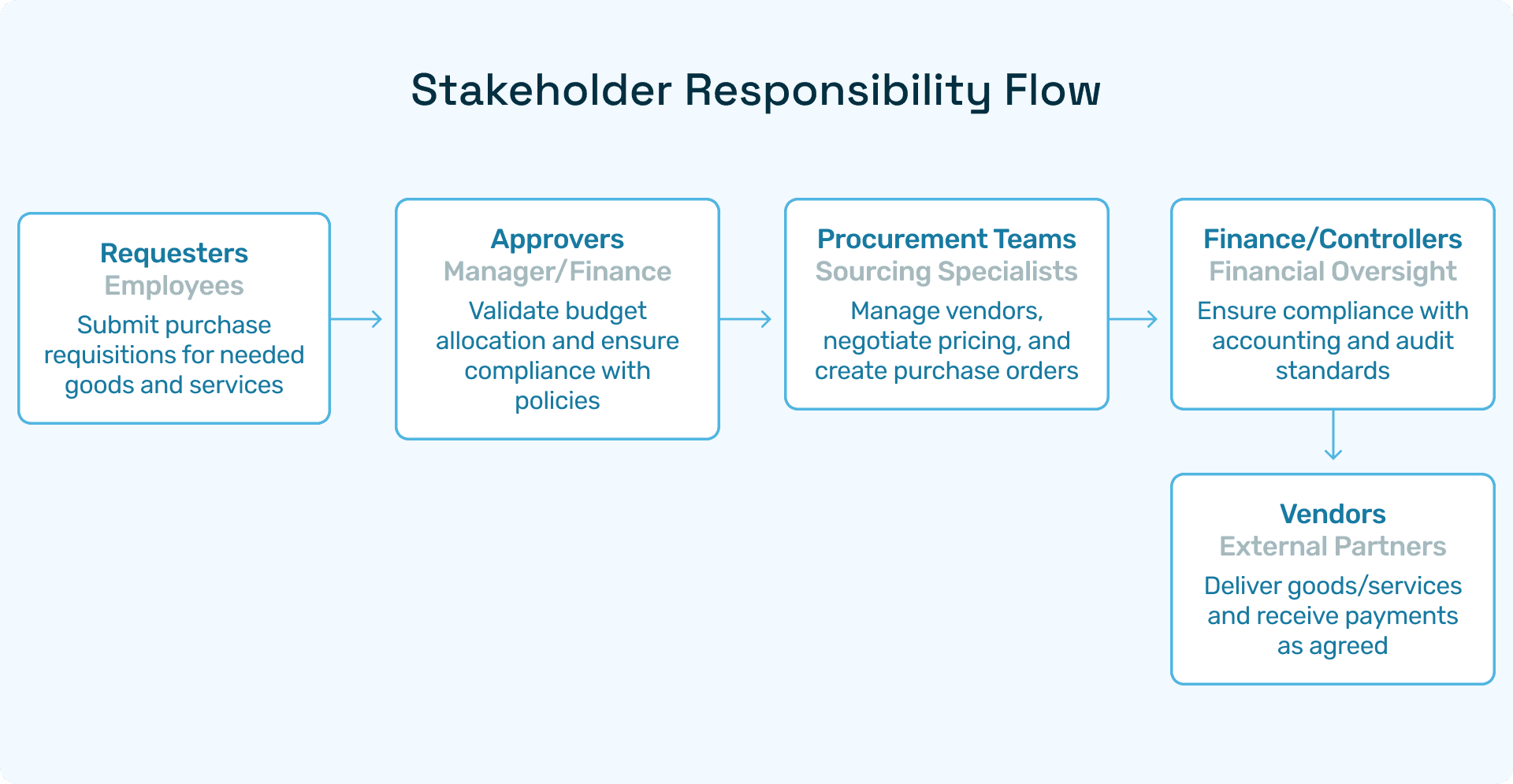
Key Roles
Requesters (Employees): Submit purchase requisitions.
Approvers (Managers/Finance): Validate budget and compliance.
Procurement Teams: Manage vendors, negotiate pricing, create POs.
Finance/Controllers: Ensure compliance with accounting and audit standards.
Vendors: Deliver goods/services and receive payments.
With Hyperbots’ Procurement Copilot, many of these tasks are streamlined: AI suggests vendors, routes approvals, and syncs data directly into ERP systems.
Process: Designing the Workflow
Creating a purchase order system requires a structured process.
Standard PO Workflow Steps
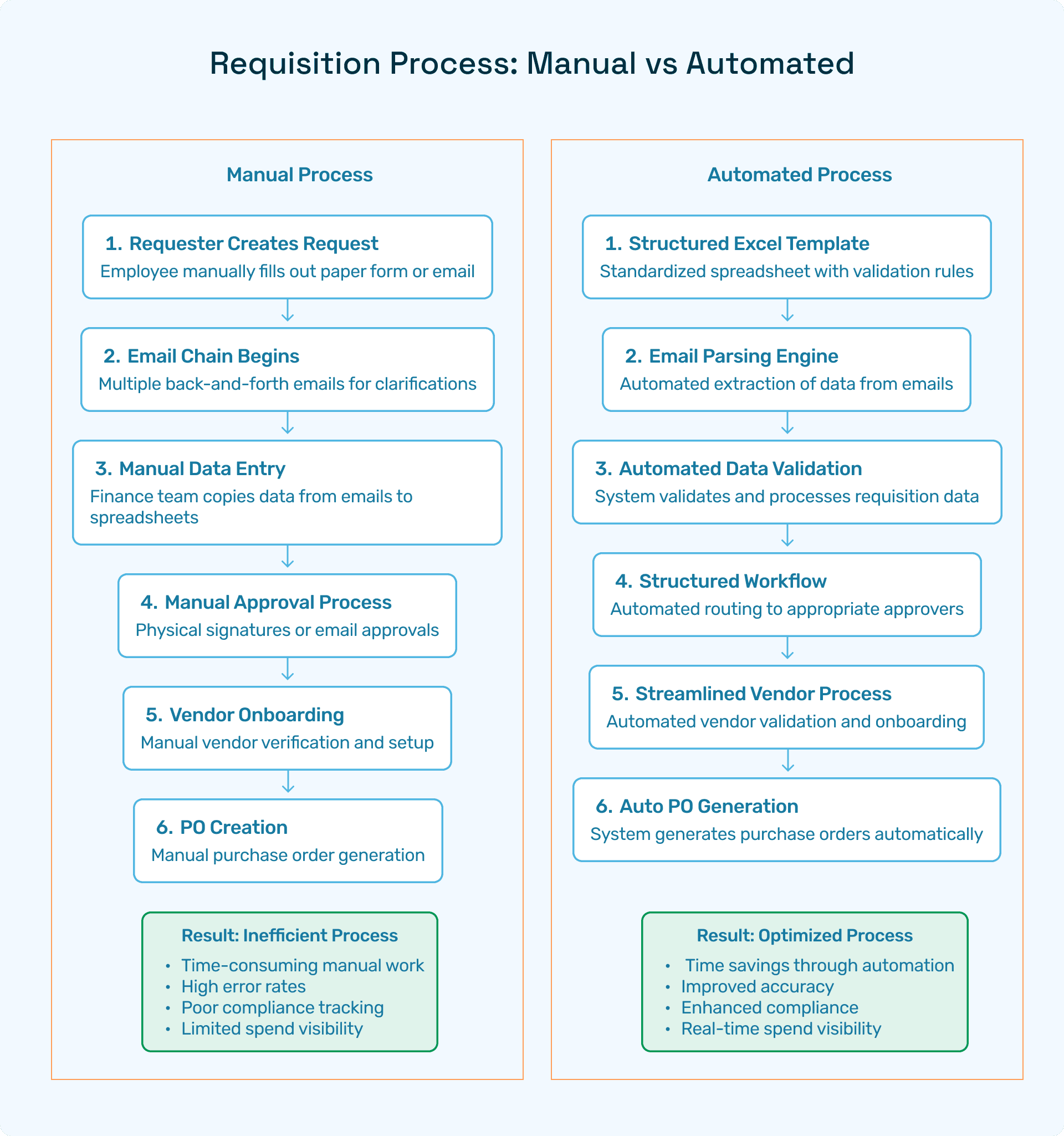
Requisition Submission: Employees submit a request via form, email, or Teams.
Approval Routing: Based on dollar amount, category, or policy.
PO Creation: Approved requisition becomes a purchase order.
Vendor Confirmation: PO sent to vendor for acknowledgment.
Goods/Services Delivery: Vendor fulfills the order.
Invoice Matching & Payment: Three-way match with invoice, PO, and receipt.
Purchase order system requirements also include audit trails and compliance controls.
Hyperbots automates this flow with AI-driven validation, ERP integration, and Invoice Processing Copilot.
Technology: Choosing the Right Platform
Technology is where automation delivers exponential gains.
Key Features to Evaluate
Integration: Sync with ERP (SAP, Oracle, NetSuite, Microsoft Dynamics).
AI Capabilities: Vendor matching, anomaly detection, predictive spend analysis.
Scalability: Ability to expand across departments and geographies.
User Experience: Simple interface for adoption by non-technical employees.
Compliance & Audit: Automatic logs, policy enforcement, and approval rules.
👉 External Insight: Deloitte notes that digital procurement can reduce processing costs by up to 30% while enhancing transparency.
Why Hyperbots Wins
Procurement Copilot: Shortens requisition-to-PO cycle from weeks to hours.
Vendor Management Copilot: Simplifies onboarding, risk checks, and compliance.
Payments Copilot: Automates secure and timely disbursements.
Platform Capabilities: Handles unstructured inputs (emails, PDFs), integrates with ERPs, and adapts to business rules with agentic AI.
Purchase Order System Requirements
To ensure success, enterprises should document purchase order system requirements across three categories:
Functional Requirements
Multi-channel intake (email, Teams, web forms)
Dynamic approval routing
Three-way matching (PO, invoice, receipt)
ERP integration
Compliance Requirements
Audit-ready logs
Budget validation rules
Role-based access controls
Reporting Requirements
Time-to-approve metrics
Adoption rate tracking
Spend dashboards
Implementing a Purchase Order System: Best Practices
Implementation requires more than just technology—it’s about adoption.
Steps to Implement
Assess Current State: Map manual workflows.
Define Success Criteria: Use KPIs like time-to-approve, compliance, adoption.
Pilot Rollout: Start with one department (e.g., IT or Marketing).
Iterate & Scale: Expand to the entire enterprise with governance policies.
Train Users: Ensure employees and vendors are comfortable.
Hyperbots provides an adoption plan with phased rollouts, change management, and user training to accelerate ROI.
Hyperbots’ Differentiation vs Market
Unlike traditional PO software, Hyperbots provides:
AI Co-pilots (vs. static workflows)
Real-time ERP sync (vs. batch updates)
Adaptive intelligence for anomaly detection (vs. rule-based only)
80% time savings in procure-to-pay operations
This positions Hyperbots AI Co-pilots as the most advanced agents for Finance and Accounting automation.
FAQs
Q1. What is the first step in setting up a purchase order system?
A: Start by mapping current workflows and identifying gaps in requisition-to-PO processing.
Q2. What are the must-have purchase order system requirements?
A: ERP integration, automated approvals, compliance checks, and reporting dashboards.
Q3. How does automation impact vendor relationships?
A: Faster PO issuance and payments build trust and reduce disputes.
Q4. Why choose Hyperbots over competitors?
A: Hyperbots combines AI-driven validation, ERP integration, and real-time spend visibility unmatched in the market.