What is an automated Purchase Order System? How It Works and Why It Matters
An automated purchase order system simplifies approvals, reduces errors, boosts compliance, and gives CFOs real-time spend visibility.
Executive Summary
Manual purchase order processes cost organizations time, money, and compliance. Finance and procurement leaders often find themselves juggling endless emails, approvals, and spreadsheets, leaving room for errors and delays. An automated purchase order system streamlines requisitions, approvals, and purchase order generation through AI and ERP integration, reducing cycle times by up to 80%.
What is a Purchase Order System?
A purchase order (PO) system is software that manages the process of requesting, approving, and issuing purchase orders between buyers and suppliers. Traditionally, these systems rely on manual entry through spreadsheets or legacy ERP modules.
An automated purchase order system takes this further by digitizing the process end-to-end, integrating with ERP platforms like SAP, Oracle, and NetSuite, and providing real-time visibility into spend.
Key functions of a purchase order system include:
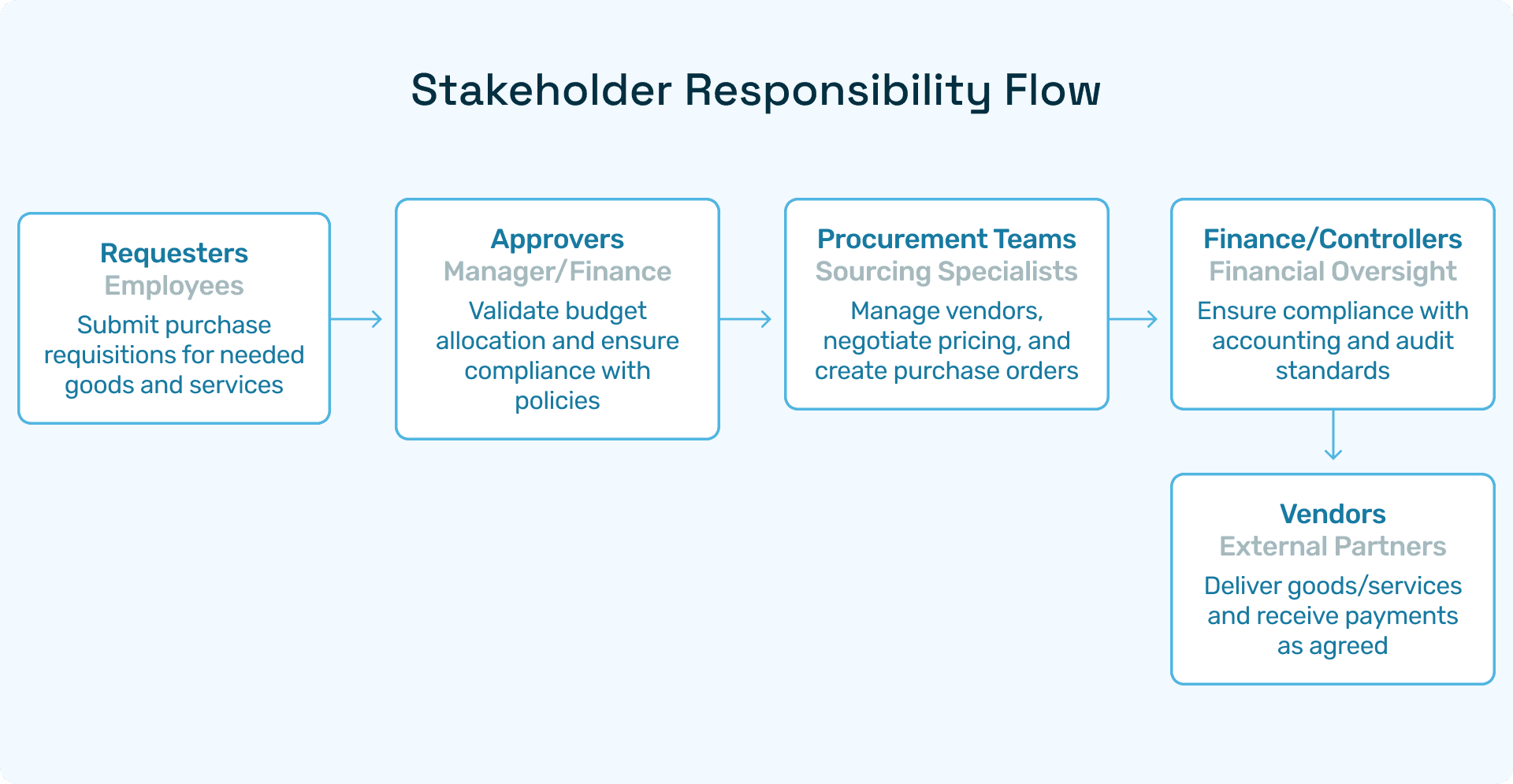
Requesting goods or services (requisitions)
Approvals based on budgets and authority levels
Issuing and tracking purchase orders
Ensuring audit trails for compliance
How Does a Purchase Order System Work?
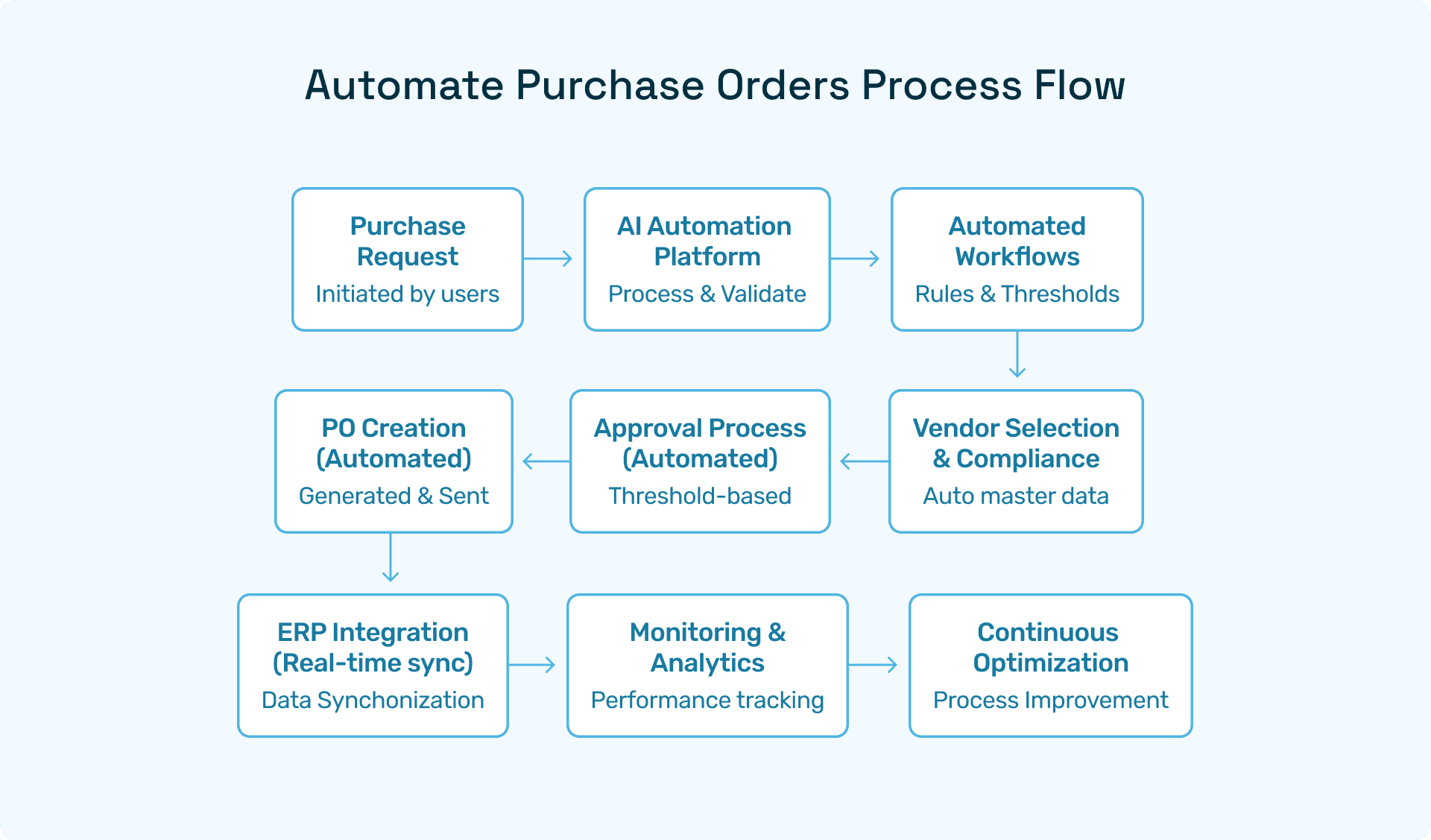
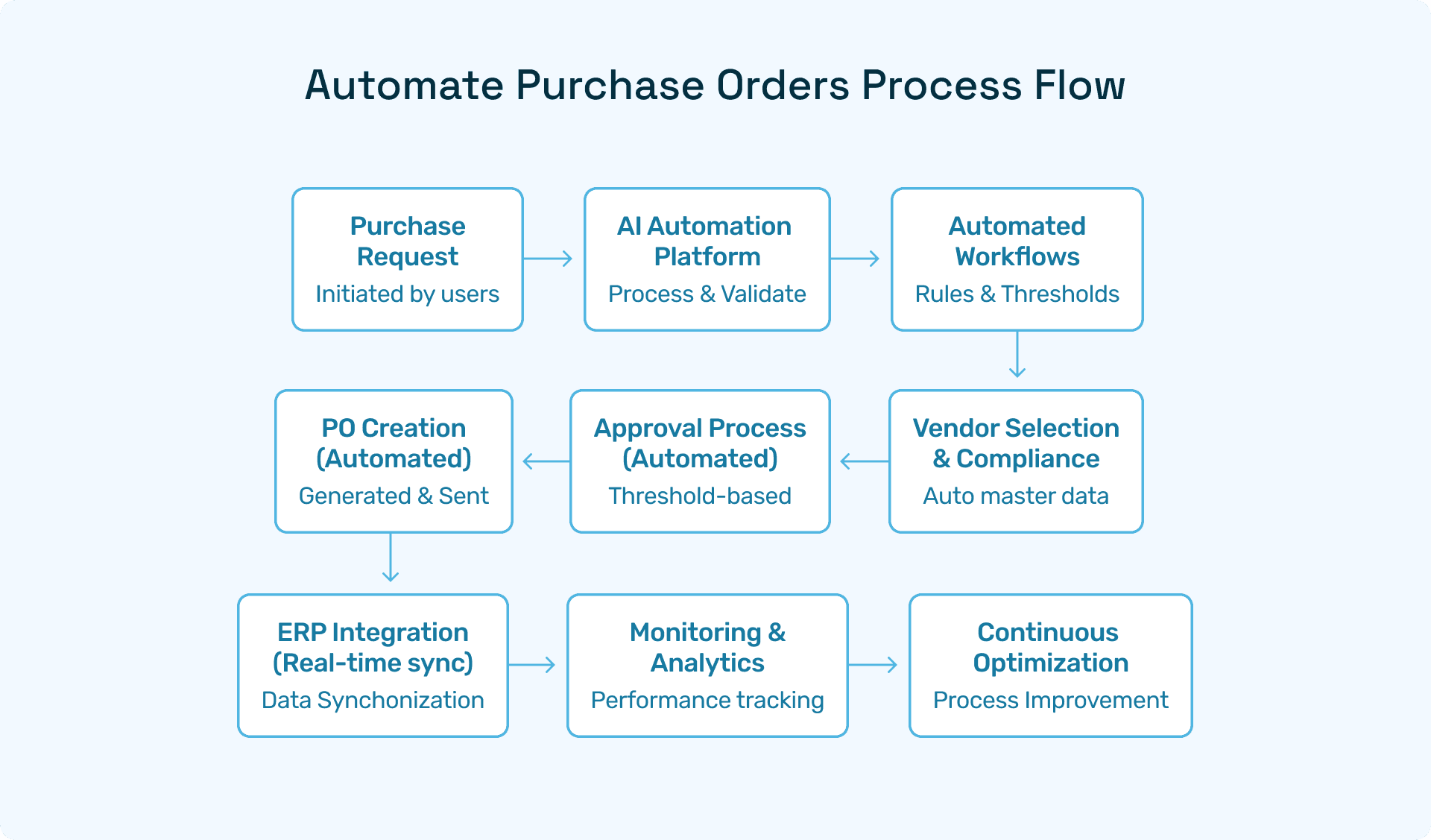
An automated purchase order system works by automating the journey from requisition to purchase order, removing manual handoffs and delays.
Step-by-step process:
Requisition Creation – Employees submit requests via email, forms, or standardized templates.
Approval Routing – AI routes requisitions to the right managers instantly, based on rules.
Purchase Order Generation – Once approved, the system generates a PO and syncs with ERP.
Supplier Notification – POs are automatically emailed or uploaded to supplier portals.
Tracking & Audit – Finance teams monitor real-time PO status with full audit trails.
By automating these steps, CFOs gain visibility and control over every dollar committed before it’s spent.
Benefits of a Purchase Order System
Implementing an automated PO system delivers both tangible and intangible benefits:
Efficiency: Shrinks cycle times by 60–80%.
Cost savings: Cuts procurement processing costs by up to 50%.
Compliance: Automatic audit trail for SOX and internal controls.
Visibility: Real-time dashboards of committed vs. actual spend.
Employee experience: Easy-to-use requisition interfaces (Excel, email, portals).
According to a Deloitte 2025 CPO Survey, top-performing procurement teams report 3.2× ROI on AI-driven procurement automation investments. Similarly, Gartner highlights procurement automation as a leading driver of cost optimization.
Why Use a Purchase Order System?
Organizations that still rely on email chains and static spreadsheets face:
Errors from manual data entry
Delayed vendor onboarding
Lack of budget visibility
Non-compliant purchases
Why use a purchase order system? To control costs, streamline processes, and empower finance teams with accurate, real-time data. Automated systems enforce discipline while reducing friction for employees.
Hyperbots AI Co-Pilots: Differentiation and Impact
Hyperbots Procurement Co-Pilot redefines how purchase orders are managed:
Automates requisition-to-PO with ERP-synced workflows.
Reduces PO dispatch time by 80%.
Provides finance leaders with real-time spend dashboards.
Supporting Co-Pilots include:
Invoice Processing Co-Pilot – Extracts and validates invoices with 99% accuracy.
Vendor Management Co-Pilot – Automates supplier onboarding and compliance.
Key Differentiators:
AI-driven context understanding vs. rule-based automation.
Deep ERP integration with SAP, Oracle, NetSuite.
End-to-end P2P coverage, not just point solutions.
ROI and Business Impact of Hyperbots' PO Automation Software
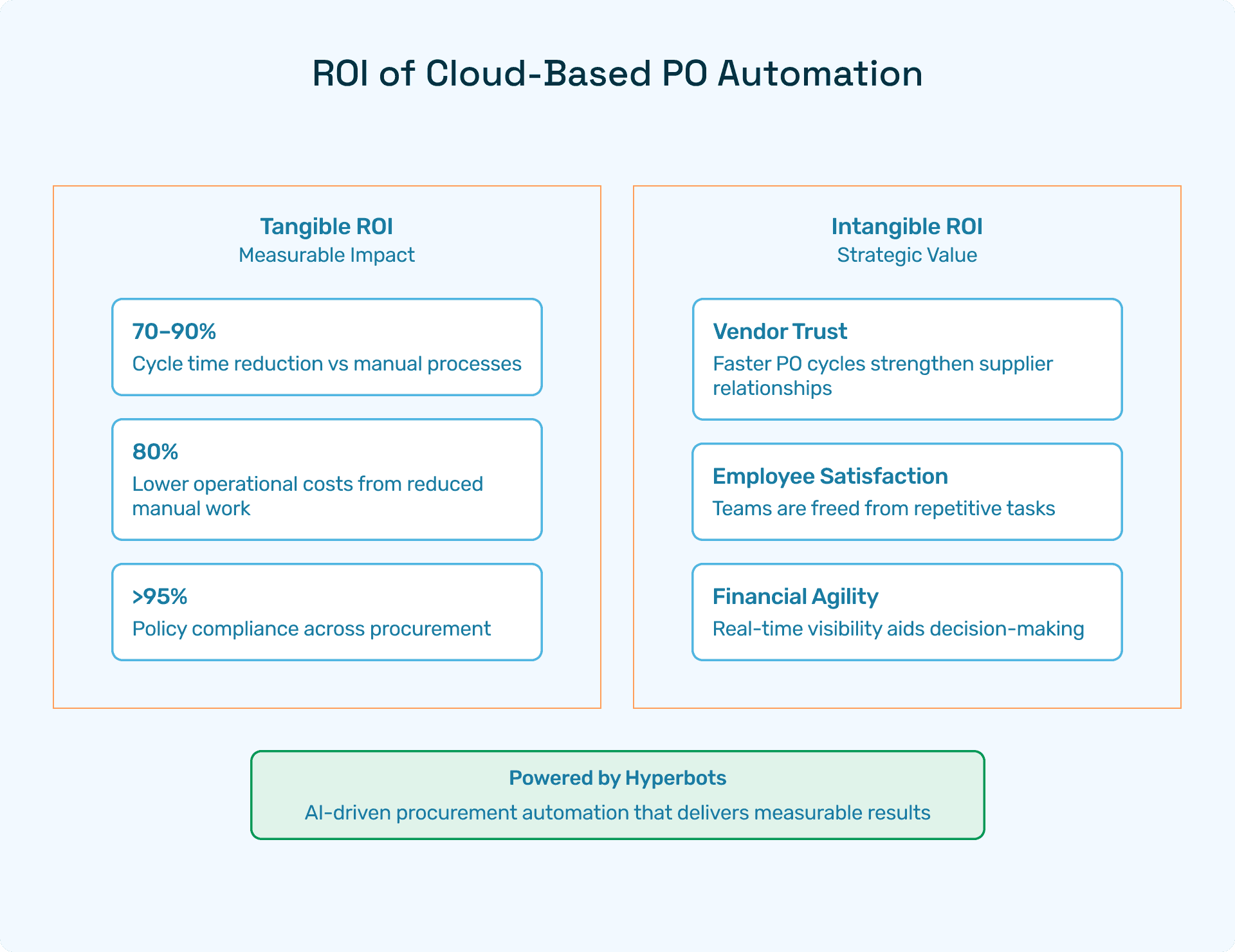
When finance leaders evaluate purchase order automation, the first question is simple: what’s the ROI? With Hyperbots, the answer is both measurable and transformative. The platform delivers savings you can quantify in hard dollars, along with intangible benefits that reshape how procurement and finance teams work.
Implementing Hyperbots' Procurement copilot deliver significant ROI and transforms procurement operations by providing:
Over 80% reduction in PO creation & dispatch time
5 minute PR creation time
At least a 10% reduction in cash outflows
Accurate and timely automatic communication with vendors
100% automation of forms and other information verification
Granular and customized workflow for each process
Improved vendor relationships due to predictable approval timelines.
Hyperbots’ integrated platform ensures that these benefits scale across departments, projects, and business units, turning procurement into a high-value function rather than a bottleneck.
Hyperbots Platform Capabilities
Hyperbots provides procurement intelligence. Unique platform features include:
Procurement Co‑Pilot: Automates requisition‑to‑PO with ERP integration, cutting PO dispatch time by 80%.
Predictive Spend Analytics: Forecasts purchasing needs and optimizes budgets.
Contract Intelligence: Scans contracts for compliance, renewal deadlines, and pricing risks.
Dynamic Approval Policies: Adapts workflows based on spend category, risk, or budget.
Vendor Performance Dashboards: Tracks KPIs like delivery times, pricing accuracy, and compliance.
FAQs
1. What is an automated purchase order system?
It is software that automates requisition, approval, and PO generation, reducing errors and delays.
2. How does a purchase order system work?
It digitizes requisitions, automates approvals, generates POs, and syncs with ERP platforms.
3. What are the benefits of a purchase order system?
Efficiency, cost savings, compliance, and visibility.
4. Why use a purchase order system instead of spreadsheets?
It eliminates errors, enforces compliance, and provides real-time visibility.
5. How does Hyperbots differ from competitors? Hyperbots offers AI-driven automation, ERP-native integration, and full procure-to-pay coverage.