Importance of ERP – A Complete Guide to Benefits, Use Cases & AI-Enhanced Productivity
Transform business operations with ERP importance, AI integration, automated workflows for manufacturing, supply chain, finance management.
Executive Summary
Enterprise Resource Planning (ERP) systems are the backbone of modern organizations, consolidating financials, procurement, inventory, HR, and more. This comprehensive blog explores the benefits of ERP, the importance of ERP for organizations of all sizes, and how Hyperbots' AI Co-pilots enhance ERP systems with automation, accuracy, and intelligence. Whether you're in manufacturing, services, or retail, this blog shows why ERP is important, what it can do, and how it becomes transformational when integrated with AI.
What Is ERP?
ERP (Enterprise Resource Planning) is an integrated suite of software applications that enables organizations to manage key business functions such as finance, procurement, HR, inventory, and supply chain within a centralized system.
Some commonly used ERPs include:
Oracle ERP Cloud
NetSuite
Microsoft Dynamics 365
SAP S/4HANA
QuickBooks Enterprise
ERP connects every department, enabling better decisions, improved process efficiency, and unified data management.
Why ERP Is Important in Modern Enterprises
The importance of ERP lies in its ability to:
Eliminate data silos
Standardize business processes
Improve regulatory compliance
Provide real-time insights
Enable scalable operations
In an era of digital transformation, ERP helps companies stay competitive, compliant, and agile.
Benefits of ERP Systems
Here are some key benefits of ERP:
Centralized data and real-time reporting
Automated workflows for finance, procurement, and HR
Improved productivity and reduced errors
Faster closing of financial books
Greater visibility and internal controls
Scalable infrastructure for business growth
ERP offers significant advantages of Enterprise Resource Planning (ERP), especially when aligned with AI.
ERP in Supply Chain Management
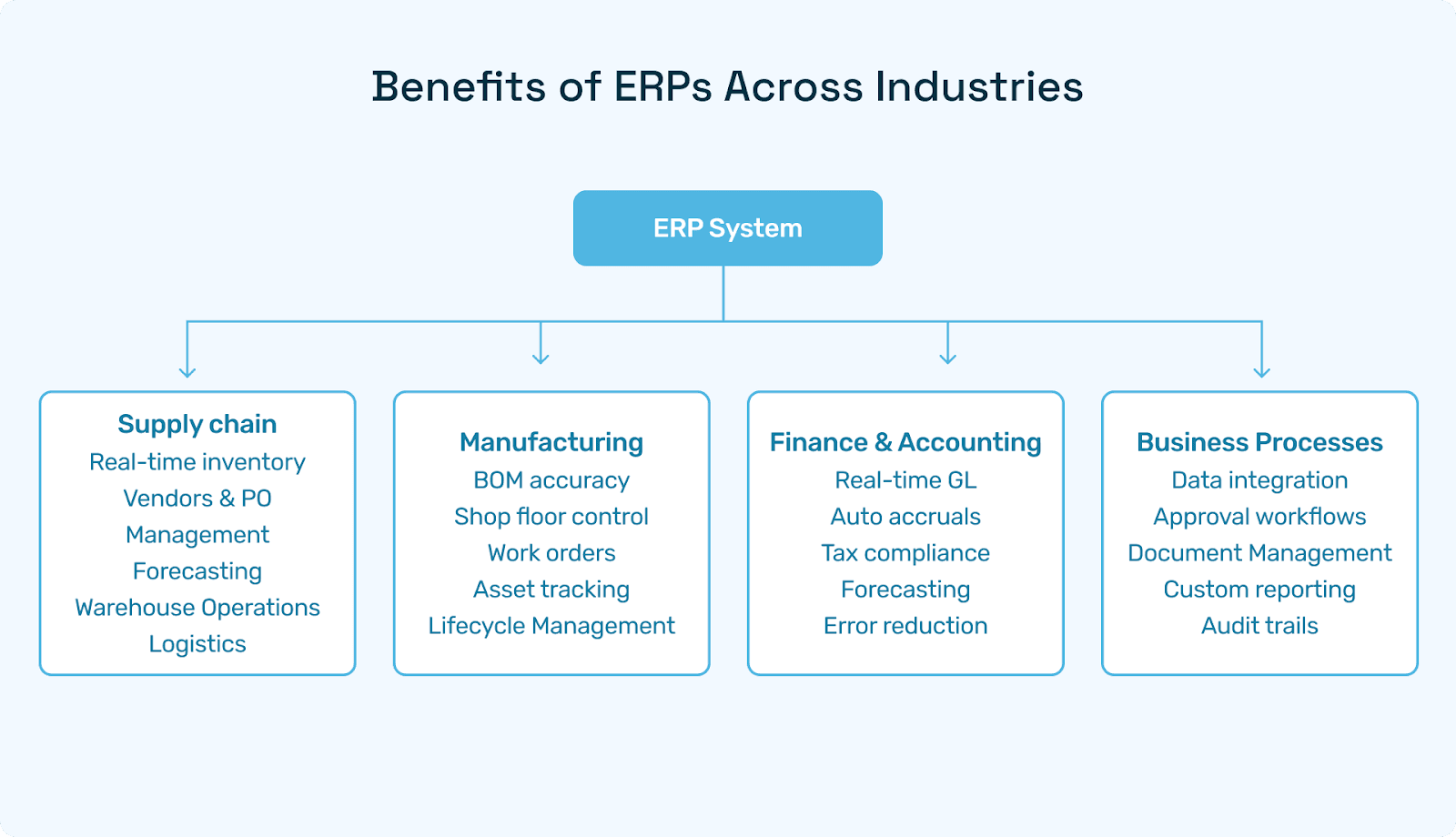
The benefits of ERP in supply chain management include:
Real-time inventory tracking
Vendor and Purchase Order (PO) management
Forecasting and demand planning
Efficient warehouse operations
Optimized logistics and transportation
ERP plays a critical role in making supply chains faster, leaner, and more predictable.
ERP for Manufacturing Businesses
In manufacturing, the benefits of ERP for manufacturing businesses include:
Bill of materials (BOM) accuracy
Shop floor control
Work order automation
Equipment and asset tracking
Product lifecycle management
Compliance with industry standards
Manufacturers experience fewer delays and better cost control with ERP.
ERP for Finance and Accounting
ERP systems are foundational to finance teams. The benefits of ERP finance software include:
Real-time general ledger updates
Automated accruals and adjustments
Tax compliance
Financial forecasting
Reduced errors in financial reporting
Hyperbots Co-pilots supercharge these functions, as we’ll explore later.
Benefits of ERP in Real-World Business Processes
Key features of Enterprise Resource Planning (ERP) that streamline business workflows include:
Integration of data across sales, finance, and operations
Built-in approval workflows and audit trails
Document management
Custom reporting for decision-making
What Are the Primary Business Benefits of an ERP System?
Efficiency: Reduces redundant work
Transparency: Offers end-to-end process visibility
Agility: Enables rapid response to market changes
Scalability: Grows with the business
Compliance: Ensures financial and regulatory adherence
Benefits of ERP Software vs. Traditional Systems
ERP systems are superior to spreadsheets or legacy software due to:
Role-based access control
Centralized dashboards
Automated reconciliations
Better scalability
AI-readiness for Hyperbots-style integration
These benefits of Enterprise Resource Planning software drive faster ROI.
Benefits of ERP for Small and Mid-Market Companies
Mid-sized firms benefit from:
Cloud-hosted, cost-effective ERP options
Configurable workflows
Automated finance and operations processes
Improved vendor and customer communication
Even small businesses now leverage ERP through modular, cloud-based systems like NetSuite and Microsoft Business Central.
How Hyperbots AI Co-Pilots Amplify ERP Benefits
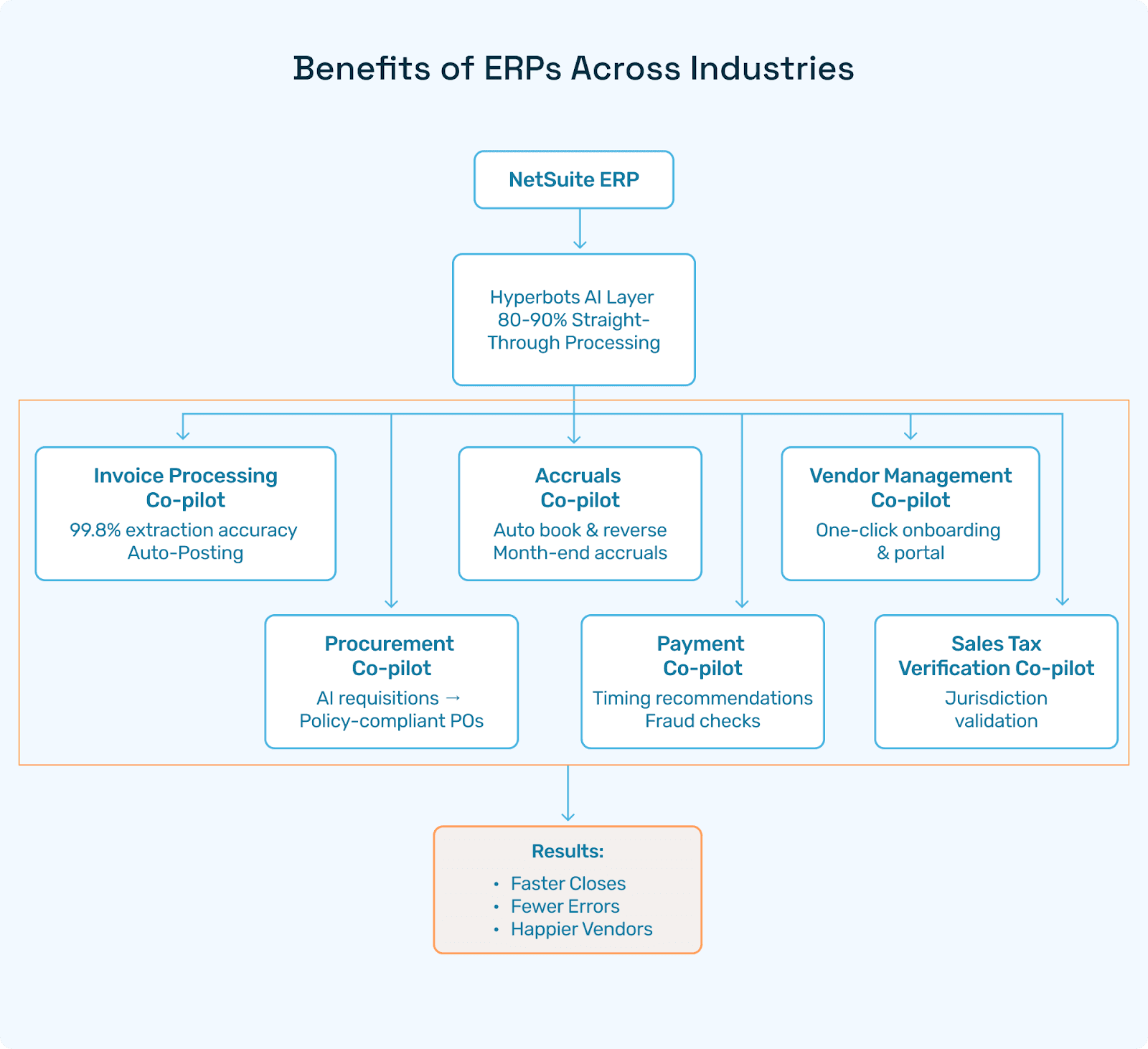
Hyperbots offers six domain-specific Co-pilots that deliver ERP financial management system automation:
Invoice Processing Co-pilot
Automates invoice ingestion, extraction, GL coding, approval routing, and posting.Procurement Co-pilot
Instantly converts requisitions into POs with approval and vendor matching.Accruals Co-pilot
Identifies, calculates, and books monthly accruals and reversals with no manual effort.Payments Co-pilot
Suggests optimal payment timing, handles approvals, and initiates payments securely.Sales Tax Verification Co-pilot
Validates tax data and ensures compliance with state and federal rules.Vendor Management Co-pilot
Simplifies onboarding and gives vendors access to real-time PO/invoice/payment updates.
Each Co-pilot sits atop any ERP, such as NetSuite, Oracle, Dynamics, QuickBooks, and delivers 80–90% automation levels.
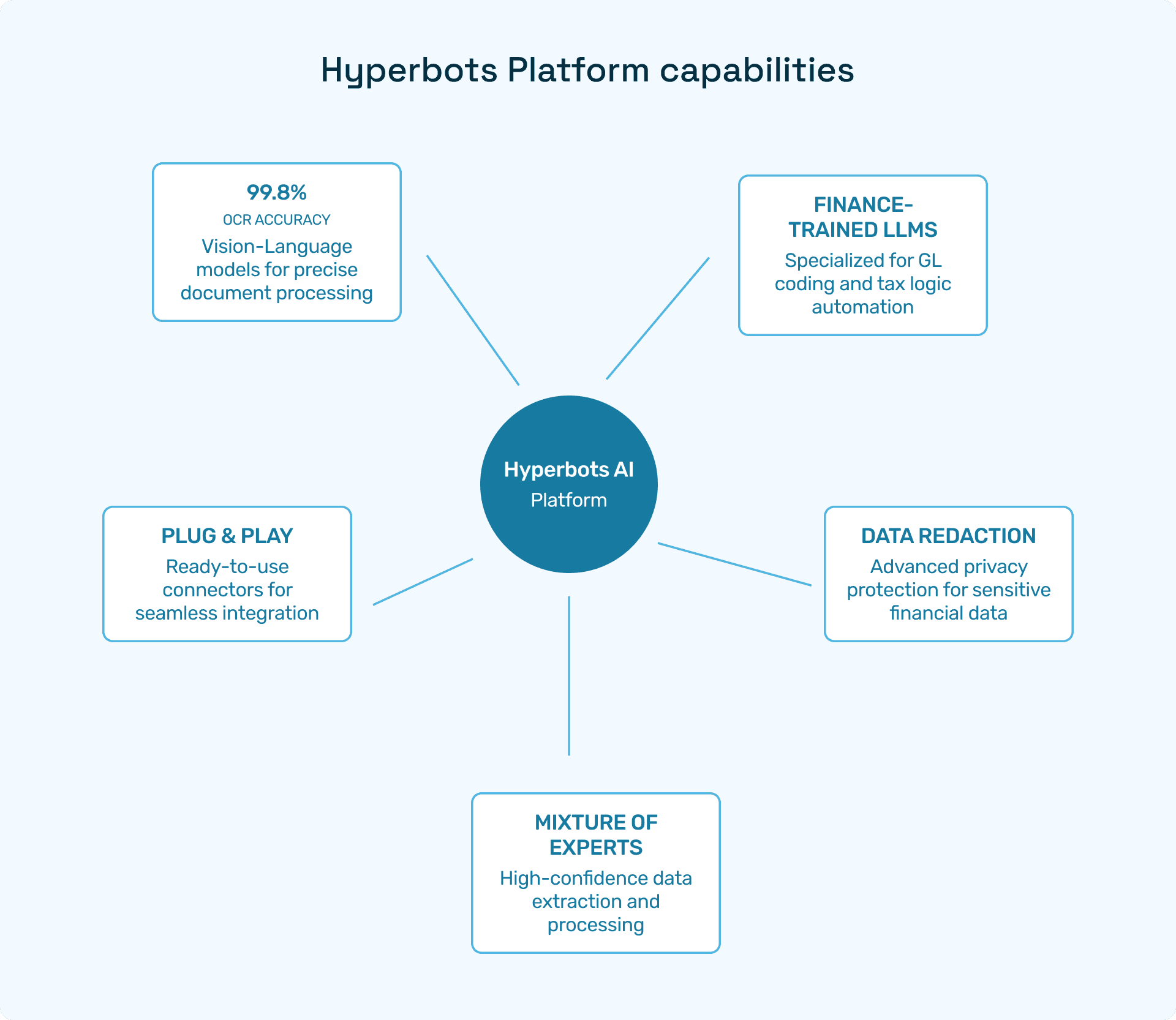
Hyperbots Platform Capabilities
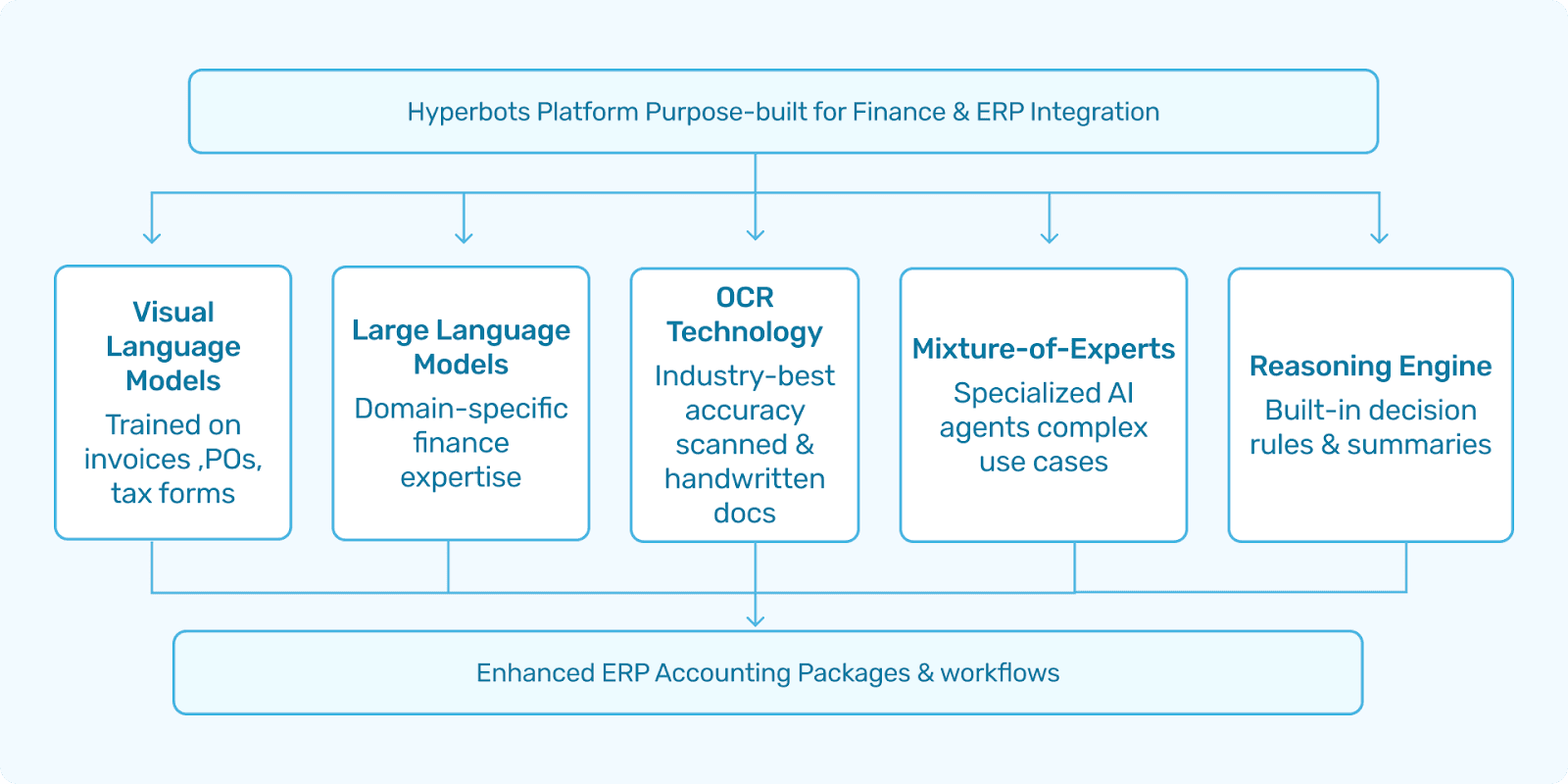
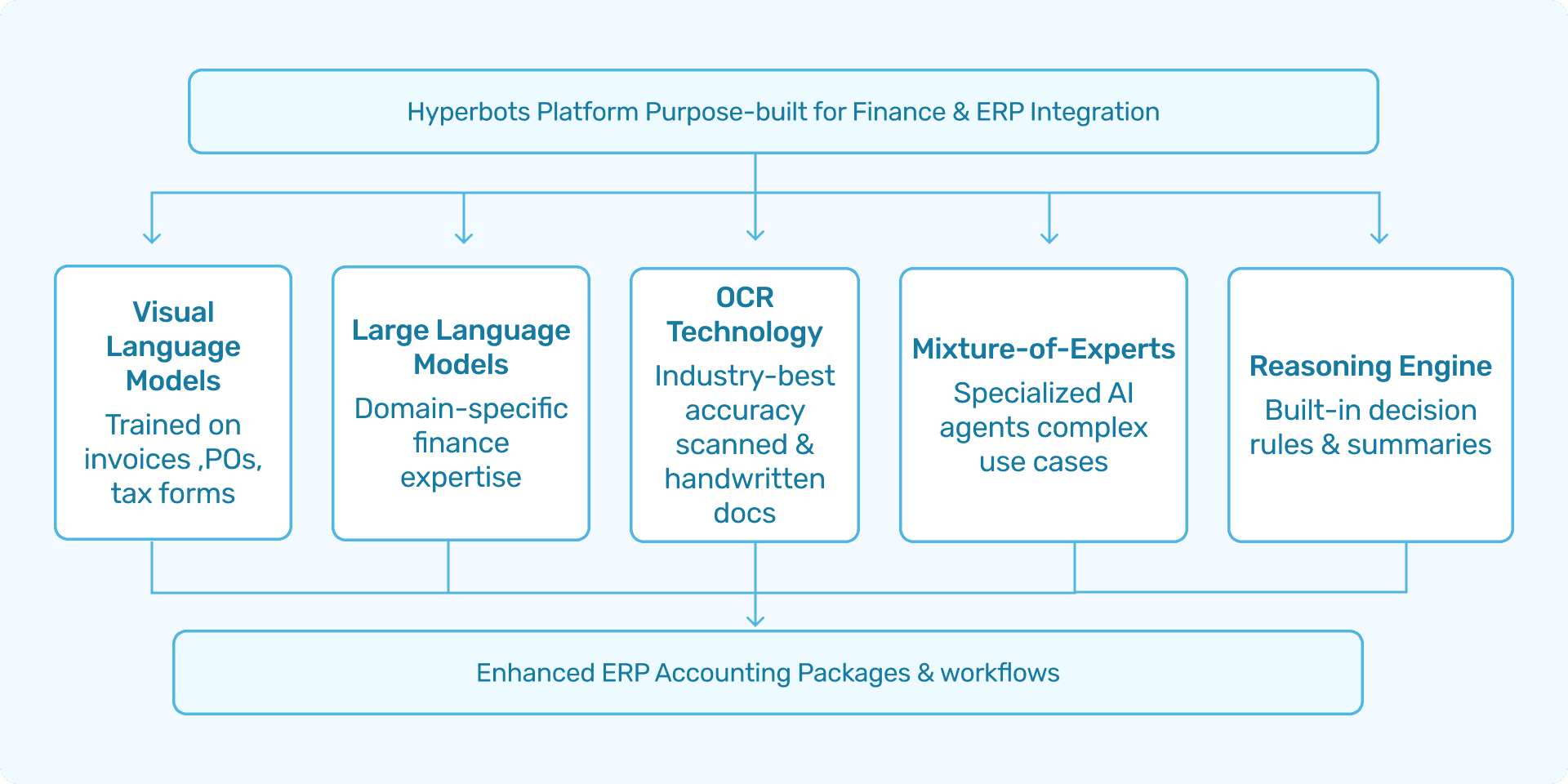
Hyperbots’ platform is purpose-built for finance and ERP integration:
VLMs: Visual Language Models trained on documents like invoices, POs, tax forms
LLMs: Domain-specific large language models
OCR: Industry-best accuracy for scanned/handwritten docs
Mixture-of-Experts: Specialized AI agents handle complex use cases
Reasoning Engine: Built-in decision rules and summaries
This combination makes Hyperbots ideal for enhancing ERP accounting packages and workflows.
Real-World Examples of Hyperbots + ERP
Retail Brand using NetSuite: Achieved 85% STP on invoice processing
Pharma Services Firm on Oracle: Closed books 4 days faster with automated accruals
Logistics Company: Used tax and vendor Co-pilots to save $200K annually
FAQs
1. Why ERP Is Important for Modern Businesses?
A: ERP delivers real-time data, streamlined operations, and better decision-making across departments.
2. What Are the Benefits of Using ERP?
A: Automation, accuracy, cost savings, and compliance are key benefits of using ERP systems.
3. What Are the Benefits of ERP in Supply Chain Management?
A: ERP enhances vendor tracking, demand planning, inventory, and logistics visibility.
4. How Do Hyperbots AI Co-Pilots Work With ERP?
A: They sit on top of any ERP and automate workflows using finance-trained AI agents.
Final Thoughts
The importance of ERP goes beyond automation. It's about empowering teams, driving strategy, and creating sustainable business operations. When integrated with Hyperbots AI Co-pilots, ERP becomes a decision-making engine with minimal manual overhead. Whether you're looking at the benefits of ERP for manufacturing, supply chain, or finance, adding AI makes all the difference.
Ready to transform your ERP experience?
Explore Hyperbots Co-pilots and unlock the future of finance and operations.