Oracle, Yardi, Google: Evaluating Built-In vs Add-On PO Systems
Compare Oracle, Yardi, and Google purchase order systems, and see how AI-powered automation cuts costs by 80% and accelerates procurement.
Executive Summary
Modern finance and procurement teams face a critical decision: should they rely on the built-in Oracle purchase order system, Yardi’s PO workflows, or emerging Google purchase order system add-ons, or should they enhance these with automation platforms? While built-in ERP systems like Oracle and Yardi provide robust functionality, they often fall short in agility, ease of use, and AI-driven automation.
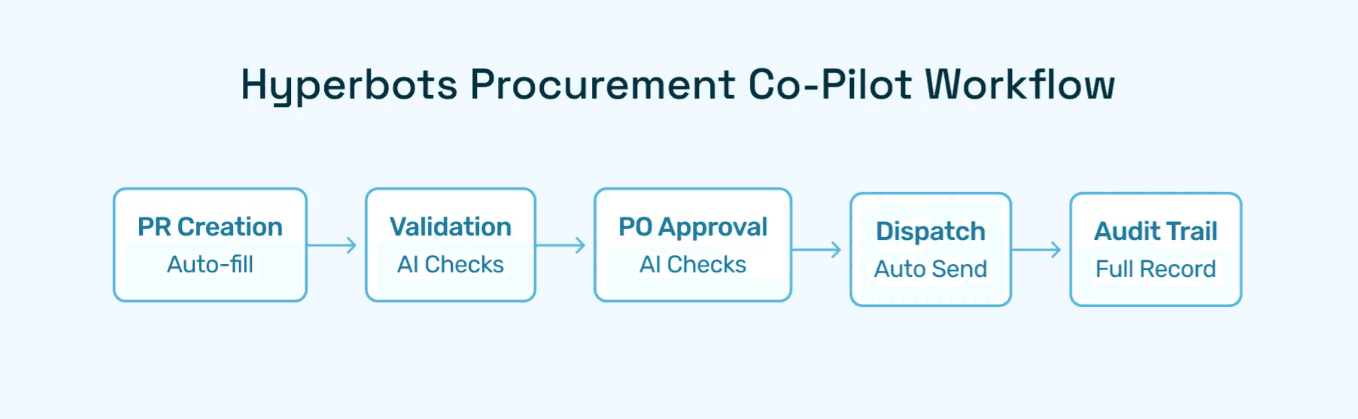
This blog compares Oracle, Yardi, and Google PO systems across workflows, integration, compliance, and automation potential. It also highlights how Hyperbots AI Co-pilots — including the Procurement Co-pilot, Invoice Processing Co-pilot, and Vendor Management Co-pilot - are redefining purchase order automation with up to 80% cost reduction, faster cycles, and fewer processing errors.
Key takeaways include:
Core features of Oracle, Yardi, and Google purchase order systems
Limitations of built-in procurement modules
Advantages of add-on AI-powered automation platforms like Hyperbots
ROI and transformational benefits of moving to procure-to-pay automation
Understanding Built-In Purchase Order Systems
Oracle Purchase Order System
The Oracle purchase order system is part of the Oracle Fusion Cloud Procurement suite. It is built to serve large enterprises with high transaction volumes.
Core Features:
Comprehensive requisition-to-payment workflows
Integration with Oracle Financials and Supply Chain
Multi-entity, multi-currency support
Advanced compliance controls and audit trails
Role-based access permissions
Strengths:
End-to-end visibility within Oracle ecosystem
Enterprise scalability for global operations
Tight integration with Oracle ERP Cloud
Limitations:
Complex UI requiring significant training
High implementation and licensing costs
Limited flexibility for SMB or mid-market users
Slow cycle times without automation add-ons
Yardi Purchase Order System
The Yardi purchase order system is widely used in the real estate and property management sector. Yardi Voyager offers built-in procurement features tailored to property management workflows.
Core Features:
Purchase order creation tied to property and unit code
Integration with Yardi’s accounts payable and general ledger
Vendor database management
Mobile PO approvals for property managers
Strengths:
Industry-specific design for real estate and property portfolios
Easy tracking of POs per property, unit, or project
Centralized vendor relationships
Limitations:
Designed primarily for property managers, not general enterprise procurement
Limited cross-industry flexibility
Manual workflows prone to delays
Lack of predictive analytics and advanced automation
Google Purchase Order System
Unlike Oracle or Yardi, Google does not provide a native Google purchase order system. Instead, businesses often rely on Google Workspace integrations or third-party procurement apps built on Google Cloud.
Core Features (via integrations):
Purchase order forms created via Google Sheets/Forms
Workflow approvals through Google Workspace (Docs, Gmail, Drive)
Cloud-based collaboration across teams
API integrations with ERP or procurement platforms
Strengths:
Lightweight, cloud-first, highly collaborative
Easy adoption for SMBs
Affordable and flexible
Limitations:
Not a true enterprise-grade PO system
Relies heavily on third-party apps for core functionality
Limited compliance and audit capabilities
Not scalable for complex procurement needs
Built-In vs Add-On PO Systems: Key Considerations
When Built-In Systems Work Best
Large enterprises already running Oracle ERP and wanting native integration
Real estate firms standardized on Yardi Voyager
Small teams using Google Workspace with lightweight needs
Where Add-On Systems Excel
Businesses seeking faster cycle times and reduced manual effort
CFOs needing real-time spend visibility across multiple ERPs
Companies requiring AI-driven compliance and error prevention
Organizations scaling procurement across multiple regions/entities
Platform Differentiation: Why Hyperbots Stands Out
Unlike rule-based ERP add-ons, Hyperbots AI Co-pilots use machine learning to continuously improve.
Differentiators:
Universal ERP Integration: Works with Oracle, Yardi, Google Cloud, SAP, NetSuite, QuickBooks, Xero, and more
Agentic AI Workflows: Goes beyond OCR/RPA with autonomous task execution
Audit-Ready Automation: Every action logged for compliance teams
Scalability: Supports SMB to enterprise deployments
External reference: Gartner – Procure-to-Pay Market Guide
ROI and Tangible Benefits
Cost Reductions:
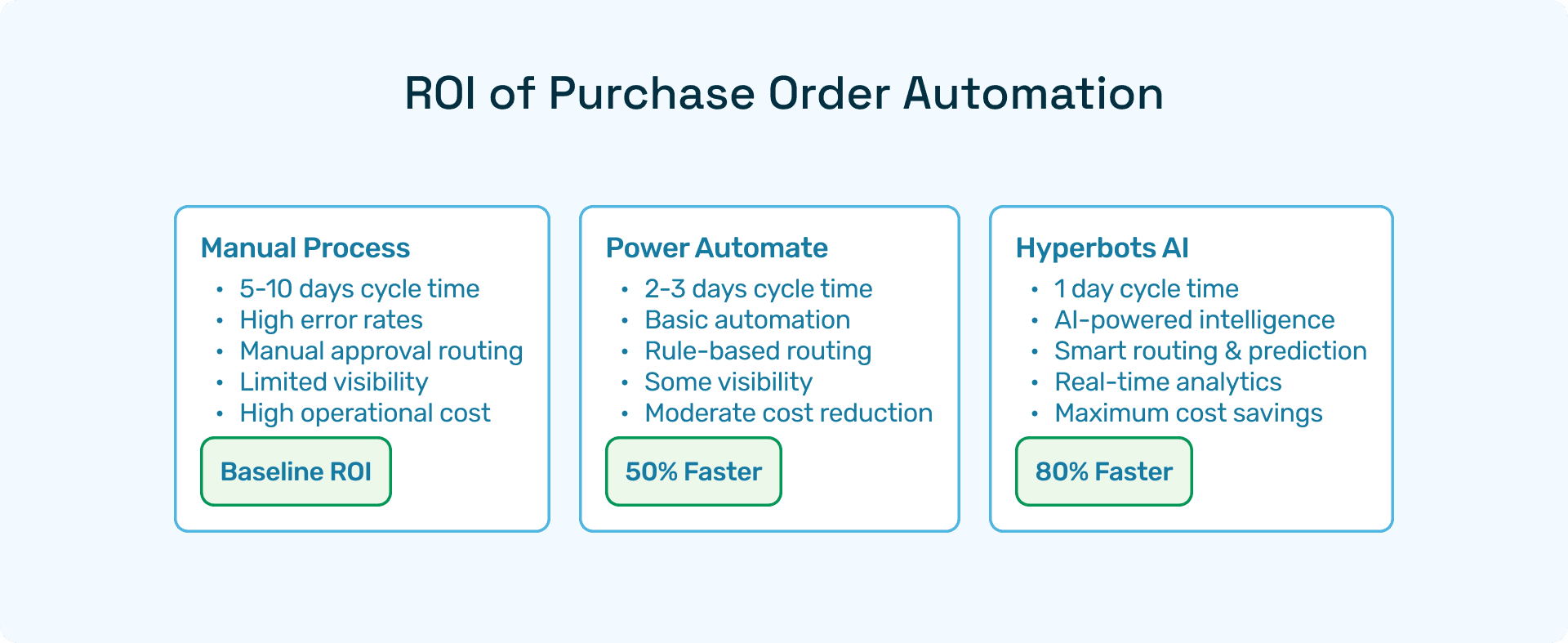
Up to 80% lower operational costs with AI-driven automation
Faster cycle times vs built-in PO systems
Reduction in processing errors
Strategic Benefits:
Improved vendor relationships through real-time communication
CFOs gain proactive, predictive insights into spend
Enables scalability without proportional headcount increase
Case studies show companies using Hyperbots alongside Oracle/Yardi reduced month-end procurement workloads, freeing finance teams for strategic projects.
Implementation Best Practices
For Oracle Users:
Map current Oracle PO workflows
Identify automation gaps
Deploy Hyperbots Co-pilots in parallel with Oracle Procurement
For Yardi Users:
Align property-level procurement with centralized policies
Use Vendor Co-pilot for onboarding landlords and contractors
Automate recurring invoices and approvals
For Google Users:
Integrate Google Workspace with Hyperbots API
Replace manual Google Forms/Sheets workflows with AI automation
Sync approvals with ERP and accounting systems
Future Outlook: Built-In vs Add-On Ecosystem
AI-native systems will overtake rule-based ERP modules by 2030 (Deloitte research).
Enterprises will increasingly prefer API-first add-ons like Hyperbots over upgrading expensive ERP modules.
Compliance and ESG reporting will drive demand for audit-ready AI PO systems.
Transform Your Procurement Operations
Whether you run the Oracle purchase order system, Yardi Voyager’s PO workflows, or lightweight Google integrations, traditional systems leave gaps in efficiency and compliance.
Hyperbots closes these gaps with end-to-end automation, shrinking cycle times, cutting costs, and giving CFOs real-time spend visibility.
👉 Explore Hyperbots Procurement Co-pilot or schedule a demo to see how AI can redefine your purchase order workflows.
FAQs
Q1: What is the Oracle purchase order system used for?
A: The Oracle purchase order system is used to manage requisitions, approvals, vendor communication, and payments within Oracle ERP.
Q2: Does Yardi have a purchase order system?
A: Yes, the Yardi purchase order system is built into Yardi Voyager and tailored for property management procurement.
Q3: Is there a Google purchase order system?
A: Google does not provide a native PO system but integrates with third-party procurement tools via Google Workspace.
Q4: How does Hyperbots integrate with Oracle, Yardi, and Google?
A: Hyperbots connects via APIs, syncing approvals, invoices, and vendor data with Oracle, Yardi, and Google-based workflows.
Q5: What ROI can I expect from Hyperbots AI Co-pilots?
A: Hyperbots clients see 80% operational cost reductions, faster cycles, and fewer errors.