Purchase Order System vs Purchase Order Management System
Elevate procurement with Hyperbots’ AI-powered management system, ensuring compliance, efficiency, and actionable insights for finance leaders.
Executive Summary
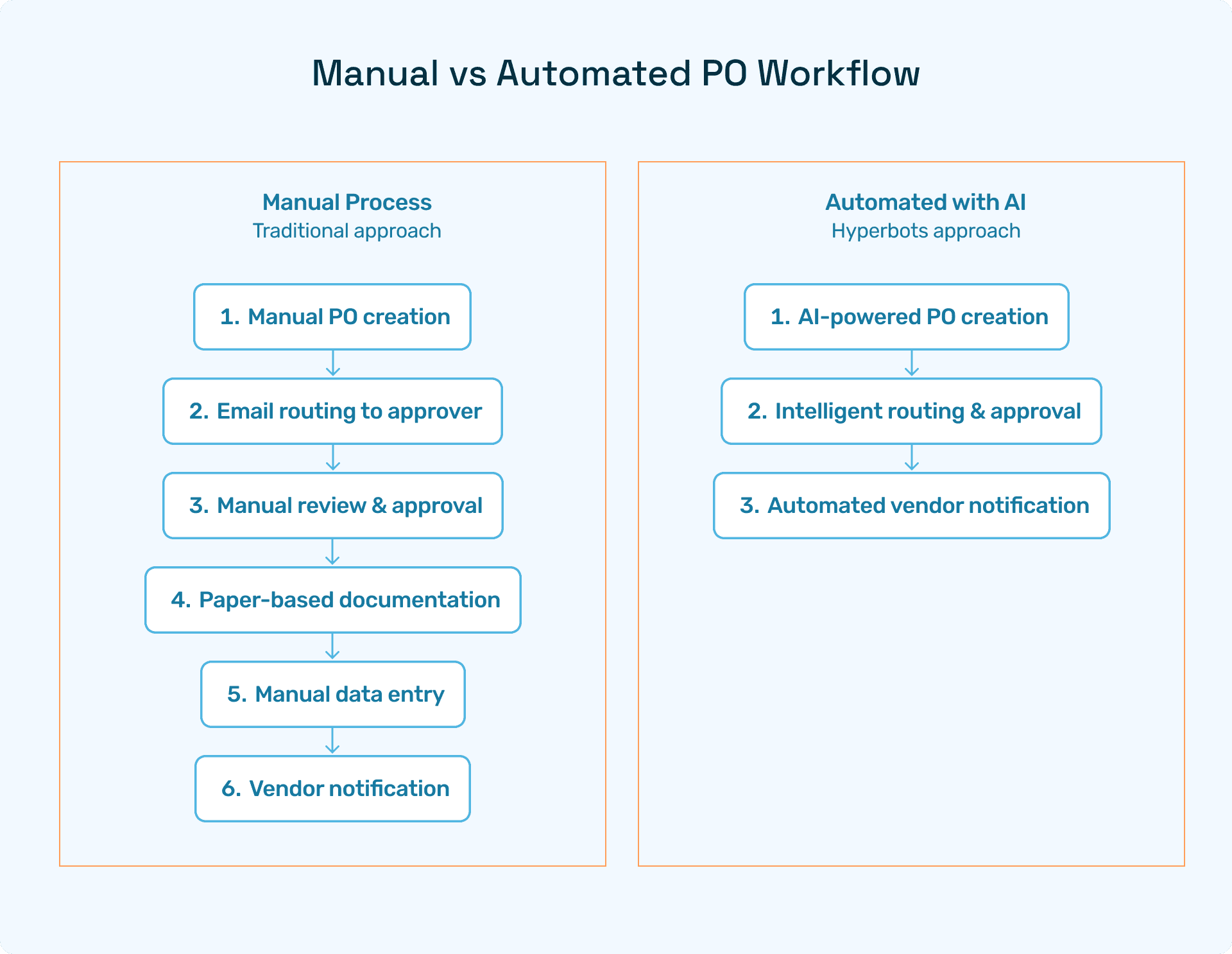
Finance and procurement leaders are under increasing pressure to reduce costs, enhance compliance, and expedite purchasing workflows. In this context, many organizations are evaluating the difference between a purchase order system and a purchase order management system. While both aim to streamline procurement, the difference lies in scope and capability. A purchase order system focuses on digitizing basic purchase order creation and approval. In contrast, a purchase order management system extends to the entire lifecycle, from requisition to dispatch, vendor master validation, budget governance, ERP integration, and compliance.
At the forefront of this transformation is Hyperbots, offering the most advanced suite of AI-powered Co-pilots for procurement. Its flagship Procurement Co-pilot and supporting agents for Invoice Processing, Accruals, Payments, Sales Tax Verification, and Vendor Management reduce operational costs by up to 80% and deliver unmatched accuracy in purchase order automation.
What Is a Purchase Order System?
A Purchase Order system is a software tool that digitizes the process of creating, submitting, and tracking purchase orders. Instead of relying on manual paperwork or emails, finance teams use such systems to:
Create standardized purchase order forms
Route POs for approval
Track PO numbers and vendor details
Store documents in a centralized repository
Limitations of a purchase order system:
Often siloed, lacking integration with ERP systems
Limited budget control features
Weak or no vendor master governance
Minimal auditability and compliance trails
What Is a Purchase Order Management System?
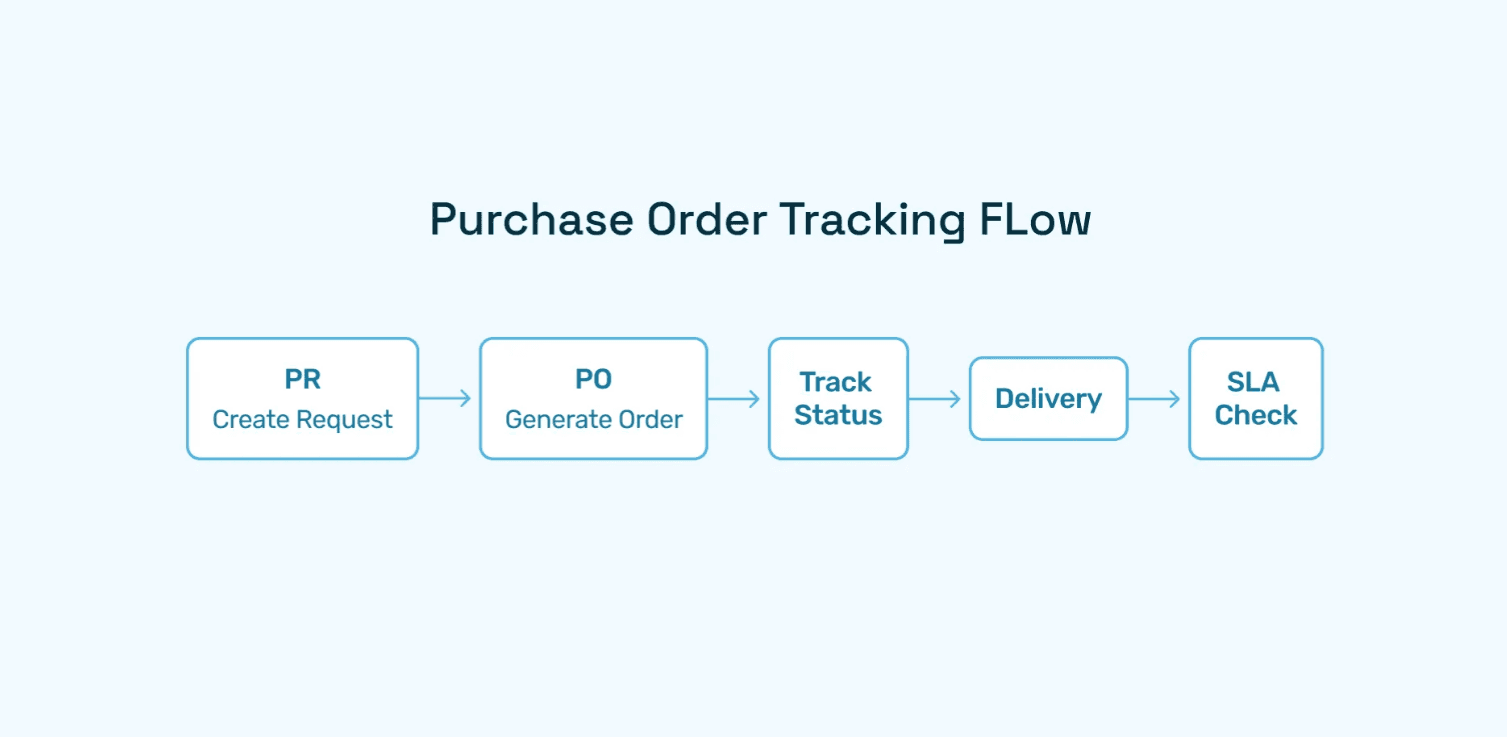
A purchase order management system extends beyond basic PO creation. It covers the entire purchase order lifecycle, from purchase requisition (PR) initiation to PO dispatch, matching with invoices, reconciliation, and audit readiness.
Key capabilities include:
Budget checks and GL coding recommendations
Vendor master data integration for accuracy
Hierarchy-based approval workflows
This is where Hyperbots’ Procurement Co-pilot stands out, providing not just automation, but AI-driven intelligence to detect anomalies, prevent duplicate requisitions, and enforce compliance.
Purchase Order System vs Purchase Order Management System: The Core Differences
Feature | Purchase Order System | Purchase Order Management System |
Scope | Focused on PO creation | Covers PR to PO lifecycle |
Budget Controls | Basic (if any) | Automated GL-based controls |
Vendor Governance | Manual entry | Vendor master integration |
ERP Integration | Rare | Deep integrations (SAP, Oracle, Dynamics, QuickBooks, Sage) |
Compliance & Audit | Limited | Full audit-ready trails |
Intelligence | Rule-based | AI-powered validation, anomaly detection |
How Hyperbots Redefines Purchase Order Management
Core Procurement Co-pilot Capabilities
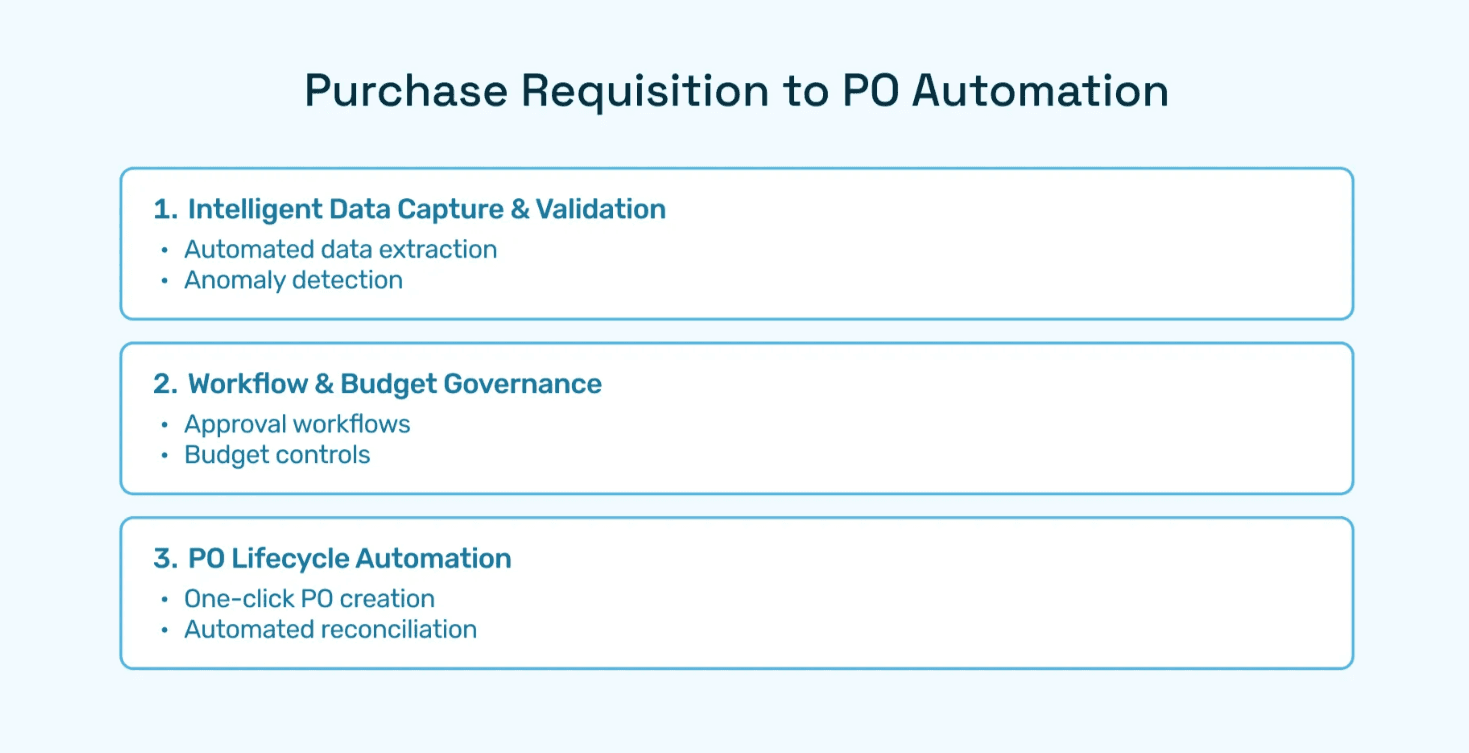
Automated field extraction & PR autofill from PDFs, contracts, and emails
Validation, duplication & anomaly detection to eliminate errors
Budget controls & GL coding recommendations powered by AI
Configurable workflows & forms across departments
Automated PO creation & dispatch with vendor master validation
PO closing & reconciliation with invoices for auditability
Supporting AI Co-pilots
Hyperbots goes beyond traditional systems by integrating procurement with:
Invoice Processing Co-pilot – Automated invoice matching
Accruals Co-pilot – Precise financial accruals
Payments Co-pilot – Automated disbursements & vendor communication
Sales Tax Verification Co-pilot – Compliance with tax nexus rules
Vendor Management Co-pilot – Centralized supplier governance
ERP Integrations for Scalability
Unlike standalone purchase order systems, a purchase order management system must integrate seamlessly with ERP platforms.
Hyperbots delivers plug-and-play ERP integrations with:
These integrations ensure:
Real-time sync of requisitions and POs
Single source of truth across finance systems
Reduced duplicate data entry
Accurate vendor and GL master consistency
ROI from Hyperbots Purchase Order Automation
Tangible ROI Improvements:
80% reduction in operational costs by eliminating manual entry and follow-ups
99.8% accuracy in PO creation with AI validation
Faster requisition approvals with automated routing
Improved vendor compliance with centralized vendor master checks
Audit readiness with explainable AI trails
Intangible Benefits:
CFO visibility into committed vs available budgets
Employee productivity gains through automation
Stronger vendor relationships with timely, accurate POs
Industry Validation
According to Gartner, enterprises digitizing procurement cut processing costs by up to 30%.
A Deloitte report shows AI-enabled procurement can halve cycle times.
Hyperbots aligns with these insights but takes them further, enabling agentic automation with explainable AI, a capability unmatched by other procure-to-pay vendors.
Hyperbots vs Competitors
Most purchase ordering systems digitize workflows. Hyperbots goes further with:
Multi-model AI extraction from millions of financial documents
Fraud detection & anomaly identification
Budget & GL coding intelligence
Configurable workflows tailored to business units
Full procure-to-pay coverage via Co-pilots
This positions Hyperbots not as another procurement tool, but as the leading AI platform for Finance & Accounting automation.
Driving the Future of Purchase Order Automation
CFOs and procurement leaders can no longer afford siloed purchase order systems. The shift is clear: only a full purchase order management system powered by AI can deliver compliance, efficiency, and strategic insights.
Hyperbots’ Procurement Co-pilot, supported by its suite of AI agents, provides the most comprehensive automation stack in the market today.
Next Steps for Finance Leaders
If your organization is considering moving from a basic purchase order system to a true purchase order management system, now is the time to act.
Explore the Hyperbots Platform or schedule a tailored demo to see how our Co-pilots can transform your procurement workflows end-to-end.
FAQs
1. What’s the difference between a purchase order system and a purchase order management system?
A: A purchase order system digitizes PO creation. A purchase order management system manages the full lifecycle from requisition to auditability.
2. Why is ERP integration important in purchase order management systems?
A: It ensures real-time sync, eliminates duplicate entries, and maintains consistent vendor and GL master data.
3. Does Hyperbots provide budget governance with its purchase order automation?
A: Yes, the Procurement Co-pilot applies automated budget checks and GL coding recommendations.
4. How does Hyperbots improve vendor management?
A: Through its Vendor Management Co-pilot, it validates supplier data, prevents duplicates, and ensures compliance.
5. How does Hyperbots’ ROI compare to other providers?
A: Hyperbots delivers up to 80% cost reduction and near-perfect accuracy — significantly higher than typical automation benchmarks.