Coupa for Healthcare vs Hyperbots: Compliance-Heavy Vendor Onboarding & Invoice Automation Compared
In healthcare finance, procurement control isn’t enough. This comparison shows why invoice accuracy, compliance-ready GL posting, and fewer exceptions matter more than broad spend platforms.
An apple a day clearly doesn’t keep the doctor away. Otherwise month-end in a hospital finance team wouldn’t be urgent, messy, and occasionally heroic. Add healthcare’s extra compliance paperwork, GPO contracts, device traceability, lot numbers, tax/exemption forms and the typical AP workflow becomes less “automation” and more “process gymnastics.”
So who’s going to stick the landing? Coupa for healthcare (the widely adopted source-to-pay platform) or Hyperbots AI-driven approach that focuses on vendor onboarding, compliance documentation, and invoice accuracy. The aim: show why, in compliance-heavy healthcare settings, accuracy and direct GL posting often produce far higher ROI than a broad spend platform that still relies on downstream integrations.
Why “Coupa for healthcare” is attractive and why healthcare teams buy it
Coupa sells a complete source-to-pay stack: procurement, supplier portal, invoicing, and AP automation, all wrapped in a confident “total spend control” bow. And for healthcare, that promise is genuinely compelling:
Centralized catalogs, negotiated contract compliance, and real-time spend visibility can dramatically reduce maverick buying because no one wants to explain why a surgeon special-ordered $2,000 scissors from “Gary’s Medical Bazaar.”
Preferred-vendor usage and cost control are essential in hospitals where margins are thinner than a disposable glove and supply chain shocks can feel like actual cardiac events.
Coupa also markets healthcare-specific solutions and touts a large ecosystem of connected medical suppliers (the Coupa supplier portal is widely used across the industry), so onboarding and keeping vendors in line doesn’t require heroic IT interventions every time.
Key wins hospitals expect from Coupa:
Centralized purchase orders & approvals (finally, fewer mystery purchases showing up in storage rooms).
Supplier portal to standardize invoicing & communications (critical when dealing with vendors who email PDFs like they’re handwritten scrolls).
AI-assisted invoicing and fraud detection (because “trust but verify” is practically a compliance motto).
So yes, Coupa for healthcare solves procurement governance at real scale, which is exactly why many health systems adopt it… and why procurement teams sometimes high-five when someone mentions contract compliance.
The Hidden Snag in Healthcare: Compliance Paperwork & Where Coupa Gets… Noisy
If only healthcare vendor onboarding was as simple as collecting a W-9 and a bank account number. Instead, think of a lengthy scavenger hunt featuring:
GPO and contract IDs that determine pricing and rebates (because nothing says “fun” like rebate math).
Tax-exempt forms, state/county registrations, payer documentation, every regulator wants a piece.
Device and lot/serial traceability for implants and sterile supplies (the FDA likes to know where the titanium knee went).
Multiple ship-to addresses because hospitals apparently enjoy having more locations than a Starbucks franchise.
Coupa’s supplier portal and procurement controls do centralize many of these elements. The catch? The extra compliance “paper”, the proof behind the pricing, the traceability, the tax rules often gets processed outside Coupa before the GL sees anything that resembles a clean audit-ready journal entry.
Coupa’s own integration playbooks reinforce this pattern:
➡ Coupa is the source system → export to middleware → ERP creates the actual journal entries.
And that is where healthcare’s complexity sneaks in.
Practical Implications for Hospitals
Complex invoices (serial numbers, bundles, mixed taxes) commonly trigger exceptions.
If those hiccups get resolved after batch integrations run, month-end accruals will be off.
Cue compliance, reconciliation, and at least one “Why is this number wrong?” meeting.Clinical compliance fields don’t always map cleanly to ERP structures.
Transformation rules must be added… and updated… and updated again.
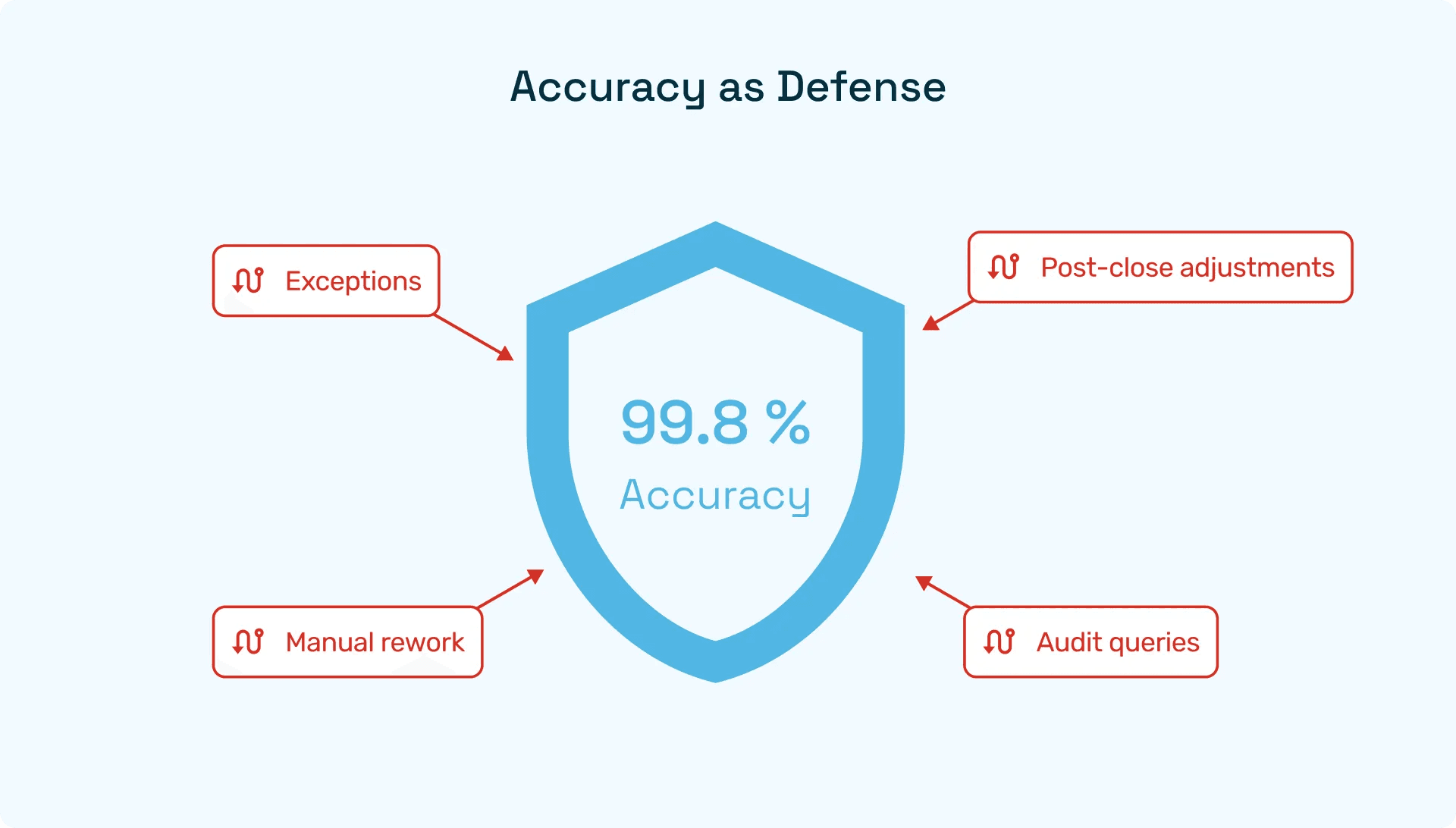
So yes, Coupa can reduce maverick procurement, but it also outsources a chunk of GL accuracy to integrations and ops teams. And in healthcare, that matters because nothing ruins a hard-won weekend like post-close journal adjustments.
Coupa Drawbacks for Healthcare: The Usual Suspects Behind Close Delays
When procurement and finance leaders at hospitals sit down to compare notes, this shortlist comes up with uncanny consistency, usually right before the coffee gets topped up:
Compliance Burden (Integration + Mapping Overload)
Healthcare doesn’t run on “standard procurement.” Custom fields for clinical compliance and cost-center precision multiply like rabbits, especially when mapping into Epic, Workday, and Oracle. Coupa expects integration… complexity is just your problem.Documentation Chaos: The Supplier Portal Doesn’t Fix Humans
Sure, portals are great when suppliers use them correctly. But hospitals live in the real world, where PDFs, EDI variations, and “invoice-in-a-Word-document” scenarios create a downstream AI extraction + exception triage party. Spoiler: not a fun party.Month-End GL Lag = Accrual Anxiety
Coupa often pushes the final GL handshake downstream to middleware and the ERP. So late invoices + batched jobs = post-close “surprises.” And nobody likes surprises in month-end (birthday cakes excluded).TCO Creeps… Like a Slow-Release Headache
Multiple facilities, multi-tax jurisdictions, device traceability, payer nuances—these turn middleware and PS hours into a ballooning total cost of ownership. CFOs do not like balloon animals in this context.
So Coupa shines at procurement governance, no doubt. But in healthcare, where fast, auditable close is the holy grail, these drawbacks can shift more heavy lifting onto finance ops. Efficiency gets replaced by exception wrangling, and suddenly “best practice” looks less like automation… and more like manual plus middleware.
What Healthcare Really Needs from Invoice Automation
A finance-led requirements checklist (that doctors would approve if they cared about AP)
Before anyone starts comparing shiny product brochures, hospitals should anchor to outcomes that actually move the needle:
Accurate extraction of clinical invoice fields
Catalog numbers, serials, lot traceability, GPO pricing… because “close enough” pricing isn’t acceptable for heart valves.Low-exception handling on multi-line, multi-tax monsters
Some invoices look like someone printed the periodic table. The system should handle them without summoning half the AP team.Fast, validated GL postings
Near-real-time (or at least same-day) accuracy keeps accruals honest and prevents the dreaded “late-night accrual clean-up shift.”A truly end-to-end audit trail
Invoice image → accrual → reversal → payment → peace of mind. If an auditor asks “how do you know?”, the answer shouldn’t involve detective work.Minimal ongoing maintenance
Less middleware glue, fewer transformation patches, reduced dependency on that one engineer who knows the custom tax mapping rules.Supplier-friendly ingestion
EDI pros and fax-era loyalists should both be able to submit invoices without creating chaos downstream.
If an AP automation solution delivers all this while lowering operational cost, healthcare finance teams will rejoice. They might even high-five. (Quietly. In the shared services center.)
Why Accuracy Beats Breadth; Especially in Healthcare
Healthcare invoices are among the messiest in the world of AP. They regularly include:
Multi-line billed charges which typically include surgical kits, implants, consumables.
Mixed tax treatments across different states or municipalities.
Embedded contract or group-purchasing (GPO) pricing that doesn’t always show up cleanly on supplier-sent PDFs.
Device identifiers, lot numbers, serial numbers, essential for regulatory traceability.
If an invoice-processing solution misreads or misses any of those, downstream logic often trips: exceptions, manual reviews, vendor follow-ups, even back-and-forth with clinical teams to verify device/lot information. This results in a delayed and messy GL posting, late accruals, and audit headaches.
Take a hospital processing 100,000 invoices per year, a modest-sounding volume.
A 4% exception rate means 4,000 manual reviews.
Drop that exception rate to 0.2%, and you're down to 200 reviews.
That compares to a dramatic drop in labor hours, fewer backlogged tickets, smoother month-end closes.
Over time, that saves real money, not just a one-time boost, but recurring gains.
In healthcare, clarity and precision pay off more than feature breadth because every mistake has a real downstream cost: financial, operational, or compliance-related.
GL Posting Is a Big Deal in Healthcare (a.k.a. “Why Finance Drinks So Much Coffee”)
Aside from extracting invoice data correctly, getting that data into the General Ledger (GL) quickly and accurately is mission-critical. Here’s why:
The GL is the financial brainstem of the hospital
It’s the single source of truth for all spend: payables, inventory, accruals, clinical supplies, everything.
If the GL is wrong, reports lie, P&L, cash flow, budgeting… the whole financial Jenga tower starts wobbling.
Healthcare deals with big, complex invoices (implants, devices, consumables), so a clean GL = clear fiscal health.
Think of it as a hospital chart but for money.
Accrual timing isn’t a “nice to have”
Healthcare uses accrual accounting: expenses must hit when incurred, not when vendors finally send that surprise invoice.
Delays or errors mean bad accruals → distorted results → CFO stress levels rising dangerously.
When GL lags reality, cash-flow planning becomes… interpretive dance.
Traceability and audits: don’t tempt fate
Hospitals must track device lot/serial numbers, GPO pricing, multi-tax rules and auditors are very curious about all of it.
GL misposts = painful audits = more late-night reconciliations = nobody’s happy.
Smart decisions need smart data
Leaders rely on GL accuracy to plan staff, equipment, expansions, you know, the important stuff.
When margins are razor-thin, wrong numbers lead to wrong calls, and those titanium screws won’t pay for themselves.
Less manual cleanup = fewer spreadsheets named “FINAL_v27”
Clean GL → fewer exceptions, fewer reversals, faster month-end close.
More automation also equals reduced risk of human error (“Oops” is not an accounting term).
In healthcare finance, accurate GL posting is how you avoid chaos. Because mistakes don’t just mess up numbers, they waste time, invite auditors, and interrupt the sacred month-end pizza night tradition.
Coupa + Healthcare: Great for Procurement Governance Not so Much for Friction-Free GL Posting
Here’s where the shine wears off: turning those many, varied supplier invoices into clean, audit-ready journal entries rarely happens inside Coupa.
Rather, it depends on integration work described in Coupa’s ERP playbooks, which means your General Ledger posting is outsourced to the middleware layer (and maybe to a few overworked ops folks).
That matters because:
Procurement wins don’t automatically translate into a calm, predictable month-end close, not unless invoice data arrives perfect, clean, and GL-ready.
Healthcare’s extra documentation overhead (device lot numbers, contract codes, GPO rebates) amplifies the chance that imperfect invoice extraction trips exceptions.
So Coupa may get you a disciplined supply chain, but your finance team can still end up doing nightly “close-week yoga”, the kind with spreadsheets, exception queues, and last-minute vendor follow-ups.
Hyperbots in Healthcare Terms: Faster Close, Fewer Exceptions, Clearer Audit Trails
If you treat invoices like medical records, Hyperbots is that dependable EHR system but for finance instead of patients. Here’s why Hyperbots isn’t just good at invoice extraction, but almost perfectly built for GL posting in complex, compliance-heavy healthcare settings.
What Hyperbots Brings to the Table (and Why It Matters)
Ultra-high-accuracy extraction (the 99.8% club):
Hyperbots uses a potent blend of AI technologies (vision-language models, layout understanding, multimodal reasoning) trained on millions of invoice fields, enabling the system to convert free-form invoices into clean, structured data with ~99.8% accuracy.That’s not a claim, it’s a risk-reduction guarantee. In healthcare invoices, where a misplaced “0” or missing lot number can lead to compliance nightmares, that precision matters more than just speed.
Reliable line-item and multi-page handling.
In hospitals, a single invoice might list dozens (or hundreds) of supplies, from surgical kits to consumables across many pages. Hyperbots is built to parse such invoices accurately, extract every line item, preserve structure, and ensure nothing gets lost.That means device serials, GPO codes, and a lot of numbers go into accounting correctly, avoiding the classic “Oops we missed a line” surprise.
End-to-end, ERP-ready GL posting with readback validation.
Hyperbots doesn’t just extract data — its “Invoice Processing Co-Pilot” goes all the way: extraction → validation → GL-coding → ERP posting → readback confirmation.Once Hyperbots posts a journal entry, it checks if the ERP accepted it properly. That closing-the-loop feature is essential for accrual accuracy, SOX compliance, and clean audit trails.
Straight-through processing (STP) lowers manual workload drastically.
With Hyperbots, many invoices (even the complex ones) flow through end-to-end without human intervention. The system achieves up to 80% STP, cutting down manual data entry, exceptions, and reconciliation work.For a hospital finance team juggling thousands of invoices a month, that’s like suddenly getting enough hands to run a marathon but only needing one or two people.
AI that learns, so glitches don’t become recurring nightmares.
Because Hyperbots is built on an “agentic AI” architecture, it adapts over time. As it processes more documents, handles exceptions, and learns from human corrections, it gets better at new invoice formats, vendor quirks, and edge cases.For a healthcare system with dozens (or hundreds) of suppliers, that adaptability means fewer surprises when a vendor changes template, merges, or ships to a new facility.
What This Means for Healthcare Finance
Rapid, accurate capture of critical supply data → implants, devices, GPO billings, tax statuses get mapped cleanly, no “lost in translation” between supply vendors and finance.
Minimal month-end drama: fewer exceptions for late, messy, or multi-line invoices; accruals and reversals post cleanly; finance teams don’t end up pulling an all-nighter.
Audit-ready trail from invoice to GL to payment: every invoice PDF stays linked to a journal entry and reversal record; regulators or internal auditors get the evidence they need without chasing email threads.
Lower ongoing maintenance: no more constant template edits, reconciliation scripts, or middleware firefighting. The AI platform handles variation, so the team manages exceptions, not chaos.
Scalability across campuses/locations: whether a supplier sends to a central hospital or a peripheral clinic, Hyperbots treats invoices the same. New locations don’t mean new chaos.
Let’s be blunt: in healthcare, accounting isn’t just spreadsheets and budgets, it’s traceability, compliance, supply-chain stability, and audit readiness. Hyperbots treats invoice capture → data extraction → GL posting as a single, mission-critical pipeline, not as disconnected modules.
For hospitals that care about clean books, predictable audits, and smooth month-ends, Hyperbots transforms how accounting handles complexity.
ROI & TCO: the arithmetic that matters for healthcare leaders
Procurement platforms like Coupa drive strategic savings (discounts, supplier compliance), but they don’t automatically eliminate the operational cost center that eating ROI alive: exceptions and integration upkeep. Healthcare finance leaders should model both sides:
Savings side (Coupa): contract realization, negotiated pricing, reduced maverick spend.
Cost side (often hidden): middleware/iPaaS subscriptions, integration maintenance, exception handling FTEs, and post-close adjustments.
A high-accuracy invoice engine (Hyperbots-style) moves the needle on the cost side, by collapsing exception volume and shortening the close, which yields faster payback on the broader automation program.
The Smart Healthcare Play: Procurement Control + Finance Zen
Coupa is good for procurement governance, the supply-chain control tower every hospital needs. But when the pressure is on for month-end accuracy, clean audits, and instant GL posting, healthcare finance teams need an invoice-first, accuracy-obsessed engine like Hyperbots (hello, 99.8% extraction and ERP read-back validation).
The practical move?
Keep Coupa for sourcing. Add Hyperbots for flawless financials.
Procurement stays sharp. Finance stays sane.
And the CFO finally stops pacing the hallways during close week.
FAQs (Frequently Asked Questions)
1. Is Coupa good for healthcare procure-to-pay workflows?
Yes, Coupa excels at procurement governance and supplier compliance, but healthcare AP teams often face downstream complexity in invoicing and GL posting.
2. Why is invoice accuracy critical in healthcare AP automation?
Healthcare invoices include devices, lot numbers, mixed taxes, and GPO pricing with errors create compliance risk, exceptions, and delayed month-end close.
3. How does Hyperbots differ from Coupa for healthcare finance teams?
Hyperbots focuses on ultra-high invoice accuracy, ERP-ready GL posting, and fewer exceptions, directly improving close speed and audit readiness.
4. Can hospitals use Hyperbots alongside Coupa?
Yes. Many healthcare systems keep Coupa for sourcing while using Hyperbots to automate invoice processing, accruals, and GL posting accurately.
5. What delivers better ROI in healthcare: spend control or AP accuracy?
Spend control saves strategically, but AP accuracy reduces recurring operational costs—fewer exceptions, faster closes, and lower compliance risk.