EDI and Digital Purchase Order Processes: Standards and Compliance
Transform purchase orders with EDI and digital automation, cut costs, ensure compliance, and achieve paperless efficiency.
Executive Summary
The EDI purchase order process has evolved from paper-based transactions to sophisticated digital ecosystems that drive operational excellence across modern enterprises. With the global EDI market projected to reach USD 36.52 billion in 2024 and growing at a 12% CAGR through 2034, organizations are increasingly adopting automated purchase order systems to streamline procurement workflows and enhance compliance.
This comprehensive guide explores the critical components of EDI purchase order processes, digital transformation strategies, compliance frameworks, and the transformative role of AI-powered automation. Finance leaders can expect to discover actionable insights for implementing paperless workflows, establishing robust audit trails, and leveraging advanced digital purchase order systems to achieve up to 80% operational cost reductions.
Understanding EDI Purchase Order Fundamentals
Electronic Data Interchange (EDI) represents the computer-to-computer exchange of business documents in a standard electronic format between business partners. The EDI purchase order process eliminates manual data entry, reduces processing errors, and accelerates transaction cycles across supply chains.
Core EDI Purchase Order Components
The foundation of any effective digital purchase order system relies on several critical elements:
EDI Transaction Sets: Purchase orders typically utilize EDI 850 (Purchase Order) transaction sets, which contain structured data fields including vendor information, item details, quantities, pricing, and delivery requirements. Supporting documents include EDI 855 (Purchase Order Acknowledgment) and EDI 810 (Invoice) for complete transaction cycles.
Data Mapping and Translation: Modern EDI systems require sophisticated data mapping capabilities to translate internal ERP formats into standardized EDI formats. This ensures seamless communication between trading partners regardless of their internal system architectures.
Communication Protocols: Secure transmission methods, including AS2, SFTP, and web-based portals, ensure data integrity and compliance with industry security standards. These protocols establish reliable audit trails that track every transaction modification and approval step.
Business Value of EDI Automation
Organizations implementing comprehensive EDI purchase order automation report significant operational improvements. Professional sports franchises have achieved cost reductions in PO processing, while others have compressed procurement cycles with reduced staffing requirements.
The transition to paperless workflows delivers measurable benefits, including faster approval cycles, improved vendor relationships, enhanced spend visibility, and strengthened regulatory compliance. These improvements directly contribute to bottom-line results through reduced processing costs and eliminated manual errors.
Digital Purchase Order System Architecture
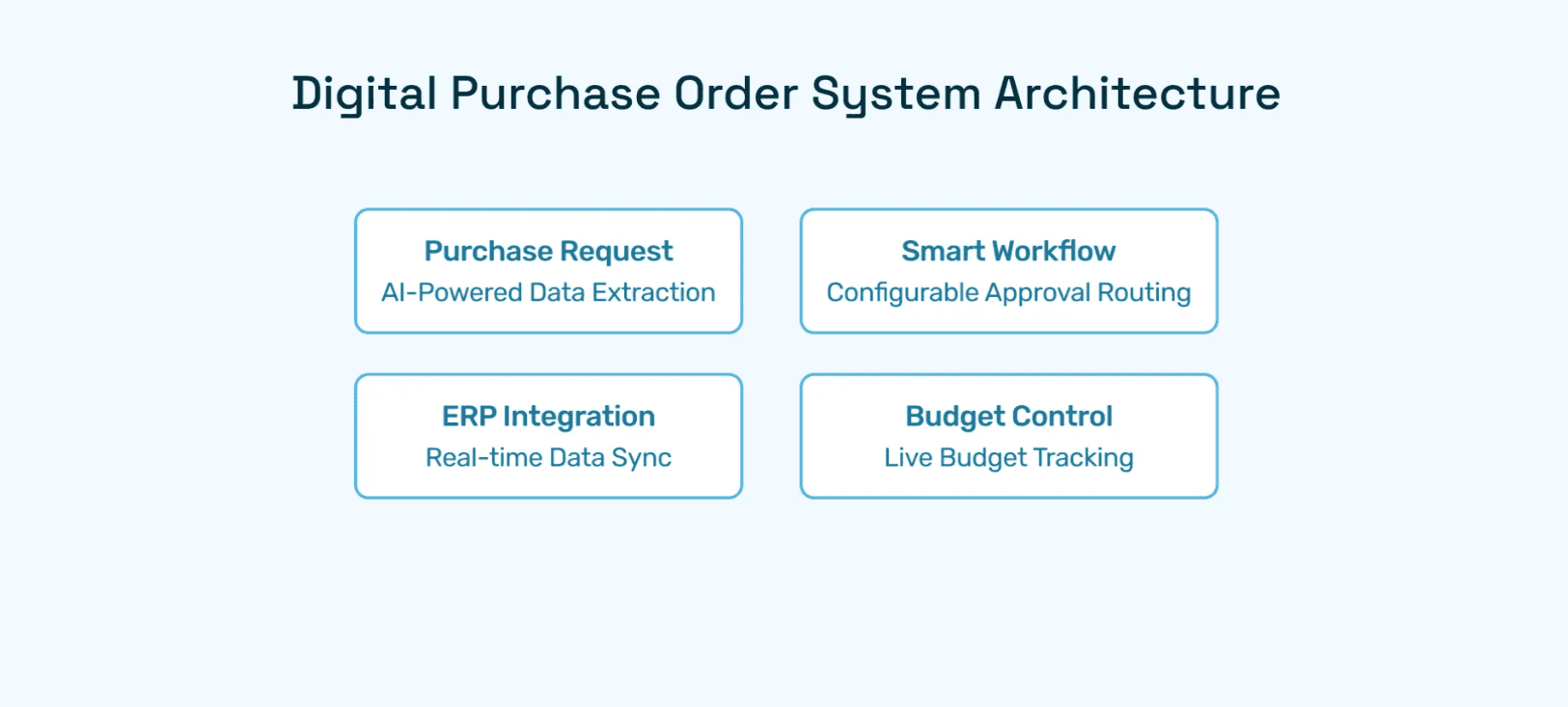
Modern digital purchase order systems require robust architectural foundations that support scalability, integration, and compliance requirements. The most effective implementations combine cloud-based flexibility with on-premise security controls.
Integration Capabilities
Enterprise-grade purchase order automation demands exhaustive integration capabilities with leading ERP systems. Hyperbots' AI co-pilots provide comprehensive integration support, including:
Real-time read and write access to expenses, Chart of Accounts (COA), vendor master, item master, assets, and liabilities
Seamless connectivity with both on-premise and cloud ERP variants
Exception handling with data integrity verification through read-back checks and optimal retry mechanisms
Custom field adaptation through configuration-driven integration frameworks that accommodate company-specific ERP customizations
Workflow Automation Features
Advanced digital purchase order systems incorporate intelligent workflow automation that adapts to organizational hierarchies and approval matrices. Key capabilities include:
Configurable Approval Routing: Dynamic approval workflows that adjust based on purchase amounts, vendor categories, and budget parameters. These systems ensure appropriate authorization levels while maintaining processing velocity.
Automated Field Extraction: AI-powered data extraction eliminates manual data entry by automatically populating purchase requisition fields from supporting documentation. This capability significantly reduces processing time while improving data accuracy.
Budget Control Integration: Real-time budget control prevents unauthorized purchases and provides instant visibility into remaining budget allocations. Integration with general ledger systems ensures accurate cost center assignments and departmental tracking.
Compliance and Standards Framework
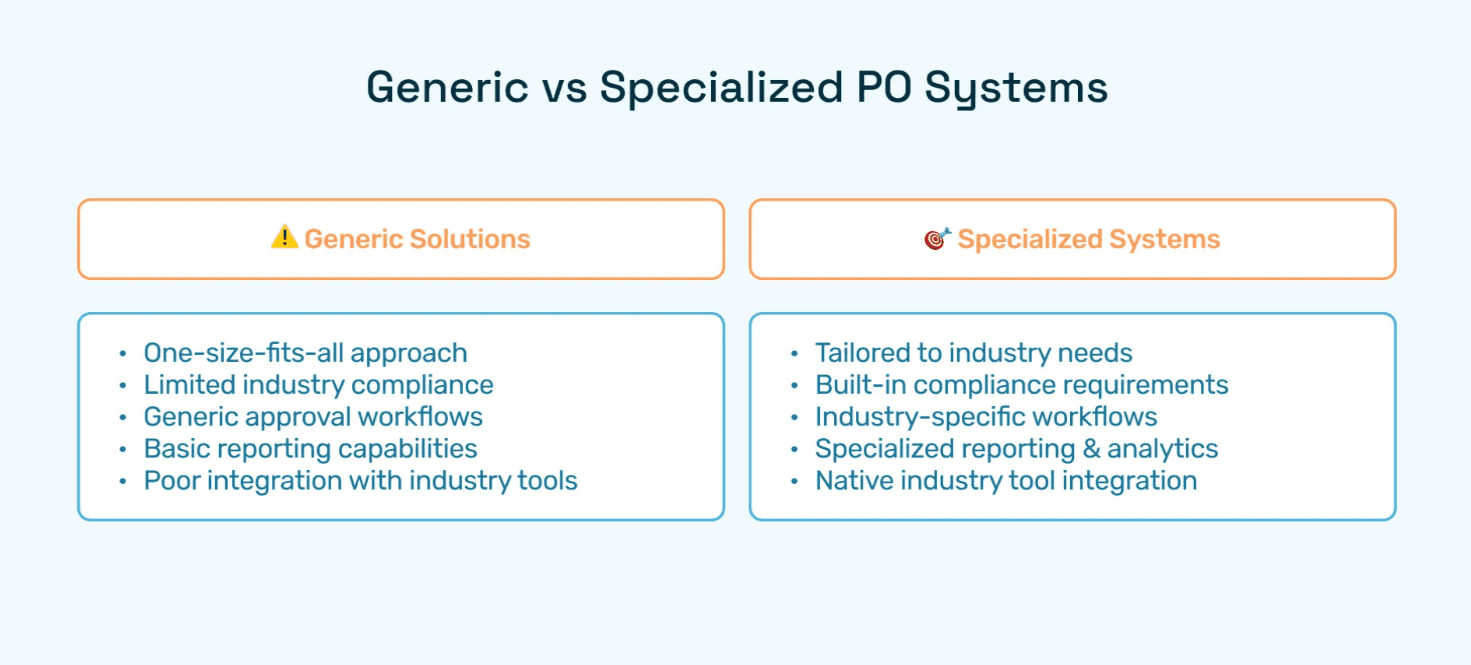
Regulatory compliance remains a critical consideration for organizations implementing EDI purchase order processes. Comprehensive compliance frameworks address financial controls, data privacy, and industry-specific requirements.
SOX Compliance for Purchase Orders
Sarbanes-Oxley Act requirements mandate robust internal controls over financial reporting, directly impacting purchase order processes. Effective audit trails must capture:
Authorization evidence documenting proper approval workflows and segregation of duties
Transaction integrity records showing purchase order modifications, approvals, and supporting documentation
System access controls limiting user permissions based on role-based access controls (RBAC)
Change management logs tracking system configuration modifications, and user access changes
Modern EDI systems support SOX compliance through automated documentation, real-time monitoring alerts, and comprehensive reporting capabilities that simplify audit preparation and regulatory examinations.
Industry-Specific Standards
Different industries impose unique compliance requirements that impact EDI purchase order processes:
Healthcare (HIPAA): Protected health information considerations affect vendor selection, data transmission protocols, and audit trail retention requirements.
Financial Services: Additional security controls, including encryption standards, access monitoring, and transaction reporting requirements.
Government Contractors (FAR/DFARS): Federal acquisition regulations impose specific documentation, pricing transparency, and cybersecurity requirements.
Public Companies (SOX): Enhanced internal controls over purchase authorization, vendor management, and financial reporting accuracy.
Paperless Workflows Implementation
The transition to comprehensive paperless workflows requires strategic planning, technology selection, and change management excellence. Organizations achieving successful digital transformations follow structured implementation approaches.
Change Management Strategies
Effective paperless workflow adoption demands comprehensive change management that addresses people, processes, and technology considerations:
Stakeholder Engagement: Early involvement of procurement teams, finance leadership, and vendor partners ensures smooth adoption and minimizes resistance. Regular communication about benefits and progress maintains momentum throughout implementation phases.
Training Programs: Comprehensive user training covering system functionality, compliance requirements, and troubleshooting procedures. Role-specific training ensures users understand their responsibilities within new digital purchase order systems.
Performance Metrics: Clear success metrics including processing time reductions, error rate improvements, and cost savings measurements. Regular progress reporting maintains organizational commitment and identifies optimization opportunities.
Technology Integration Considerations
Successful paperless workflow implementations require careful technology selection and integration planning:
System Compatibility: Ensuring new EDI platforms integrate seamlessly with existing ERP, accounting, and vendor management systems. Hyperbots' co-pilots excel in this area through exhaustive integration capabilities and real-time data synchronization.
Data Migration: Systematic transfer of historical purchase order data, vendor information, and approval hierarchies. Proper data cleansing and validation prevent downstream processing issues.
Security Implementation: Robust cybersecurity controls, including encryption, access controls, and monitoring systems that protect sensitive procurement data while maintaining system performance.
Audit Trail Management and Compliance
Comprehensive audit trail capabilities form the backbone of compliant purchase order processes. Modern systems must capture, store, and present transaction histories in formats that satisfy regulatory requirements and support business decision-making.
Audit Trail Components
Effective audit trails encompass multiple data elements that provide complete transaction visibility:
Transaction Lineage: Complete documentation of purchase order creation, modification, and approval processes, including timestamps, user identification, and reason codes for changes.
Document Management: Centralized storage of supporting documentation, including requisitions, quotes, contracts, and correspondence. Version control ensures access to current and historical document versions.
Approval Evidence: Digital signatures, approval workflows, and authorization matrices that demonstrate proper internal controls and segregation of duties.
System Activity Logs: Comprehensive logging of user access, system configuration changes, and integration activities that support security monitoring and compliance reporting.
Retention and Accessibility
Audit trail management must balance compliance requirements with operational efficiency:
Retention Policies: Industry-specific requirements for document and transaction history retention periods. Automated archiving systems maintain compliance while optimizing system performance.
Search Capabilities: Advanced search and filtering tools that enable quick location of specific transactions, approvals, or supporting documents during audits or investigations.
Reporting Features: Standard and custom reports that present audit trail information in formats suitable for regulatory examinations, internal audits, and management reviews.
Hyperbots' AI-Powered Purchase Order Automation
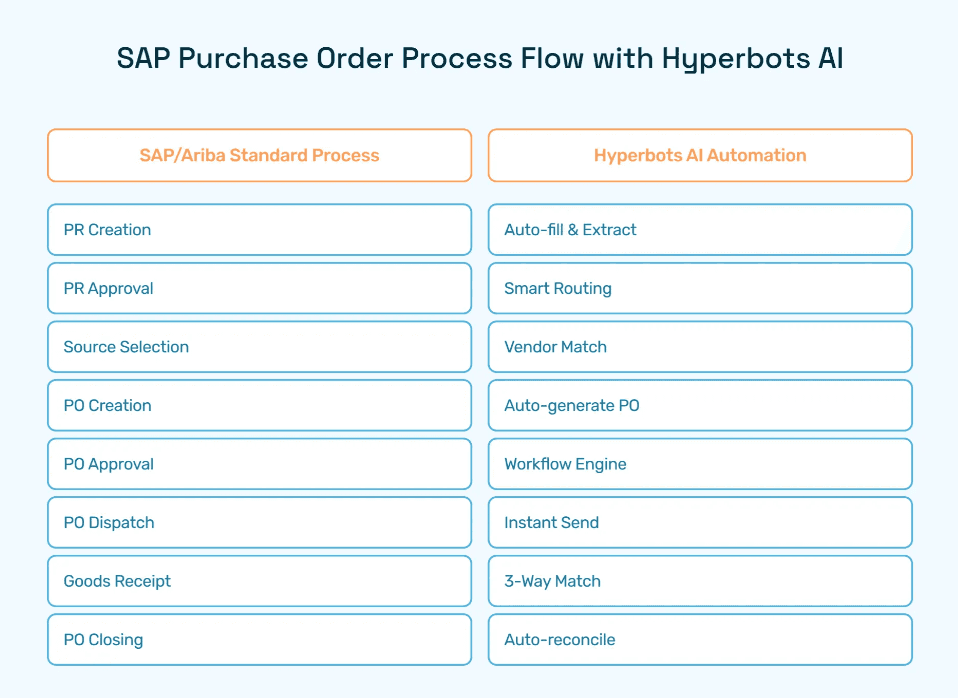
Hyperbots delivers the market's most comprehensive AI co-pilot suite for purchase order automation, achieving up to 80% operational cost reductions through intelligent process optimization and seamless ERP integration.
Procurement Co-pilot Capabilities
The Hyperbots Procurement Co-pilot transforms traditional purchase order processes through advanced AI capabilities:
Automated Field Extraction and PR Autofill: Machine learning algorithms automatically extract data from vendor communications, contracts, and historical transactions to populate purchase requisitions with remarkable accuracy.
Validation, duplication & anomaly detection: Real-time validation checks identify potential duplicate orders, pricing anomalies, and compliance violations before processing. Advanced algorithms learn from historical patterns to improve detection accuracy continuously.
Budget controls & GL coding recommendations: Intelligent budget validation prevents overspending while AI-powered general ledger coding recommendations ensure accurate cost center assignments and financial reporting.
Configurable workflows: Flexible approval routing adapts to organizational hierarchies, purchase categories, and approval thresholds. Custom form templates accommodate unique business requirements without compromising automation benefits.
Automated PO creation & dispatch: Complete purchase order generation and vendor transmission with minimal human intervention. Integration with vendor portals and EDI systems ensures rapid order processing and confirmation.
ROI and Business Impact Analysis
Organizations implementing Hyperbots' AI-powered purchase order automation experience transformational operational improvements with measurable financial returns.
Quantifiable ROI Improvements
Hyperbots clients consistently achieve significant operational improvements across multiple metrics:
Cost Reduction: Up to 80% reduction in operational costs through the elimination of manual processing, reduced errors, and optimized approval cycles. These savings compound over time as AI capabilities improve through continuous learning.
Cycle Time Acceleration: Enterprise procurement solutions can reduce sourcing activity time, enabling procurement teams to focus on strategic initiatives rather than transactional processing.
Error Elimination: AI-powered validation and duplicate detection virtually eliminate manual errors that traditionally plague purchase order processes. This improvement reduces vendor disputes, payment delays, and audit exceptions.
Compliance Enhancement: Automated audit trails and real-time compliance monitoring significantly reduce regulatory risks and audit preparation time.
Intangible Benefits
Beyond measurable cost savings, Hyperbots' automation delivers strategic advantages:
Enhanced Vendor Relationships: Faster processing, accurate communications, and timely payments strengthen vendor partnerships and potentially unlock better terms and priority service levels.
Strategic Procurement Focus: Elimination of routine transactional work enables procurement teams to concentrate on strategic sourcing, vendor management, and category optimization initiatives.
Scalability and Growth Support: Automated processes scale effortlessly with business growth without proportional increases in administrative staffing requirements.
Risk Mitigation: Comprehensive audit trails, compliance monitoring, and fraud detection capabilities significantly reduce operational and regulatory risks.
Implementation Best Practices
Successful EDI purchase order automation implementation requires systematic planning, stakeholder engagement, and phased rollout strategies that minimize disruption while maximizing adoption rates.
Project Planning and Governance
Effective implementations establish clear project governance structures and success metrics:
Executive Sponsorship: C-level commitment ensures adequate resources and organizational support throughout implementation phases. Regular steering committee meetings maintain momentum and resolve escalated issues promptly.
Cross-Functional Teams: Implementation teams should include representatives from procurement, finance, IT, and key vendor partners. This diversity ensures comprehensive requirement capture and smooth change management.
Phased Rollout Strategy: Gradual implementation, beginning with high-volume, low-complexity purchase categories, allows teams to refine processes before expanding to more complex scenarios.
Success Metrics and Monitoring
Comprehensive performance monitoring ensures implementation objectives are achieved and provides data for continuous improvement:
Processing Time Metrics: Average time from requisition creation through purchase order dispatch. Target reductions are achievable with proper automation implementation.
Error Rate Tracking: Monitoring of duplicate orders, pricing discrepancies, and compliance violations. Well-implemented systems achieve error rates below 1% within six months of deployment.
Cost per Transaction: Total cost of purchase order processing, including labor, technology, and overhead expenses. Leading organizations achieve per-transaction costs below $25 compared to industry averages of $100-150 for manual processes.
User Adoption Rates: Percentage of eligible transactions processed through automated systems. Success requires adoption rates exceeding 90% within the first year of implementation.
Future Trends and Technology Evolution
The EDI purchase order process continues evolving with emerging technologies, including artificial intelligence, blockchain, and advanced analytics capabilities that promise additional operational improvements.
Emerging Technology Integration
Next-generation purchase order systems will incorporate several advanced technologies:
Machine Learning Enhancement: Continuous improvement of data extraction accuracy, fraud detection, and approval routing optimization through machine learning algorithms that adapt to organizational patterns.
Blockchain Integration: Immutable transaction records and smart contract capabilities that enhance security, reduce disputes, and enable automatic execution of predefined agreement terms.
Advanced Analytics: Predictive analytics for demand forecasting, supplier performance optimization, and risk assessment that enable more strategic procurement decision-making.
IoT Integration: Internet of Things connectivity enabling automatic reordering based on inventory levels, usage patterns, and predictive maintenance requirements.
Strategic Considerations
Organizations planning long-term procurement automation strategies should consider:
Vendor Ecosystem Development: Encouraging trading partners to adopt compatible EDI capabilities and digital integration standards. This collaboration amplifies automation benefits across the entire supply chain.
Data Governance Frameworks: Establishing comprehensive data quality, privacy, and security standards that support current compliance requirements while accommodating future regulatory changes.
Skill Development: Investing in staff development to support strategic procurement activities as routine transactional work becomes automated. This evolution enables higher-value contributions from procurement teams.
Next Steps: Transform Your Purchase Order Process
The evidence is clear: organizations that embrace comprehensive EDI purchase order automation achieve substantial operational improvements while positioning themselves for continued competitive advantage. With the EDI market projected to grow at 12% annually and procurement automation delivering cost reductions of up to 39%, the strategic imperative for action has never been stronger.
Hyperbots' AI co-pilots represent the next evolution in purchase order automation, combining advanced artificial intelligence with comprehensive ERP integration capabilities. Our platform enables organizations to achieve up to 80% operational cost reductions while establishing robust compliance frameworks and audit trails that satisfy the most stringent regulatory requirements.
Finance leaders ready to transform their procurement operations can explore Hyperbots' comprehensive automation capabilities and schedule a personalized demonstration to understand how our AI co-pilots address specific organizational challenges and opportunities.
Discover the Hyperbots Platform | Schedule Your Demo
Frequently Asked Questions
Q1: What are the primary benefits of implementing an EDI purchase order process?
A: Cost reductions up to 80%, error elimination, faster approvals, improved vendor relationships, enhanced compliance.
Q2: How does EDI integration work with existing ERP systems?
A: Real-time read/write access, custom field support, seamless on-premise and cloud integration capabilities.
Q3: What compliance requirements apply to EDI purchase order processes?
A: SOX controls, data privacy regulations, and industry-specific standards requiring comprehensive audit trails and authorization.
Q4: How long does it take to implement a digital purchase order system?
A: Implementation typically takes 2-6 months, depending on organizational complexity and integration requirements.