Construction Purchase Order Process & More: PO Best Practices for Construction, Government, and Retail
Optimize PO workflows in construction, government, and retail using automation, compliance checks, and real-time insights for efficient procurement.
Executive Summary
A strategic, error-free purchase order process is crucial across all industries, but no sectors demand more than construction, government, and retail. Each environment enforces unique compliance, speed, and visibility requirements—whether managing project-based spend, blanket orders, or real-time retail stock. This guide uncovers how industry leaders structure the construction purchase order process, adapt for the government or public sector, manage blanket purchase order process flow, satisfy compulsory purchase order process mandates, and innovate for retail adaptations. We also showcase how next-generation tools like Hyperbots transform these workflows with AI and deep ERP integrations, supported by authoritative research and specialized job roles.
Why Each Industry Needs Specialized Purchase Order Processes
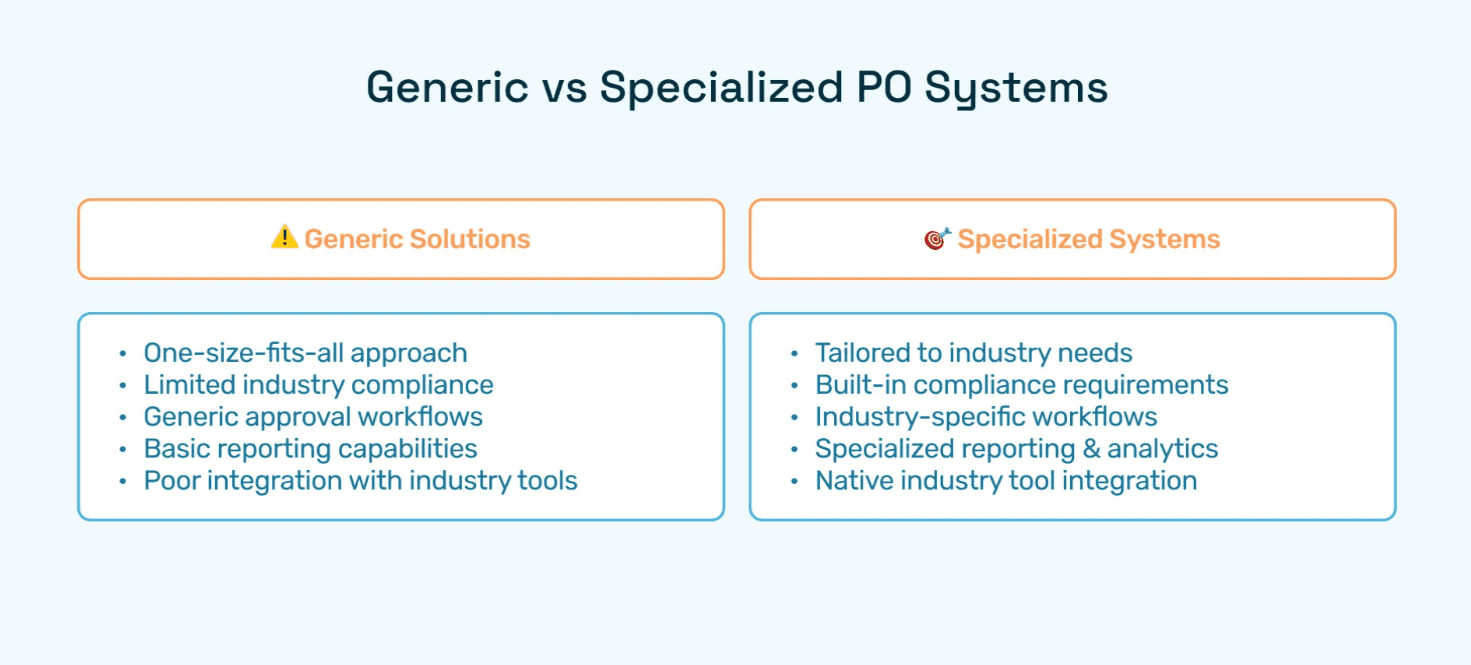
The Case for Industry-Specific PO Systems
Procurement requirements differ significantly across industries, making industry-specific purchase order (PO) systems essential for operational efficiency, compliance, and accuracy. Generic solutions often fail to address the unique challenges each sector faces, from regulatory constraints to complex workflows. Tailored PO systems help organizations optimize processes, enforce compliance, and generate actionable insights specific to their operational context.
Construction Industry
Construction projects typically involve high-value contracts, multiple subcontractors, and coordination with numerous vendors. A construction-specific PO system helps organizations manage:
Strict budget tracking: Preventing cost overruns on large-scale projects and keeping expenses aligned with approved budgets.
Change order management: Accurately documenting modifications to contracts or project scopes to maintain clarity and accountability.
Multi-vendor coordination: Ensuring timely delivery of materials and equipment, reducing project delays.
Frequent compliance checks: Aligning procurement with safety regulations, labor laws, and contractual obligations.
By centralizing POs and integrating with project management and ERP tools, construction-specific systems improve transparency, reduce errors, and streamline procurement workflows across multiple sites and teams.
Government/Public Sector
Government agencies and public sector organizations operate under rigorous transparency requirements and strict regulatory oversight. Industry-specific PO systems for this sector provide:
Supplier vetting: Ensuring eligibility and regulatory compliance for all vendors.
Mandatory multi-level approval chains: Safeguarding public funds through structured authorization workflows.
Audit-ready documentation: Maintaining complete records for internal and external reviews.
Regulated procurement processes: Guaranteeing fairness, accountability, and adherence to legal frameworks.
These systems enforce policy compliance while simplifying oversight, helping public organizations maintain transparency and operational integrity even across large, complex procurement networks.
Retail Industry
Retail procurement faces challenges like high order volumes, frequent SKU changes, and dynamic market demand. Retail-specific PO systems address these by providing:
Frequent blanket POs: Supporting recurring stock needs efficiently.
Rapid SKU turnover: Enabling agile order management to keep up with fast-changing inventory requirements.
Real-time vendor and inventory synchronization: Preventing stockouts, overstocking, and lost sales opportunities.
These capabilities allow retailers to maintain accurate inventory, reduce administrative overhead, and respond swiftly to demand fluctuations, ultimately improving operational efficiency and customer satisfaction.
Construction Purchase Order Process: Why Industry-Specific Automation Matters
Construction-Specific Challenges
Construction projects are inherently complex, often spanning months or even years and involving hundreds of material and equipment purchase orders (POs) per project. The unique operational environment introduces several challenges:
Frequent Change Orders: Project scopes often evolve, requiring modifications to existing POs. Without automated tracking, change orders risk delays, miscommunication, and cost overruns.
Blanket Purchase Orders: Recurring deliveries of consumables or ongoing materials necessitate blanket POs that must be tracked precisely to maintain supplier relationships and project continuity.
Onsite Receiving and Mobile Approvals: Site supervisors need the ability to confirm deliveries and approve requisitions directly from the field, ensuring timely updates and avoiding bottlenecks.
Project-Specific Spend and Compliance Tracking: Each project has distinct budgets, compliance requirements, and reporting needs, demanding precise allocation of costs and robust audit trails.
These factors make manual or generic PO processes inefficient, error-prone, and risky.
End-to-End Construction Purchase Order Flow
Requisition Initiation:
Project managers or autonomous teams submit requests via mobile or desktop platforms, specifying materials, preferred suppliers, and project codes. Automated field population reduces errors and accelerates submission.Approval & Budget Control:
POs are allocated against project-specific budgets rather than generic department codes. Pre-approval limits are enforced based on contract value, regulatory caps, or contingency allowances, ensuring spending compliance.PO Creation and Dispatch:
Custom templates are generated per vendor or project, supporting bulk uploads and automated dispatch for blanket agreements. Automation minimizes manual entry and speeds up procurement cycles.Blanket Purchase Order Process Flow:
Pre-approved vendors receive POs for recurring or indefinite-scope deliveries, with each draw-down automatically logged. This ensures accurate tracking and continuity across long-term projects.Receiving & Change Management:
Onsite supervisors confirm deliveries via mobile interfaces. The system automatically posts receipts and adjusts change orders in real time, maintaining up-to-date project budgets and approvals.Invoice Processing & Matching:
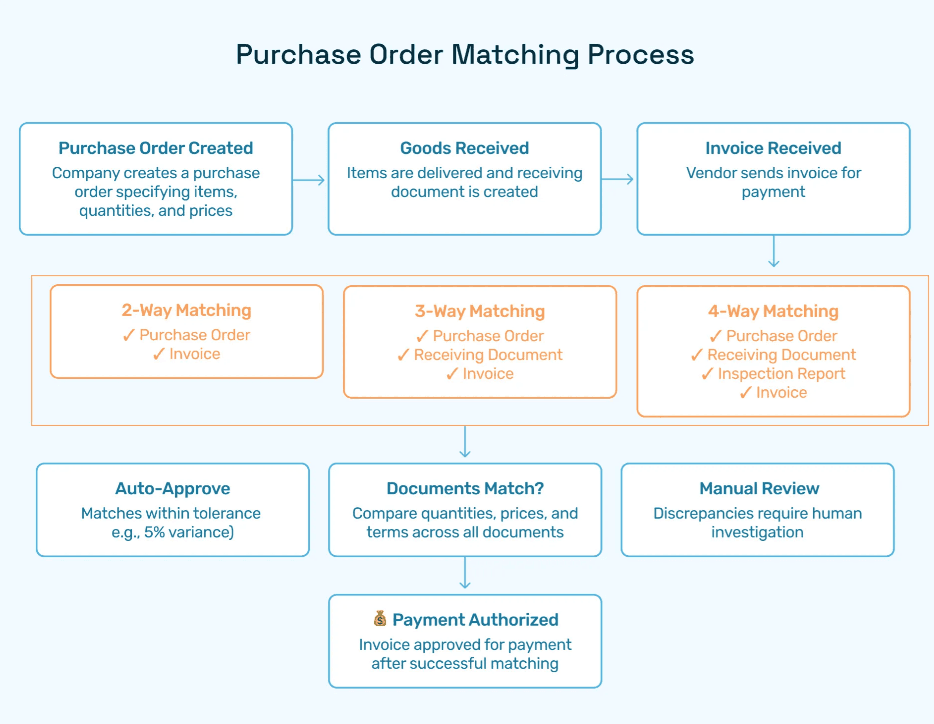
AI performs three-way matching between invoices, POs, and receiving documents. Exceptions such as cost overruns or change-order discrepancies are flagged for review, reducing errors and payment delays.Payment and Audit:
Payments are coded to project-specific GL accounts, with complete audit trails and contract-level spend analysis. Dashboards provide visibility into budget adherence and supplier performance.
Why Automation Is Critical
Delays in approvals can stall multimillion-dollar projects, while manual change order management risks budget overruns and work stoppages. Frequent use of vendors and blanket POs further increases reconciliation and payment risks.
Deloitte's insights underscore the critical role of digitized, industry-optimized purchase order (PO) and contract management systems in the success of major capital projects. These systems enable accurate tracking, faster approvals, and enhanced compliance, which are essential for managing the complexities of large-scale construction endeavors.
For instance, Deloitte's guidance on Digital Capital Projects emphasizes the importance of integrating digital technologies throughout the project lifecycle. This approach leads to significant benefits, including a 5–10% reduction in build costs and a 10–20% decrease in operational costs. The report highlights that adopting a data-driven approach, supported by agile innovation processes and a digital mindset, is crucial for delivering successful outcomes in capital projects
Government Purchase Order Process
Public sector procurement comes with unique challenges. Unlike private organizations, government agencies must balance efficiency with strict regulatory compliance, transparency, and accountability. Purchase orders (POs) in the public sector are a legally mandated mechanism to ensure fair competition, prevent fraud, and provide an auditable trail for taxpayers.
Regulatory Demands and Compliance
Government POs are governed by stringent rules:
Public Transparency & Auditability: Every step—from requisition to payment—must be documented in an auditable format. Agencies must maintain detailed records for internal review and often for public disclosure.
Mandatory PO Use: Certain spending categories, thresholds, or project types require the use of standardized purchase orders, sometimes even requiring council or board sign-off.
Competitive Bidding & Supplier Vetting: Vendors must meet eligibility criteria, be pre-approved, and participate in fair bidding processes to avoid conflicts of interest or favoritism.
Multi-Level Approvals: Government POs often follow complex, multi-tier approval chains, including departmental managers, finance officers, and committees.
Specialized Workflow for Government POs
To meet these regulatory requirements, government-specific PO processes include:
Pre-Qualification: Vendors must be registered on the approved supplier list. Automated vendor onboarding ensures that only compliant and verified suppliers are eligible for transactions.
Requisition Submission: Requestors submit detailed purchase requisitions, including justifications, policy codes, and budget references. These fields are often configurable within digital platforms to enforce compliance and standardization.
Compulsory PO Process: The PO workflow is tightly regulated. Standard POs are used for predefined spending categories, while higher-value or sensitive purchases may require additional approvals from committees or governing boards. Automated routing ensures all mandatory approvals are captured and tracked.
PO Issuance and Publication: Once approved, POs are issued to vendors and logged in a centralized system. Public disclosure may be required for certain contracts or amounts. Vendor portals allow suppliers to track PO status, submit invoices, and confirm payments, ensuring transparency at every stage.
Receiving, Invoice Matching, and Payment: Government procurement often involves longer inspection periods and compliance reviews before payment. AI-powered systems can match invoices against POs and receive reports, verify tax compliance, and flag exceptions automatically, reducing manual errors and delays.
Pain Points Solved by PO Automation
Automated government PO systems address common challenges:
Simplified Audits: Persistent electronic records for every stage of the PO process streamline both internal and external audits.
Compliance Enforcement: Pre-configured templates and rules ensure that only eligible vendors are paid according to policy.
Exception Management: AI can score invoices for risk, flag anomalies, and prioritize high-risk transactions for review.
Transparency and Reporting: Real-time dashboards provide finance and procurement teams with visibility into spending patterns, approvals, and compliance adherence.
Gartner's broader research on digital government emphasizes the importance of digital transformation, including the use of analytics and technology platforms, to enhance transparency and efficiency in public sector operations.
Blanket Purchase Order Process Flow
Blanket Orders Explained
A blanket purchase order (PO) is an open-ended authorization issued to a supplier to cover recurring or variable spend over a defined period. Unlike standard POs, which are specific to a single purchase or delivery, blanket POs provide flexibility for multiple deliveries, often used in industries like construction and retail. They allow organizations to draw down funds as needed, up to an agreed-upon limit or expiration date.
Key benefits include:
Simplified Procurement: Instead of issuing dozens or even hundreds of individual POs for recurring materials, supplies, or services, a single blanket PO covers the entire scope of recurring requirements.
Flexible Spending: Authorized users can draw down against the blanket PO as needs arise, while the system ensures spending stays within the defined cap.
Streamlined Reconciliation: Receipts and invoices are matched automatically, reducing manual data entry and improving accuracy.
Modern Blanket Purchase Order Process Flow
Contract/Price List Approval:
The process begins with approval of the contract or agreed-upon pricing with the supplier. Pre-approved price lists or blanket contracts ensure compliance and allow draw-downs without additional approvals for each transaction.Blanket PO Issuance:
Once the contract is approved, the blanket PO is issued. Authorized personnel can make purchases or schedule deliveries within the terms of the PO. The system tracks each draw-down, remaining budget, and expiration date, providing full visibility into usage.Transaction Logging and Budget Control:
Every draw-down or partial order is automatically logged in the system. This ensures the remaining cap is updated in real time and prevents over-expenditure. Any attempt to exceed the authorized amount triggers an alert, enforcing financial discipline.Receipts and Reconciliation:
As goods or services are delivered, receipts are confirmed, and accounts payable (AP) is notified. Invoices are automatically matched against the PO and receipts, simplifying reconciliation and reducing the risk of errors or duplicate payments.Closure:
The blanket PO automatically closes when the cap is reached, the expiration date arrives, or the organization manually terminates it. This ensures proper accounting and audit trails are maintained.
Why Automation Matters
Automating blanket POs delivers significant operational advantages:
Reduced Administrative Effort: One blanket PO can replace dozens or hundreds of single-use orders, cutting down on manual processing and approval tasks.
Real-Time Oversight: Automated systems flag overdraws or purchases outside the scope instantly, preventing budget overruns.
Improved Compliance and Audit Readiness: Each transaction is recorded, providing a complete audit trail and improving transparency for finance teams.
Operational Efficiency: Teams can focus on strategic procurement and supplier management rather than repetitive PO creation and tracking.
Implementing automated blanket POs allows organizations to gain control over recurring spend, improve compliance, reduce administrative burden, and enhance operational efficiency across projects or high-volume procurement cycles.
Compulsory Purchase Order Process: Policy and Audit Implications
In many organizations in the public sector, certain purchase amounts or categories legally or organizationally require a purchase order (PO). These compulsory POs are a critical tool to ensure transparency, enforce policy, and maintain financial integrity.
Policy Enforcement and Segregation of Duties
When POs are mandatory for specific spend levels, organizations can enforce procurement policies consistently. Every purchase must go through predefined approval paths, ensuring that expenditures are justified before money leaves the organization.
Segregation of Duties: By separating roles between requisitioners, approvers, and finance staff, the risk of fraud or error is minimized.
Clear Accountability: Each step in the PO workflow is traceable, making it easy to see who approved what and when.
This structured approach not only prevents unauthorized spending but also fosters a culture of accountability across teams.
Built-in Audit Controls
A systematized PO process integrates audit controls at every stage of procurement—from the initial requisition to final payment. With digital records at each step:
Finance teams can monitor approvals and flag exceptions in real time.
Internal audits become faster, easier, and less error-prone.
Organizations can provide a complete trail for compliance reviews and regulatory inspections.
These continuous audit-ready records are especially valuable for high-spend or regulated areas, reducing the burden on auditors while increasing confidence in procurement accuracy.
The Role of Digital PO Traceability
Digital tools have transformed compulsory POs from a paper-heavy administrative task into a streamlined, transparent process. Accenture's research on supply chain and procurement emphasizes the importance of digital transformation, including the use of analytics and technology platforms, to enhance transparency and efficiency in public sector operations.
With the right system, organizations can quickly flag exceptions, track remaining budgets, and maintain complete transparency across the entire procurement lifecycle.
Why It Matters
Compulsory POs are about compliance and a strategic way to strengthen governance, mitigate risk, and streamline procurement. Mandatory PO policies along with digital automation, organizations achieve greater efficiency, minimize errors, and ensure that every dollar is spent wisely and transparently.
Retail Adaptations for Purchase Order Processing
Retail procurement is a fast-paced, high-volume operation. Retailers manage thousands of SKUs across multiple vendors, and even small errors in purchase orders can cascade into stockouts, lost sales, or overspending. This makes efficient and accurate PO processing critical.
Challenges in Retail PO Management
Retailers face unique procurement pressures:
High PO Volume: With thousands of SKUs and frequent orders, manual processing quickly becomes unmanageable.
Replenishment & Merchandising Needs: Maintaining the right stock levels for stores and online platforms is essential to meet customer demand.
Supplier Agreements & Promotions: Blanket purchase orders are often used to streamline repeated or seasonal purchases, as well as to maintain favorable supplier contracts.
Manual Risks: Traditional spreadsheet-based or paper workflows increase the risk of errors, duplicate orders, delayed approvals, and stock discrepancies. These mistakes can lead to lost sales, overstocking, or shrinkage.
Modern Retail PO Automation
Digital platforms have transformed retail procurement, providing a seamless, automated approach to PO management. Key adaptations include:
Automated Reorder Triggers: Systems can monitor minimum/maximum stock levels or sales velocity, automatically generating requisitions to prevent stockouts.
Template-Driven PO Creation: Pre-defined and custom PO templates streamline creation, saving time and reducing errors, especially for recurring or seasonal purchases.
Centralized Vendor Onboarding and Validation: Vendor management platforms ensure all suppliers are verified, compliant, and integrated into the procurement system, reducing risk and administrative overhead.
Blanket Purchase Orders: Retailers can use blanket POs for recurring or high-volume purchases, enabling multiple drawdowns while maintaining accurate budget and contract tracking.
Invoice and Delivery Matching: AI-enabled systems perform two-way or three-way matching between POs, invoices, and goods received. Discrepancies in price, quantity, or duplicate invoices are automatically flagged for review.
Real-Time Reporting: Dashboards provide up-to-the-minute insights into PO, invoice, and payment status, helping procurement and finance teams manage budgets, track performance, and respond quickly to supply chain issues.
Retail procurement is a high-stakes environment, and modern digital PO systems ensure that retailers stay agile, accurate, and profitable, even in the face of complex supply chains and ever-changing demand.
Hyperbots: Transformational AI Platform for Specialized PO Automation
Key Modules Tailored by Industry
Hyperbots’ platform is structured around specialized modules that address the unique needs of different industries:
Procurement Co-Pilot: Automates purchase requisition to purchase order (PR/PO) workflows, including approval routing, blanket order management, and mobile-based approvals. It ensures that recurring purchases, project-specific requests, and high-volume operations are processed efficiently and accurately.
Invoice Processing Co-Pilot: Handles accounts payable with precision. It supports two-way and three-way invoice matching, automates retail and consignment invoice processing, flags discrepancies, and reduces duplicate payments, allowing finance teams to focus on strategic insights instead of manual reconciliation.
Vendor Management Co-Pilot: Integrates vendor onboarding, contract validation, and compliance checks. For public sector and construction organizations, it ensures that only authorized and compliant suppliers are engaged, mitigating risk while improving operational transparency.
Accruals Co-Pilot: Automatically manages period-end accruals for projects or retail operations, accounting for goods or services received but not yet invoiced. This ensures accurate financial reporting and eliminates errors often associated with manual accrual calculations.
Platform Capabilities for Construction and Retail PO Processes
Hyperbots is designed to scale with the complexity of large projects and multi-site retail operations:
Unlimited Access: The platform scales seamlessly as project scopes or retail operations expand, accommodating unlimited POs, users, and approval levels without additional configuration.
Process-Specific Workflows: Workflows can be customized per client or project, ensuring that industry-specific rules, approval hierarchies, and compliance standards are always adhered to.
Multi-Entity Controls: Supports subsidiaries, holding companies, or multi-entity organizations, enabling centralized oversight while maintaining local autonomy for procurement and AP tasks.
Real-Time Compliance and Audit Logs: For government and highly regulated sectors, Hyperbots provides audit-ready logs, capturing every approval, exception, and policy enforcement step in real time.
These AI-driven specialized modules work in concert to transform purchase order processing from a manual, error-prone task into a strategic, high-value workflow. Teams can reduce administrative burden, enhance compliance, improve vendor collaboration, and gain actionable insights and maintain control over budgets, approvals, and operational workflows.
Unlocking Procurement Efficiency: How Hyperbots Delivers ROI and Strategic Advantage
When finance leaders evaluate purchase order automation, the first question is simple: what’s the ROI? With Hyperbots, the answer is both measurable and transformative. The platform delivers savings you can quantify in hard dollars, along with intangible benefits that reshape how procurement and finance teams work.
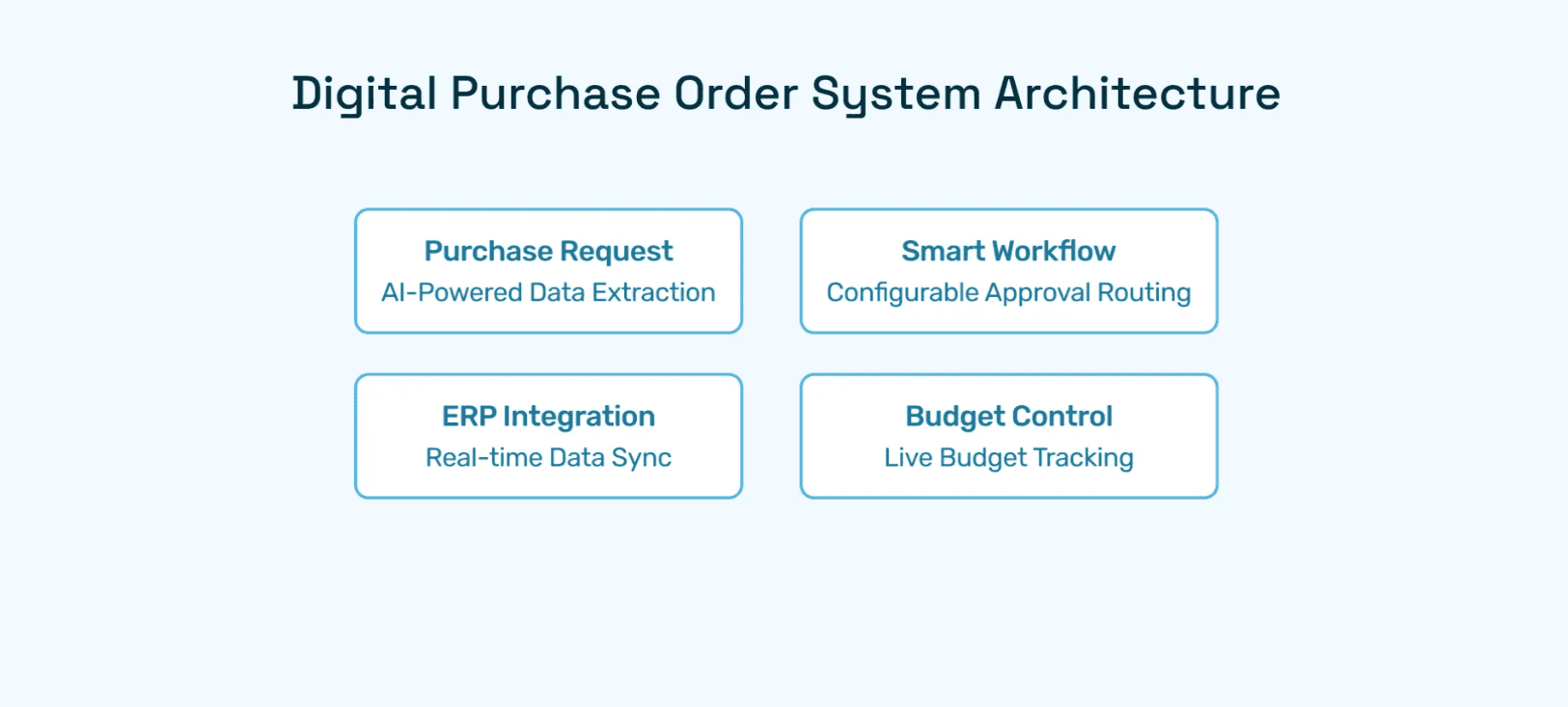
Implementing Hyperbots' Procurement copilot deliver significant ROI and transforms procurement operations by providing:
Over 80% reduction in PO creation & dispatch time
5 minute PR creation time
At least a 10% reduction in cash outflows
Accurate and timely automatic communication with vendors
100% automation of forms and other information verification
Granular and customized workflow for each process
Improved vendor relationships due to predictable approval timelines.
Hyperbots’ integrated platform ensures that these benefits scale across departments, projects, and business units, turning procurement into a high-value function rather than a bottleneck.
Strategic Differentiation: Why Hyperbots Stands Out
1. Industry-Specific Customization
Hyperbots offers tailored solutions for various industries, including construction, government, and retail. Each module is designed to address the unique challenges and requirements of these sectors, ensuring that procurement processes are optimized for specific needs.
2. Scalable and Flexible Architecture
The platform's architecture supports multi-entity controls, allowing organizations with complex structures to manage procurement processes across subsidiaries and departments efficiently. This scalability ensures that as organizations grow, their procurement systems can adapt accordingly.
3. Real-Time Analytics and Reporting
Hyperbots provides real-time insights into procurement activities, enabling organizations to monitor performance, identify bottlenecks, and make data-driven decisions. This visibility enhances strategic planning and operational efficiency.
Industry Insights: Leading research firms recognize the value of AI-driven procurement solutions. For instance, Gartner's research highlights the importance of AI, configurable workflows, and multi-entity controls in procurement platforms, emphasizing their role in enhancing efficiency and compliance in various sectors.
FAQs
Q1. What is the construction purchase order process?
It begins with project-driven requisitions, budget approval, multi-level PO creation, vendor dispatch, onsite goods receipt, change management, AP matching, and payment—ideally automated for mobile and jobsite speed.
Q2. How does the government purchase order process differ?
Government POs are highly regulated, requiring public transparency, audit logs, compliance with compulsory buy policies, and multi-committee approvals.
Q3. What is the blanket purchase order process flow?
It’s the lifecycle for long-term or recurring purchases: issue a blanket PO linked to a master contract, draw down value as goods/services are delivered, with automated budget/check/close features.
Q4. What is the compulsory purchase order process?
This dictates that certain purchases cannot progress without a formal PO—enforced via workflow, audit, and regulatory controls.
Q5. How are retail purchase order processes adapted?
They feature high-volume, automated reorder, blanket/seasonal PO use, line-level reconciliations, vendor onboarding at scale, and real-time analytics for every SKU/order.
What makes Hyperbots unique for these sectors?
Hyperbots delivers industry-specific workflow templates, deep integration, multi-entity scaling, audit-proof compliance, and mobile access tailored for field, back-office, or store use.