How to Drive User Adoption of Purchase Order Automation: A Complete Guide for Finance Leaders
Practical and Action-Oriented: Stop chasing paper and start driving value. This guide provides finance leaders with the proven framework and actionable steps to achieve maximum user adoption and realize the full ROI of their PO automation investment.

Executive Summary
Purchase order automation represents one of the most transformative opportunities for modern finance teams, yet only 52% of procurement teams have adopted automation technologies, despite the clear competitive advantages. This comprehensive guide addresses the critical success factors for driving procurement automation adoption within organizations, focusing on overcoming resistance, optimizing purchase order workflow usability, and implementing effective PO automation training programs.
Finance leaders implementing AI-powered purchase order automation systems can achieve operational cost reductions of up to 80%, with procurement solution automation over manual system costs. However, success depends not just on technology selection, but on strategic user adoption approaches that address organizational change management, training protocols, and workflow optimization.
This guide provides actionable strategies for CFOs, Controllers, and Procurement leaders to successfully implement and scale purchase order automation, positioning their organizations among the 74% of Chief Procurement Officers planning to integrate AI by 2025. We'll explore proven methodologies, common pitfalls, and the transformational impact that comprehensive AI co-pilots can deliver to finance operations.
Understanding the Current State of Procurement Automation Adoption
The Market Reality: Gaps Between Intention and Implementation
While procurement automation represents a clear path to operational excellence, adoption rates reveal significant implementation challenges. Over 80% of enterprise firms pilot generative AI, but only 5% of AI pilots have reached mature production-stage adoption. This gap between experimentation and full-scale deployment highlights the critical importance of strategic user adoption planning.
The financial services sector leads adoption trends, with over 40% of finance professionals and 33% of accounting professionals identifying automated purchasing and procurement processes as a top priority. However, implementation success varies dramatically based on change management approaches and user engagement strategies.
Key Market Statistics:
52% of procurement teams currently use automation technologies
74% of CPOs plan AI integration by end of 2025
$9.5 billion projected global procurement software market by 2028
10.8% CAGR growth rate for procurement automation solutions
Identifying Adoption Barriers
Understanding why organizations struggle with procurement automation adoption requires examining both technical and human factors. Research indicates that 44% of procurement decision-makers cite efficiency and complexity as primary challenges for their procurement processes.
Primary Adoption Barriers:
Technical Challenges:
Legacy ERP system integration complexities
Data migration and cleansing requirements
Workflow mapping and process standardization
Security and compliance considerations
Organizational Resistance:
User reluctance to change established workflows
Insufficient training and support resources
Unclear ROI communication to stakeholders
Lack of executive sponsorship and change advocacy
Process-Related Issues:
Inconsistent purchase order workflow usability
Inadequate PO automation training programs
Poor user experience design
Limited customization for specific business needs
Building a Foundation for Successful Procurement Automation Adoption
Strategic Planning and Stakeholder Alignment
Successful procurement automation adoption begins with comprehensive strategic planning that aligns technology capabilities with organizational objectives. Finance leaders must establish clear success metrics and stakeholder buy-in before implementation begins.
Executive Sponsorship Requirements:
CFO championship for budget allocation and strategic direction
Procurement head involvement for process optimization
IT leadership for technical implementation oversight
End-user representative participation for workflow validation
Comprehensive Needs Assessment
Organizations must conduct thorough current-state assessments to identify specific automation opportunities and user requirements. This assessment should evaluate existing purchase order workflow usability, identify process bottlenecks, and establish baseline metrics for ROI measurement.
Assessment Framework:
Process Mapping: Document existing procurement workflows
Volume Analysis: Quantify transaction volumes and processing times
Cost Evaluation: Calculate current processing costs per purchase order
User Experience Review: Identify pain points and improvement opportunities
Technology Gap Analysis: Assess current system capabilities and limitations
Change Management Strategy Development
Effective change management represents the cornerstone of successful procurement automation adoption. Organizations must develop comprehensive strategies that address user concerns, provide adequate support, and demonstrate clear value propositions.
Change Management Components:
Communication plans addressing "what's in it for me" messaging
Training programs tailored to different user skill levels
Support systems for ongoing assistance and troubleshooting
Feedback mechanisms for continuous improvement
Recognition programs for early adopters and champions
Optimizing Purchase Order Workflow Usability for Maximum Adoption
User-Centric Design Principles
Purchase order workflow usability directly impacts adoption success rates. Systems that prioritize intuitive user experiences generate higher engagement and reduce training requirements. Modern procurement automation platforms must balance comprehensive functionality with simplified user interfaces.
Key Usability Features:
One-Click Approvals: Streamlined approval processes with mobile accessibility
Intelligent Data Pre-Population: Automatic field completion using historical data
Visual Workflow Status: Real-time tracking with clear status indicators
Exception Management: Automated routing for non-standard scenarios
Mobile Optimization: Full functionality across desktop and mobile devices
Workflow Standardization and Customization Balance
Successful purchase order workflow usability requires balancing standardization benefits with organizational flexibility needs. Organizations must establish consistent processes while allowing for business-specific customizations that enhance user acceptance.
Standardization Benefits:
Reduced training complexity across departments
Improved process consistency and compliance
Enhanced reporting and analytics capabilities
Simplified system maintenance and updates
Customization Considerations:
Department-specific approval hierarchies
Industry-specific compliance requirements
Vendor relationship management preferences
Regional or subsidiary operational differences
Integration with Existing Systems
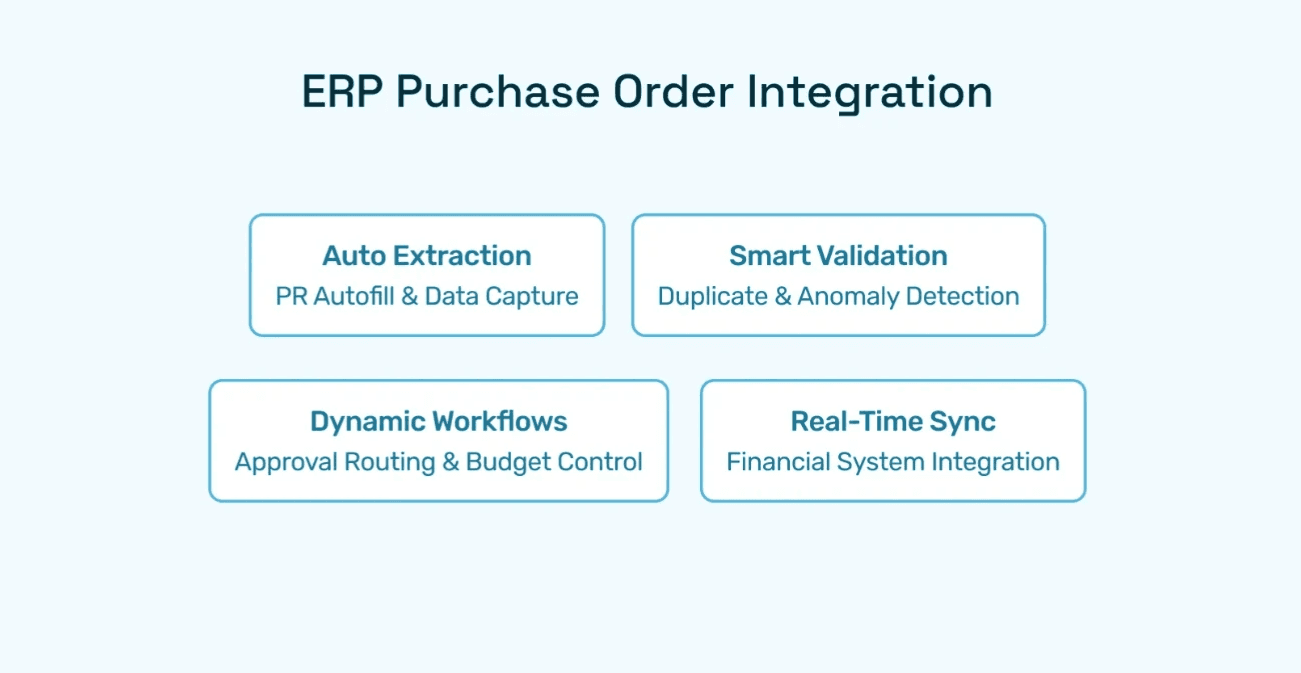
Seamless integration with existing ERP and financial systems dramatically improves purchase order workflow usability by eliminating data silos and reducing manual data entry. Users experience greater efficiency when procurement automation connects naturally with their established workflows.
Integration Requirements:
Real-time ERP synchronization for budget validation
Vendor master data alignment across systems
Chart of accounts mapping for accurate GL coding
Automated three-way matching capabilities
Document management system connectivity
Implementing Effective PO Automation Training Programs
Comprehensive Training Strategy Development
PO automation training programs must address diverse user skill levels and learning preferences while ensuring consistent competency across the organization. Effective programs combine multiple delivery methods and provide ongoing support resources.
Training Program Components:
Initial Onboarding:
System overview and navigation training
Role-specific workflow instruction
Hands-on practice with test environments
Competency assessments and certification
Quick reference guides and job aids
Ongoing Education:
Advanced feature training for power users
Regular system update communications
Best practice sharing sessions
Troubleshooting workshops
Continuous improvement feedback collection
Role-Based Training Approaches
Different user groups require tailored PO automation training approaches based on their specific responsibilities and system interaction levels. Customized training programs improve comprehension and reduce resistance to adoption.
Training Segmentation by Role:
Requesters/End Users:
Basic requisition creation and submission
Approval workflow understanding
Status tracking and communication
Mobile application usage
Exception handling procedures
Approvers/Managers:
Approval queue management
Budget validation processes
Delegation and workflow routing
Reporting and analytics access
Vendor relationship considerations
Procurement Professionals:
Advanced system configuration
Vendor management integration
Contract compliance monitoring
Analytics and reporting mastery
Integration troubleshooting
Finance Team Members:
GL coding and account mapping
Budget monitoring and control
Accrual and payment processing
Financial reporting integration
Audit trail management
Training Delivery Methods and Support Systems
Modern PO automation training programs leverage multiple delivery methods to accommodate diverse learning preferences and organizational constraints. Hybrid approaches combining digital and in-person elements typically achieve the highest engagement rates.
Delivery Method Options:
Interactive E-Learning Modules: Self-paced online courses with progress tracking
Virtual Instructor-Led Training: Live online sessions with Q&A opportunities
In-Person Workshops: Hands-on training with direct instructor support
Video Tutorials: Short, task-specific instructional content
Peer Mentoring Programs: Experienced user support for new adopters
Ongoing Support Resources:
Help desk with procurement automation expertise
User communities and discussion forums
Regular "lunch and learn" sessions
System update notifications and training
Performance monitoring and coaching
Hyperbots Platform: Transformational Impact on Purchase Order Automation
Comprehensive AI Co-Pilot Suite for Procurement Excellence
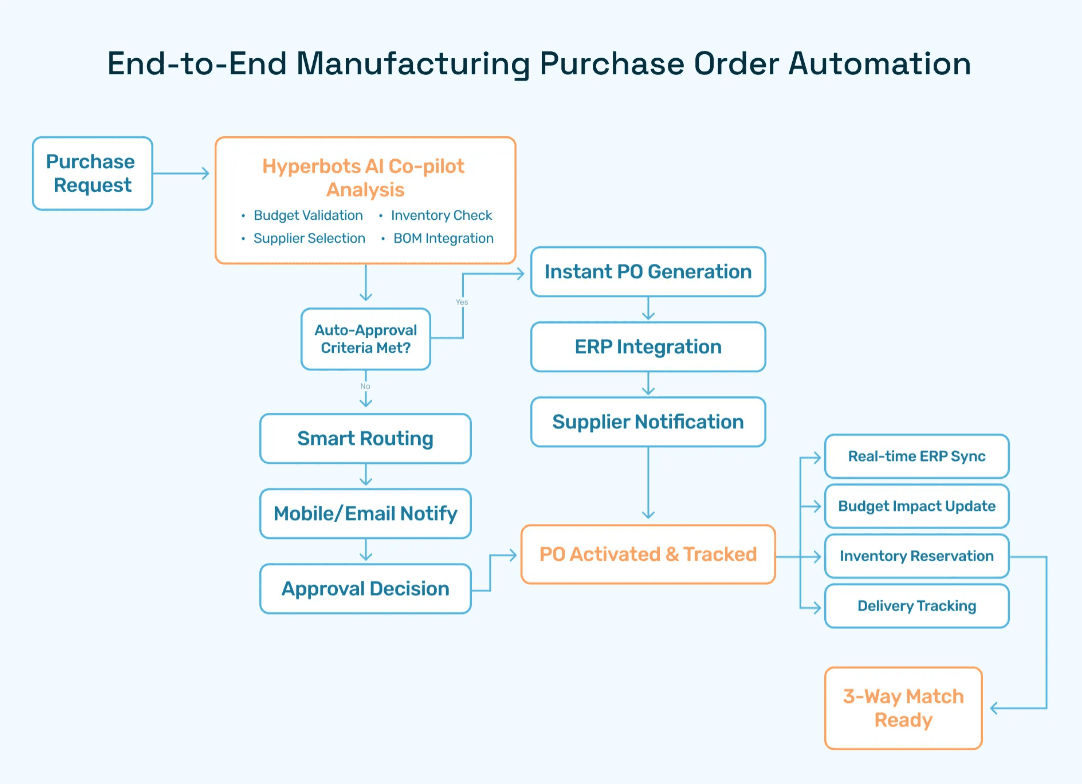
Hyperbots represents the next generation of procurement automation, delivering comprehensive AI co-pilots that transform traditional purchase order processing into intelligent, autonomous workflows. The platform's primary Procurement Co-Pilot shrinks cycle times from request to purchase order, freeing teams from manual effort while delivering instant ERP-synced approvals and real-time spend visibility.
Core Platform Capabilities:
Primary Co-pilot: Procurement Co-Pilot
Intelligent requisition processing with contextual validation
Automated approval routing based on business rules and spending thresholds
Real-time ERP synchronization for budget validation
Smart vendor recommendations based on historical performance
Compliance monitoring and exception management
Supporting Co-pilots for End-to-End Automation:
Invoice Processing Co-Pilot: Automated three-way matching and exception handling
Vendor Management Co-Pilot: Relationship optimization and performance tracking
Payment Co-Pilot: Strategic payment timing and cash flow optimization
Differentiation from Traditional Procure-to-Pay Solutions
Hyperbots AI co-pilots distinguish themselves from traditional procurement platforms through advanced agentic AI capabilities that learn and adapt to organizational patterns. Unlike rule-based automation systems, Hyperbots leverages machine learning to continuously improve decision-making and process optimization.
Key Differentiators:
Agentic AI Intelligence:
Self-learning algorithms that adapt to organizational preferences
Contextual decision-making beyond simple rule-based logic
Predictive analytics for demand forecasting and budget planning
Natural language processing for unstructured data interpretation
Seamless Integration Architecture:
Native connectivity with major ERP systems (SAP, Oracle NetSuite, Microsoft Dynamics)
Real-time data synchronization without batch processing delays
Flexible API framework for custom integrations
Cloud-native architecture ensuring scalability and security
User Experience Excellence:
Intuitive interfaces designed for non-technical users
Mobile-first approach enabling anywhere, anytime access
Personalized dashboards with role-based information display
Voice-enabled interactions for hands-free processing
ROI Impact and Measurable Outcomes
Organizations implementing Hyperbots AI co-pilots consistently achieve transformational results across multiple performance dimensions. The platform delivers measurable improvements in operational efficiency, cost reduction, and strategic procurement capabilities.
Quantifiable ROI Improvements:
Operational Cost Reduction:
Reduction in operational processing costs
Decrease in purchase order cycle times
Reduction in manual data entry requirements
Improvement in vendor payment processing speed
Process Efficiency Gains:
80% straight-through processing rates for standard transactions
99.8% accuracy in automated data capture and validation
Faster vendor onboarding and management
Reduction in procurement-related queries and exceptions
Strategic Value Creation:
Real-time spend visibility enabling proactive budget management
Enhanced compliance with automated policy enforcement
Improved vendor relationships through consistent, timely processing
Data-driven insights supporting strategic sourcing decisions
Overcoming Common User Adoption Challenges
Addressing Resistance to Change
User resistance represents the most significant barrier to successful procurement automation adoption. Finance leaders must proactively address concerns and demonstrate clear value propositions to overcome natural reluctance to process changes.
Common Resistance Sources:
Fear of job displacement or role changes
Concerns about system reliability and accuracy
Preference for familiar manual processes
Skepticism about automation capabilities
Lack of confidence in technical systems
Resistance Management Strategies:
Transparent Communication: Clear messaging about automation goals and employee impacts
Value Demonstration: Concrete examples of efficiency gains and improved job satisfaction
Gradual Implementation: Phased rollouts allowing adjustment and feedback incorporation
Champion Development: Identifying and empowering internal advocates
Success Celebration: Recognizing and sharing early wins and improvements
Ensuring Data Quality and System Reliability
User confidence in procurement automation systems depends heavily on data quality and system reliability. Organizations must establish robust data management practices and system monitoring to maintain user trust and engagement.
Data Quality Requirements:
Vendor Master Data: Clean, complete supplier information with accurate contacts
Product Catalogs: Up-to-date pricing and specification data
Budget Information: Real-time budget balances and spending authority
Approval Hierarchies: Current organizational structures and delegation rules
Historical Data: Clean transaction history for learning algorithms
System Reliability Measures:
Uptime Monitoring: 99.9% availability targets with proactive monitoring
Performance Testing: Regular load testing to ensure response times
Backup and Recovery: Comprehensive disaster recovery procedures
Security Protocols: Advanced cybersecurity measures and compliance
Update Management: Seamless system updates with minimal user disruption
Building Internal Champions and Power Users
Internal champions play crucial roles in driving procurement automation adoption by providing peer-to-peer support and demonstrating success stories. Organizations should strategically identify and develop champion networks to accelerate user acceptance.
Champion Development Program:
Early Access Privileges: Beta testing opportunities for new features
Advanced Training: Deep-dive sessions on system capabilities
Feedback Channels: Direct input on system improvements and enhancements
Recognition Programs: Formal acknowledgment of champion contributions
Leadership Opportunities: Roles in training and supporting other users
Measuring Success: KPIs and Metrics for Procurement Automation Adoption
Adoption Rate Metrics
Successful procurement automation implementation requires comprehensive measurement of adoption rates across different user groups and system functions. These metrics provide visibility into program effectiveness and identify areas requiring additional support.
Core Adoption Metrics:
User Login Frequency: Daily and weekly active user counts
Transaction Volume: Percentage of purchase orders processed through automation
Feature Utilization: Usage rates for specific system capabilities
Mobile Adoption: Mobile application usage versus desktop access
Training Completion: Certification rates and competency assessments
Operational Efficiency Improvements
Operational efficiency metrics demonstrate the tangible benefits of procurement automation adoption and provide data for ROI calculations. These measurements should align with organizational goals and stakeholder expectations.
Key Efficiency Metrics:
Process Speed:
Average Purchase Order Cycle Time: From requisition to approval
Approval Processing Time: Duration for routing and decision-making
Vendor Response Times: Supplier engagement and quote submission
Exception Resolution: Time required for non-standard scenario handling
Cost Reduction:
Cost per Purchase Order: Total processing cost including labor and overhead
Manual Processing Elimination: Reduction in paper-based workflows
Error Correction Costs: Decreased rework and correction expenses
Vendor Management Efficiency: Improved supplier relationship costs
Quality Improvements:
Data Accuracy Rates: Reduction in errors and manual corrections
Compliance Adherence: Policy violation reduction and audit readiness
Budget Variance: Improved spending control and forecast accuracy
Vendor Performance: Supplier delivery and quality improvements
User Satisfaction and Experience Metrics
User satisfaction metrics provide critical insights into system usability and identify opportunities for improvement. High satisfaction rates typically correlate with sustained adoption and positive organizational outcomes.
Satisfaction Measurement Methods:
Regular User Surveys: Quarterly assessments of system satisfaction
Net Promoter Score (NPS): Likelihood to recommend system to colleagues
Support Ticket Analysis: Volume and types of user assistance requests
Feature Request Tracking: User-driven enhancement suggestions
Retention Rates: Continued system usage over time
Experience Quality Indicators:
Task Completion Rates: Successful workflow completion percentages
User Error Frequency: Mistakes requiring correction or support
Self-Service Success: Independent problem resolution rates
Training Effectiveness: Post-training competency and confidence levels
System Responsiveness: Performance perception and actual response times
Future-Proofing Your Procurement Automation Strategy
Emerging Technology Integration
The procurement automation landscape continues evolving rapidly, with new technologies offering additional opportunities for efficiency and intelligence. Organizations must consider future capabilities when designing adoption strategies to ensure long-term success.
Emerging Technology Trends:
Advanced AI Capabilities:
Natural Language Processing: Voice-activated procurement requests and approvals
Predictive Analytics: Demand forecasting and budget optimization
Machine Learning: Continuous improvement in decision-making accuracy
Computer Vision: Automated document scanning and data extraction
Integration Enhancements:
API-First Architecture: Seamless connectivity with emerging business applications
Blockchain Technology: Enhanced security and traceability for supply chain transactions
IoT Integration: Real-time inventory and asset management capabilities
Robotic Process Automation: Intelligent automation of complex multi-step processes
Scalability and Growth Considerations
Procurement automation strategies must accommodate organizational growth and changing business requirements. Scalable solutions prevent the need for costly system replacements as companies expand operations.
Scalability Planning Factors:
User Volume Growth: System capacity for increasing user populations
Transaction Volume: Processing capability for higher purchase order volumes
Geographic Expansion: Multi-currency and regulatory compliance support
Acquisition Integration: Ability to incorporate new subsidiaries and divisions
Feature Evolution: Platform capability to add new functions and modules
Continuous Improvement and Innovation
Successful procurement automation adoption requires ongoing commitment to improvement and innovation. Organizations should establish processes for regular system evaluation and enhancement to maintain competitive advantages.
Continuous Improvement Framework:
Regular Performance Reviews: Quarterly assessments of system effectiveness
User Feedback Integration: Systematic collection and implementation of suggestions
Technology Updates: Proactive adoption of new platform capabilities
Process Optimization: Ongoing workflow refinement and enhancement
Industry Benchmark Comparison: Regular competitive analysis and best practice adoption
Best Practices for Sustainable Success
Organizations achieving lasting success with procurement automation adoption consistently implement specific best practices that address both technical and human factors. These practices ensure sustainable improvements and continued user engagement.
Technical Best Practices:
Comprehensive Testing: Thorough system testing before deployment
Data Migration Validation: Careful verification of transferred information
Security Implementation: Robust cybersecurity measures and protocols
Performance Monitoring: Proactive system performance management
Regular Updates: Timely implementation of system enhancements
Organizational Best Practices:
Executive Sponsorship: Sustained leadership support throughout implementation
Change Management: Comprehensive change management program execution
Communication Strategy: Regular, transparent communication with all stakeholders
Training Investment: Adequate resources for comprehensive user education
Success Recognition: Formal recognition of achievements and improvements
Maximizing ROI Through Strategic Procurement Automation Adoption
Financial Benefits Quantification
Organizations implementing comprehensive procurement automation solutions consistently achieve significant financial returns through multiple benefit categories. Understanding and measuring these benefits enables accurate ROI calculations and continued investment justification.
Direct Cost Savings:
Personnel Cost Reduction: Decreased manual processing requirements
Paper and Printing Elimination: Digital workflow cost savings
Storage and Archive Costs: Electronic document management benefits
Postage and Communications: Reduced physical document transmission
Error Correction Costs: Automated validation and accuracy improvements
Indirect Value Creation:
Strategic Sourcing Optimization: Better vendor negotiation capabilities
Cash Flow Management: Improved payment timing and discount capture
Compliance Risk Reduction: Automated policy enforcement and audit trails
Vendor Relationship Enhancement: Consistent, reliable processing improvements
Data-Driven Decision Making: Analytics-enabled procurement strategy
Long-Term Strategic Advantages
Beyond immediate operational improvements, successful procurement automation adoption creates lasting competitive advantages that compound over time. These strategic benefits often exceed initial cost savings in long-term value creation.
Strategic Value Dimensions:
Organizational Agility: Rapid response to market changes and opportunities
Scalability Readiness: Infrastructure capable of supporting growth
Innovation Enablement: Technology foundation for advanced capabilities
Talent Attraction: Modern technology enhancing employer brand
Customer Service Improvement: Indirect benefits through operational excellence
Ready to Transform Your Procurement Operations?
The journey toward successful procurement automation adoption requires strategic planning, comprehensive user engagement, and sustained organizational commitment. Organizations leveraging advanced AI co-pilots like Hyperbots' Procurement Suite consistently achieve transformational results, including 80% operational cost reductions and dramatic improvements in process efficiency.
Success depends on addressing both technological and human factors through careful change management, comprehensive training programs, and user-centric design approaches. By focusing on purchase order workflow usability and implementing effective PO automation training programs, finance leaders can ensure sustainable adoption and long-term value realization.
The procurement automation market continues evolving rapidly, with 74% of CPOs planning AI integration by 2025 and the global procurement software market projected to grow at 10.8% CAGR through 2031. Organizations beginning their automation journey today position themselves for competitive advantages and operational excellence in an increasingly digital business environment.
Ready to explore how Hyperbots' AI-powered Procurement Co-Pilot can transform your purchase order automation? Discover comprehensive solutions designed specifically for modern finance teams seeking to eliminate manual processes while maintaining complete control and visibility. Schedule a personalized demo to see how leading organizations achieve cost reductions and 99% processing accuracy through intelligent procurement automation.
Frequently Asked Questions
Q1: What is the typical timeline for procurement automation adoption?
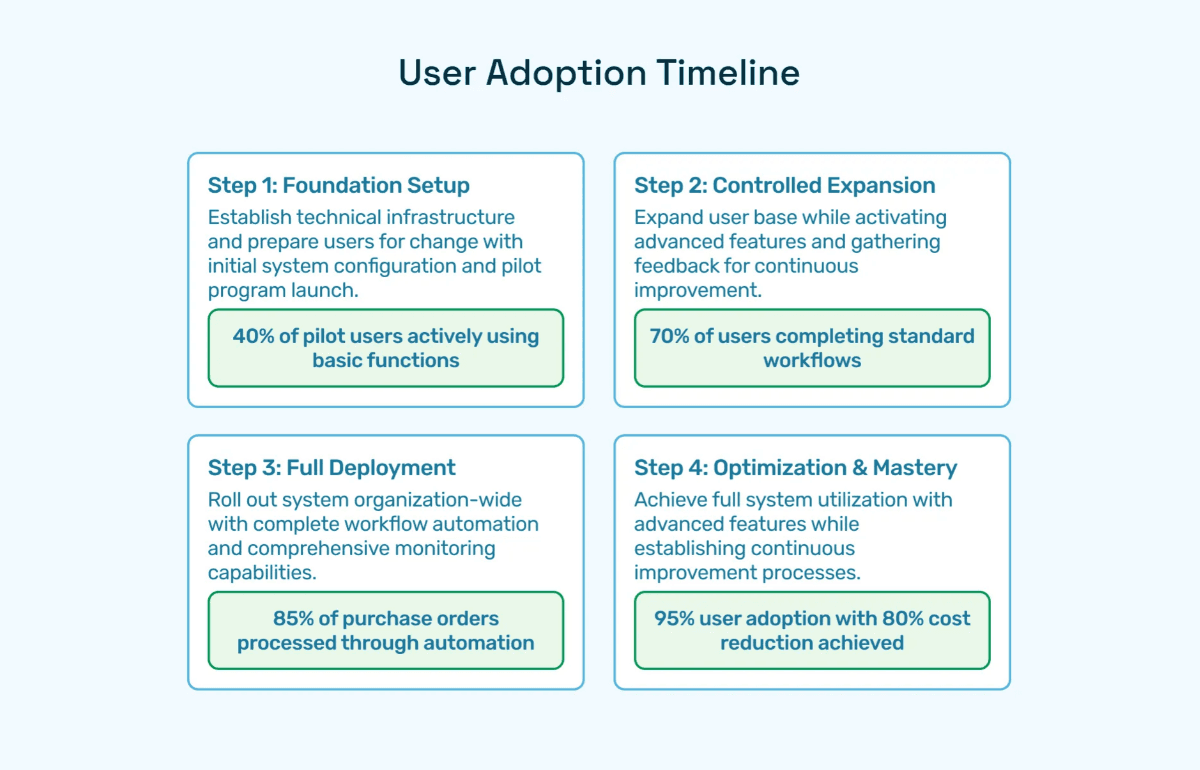
A: Most organizations achieve full procurement automation adoption within 6-12 months, depending on organizational size and complexity. The implementation follows a phased approach: foundation setup (1-2 months), pilot testing and expansion (3-4 months), full deployment (5-6 months), and optimization (7-12 months). Organizations with strong change management and executive support often achieve adoption milestones faster.
Q2: How can we measure ROI from purchase order automation?
A: ROI measurement should include both direct and indirect benefits. Direct savings include reduced processing costs (typically 40-70% savings), decreased manual labor requirements, and elimination of paper-based expenses. Indirect benefits encompass improved compliance, better vendor relationships, enhanced spend visibility, and strategic sourcing capabilities. Most organizations see positive ROI within 6-9 months of implementation.
Q3: What are the biggest challenges in driving user adoption?
A: The primary challenges include resistance to change, inadequate training programs, poor system usability, and insufficient executive support. Successful adoption requires addressing each challenge through comprehensive change management, role-based training programs, user-centric system design, and sustained leadership commitment. Organizations should expect initial resistance but can overcome it through demonstration of clear value and adequate support.
Q4: How do we ensure data quality during procurement automation implementation?
A: Data quality requires systematic attention to vendor master data cleansing, product catalog accuracy, budget information alignment, and historical data validation. Organizations should conduct comprehensive data audits before implementation, establish data governance procedures, and implement ongoing data quality monitoring. Clean data ensures accurate automated decision-making and user confidence in system reliability.
Q5: What training is required for different user types?
A: Training requirements vary by role: end users need basic requisition creation and submission skills; approvers require workflow management and delegation capabilities; procurement professionals need advanced configuration and vendor management training; finance team members require GL coding and reporting expertise. Effective programs combine multiple delivery methods including e-learning, virtual instruction, hands-on workshops, and ongoing support resources.
Q6: How does Hyperbots differ from other procurement automation solutions?
A: Hyperbots leverages agentic AI technology that learns and adapts to organizational patterns, unlike traditional rule-based systems. The platform offers comprehensive AI co-pilots for end-to-end procurement automation, seamless ERP integration, and user-centric design. Organizations typically achieve 80% operational cost reductions and 99.8% processing accuracy through Hyperbots' intelligent automation capabilities.
Q7: What security considerations are important for procurement automation?
A: Security requirements include data encryption, access control management, audit trail maintenance, vendor data protection, and compliance with relevant regulations (SOX, GDPR, industry-specific requirements). Organizations should implement role-based access controls, regular security audits, secure integrations with existing systems, and comprehensive backup and recovery procedures.
Q8: How do we handle exceptions and non-standard purchase orders?
A: Modern procurement automation systems handle exceptions through intelligent routing, escalation procedures, and manual override capabilities. Systems should support configurable business rules, exception queues for manual review, automated notifications for stakeholders, and comprehensive audit trails. Effective exception management maintains automation benefits while ensuring appropriate human oversight for complex scenarios.