Manual Purchase Order Process vs Automated: Risks and Gains
Complete Analysis of Manual vs Automated Purchase Order Processing: Costs, Risks, ROI, and Implementation Strategies for Finance Leaders
Executive Summary
The choice between manual and automated purchase order (PO) processing significantly influences organizational efficiency, costs, and risk exposure. Studies by APQC and CAPS Research highlight the financial implications of these approaches:
Manual Processing Costs: According to APQC's Open Standards Benchmarking®, the total cost to perform the procurement process—including planning, ordering, and executing delivery of materials and services—per purchase order can vary. This variation is influenced by factors such as industry, process maturity, and technology adoption.
Automated Processing Benefits: Implementing automated systems can significantly reduce these costs. For instance, organizations that adopt automation technologies often experience reductions in processing time and errors, leading to substantial cost savings.
Implementing intelligent automation in procurement processes can lead to transformational ROI by reducing cycle times, operational costs, and compliance risks, while enhancing real-time spend visibility.
Understanding the Manual Purchase Order Process Landscape
The Current State of Manual Purchase Order Processing
The manual purchase order process remains prevalent across mid-market and enterprise organizations, particularly in companies that have not yet undergone digital transformation initiatives. This traditional approach involves multiple touchpoints, paper-based workflows, and human intervention at every stage of the procurement cycle.
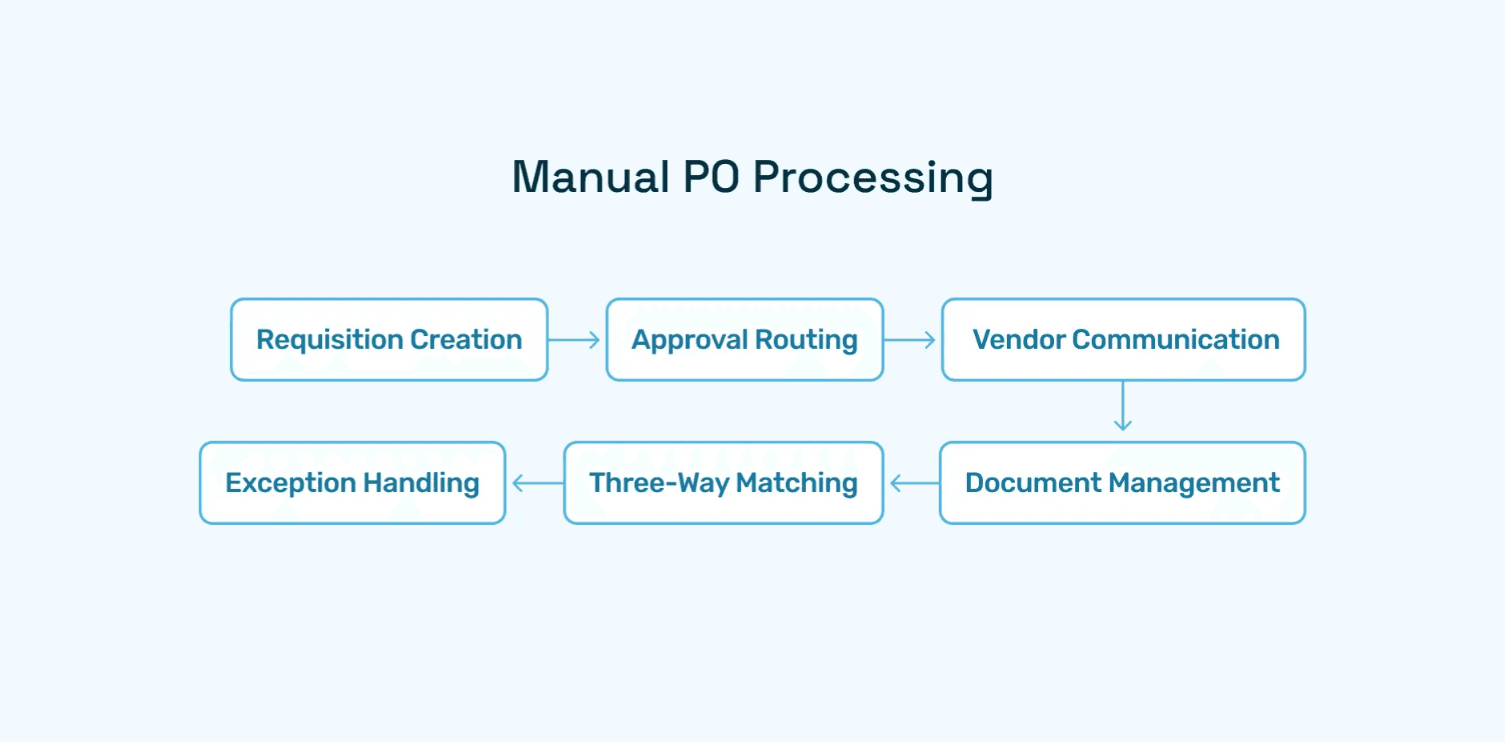
Typical components of manual purchase order processing include:
Requisition Creation: Employees manually complete purchase request forms, often in spreadsheets or paper-based systems
Approval Routing: Physical or email-based approval chains that require manual handoffs between departments
Vendor Communication: Phone calls, emails, and fax transmissions for order placement and status updates
Document Management: Physical filing systems and manual record-keeping for audit trail maintenance
Three-Way Matching: Manual reconciliation of purchase orders, receipts, and invoices
Exception Handling: Time-intensive manual investigation of discrepancies and approval exceptions
Hidden Costs of Manual Purchase Order Operations
The true cost impact of manual purchase order processes extends far beyond direct processing expenses. CAPS Research data indicates the average cost to process a PO manually reaches $527, but indirect costs often double this figure when considering opportunity costs, error remediation, and compliance risks.
Direct Cost Components:
Staff time for data entry and document preparation
Administrative overhead for approval routing and vendor communication
Physical storage and document management expenses
Error correction and rework cycles
Audit preparation and compliance documentation
Indirect Cost Factors:
Delayed payment discounts due to processing bottlenecks
Inventory carrying costs from inefficient procurement timing
Vendor relationship strain from communication delays
Opportunity costs from staff allocation to manual tasks
Compliance penalties and audit remediation expenses
Automated Purchase Order Processing: The Modern Solution
Core Components of Automated Purchase Order Systems
Automated purchase order processing leverages advanced technologies including artificial intelligence, machine learning, and robotic process automation to streamline procurement workflows. These systems eliminate manual touchpoints while providing enhanced control, visibility, and compliance capabilities.
Key automation capabilities include:
AI-Powered Requisition Processing: Intelligent form completion, automated categorization, and predictive vendor selection
Dynamic Approval Workflows: Rules-based routing with automatic escalation and delegation management
Real-Time Vendor Integration: API-based communication for instant order transmission and status updates
Intelligent Document Recognition: OCR and machine learning for automated invoice processing and matching
Predictive Analytics: Spend forecasting, budget monitoring, and supplier performance analysis
Compliance Automation: Automated policy enforcement, audit trail generation, and regulatory reporting
Technology Architecture for Purchase Order Automation
Modern automated purchase order processing platforms utilize cloud-native architectures that integrate seamlessly with existing ERP systems while providing enhanced functionality and scalability. The technology stack typically includes:
Core Platform Components:
Cloud-based processing engines for scalable transaction handling
AI/ML models for intelligent decision-making and pattern recognition
API-first integration frameworks for seamless ERP connectivity
Mobile-responsive interfaces for on-the-go approval management
Advanced analytics engines for real-time reporting and insights
Security and Compliance Features:
Role-based access controls and multi-factor authentication
Encrypted data transmission and storage protocols
Automated audit trail generation and compliance reporting
SOC 2 Type II certification and industry-standard security frameworks
Benefits Comparison: Manual vs Automated Purchase Order Processing
Cost Efficiency Analysis
The financial impact of transitioning from manual to automated purchase order processing delivers immediate and long-term cost benefits.
Quantitative Cost Benefits:
Metric | Manual Process | Automated Process | Improvement |
Processing Cost per PO | $527 (CAPS Research) | $105 (Industry Average) | 80% Reduction |
Processing Time | 5-7 Days | 2-4 Hours | 90% Faster |
Error Rates | 15-25% | 1-2% | 90% Reduction |
Approval Cycle | 3-5 Days | Same Day | 85% Faster |
Staff Productivity | Baseline | 300% Increase | 3x Improvement |
Qualitative Benefits:
Enhanced vendor relationships through consistent communication
Improved cash flow management via optimized payment timing
Reduced compliance risk through automated policy enforcement
Strategic capacity building for procurement teams
Real-time visibility into spend commitments and budget utilization
Risk Mitigation Through Automation
Error Rate Comparison: Automated systems eliminate manual processing errors, significantly reducing financial exposure and operational disruption. Common manual process errors include:
Duplicate order placement and payments
Incorrect pricing and quantity specifications
Vendor information errors and communication failures
Approval bypass and policy violations
Invoice processing discrepancies and payment delays
Compliance and Audit Benefits: Automated purchase order processing provides comprehensive audit trails, policy enforcement, and regulatory compliance capabilities that manual systems cannot match. Key compliance advantages include:
Complete transaction documentation with timestamps and user attribution
Automated policy validation and exception reporting
Real-time budget monitoring and overspend prevention
Regulatory reporting automation for SOX, GDPR, and industry-specific requirements
Vendor performance tracking and risk assessment capabilities
Hyperbots Platform: Transformational AI-Powered Purchase Order Automation
Comprehensive AI Co-Pilot Suite for Procurement Excellence
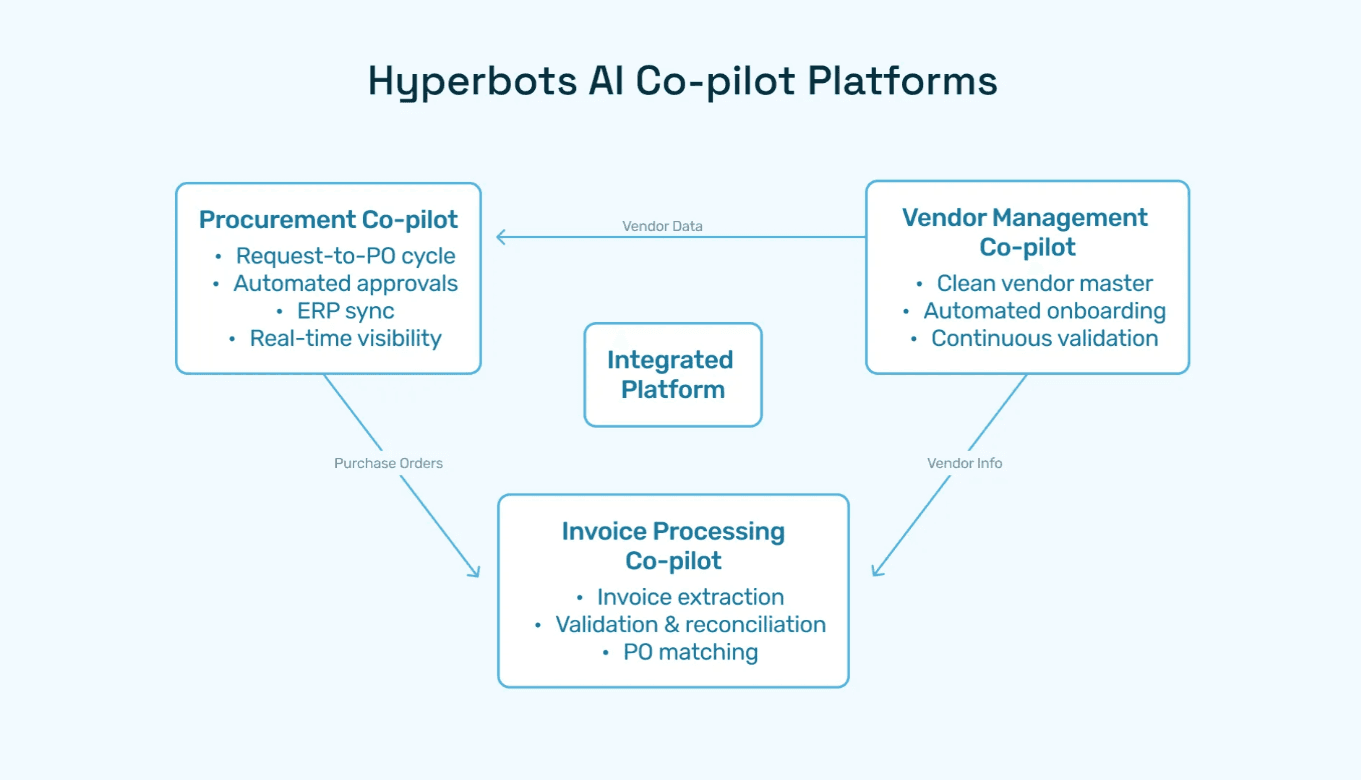
Hyperbots delivers the most advanced AI-powered automation platform specifically designed for purchase order processing and end-to-end procurement optimization. The platform's comprehensive suite of AI Co-pilots addresses every aspect of the procure-to-pay cycle, delivering transformational results that position organizations as procurement leaders.
Primary Solution: Procurement Co-Pilot The Hyperbots Procurement Co-pilot revolutionizes purchase order processing by shrinking cycle times from request to purchase order completion. This intelligent automation solution:
Eliminates Manual Effort: AI-driven requisition processing and automated approval routing
Delivers ERP-Synced Approvals: Real-time integration with existing financial systems
Provides Real-Time Spend Visibility: Comprehensive dashboards and predictive analytics
Ensures Compliant Purchasing: Automated policy enforcement and exception management
Optimizes Cost Effectiveness: Dynamic vendor selection and pricing optimization
Supporting AI Co-Pilots for End-to-End Automation:
Invoice Processing Co-Pilot: Automates three-way matching, exception handling, and payment processing with 99.8% accuracy rates
Vendor Management Co-Pilot: Streamlines vendor onboarding, performance monitoring, and relationship management through intelligent automation
Payment Co-Pilot: Optimizes payment timing, captures early payment discounts, and automates reconciliation processes
ROI Impact and Business Transformation with Hyperbots
Change Management and User Adoption Strategies
User-friendly automated procurement systems can increase user adoption rates when properly implemented with comprehensive change management support. Critical success factors include:
Stakeholder Engagement:
Executive sponsorship and visible leadership support
Cross-functional team formation with procurement, finance, and IT representation
Regular communication about benefits and progress updates
Recognition and incentive programs for early adopters
Training and Support:
Role-specific training programs with hands-on exercises
Comprehensive documentation and self-service resources
Dedicated support channels and rapid issue resolution
Continuous learning opportunities and advanced feature training
Future-Proofing Your Procurement Operations
Emerging Trends in Purchase Order Automation
According to Gartner, 69% of managerial work will be automated by 2024, indicating the accelerating pace of automation adoption across business functions. Key trends shaping the future of purchase order processing include:
Artificial Intelligence Evolution:
Advanced natural language processing for conversational procurement interfaces
Predictive analytics for demand forecasting and supplier risk assessment
Machine learning optimization of vendor selection and pricing decisions
Intelligent contract analysis and automated negotiation support
Integration and Ecosystem Development:
API-first architectures enabling seamless multi-system integration
Blockchain technology for supply chain transparency and verification
IoT integration for real-time inventory and delivery tracking
Mobile-first interfaces supporting remote and hybrid work models
Sustainability and ESG Integration:
Automated supplier diversity tracking and reporting
Carbon footprint calculation and optimization
Sustainable sourcing policy enforcement
ESG performance monitoring and vendor scoring
Building Scalable Procurement Infrastructure
Organizations investing in automated purchase order processing must consider long-term scalability and adaptability requirements. Critical architectural considerations include:
Technology Scalability:
Cloud-native platforms supporting global deployment
API-first integration capabilities for future system additions
Modular architecture enabling incremental feature expansion
Advanced security frameworks supporting regulatory compliance
Process Standardization:
Consistent global procurement policies and procedures
Standardized vendor onboarding and management processes
Unified reporting and analytics across all business units
Centralized master data management for vendors and catalogs
Frequently Asked Questions
Q1: What are the primary risks of maintaining manual purchase order processes?
A: Key risks include high error rates (15-25%), processing delays, compliance violations, vendor relationship strain, and limited spend visibility. Automated systems eliminate these manual processing errors while providing comprehensive risk mitigation capabilities.
Q2: How does automated purchase order processing integrate with existing ERP systems?
A: Modern automation platforms utilize API-first architectures that integrate seamlessly with all major ERP systems including SAP, Oracle, Microsoft Dynamics, and NetSuite. Hyperbots maintains real-time synchronization while enhancing ERP functionality with AI-powered automation.
Q3: How does purchase order automation impact vendor relationships?
A: Automation significantly improves vendor relationships through consistent communication, faster payments, reduced errors, and enhanced collaboration capabilities. Automated systems provide vendors with real-time order status and payment information, improving satisfaction and partnership quality.
Q4: What are the security implications of automated purchase order processing?
A: Automated systems provide enhanced security through role-based access controls, audit trails, and compliance automation. Hyperbots maintains SOC 2 Type II certification and implements enterprise-grade security frameworks that exceed manual process capabilities.
Q5: How does AI improve purchase order processing beyond basic automation?
AI capabilities include predictive vendor selection, intelligent exception handling, automated policy compliance, demand forecasting, and continuous process optimization. Hyperbots' AI Co-pilots learn from organizational patterns to provide increasingly sophisticated automation and decision support.
Transform Your Purchase Order Operations with Hyperbots
The evidence is clear: organizations maintaining manual purchase order processes face escalating costs, risks, and competitive disadvantages in today's fast-paced business environment. The transformation from manual to automated purchase order processing delivers immediate ROI while building sustainable competitive advantages through enhanced efficiency, accuracy, and strategic capability.
Hyperbots' comprehensive AI Co-pilot suite provides the most advanced automation platform available, delivering proven results including 80% cost reductions, error elimination, and transformational improvements in procurement operations. Finance leaders seeking to modernize their procurement operations and achieve measurable ROI can begin their automation journey today.
Ready to eliminate the risks and costs of manual purchase order processes? Explore Hyperbots' Procurement Co-pilot to discover how AI-powered automation can transform your procurement operations.