On-Premise vs. Cloud PO Systems: How to Choose the Best Online Purchase Order Software
Compare on-premise vs cloud PO systems and discover AI-powered purchase order automation for smarter procurement.
Executive Summary
Finance and procurement leaders must carefully choose between on-premise and cloud-based purchase order systems, as the decision affects efficiency, cost, security, and agility. This guide compares deployment options, outlines key decision factors, and shows how advanced online purchase order software—especially Hyperbots’ AI-driven Procurement Copilot—streamlines workflows, reduces costs, and drives transformational change in procurement operations.
What Is a Purchase Order System?
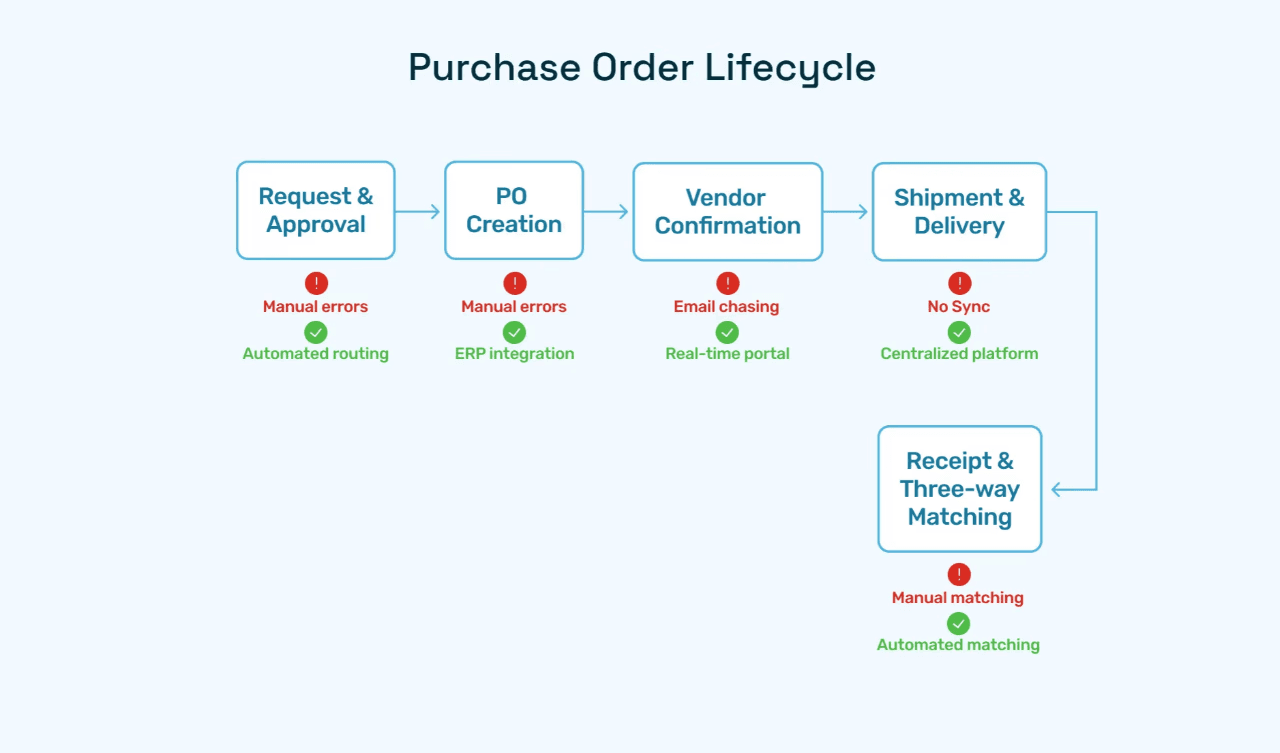
A purchase order system automates and manages the creation, approval, and tracking of purchase orders. It ensures a standardized process for requesting and acquiring goods or services, reducing manual errors and improving compliance.
Key features include:
Automated approvals and workflows
Real-time spend visibility
Integration with ERP systems
Supplier collaboration tools
On-Premise vs. Cloud PO Systems: Deployment Comparison
On-Premise Purchase Order System
Definition: An on-premise solution is hosted locally on a company’s own servers. The organization owns the hardware, manages the software, and controls security.
Pros:
Full control over data security and customization
Can integrate deeply with existing legacy systems
No dependency on internet connectivity for internal operations
Cons:
High upfront capital expenditure (hardware, licenses, IT staff)
Slower implementation and updates
Limited scalability
Cloud Purchase Order System
Definition: A cloud-based system is hosted by a third-party provider and accessed via the internet. Solutions are typically offered as SaaS (Software as a Service).
Pros:
Low upfront costs and predictable subscription pricing
Fast deployment and regular automated updates
High scalability with flexible resource allocation
Accessible from anywhere, enabling remote work
Cons:
Ongoing subscription fees
Data stored externally (though providers maintain high security standards)
Why Cloud PO Systems Lead in Modern Procurement
Total Cost of Ownership (TCO): Studies indicate that cloud solutions often offer lower TCO due to reduced hardware and maintenance costs, as well as automated updates. For instance, Accenture found that moving workloads to the public cloud leads to TCO savings of 30-40%. (source)
Flexibility & Scalability:
Cloud-based purchase order management systems allow finance teams to scale as business needs evolve without major infrastructure changes.Enhanced Security:
Leading cloud providers adhere to strict compliance and security protocols (SOC 2, ISO 27001), reducing the burden on internal IT teams.
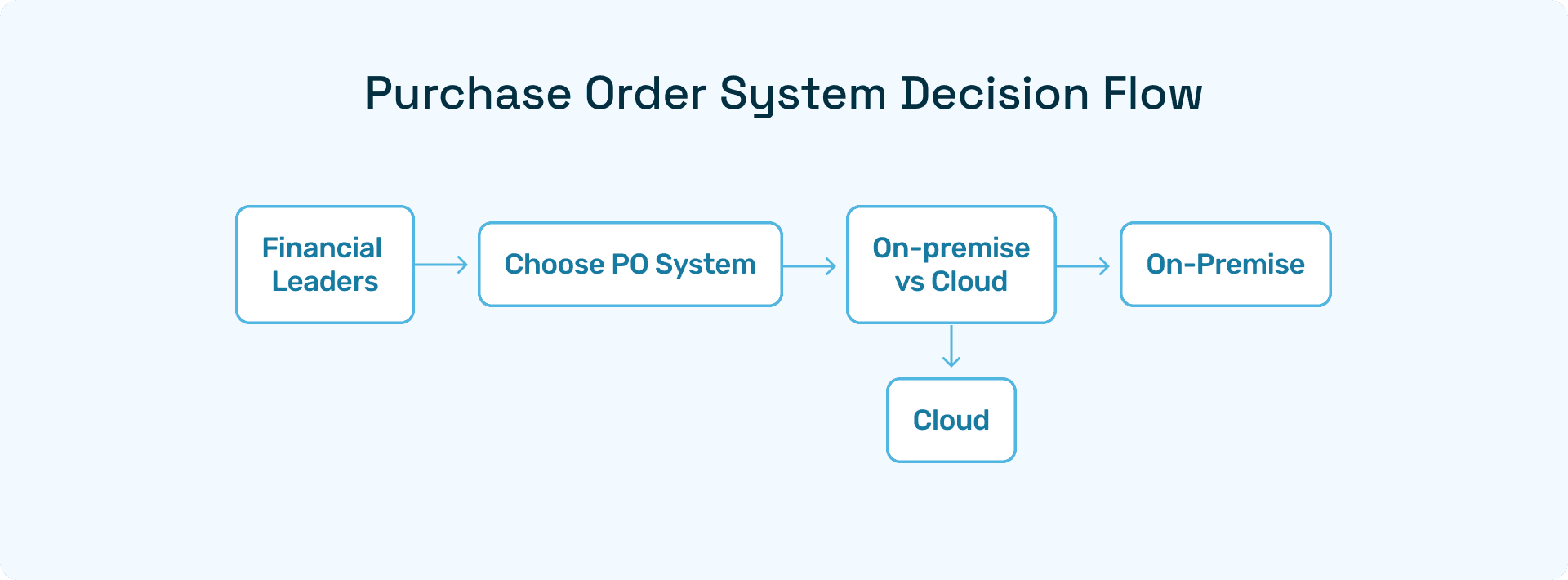
How to Decide: On-Premise vs. Cloud PO System
Consider these factors:
On-Premise | Cloud | |
Initial Cost | High | Low |
Maintenance | In-house IT team | Vendor-Managed |
Scalability | Limited | Highly Scalable |
Security | Fully Controlled | Enterprise-grade security |
Deployment Time | Months | Weeks |
For most modern enterprises, cloud PO systems offer superior flexibility, cost savings, and innovation readiness.
Factors to Consider When Choosing Between On-Premise and Cloud PO Systems
Choosing between on-premise and cloud-based purchase order systems is more than a technology decision—it’s a strategic one that impacts cost, efficiency, and long-term agility. Organizations should carefully evaluate several critical factors:
IT Infrastructure & Resources:
On-premise systems demand robust internal IT teams to handle server maintenance, software updates, and troubleshooting. Cloud systems shift these responsibilities to the provider, freeing IT resources for strategic initiatives.
Data Security & Compliance:
Security is often a top concern. While on-premise solutions offer full control over sensitive financial data, modern cloud providers adhere to strict security and compliance standards (SOC 2, ISO 27001), making cloud adoption increasingly viable even for regulated industries.
Scalability Needs:
Businesses experiencing seasonal spikes, rapid growth, or multi-location expansion benefit from cloud systems that can scale instantly without additional hardware investments. On-premise systems can become bottlenecks as demand rises.
Cost Structure:
On-premise solutions require significant upfront investment in hardware, licenses, and IT support. Cloud systems, in contrast, offer predictable subscription-based pricing and reduced capital expenditure, making budgeting simpler.
Remote Access & Mobility:
In today’s remote-first work environment, cloud systems provide immediate access from anywhere, enabling managers to approve POs and track orders without being physically on-site.
By carefully weighing these factors, organizations can select a PO system that not only addresses current operational needs but also supports future growth and strategic procurement objectives.
Best Practices for Modern Purchase Order Management
Regardless of whether a company chooses on-premise or cloud deployment, implementing best practices ensures procurement remains efficient, compliant, and agile:
Standardize Workflows:
Clearly define each stage of the PO process—from requisition to approval to issuance. Standardized procedures reduce errors and create accountability across teams.
Automate Repetitive Tasks:
Automation of approvals, notifications, and PO generation accelerates the cycle, minimizes manual intervention, and prevents common mistakes.
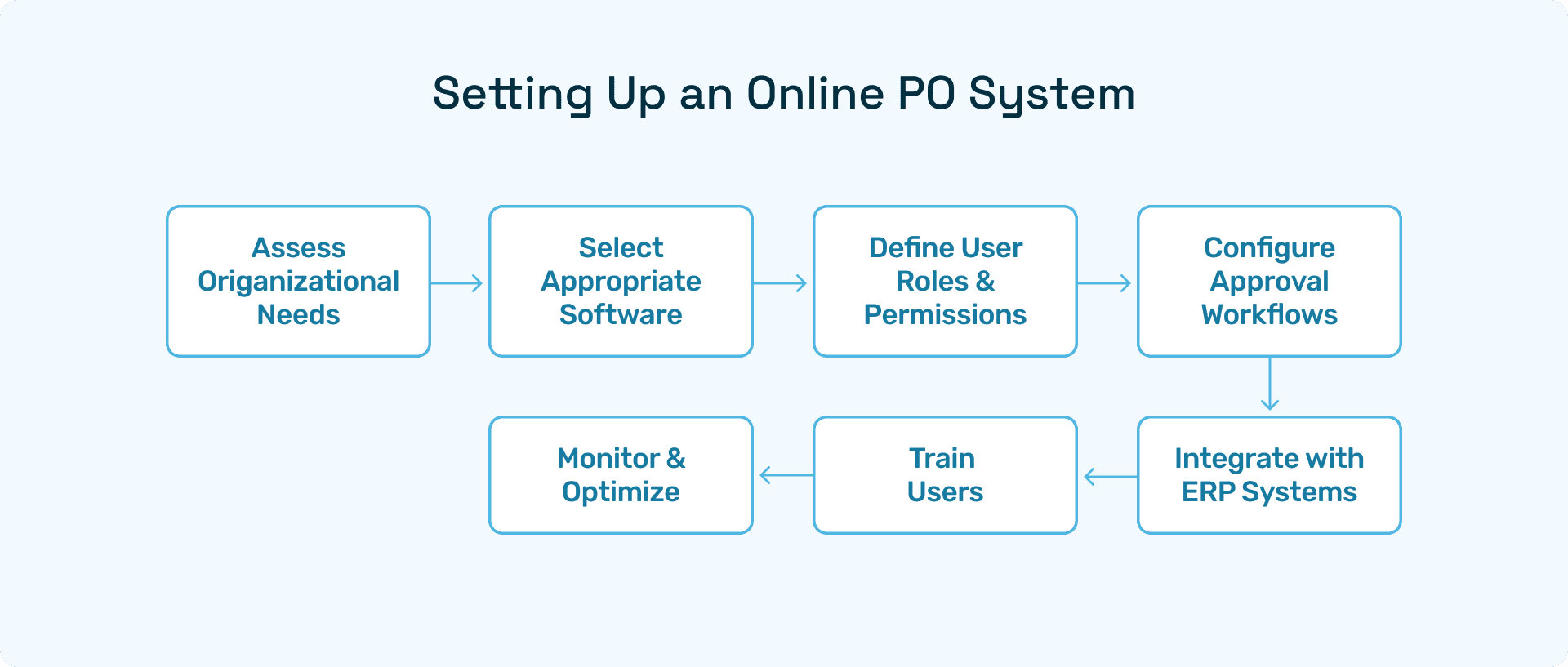
Integrate with ERP & Finance Systems:
Linking PO systems to ERP platforms ensures financial data flows seamlessly, improving spend visibility and simplifying reporting.
Maintain Comprehensive Audit Trails:
Documenting every action—approvals, edits, and communications—supports internal controls and regulatory compliance.
Monitor KPIs:
Track metrics such as cycle times, error rates, and budget adherence. Continuous monitoring allows organizations to identify bottlenecks and refine processes.
Train and Engage Teams:
Successful PO management depends on adoption. Train procurement and finance staff on workflows, system features, and compliance policies to ensure consistency and efficiency.
Leverage Real-Time Insights:
Use dashboards and reporting tools to give stakeholders instant visibility into PO status, supplier performance, and financial commitments.
Adopting these practices empowers organizations to reduce errors, speed approvals, improve compliance, and maintain tighter control over spending—regardless of the underlying technology. Modern PO management becomes a strategic advantage rather than just a back-office function.
Key Benefits of Hyperbots AI Co-Pilots Over Competitors
Instant ERP Synchronization: Unlike many platforms requiring manual integration, Hyperbots delivers seamless, real-time ERP sync.
End-to-End Automation: From requisition to PO to invoice, Hyperbots automates every step, eliminating process silos.
AI-Driven Anomaly Detection: Spot fraud and errors faster than manual processes.
Real-World ROI: Hyperbots in Purchase Order Automation
When finance leaders evaluate purchase order automation, the first question is simple: what’s the ROI? With Hyperbots, the answer is both measurable and transformative. The platform delivers savings you can quantify in hard dollars, along with intangible benefits that reshape how procurement and finance teams work.
Implementing Hyperbots' Procurement copilot deliver significant ROI and transforms procurement operations by providing:
Over 80% reduction in PO creation & dispatch time
5 minute PR creation time
At least a 10% reduction in cash outflows
Accurate and timely automatic communication with vendors
100% automation of forms and other information verification
Granular and customized workflow for each process
Improved vendor relationships due to predictable approval timelines.
By leveraging AI-driven PO tracking, companies not only achieve quantifiable cost savings but also strengthen operational resilience and supplier collaboration. Hyperbots’ integrated platform ensures that these benefits scale across departments, projects, and business units, turning procurement into a high-value function rather than a bottleneck.
FAQs
Q1: Is cloud PO software secure for sensitive financial data?
Yes, top providers follow strict compliance protocols (SOC 2, ISO 27001), ensuring high-level security.
Q2: Can cloud PO systems integrate with existing ERP solutions?
Absolutely. Hyperbots’ Procurement Copilot offers seamless ERP synchronization for real-time approvals and data accuracy.
Q3: What is the typical ROI period for adopting Hyperbots’ PO automation? Most clients see tangible ROI within 3–6 months through cost reductions and process efficiency gains.