Purchase Order Approval Process: Policies, Routing, Escalations
Streamline your purchase order approval process with clear policies, smart routing, and automated escalation strategies for faster, compliant procurement.
Executive Summary
The purchase order approval process serves as the critical control mechanism that balances organizational spending oversight with operational efficiency. Modern finance leaders increasingly recognize that traditional approval workflows, while providing necessary controls, often create bottlenecks that slow business operations and increase administrative costs. By streamlining requests, clarifying rules and using automation to remove friction, procurement leaders can flip approvals from bottlenecks into reliable engines for getting things done.
Effective purchase order approval processes require sophisticated routing policies, clearly defined approval matrices, and service level agreements (SLA routing) that ensure timely decision-making while maintaining appropriate fiscal controls. Organizations implementing intelligent approval automation typically achieve reduction in cycle times while strengthening compliance and audit capabilities.
This comprehensive guide explores advanced approval process frameworks, automation strategies, and policy structures that transform procurement from a reactive cost center into a strategic business enabler. We'll examine how AI-powered approval systems eliminate manual bottlenecks while enhancing decision quality and organizational transparency.
Understanding Purchase Order Approval Process Fundamentals
What is Purchase Order Processing and Approval?
Purchase order processing encompasses the complete workflow from initial purchase requisition through final approval and vendor communication. The approval component represents the quality control layer that validates business justification, budget availability, compliance requirements, and organizational policy adherence before financial commitments are authorized.
A comprehensive purchase order approval process includes several key validation points:
Business Justification Review: Ensuring purchases align with operational requirements and strategic objectives while avoiding unnecessary or duplicate expenditures.
Budget Authorization: Confirming available budget capacity and appropriate cost center allocation to prevent overspending and support accurate financial forecasting.
Policy Compliance: Validating adherence to procurement policies, vendor requirements, contract terms, and regulatory obligations that protect organizational interests.
Risk Assessment: Evaluating supplier credentials, contract terms, and potential business risks that could impact operational continuity or financial performance.
Core Components of Effective Approval Workflows
Modern purchase order approval processes integrate multiple sophisticated components that work together to optimize efficiency while maintaining control:
Dynamic Routing Logic: Intelligent systems automatically route approval requests based on purchase characteristics, organizational hierarchy, and policy requirements, eliminating manual routing delays and errors.
Parallel Processing Capabilities: Advanced workflows enable simultaneous reviews by multiple stakeholders when appropriate, significantly reducing overall approval cycle times.
Exception Handling Protocols: Built-in processes manage unusual circumstances, policy violations, and system errors without disrupting normal workflow operations.
Escalation Management: Automated escalation triggers ensure approval delays don't impact business operations while maintaining appropriate oversight levels.
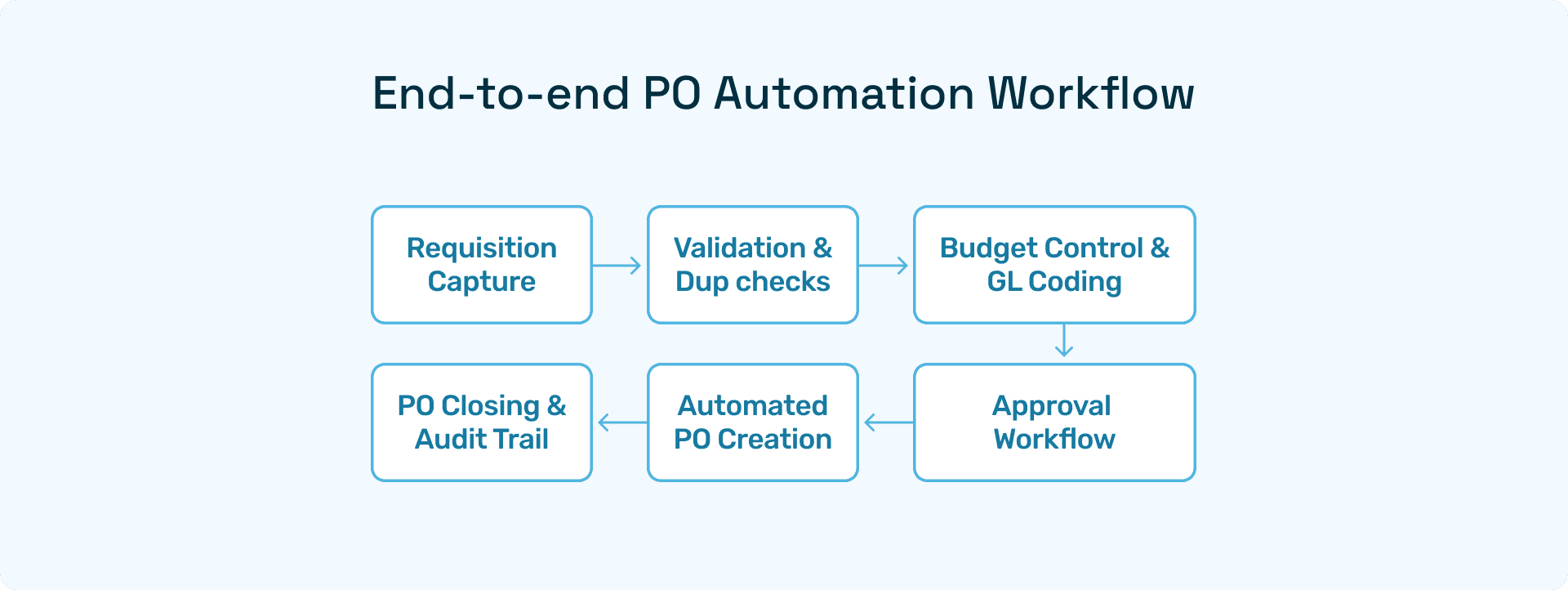
Purchase Order Approval Process Flowchart Design
Standard Approval Workflow Architecture
Effective purchase order approval process flowcharts incorporate standardized elements that ensure consistency while accommodating organizational complexity:
Initiation Phase:
Purchase requisition creation with detailed specifications
Automatic budget availability validation
Initial policy compliance screening
Vendor validation and risk assessment
Routing Phase:
Dynamic approver identification based on approval matrices
Parallel routing for efficiency optimization
Real-time notification and status tracking
Mobile accessibility for remote approvals
Decision Phase:
Structured approval criteria evaluation
Comment and feedback collection capabilities
Conditional approval mechanisms for special circumstances
Automatic rejection routing for non-compliant requests
Completion Phase:
Purchase order generation and vendor transmission
Audit trail creation and documentation
Performance metrics collection and reporting
Integration with downstream processes
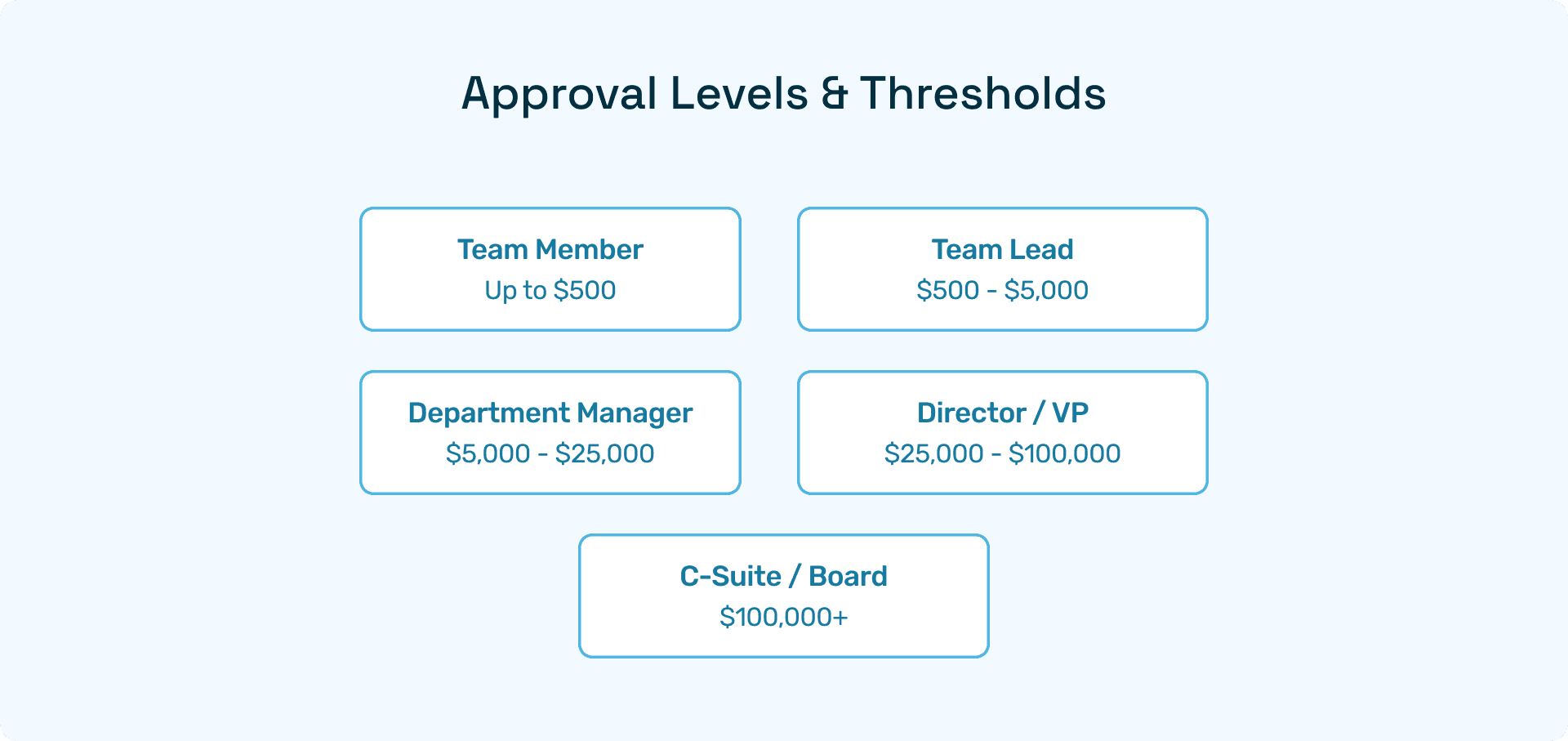
Multi-Level Approval Hierarchies
Striking the right balance between control and process efficiency is key. A best practice is to have budget owners review purchases above a defined threshold while involving finance only when the purchase exceeds the budget.
Spend-Based Approval Levels:
Tier 1 ($0-$1,000): Department manager approval with automated processing
Tier 2 ($1,000-$10,000): Department head and budget owner approval
Tier 3 ($10,000-$50,000): Director approval with finance review
Tier 4 ($50,000+): Executive approval with comprehensive due diligence
Risk-Based Routing Enhancement:
New vendor purchases require additional security and financial reviews
Contract modifications trigger legal and procurement team involvement
Emergency purchases follow expedited approval paths with post-approval validation
Sole source purchases require competitive analysis and justification documentation
Approval Matrices: Structure and Implementation
Understanding Approval Matrix Fundamentals
A procurement approval matrix ensures the right people approve the right purchases—without delays or confusion. It boosts efficiency, strengthens compliance, and makes every approval traceable and accountable.
Approval matrices serve as the foundational framework that determines who can approve what purchases under which circumstances. These structured decision trees eliminate ambiguity while ensuring appropriate oversight levels based on risk, spend amount, and organizational impact.
Matrix Dimensions Include:
Spend Amount Thresholds: Progressive approval requirements based on financial impact
Purchase Categories: Different approval paths for services, goods, capital equipment, and software
Department Classifications: Varying approval authorities based on operational requirements
Vendor Risk Levels: Enhanced approval requirements for new or high-risk suppliers
Dynamic Approval Matrix Configuration
Modern approval matrices incorporate intelligent logic that adapts to changing business conditions and organizational requirements:
Conditional Approval Rules:
Budget availability automatically modifies approval requirements
Vendor performance history influences routing decisions
Contract compliance status affects approval complexity
Seasonal business cycles modify threshold levels
Delegation and Backup Systems:
Temporary delegation capabilities during absences or travel
Automatic backup approver activation when primary approvers are unavailable
Role-based permissions that maintain segregation of duties
Mobile approval capabilities that prevent delays
Performance-Based Adjustments:
Approval velocity metrics inform matrix optimization
Historical decision patterns identify bottlenecks and inefficiencies
User feedback drives continuous improvement initiatives
Cost-benefit analysis validates matrix effectiveness
Industry-Specific Approval Matrix Design
Manufacturing Organizations:
Production-critical purchases receive expedited approval paths
Quality certification requirements trigger specialized reviews
Inventory impact assessments influence approval complexity
Supplier capacity validations add approval checkpoints
Professional Services Firms:
Client billing considerations affect approval routing
Professional liability assessments require specialized review
Resource allocation impacts influence approval hierarchies
Regulatory compliance adds industry-specific checkpoints
Technology Companies:
Security assessments mandatory for all technology purchases
Intellectual property considerations trigger legal reviews
Scalability requirements influence approval complexity
Integration compatibility adds technical approval layers
SLA Routing and Performance Management
Service Level Agreement Framework for Approvals
A service-level agreement (SLA) is a contract between a service provider (Procurement team) and its internal end users (those who place the purchase request). It documents what services for the purchase request, procurement team will furnish and also defines the performance standards the provider is obligated to meet.
SLA routing establishes measurable performance standards for approval processes, creating accountability while ensuring business operations receive predictable service levels. Effective SLAs balance thorough review requirements with operational urgency needs.
Standard SLA Metrics:
Routine Approvals: 24-48 hour completion targets
Complex Reviews: 5-7 business day completion standards
Emergency Purchases: 2-4 hour expedited processing
Capital Expenditures: 10-15 business day comprehensive review cycles
Automated SLA Monitoring and Escalation
Modern systems continuously monitor approval performance against established SLAs, automatically triggering escalation processes when delays occur:
Proactive Notification Systems:
Advance warnings to approvers before SLA deadlines
Automatic escalation to backup approvers when delays occur
Real-time dashboard visibility for all stakeholders
Mobile push notifications for urgent approval requests
Performance Analytics:
Individual approver performance tracking and reporting
Department-level SLA compliance measurement
Bottleneck identification and resolution recommendations
Historical trend analysis for continuous improvement
Escalation Management Protocols:
Automatic routing to next approval level after SLA breach
Emergency contact procedures for critical business purchases
Executive notification systems for high-value delays
Vendor communication automation during approval delays
Policy Framework and Governance Structure
Comprehensive Approval Policy Development
Effective purchase order approval processes require detailed policy frameworks that provide clear guidance while accommodating business flexibility:
Approval Authority Guidelines:
Spend threshold definitions with regular review and adjustment mechanisms
Emergency approval procedures that maintain appropriate controls
Delegation protocols that ensure continuous approval capability
Conflict of interest policies that prevent inappropriate approvals
Documentation Requirements:
Business justification standards that demonstrate purchase necessity
Vendor selection criteria and competitive bidding requirements
Budget impact analysis for significant purchases
Compliance certification for regulated industry purchases
Exception Management Procedures:
Sole source justification requirements and approval processes
Emergency purchase procedures with post-approval validation
Budget variance approval processes and limits
Non-standard contract term approval protocols
Compliance and Audit Integration
Regulatory Compliance Framework:
SOX compliance controls for public companies
Industry-specific regulatory requirements integration
International compliance considerations for global organizations
Data privacy and security compliance validation
Audit Trail Management:
Comprehensive approval decision documentation
Timestamp and digital signature capture
Comment and justification preservation
Decision reversal and modification tracking
Internal Control Alignment:
Segregation of duties enforcement through system controls
Multi-person approval requirements for high-risk transactions
Regular access review and approval authority validation
Exception reporting and investigation procedures
Hyperbots AI Co-Pilots: Revolutionary Approval Process Automation
Procurement Co-Pilot: Intelligent Approval Management
The Hyperbots Procurement Co-Pilot transforms traditional purchase order approval processes through advanced artificial intelligence that learns organizational patterns and optimizes decision-making:
Intelligent Approval Routing: The co-pilot analyzes purchase characteristics, organizational policies, and historical patterns to automatically route approvals through optimal paths, reducing cycle times while maintaining appropriate control levels.
Predictive Approval Recommendations: Machine learning algorithms evaluate purchase requests against organizational data to provide intelligent approval recommendations, helping approvers make faster, more informed decisions while reducing approval bottlenecks.
Real-Time ERP Integration: Instant synchronization with enterprise systems enables real-time budget validation, vendor verification, and policy compliance checking, eliminating delays caused by manual system queries and data validation.
Advanced AI Capabilities for Approval Optimization
Contextual Decision Support:
AI-powered risk assessment based on vendor performance, purchase history, and market conditions
Intelligent budget analysis with predictive spend forecasting and variance alerts
Automated compliance checking against organizational policies and regulatory requirements
Dynamic threshold adjustments based on business conditions and approval performance
Natural Language Processing:
Automated business justification analysis and quality scoring
Intelligent extraction of key purchase details for approval routing
Context-aware approval recommendations based on purchase descriptions
Automated generation of approval summaries and decision documentation
Continuous Learning and Optimization:
Pattern recognition that identifies approval bottlenecks and optimization opportunities
Performance analytics that drive continuous process improvement
User behavior analysis that personalizes approval workflows
Predictive modeling that anticipates approval delays and suggests mitigation strategies
Comprehensive Procure-to-Pay Automation Ecosystem
Hyperbots' integrated co-pilot suite delivers end-to-end automation that extends beyond approval processes:
Invoice Processing Co-Pilot: Seamless integration with approval workflows ensures approved purchases flow efficiently through invoice validation and payment processing, maintaining audit trails and compliance requirements.
Vendor Management Co-Pilot: Continuous supplier performance monitoring informs approval routing decisions while maintaining comprehensive vendor risk profiles that enhance approval quality.
Strategic Value Creation Through Intelligent Approvals
Enhanced Decision Quality:
AI-powered recommendations improve approval accuracy by through comprehensive data analysis
Risk assessment capabilities reduce vendor-related issues through proactive identification
Budget compliance improvements prevent cost overruns and support accurate financial forecasting
Organizational Agility:
Faster approval processes enable rapid response to market opportunities and competitive threats
Scalable automation supports business growth without proportional administrative overhead increases
Flexible policy management adapts to changing business conditions and regulatory requirements
Competitive Advantage:
Superior supplier relationships through reliable, fast payment processes
Enhanced negotiating power through improved contract compliance and performance tracking
Strategic procurement focus enables value-driven vendor partnerships rather than transactional relationships
Implementation Best Practices for Approval Process Optimization
Change Management and User Adoption Strategies
Successful approval process automation requires comprehensive change management that addresses both technical and cultural transformation:
Stakeholder Engagement Framework:
Executive sponsorship and visible leadership support for automation initiatives
Cross-functional teams including finance, procurement, IT, and business users
Regular communication about benefits, progress, and implementation milestones
Success story sharing and best practice dissemination across the organization
Training and Support Programs:
Role-based training programs tailored to different user groups and approval levels
Hands-on workshops and simulation exercises using real organizational scenarios
Ongoing support resources including documentation, video tutorials, and help desk services
Super-user programs that create internal champions and support networks
Performance Monitoring and Continuous Improvement
Key Performance Indicators:
Average approval cycle time by purchase category and approval level
SLA compliance rates with trend analysis and root cause identification
User satisfaction scores and adoption rate measurements
Cost per approval transaction and overall process efficiency metrics
Optimization Methodologies:
Regular process reviews with stakeholder feedback and performance data analysis
A/B testing of approval routing alternatives and policy modifications
Continuous monitoring of bottlenecks with automated resolution recommendations
Predictive analytics that identify future optimization opportunities
Advanced Approval Process Configurations
Multi-Entity and Global Approval Management
Large organizations require sophisticated approval processes that accommodate multiple legal entities, currencies, and regulatory environments:
Cross-Entity Approval Coordination:
Centralized policy management with local compliance customization
Multi-currency approval thresholds with real-time exchange rate integration
Inter-company purchase approval workflows and transfer pricing considerations
Global vendor management with local procurement authority integration
Regional Compliance Integration:
Country-specific regulatory requirement incorporation
Local language support for international approval workflows
Time zone optimization for global approval routing
Cultural consideration integration for international stakeholder management
Advanced Integration and API Management
Enterprise System Integration:
Real-time ERP synchronization for budget, vendor, and policy data
CRM integration for customer-related purchase approvals
Project management system coordination for project-based purchases
Financial planning system integration for budget forecasting and variance analysis
Third-Party Platform Connectivity:
Supplier portal integration for direct vendor communication
Banking system integration for payment term validation
Risk management platform connectivity for vendor risk assessment
Contract management system integration for agreement compliance validation
Future Trends in Purchase Order Approval Automation
Emerging Technologies and Capabilities
Blockchain-Based Approval Systems:
Immutable approval records that enhance audit capabilities and fraud prevention
Smart contracts that automate approval execution based on predetermined conditions
Decentralized approval networks that eliminate single points of failure
Cryptocurrency integration for cross-border purchase settlements
Advanced AI and Machine Learning:
Predictive approval modeling that anticipates approval outcomes and optimizes routing
Natural language generation for automated approval explanations and documentation
Computer vision integration for invoice and receipt validation during approval processes
Voice recognition capabilities that enable hands-free approval processing
Market Evolution and Industry Standards
The purchase order approval process landscape continues evolving toward intelligent, autonomous systems that require minimal human intervention while maintaining appropriate oversight:
Industry Standardization:
Common API standards for approval system integration
Standardized approval matrix templates for different industries
Best practice frameworks for SLA management and performance measurement
Regulatory guidance for automated approval compliance
Autonomous Approval Systems:
Machine learning systems that handle routine approvals without human intervention
Exception-only approval workflows that focus human attention on high-value decisions
Predictive systems that prevent approval bottlenecks before they occur
Self-optimizing workflows that continuously improve performance without manual intervention
Optimizing Your Purchase Order Approval Process
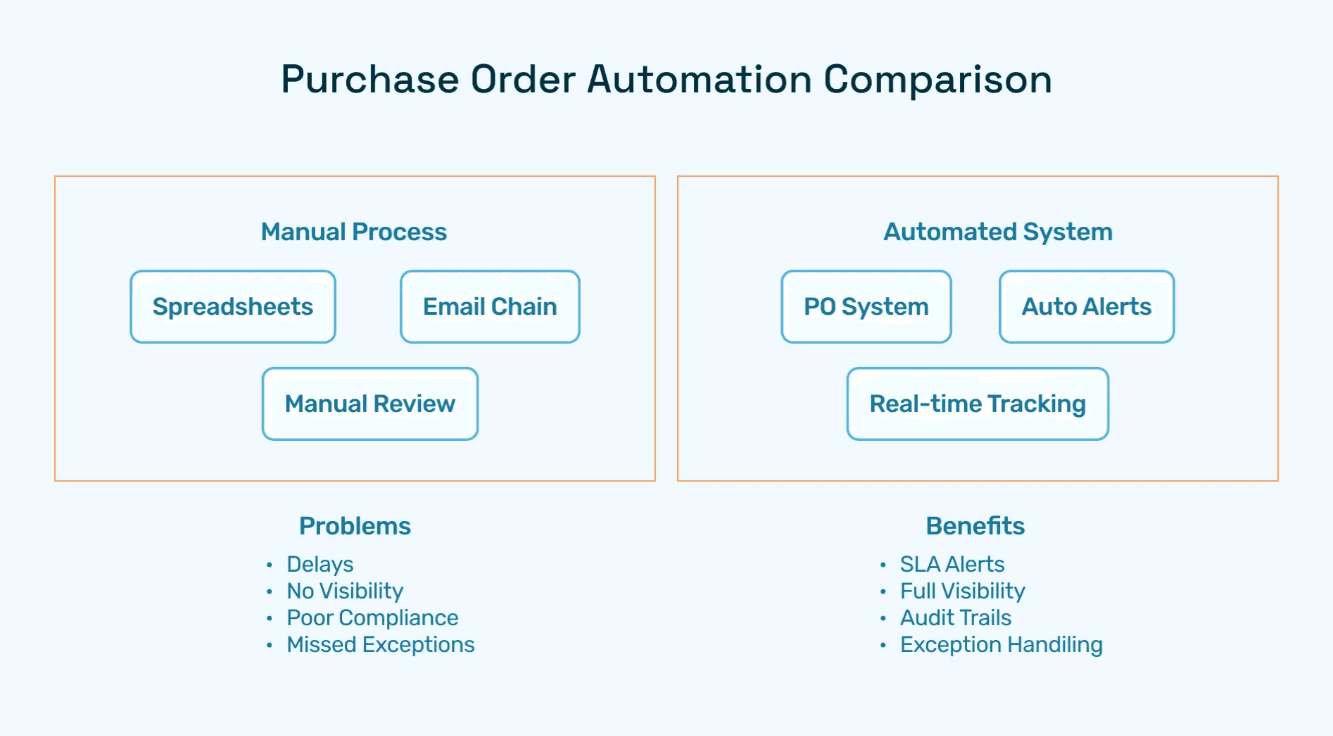
The transformation from manual, paper-based approval processes to intelligent, AI-powered automation represents a critical competitive advantage in today's fast-paced business environment. Organizations that master purchase order approval process optimization achieve remarkable efficiency gains while strengthening compliance and control capabilities.
Hyperbots' Procurement Co-Pilot delivers the most sophisticated approval automation available, combining intelligent routing, predictive analytics, and seamless ERP integration to achieve 80% operational cost reductions while enhancing decision quality and organizational agility. Finance leaders who implement comprehensive approval automation position their organizations for sustainable competitive advantage through superior procurement performance.
Transform your approval bottlenecks into competitive advantages with Hyperbots' Procurement Co-Pilot.
Frequently Asked Questions
Q1: What is the optimal approval matrix structure for mid-size companies?
A: Mid-size companies typically benefit from 3-4 approval levels with spend thresholds of $1,000, $10,000, and $50,000. The key is balancing control with efficiency by implementing parallel approvals where possible and focusing executive approval on strategic purchases rather than routine operational needs.
Q2: How do automated approval systems handle emergency purchases?
A: Modern approval systems include emergency purchase workflows that bypass normal routing while maintaining appropriate controls. These workflows typically require post-approval validation, executive notification, and comprehensive documentation to ensure emergency procedures aren't misused while enabling rapid response to critical business needs.
Q3: What are typical SLA targets for different types of purchase approvals?
A: Standard SLA targets include 24-48 hours for routine purchases under $10,000, 3-5 business days for complex purchases up to $50,000, and 7-10 business days for capital expenditures and strategic purchases. Emergency purchases should target 2-4 hour completion times with appropriate escalation procedures.
Q4: How do approval matrices accommodate organizational changes and growth?
A: Effective approval matrices include built-in flexibility through role-based permissions, delegation capabilities, and threshold adjustment mechanisms. Cloud-based systems enable rapid configuration changes that accommodate organizational growth, restructuring, and policy modifications without disrupting ongoing operations.
Q5: What compliance considerations apply to automated approval processes?
A: Automated approval processes must maintain comprehensive audit trails, enforce segregation of duties, and provide sufficient documentation for regulatory compliance. SOX compliance requires particular attention to approval authority controls, while industry-specific regulations may impose additional documentation and validation requirements.
Q6: How do organizations measure the success of approval process automation?
A: Success metrics include cycle time reduction, cost per transaction, SLA compliance rates, user satisfaction scores, and error rate improvements. Most organizations see 60-80% cycle time reductions and 40-60% cost reductions within six months of implementing comprehensive approval automation.