Purchase Order Process Flow: Visual Guide and Flowchart Templates
A practical guide to understanding purchase order process flows with easy-to-use flowchart templates that simplify procurement and improve efficiency.
Executive Summary
The purchase order process flow serves as the backbone of efficient procurement operations, directly impacting an organization's financial performance and operational efficiency. Modern finance leaders face increasing pressure to streamline procurement cycles while maintaining strict compliance and cost controls. Studies show that automated procurement solutions can save 40 to 70% over manual system costs, making process optimization a critical strategic priority.
This comprehensive guide provides finance professionals with detailed purchase order process flow charts, templates, and automation strategies that reduce operational costs while enhancing visibility and control. We'll explore visual workflows, best practices, and how AI-powered co-pilots are transforming traditional procurement processes to deliver measurable ROI improvements.
Key takeaways include standardized flowchart templates, automation implementation roadmaps, and quantified benefits that position procurement as a strategic value driver rather than a cost center.
Understanding Purchase Order Process Flow Fundamentals
What is Purchase Order Process Flow?
A purchase order process flow represents the systematic sequence of steps organizations follow from identifying procurement needs through final payment and reconciliation. The PO process fits into a larger procure-to-pay (P2P) process, starting with identifying business needs and continuing through payment and auditing. This structured approach ensures legal compliance, enforces agreed-upon price terms, and provides essential audit trails for financial transparency.
The purchase order process flow chart typically encompasses seven core stages:
Need identification and requisition creation
Budget approval and vendor selection
Purchase order generation and approval
Vendor communication and order confirmation
Goods receipt and inspection
Invoice processing and three-way matching
Payment authorization and completion
Core Components of Effective Purchase Order Process Flow Charts
Professional purchase order process flowcharts incorporate several critical elements that ensure operational efficiency and compliance:
Decision Points: Clear approval thresholds based on spend amounts, department budgets, and authorization levels create accountability while preventing bottlenecks.
Parallel Processing: Modern workflows enable simultaneous vendor communications, budget checks, and compliance validations to reduce cycle times.
Exception Handling: Built-in processes for handling discrepancies, emergency purchases, and vendor issues maintain flow continuity.
Integration Touchpoints: Connections to ERP systems, financial platforms, and vendor portals ensure data consistency and real-time visibility.
Standard Purchase Order Process Flow Chart Template
Step-by-Step Purchase Order Process Flowchart
Step 1: Purchase Requisition Creation: The process initiates when departments identify procurement needs. Requesters complete digital forms specifying item details, quantities, preferred vendors, and business justifications. Modern systems automatically validate budget availability and route requests based on predefined approval hierarchies.
Step 2: Approval Workflow Execution: Requests flow through automated approval chains based on spend thresholds and organizational policies. Effective purchase order management relies on having a repeatable process that applies to every purchase, ensuring consistency and compliance across all procurement activities.
Step 3: Vendor Selection and Quotation: This process may involve sending requests for quotations (RFQs) to multiple vendors, evaluating responses based on price, quality, delivery time, and reputation. Strategic sourcing teams analyze proposals using weighted scoring matrices to select optimal suppliers.
Step 4: Purchase Order Generation: Approved requisitions automatically generate purchase orders containing complete specifications, delivery requirements, payment terms, and compliance conditions. Digital signatures and automated routing eliminate manual handling delays.
Step 5: Vendor Confirmation and Communication: Electronic purchase orders transmit instantly to selected vendors through integrated portals or EDI connections. Automated acknowledgment requirements ensure vendors confirm receipt, pricing, and delivery commitments.
Step 6: Goods Receipt and Inspection: Receiving teams validate deliveries against purchase orders, conducting quality inspections and quantity verifications. Mobile applications enable real-time receipt confirmations that trigger subsequent workflow steps.
Step 7: Invoice Processing and Payment: Three-way matching automatically compares purchase orders, receipts, and invoices to identify discrepancies.
Purchase Order Process Flow Chart PDF Templates
Standardized purchase order process flow chart PDF templates provide organizations with consistent visual frameworks that accommodate various complexity levels:
Basic Template: Suitable for smaller organizations with straightforward approval hierarchies and limited vendor relationships. Includes essential steps with minimal decision branches.
Advanced Template: Designed for enterprise environments with complex approval matrices, multiple approval paths, and extensive vendor networks. Incorporates parallel processing capabilities and exception handling protocols.
Industry-Specific Templates: Customized workflows addressing unique requirements for manufacturing, healthcare, technology, and professional services organizations.
Purchase Order Process Flowchart Template Variations
Department-Specific Purchase Order Process Flowcharts
Different organizational functions require tailored purchase order process flowchart templates that address unique requirements and approval structures:
Finance Department Workflows: Emphasize budget validations, GL coding accuracy, and compliance checkpoints. Include additional approval layers for capital expenditures and contract commitments.
IT Department Processes: Incorporate security assessments, compatibility validations, and vendor risk evaluations. Include technical specification reviews and implementation planning steps.
Operations and Manufacturing: Focus on inventory integration, production scheduling impacts, and quality specification requirements. Include supplier performance tracking and delivery coordination elements.
Approval Hierarchy Purchase Order Process Flow Charts
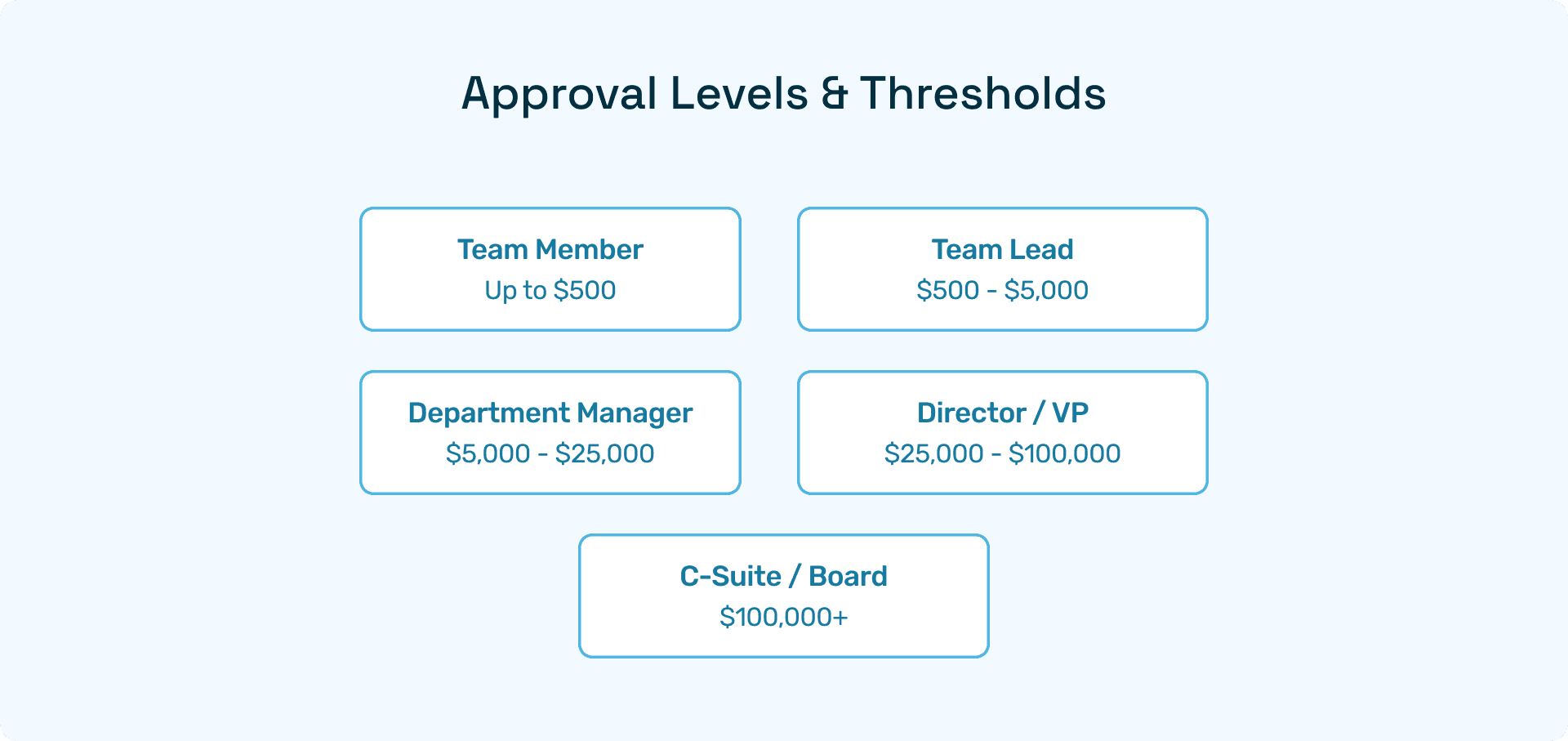
Effective approval hierarchies balance control requirements with operational efficiency. Modern purchase order process flows implement dynamic approval routing based on multiple variables:
Spend-Based Approvals:
Under $1,000: Department manager approval
$1,000-$10,000: Department head and finance approval
$10,000-$50,000: Director and CFO approval
Above $50,000: Executive committee approval
Risk-Based Routing: High-risk vendors, new suppliers, or non-standard terms trigger additional review steps regardless of spend amounts.
Emergency Processing: Streamlined workflows for urgent purchases maintain appropriate controls while enabling rapid processing for critical business needs.
Benefits of Implementing Structured Purchase Order Process Flows
Financial Impact and Cost Control
Structured purchase order process flows deliver measurable financial benefits through enhanced visibility and control mechanisms:
Spending Visibility: Real-time dashboards provide finance teams with comprehensive spend analytics, enabling proactive budget management and variance analysis. Organizations typically achieve 15-25% reduction in maverick spending through improved visibility.
Contract Compliance: Automated enforcement of negotiated terms, pricing, and vendor agreements prevents cost leakage and ensures maximum value realization from strategic sourcing initiatives.
Cash Flow Optimization: Standardized payment terms and automated processing enable organizations to optimize cash flow management while capturing early payment discounts when advantageous.
Operational Efficiency Improvements
Standardizing the purchase order process helps streamline workflow and reduce administrative burden, enabling efficient communication between departments, suppliers, and stakeholders.
Cycle Time Reduction: Automated workflows typically reduce purchase order cycle times, freeing procurement teams to focus on strategic value-added activities rather than transactional processing.
Error Elimination: Systematic validations and automated data entry significantly reduce human errors that cause processing delays, vendor disputes, and financial reconciliation issues.
Resource Optimization: Staff productivity improvements allow organizations to handle increased transaction volumes without proportional headcount increases, improving overall operational leverage.
Risk Management and Compliance
Audit Trail Completeness: Digital workflows create comprehensive audit trails that support regulatory compliance, internal controls testing, and vendor relationship management.
Segregation of Duties: Automated role-based access controls ensure proper segregation of duties between requisition, approval, and payment functions, strengthening internal control environments.
Vendor Risk Mitigation: Integrated vendor management capabilities enable continuous monitoring of supplier performance, financial stability, and compliance status.
Digital Transformation and Purchase Order Process Flow Modernization
Legacy vs. Modern Purchase Order Processing Systems
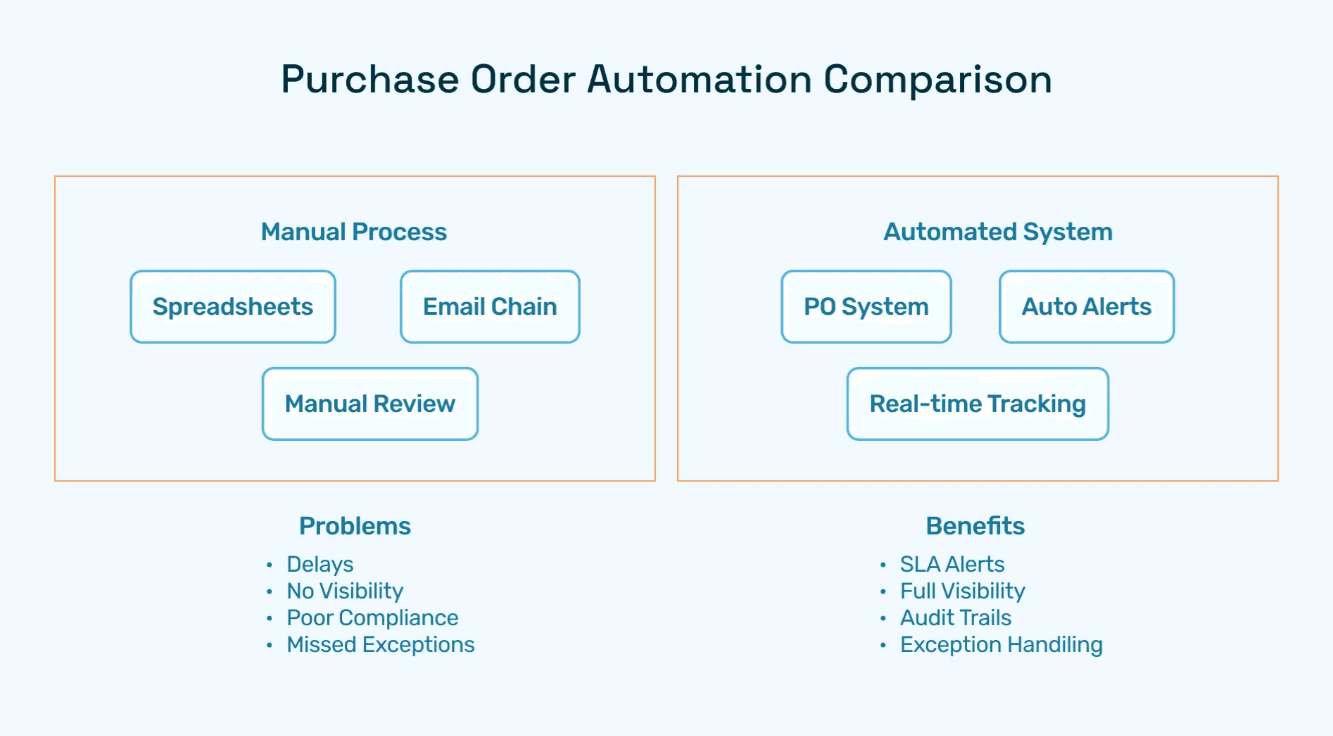
The transition from traditional purchase order processes to modern digital workflows represents one of the most significant operational transformations in procurement history. Understanding this evolution helps organizations identify improvement opportunities and quantify potential benefits.
Legacy Process Characteristics:
Paper-based requisitions and manual routing
Email-dependent approvals with unclear status tracking
Spreadsheet-based vendor management and catalog systems
Manual three-way matching processes prone to errors
Limited spending visibility and reporting capabilities
Average processing time of 7-14 days for routine purchases
Modern Digital Process Advantages:
Cloud-based platforms with mobile accessibility
Automated workflow routing and real-time status updates
Integrated supplier portals and electronic catalogs
AI-powered invoice matching and exception handling
Comprehensive analytics and predictive insights
Processing times reduced to hours or minutes
The shift to modern purchase order process flows enables organizations to achieve 60-80% faster processing times while significantly reducing error rates and operational costs.
Common Purchase Order Process Flow Bottlenecks and Solutions
Approval Delays and Authority Confusion: Traditional approval hierarchies often create bottlenecks when approvers are unavailable or authority levels are unclear. Modern systems implement dynamic routing with backup approvers, delegation capabilities, and mobile notifications that ensure continuous workflow movement.
Vendor Communication Gaps: Manual vendor communications frequently result in delayed confirmations, pricing discrepancies, and delivery issues. Integrated vendor portals provide real-time order status, automated acknowledgments, and self-service capabilities that eliminate communication delays.
Budget Validation Challenges: Without real-time budget integration, organizations risk over-commitments and budget overruns. Cloud-based systems provide instant budget validation, automated alerts for threshold breaches, and predictive spend analytics that support proactive financial management.
Invoice Processing Inefficiencies: Manual three-way matching consumes significant resources and introduces error risks. Automated matching algorithms process invoices in seconds rather than days, with exception handling that escalates only true discrepancies requiring human intervention.
Purchase Order Process Flow Metrics and KPIs
Effective purchase order process flow management requires comprehensive performance measurement frameworks that track both efficiency and effectiveness metrics:
Efficiency Metrics:
Purchase order cycle time: Average time from requisition to PO issuance
Processing cost per transaction: Total processing costs divided by PO volume
Approval velocity: Average time spent in approval workflows
Exception resolution time: Time to resolve discrepancies and issues
User productivity: Transactions processed per full-time equivalent
Effectiveness Metrics:
Spend under management: Percentage of organizational spend flowing through controlled processes
Contract compliance rate: Adherence to negotiated terms and approved vendors
Supplier performance scores: On-time delivery, quality, and service metrics
Cost avoidance: Savings achieved through process improvements and automation
Risk mitigation: Reduction in fraud, errors, and compliance issues
Organizations implementing modern purchase order process flows typically see 40-60% improvement in efficiency metrics within six months, with effectiveness gains continuing to compound over time.
Mobile and Cloud-Based Purchase Order Processing
Mobile Enablement Benefits Modern purchase order process flows leverage mobile technologies to eliminate location and timing constraints that traditionally slow procurement processes:
Field-Based Approvals: Managers can approve purchase orders from any location, preventing delays when key personnel are traveling or working remotely
Real-Time Receipt Confirmation: Warehouse staff use mobile devices to confirm deliveries instantly, triggering automated invoice processing workflows
Emergency Purchase Capabilities: Critical purchases can be initiated and approved through mobile interfaces, maintaining control while enabling rapid response
Cloud Platform Advantages Cloud-based purchase order processing delivers scalability, security, and accessibility benefits that on-premise systems cannot match:
Automatic Updates: Regular system updates ensure access to latest features without IT overhead or downtime
Disaster Recovery: Built-in redundancy and backup capabilities protect against data loss and system failures
Global Accessibility: International organizations manage worldwide procurement through single platforms with local compliance features
Integration Capabilities: Pre-built connectors to major ERP systems reduce implementation complexity and costs
The combination of mobile and cloud technologies enables organizations to achieve 24/7 procurement capabilities while maintaining comprehensive control and audit trails.
Advanced Purchase Order Process Flow Automation
AI-Powered Purchase Order Processing
Artificial intelligence transforms traditional purchase order processes through intelligent automation that learns from historical patterns and optimizes decision-making:
Predictive Analytics: AI algorithms analyze spending patterns, seasonal variations, and demand forecasts to suggest optimal ordering quantities and timing, reducing both stockouts and excess inventory costs.
Intelligent Routing: Machine learning models evaluate purchase characteristics and automatically route requests through optimal approval paths, reducing processing times while maintaining appropriate controls.
Anomaly Detection: Advanced analytics identify unusual purchasing patterns, pricing discrepancies, or vendor behaviors that may indicate errors, fraud, or process improvements opportunities.
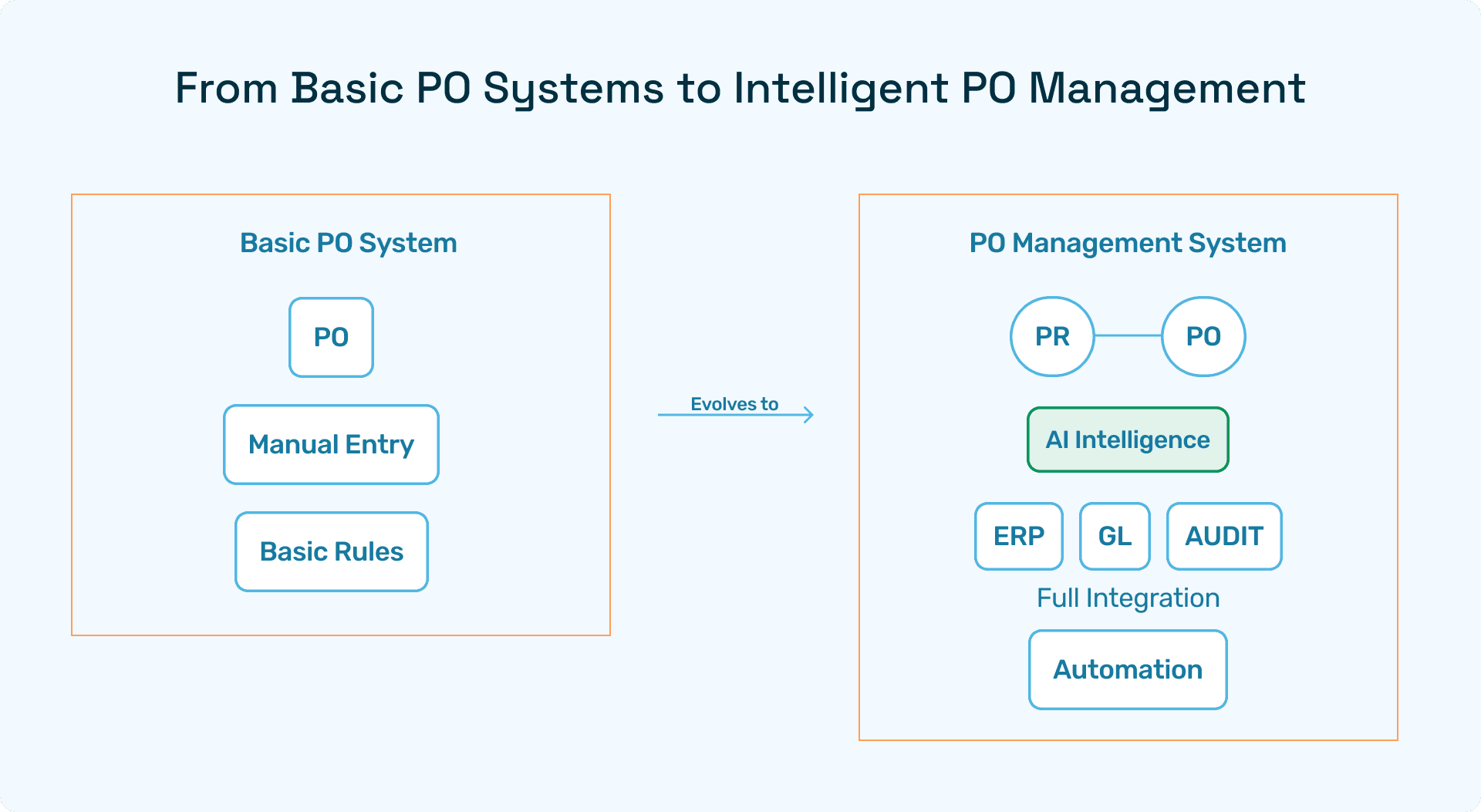
Integration with ERP and Financial Systems
Modern purchase order process flows require seamless integration with existing enterprise systems to maximize efficiency and data accuracy:
Real-Time Budget Validation: Direct integration with financial systems enables instant budget availability checks, preventing over-commitments and supporting accurate financial forecasting.
Automated GL Coding: Intelligent systems suggest appropriate general ledger codes based on item categories, departments, and historical patterns, improving accounting accuracy and reducing manual effort.
Vendor Master Synchronization: Centralized vendor databases ensure consistent information across all procurement touchpoints, reducing data entry errors and supporting comprehensive vendor performance tracking.
Hyperbots AI Co-Pilots: Transformational Purchase Order Automation
Procurement Co-Pilot: Revolutionary Purchase Order Processing
The Hyperbots Procurement Co-Pilot represents a paradigm shift in purchase order automation, delivering unprecedented efficiency gains and cost reductions:
Instant ERP-Synced Approvals: The co-pilot maintains real-time synchronization with enterprise systems, enabling instant approval processing that eliminates traditional workflow delays. Finance teams achieve complete spend visibility while maintaining stringent control requirements.
Cycle Time Compression: Organizations typically experience reduction in purchase order cycle times, transforming procurement from a bottleneck into a competitive advantage. The co-pilot's intelligent routing and automated validations enable same-day processing for routine purchases.
Operational Cost Reduction: Hyperbots clients consistently achieve 80% reduction in operational costs through comprehensive automation of manual processes, error elimination, and resource optimization.
End-to-End Procure-to-Pay Automation Suite
Hyperbots' comprehensive AI co-pilot ecosystem addresses the entire procure-to-pay lifecycle:
Invoice Processing Co-Pilot: Automated three-way matching, exception handling, and payment processing that integrates seamlessly with purchase order workflows.
Vendor Management Co-Pilot: Continuous supplier performance monitoring, risk assessment, and relationship optimization that enhances procurement decision-making.
Hyperbots Platform Differentiation
Adaptive Intelligence: Unlike rule-based systems, Hyperbots co-pilots continuously learn from organizational patterns and user behaviors, improving performance and accuracy over time.
Contextual Decision-Making: Advanced natural language processing enables co-pilots to understand business context, making intelligent recommendations that align with organizational priorities and constraints.
Seamless User Experience: Conversational interfaces and intuitive workflows reduce training requirements while maximizing user adoption and satisfaction.
Implementation Best Practices for Purchase Order Process Flows
Change Management and User Adoption
Successful purchase order process flow implementation requires comprehensive change management strategies that address both technical and cultural transformation:
Stakeholder Engagement: Early involvement of key users, approval authorities, and vendor partners ensures requirements alignment and builds implementation support.
Training and Support: Comprehensive training programs and ongoing support resources maximize user adoption and minimize implementation disruption.
Phased Rollout: Gradual implementation across departments or transaction types reduces risk while enabling continuous refinement and optimization.
Performance Monitoring and Optimization
Continuous monitoring and optimization ensure purchase order process flows deliver sustained value:
Key Performance Indicators:
Purchase order cycle time reduction
Processing cost per transaction
Error rates and exception handling
User satisfaction and adoption rates
Vendor performance improvements
Regular Process Reviews: Quarterly assessments identify optimization opportunities, technology updates, and process refinements that maintain competitive advantage.
Industry-Specific Purchase Order Process Considerations
Manufacturing and Supply Chain Requirements
Manufacturing organizations require specialized purchase order process flows that address unique operational requirements:
Just-in-Time Integration: Automated purchase orders triggered by production schedules and inventory levels minimize carrying costs while preventing stockouts.
Quality Specifications: Detailed technical specifications, quality requirements, and inspection protocols ensure manufactured goods meet exact requirements.
Supplier Collaboration: Direct integration with supplier systems enables real-time visibility into production schedules, delivery commitments, and quality metrics.
Professional Services and Technology Sectors
Service-based organizations require purchase order processes that accommodate project-based procurement and intellectual property considerations:
Project-Based Approvals: Workflows that align with project budgets, timelines, and deliverable requirements ensure procurement supports project success.
Intellectual Property Protection: Additional review steps for technology purchases, consulting services, and vendor access requirements protect organizational assets.
Flexible Contracting: Support for various contract types, payment terms, and performance metrics that reflect service-based business models.
Future Trends in Purchase Order Process Flow Automation
Emerging Technologies and Capabilities
Blockchain Integration: Immutable transaction records and smart contracts that automate compliance and payment execution based on predetermined conditions.
Advanced Analytics: Predictive modeling that optimizes inventory levels, identifies market opportunities, and forecasts spending patterns with unprecedented accuracy.
Voice-Activated Processing: Natural language interfaces that enable hands-free purchase order creation and approval, further streamlining user interactions.
Market Evolution and Competitive Landscape
The procurement automation market continues evolving rapidly, with organizations seeking comprehensive solutions that address entire procure-to-pay lifecycles rather than point solutions. Automation not only ensures complete transparency and accurate approval routing but also gives full control over inventory and budgets.
Leading organizations are moving beyond basic workflow automation toward intelligent co-pilot systems that provide contextual recommendations, predictive insights, and adaptive optimization capabilities.
Getting Started with Purchase Order Process Flow Optimization
Assessment and Planning Framework
Organizations embarking on purchase order process flow optimization should begin with comprehensive current-state assessment:
Process Mapping: Document existing workflows, identify bottlenecks, and quantify current performance metrics to establish improvement baselines.
Technology Evaluation: Assess current system capabilities, integration requirements, and upgrade opportunities that support automation objectives.
Stakeholder Requirements: Gather input from all process participants to ensure solution design addresses real operational needs and constraints.
Implementation Roadmap Development
Phase 1: Foundation Building
Standardize process definitions and approval hierarchies
Implement basic workflow automation capabilities
Establish performance measurement frameworks
Phase 2: Intelligence Integration
Deploy AI-powered co-pilot capabilities
Enable predictive analytics and optimization features
Expand integration with enterprise systems
Phase 3: Continuous Optimization
Implement advanced analytics and reporting
Enable vendor collaboration and integration
Develop strategic sourcing capabilities
Frequently Asked Questions
Q1: What is the typical timeline for implementing purchase order process flow automation?
A: Most organizations complete basic workflow automation within 3-6 months, while comprehensive AI co-pilot implementation typically requires 6-12 months depending on system complexity and integration requirements. Hyperbots' pre-configured solutions often enable faster deployment timelines.
Q2: How do automated purchase order processes handle exceptions and unusual requests?
A: Modern automation platforms include sophisticated exception handling capabilities that route unusual requests to appropriate personnel while maintaining audit trails and control requirements. AI-powered systems learn from exception patterns to improve automated decision-making over time.
Q3: What are the minimum system requirements for purchase order process flow automation?
A: Cloud-based solutions like Hyperbots require minimal on-premise infrastructure, typically needing only reliable internet connectivity and basic user devices. Integration with existing ERP systems usually occurs through standard APIs or web services.
Q4: How does purchase order automation affect vendor relationships?
A: Automation generally improves vendor relationships through faster processing, consistent communications, and reliable payment terms. Vendors appreciate reduced administrative burden and improved predictability in their business interactions.
Q5: What compliance and audit considerations apply to automated purchase order processes?
A: Automated systems typically strengthen compliance through consistent policy enforcement, comprehensive audit trails, and improved segregation of duties. Regular compliance reviews and audit preparation become more efficient with digital documentation and reporting capabilities.
Q6: How do organizations measure the success of purchase order process flow optimization?
A: Key success metrics include cycle time reduction, processing cost per transaction, error rate improvements, user satisfaction scores, and overall procurement efficiency gains. Most organizations see measurable improvements within the first quarter of implementation.
Transform Your Purchase Order Process with Hyperbots AI
The evolution from manual purchase order processing to intelligent automation represents more than operational improvement—it's a strategic transformation that positions procurement as a competitive advantage. Organizations implementing comprehensive purchase order process flows with AI-powered automation consistently achieve operational cost reductions of 80% while enhancing control, visibility, and strategic value creation.
Hyperbots' Procurement Co-Pilot delivers the most advanced purchase order automation capabilities available, combining intelligent workflow management with predictive analytics and seamless ERP integration. Finance leaders who recognize procurement's strategic potential are already leveraging these capabilities to drive measurable business outcomes.
Ready to transform your purchase order process flow? Explore Hyperbots' Procurement Co-Pilot to discover how AI-powered automation can deliver immediate efficiency gains and long-term strategic value. Schedule a personalized demonstration to see how leading organizations are achieving 80% operational cost reductions while enhancing procurement performance and control.