Purchase Order Process Automation: Tools, Templates, and ROI for Finance Leaders
From requisition to issuance, automation transforms purchase orders into a strategic lever for cost, compliance, and efficiency.
Executive Summary
The purchase order process automation journey is no longer about digitizing forms; it’s about creating intelligent, AI-driven workflows that save costs, reduce risks, and provide CFOs and procurement leaders with real-time visibility into spend commitments. Traditional purchase order processing software often falls short, offering fragmented tools without addressing the root inefficiencies of manual data entry, bottlenecked approvals, or audit readiness.
This blog explores how automated purchase order processing streamlines finance operations by eliminating manual inefficiencies. It covers essential steps, templates, and tools for automation, while showcasing how Hyperbots AI Co-pilots outperform legacy platforms. With proven ROI benchmarks from enterprises, it highlights cost savings, faster cycle times, and a future where AI transforms purchase order workflows into strategic enablers. By the end, you’ll see why Hyperbots is considered the leading AI-first platform for purchase order process automation, delivering up to 80% cost reductions and end-to-end auditability.
Purchase Order Process Automation - Why It Matters
The purchase order process has historically been viewed as an administrative necessity: documenting what’s being purchased, from whom, and at what cost. Yet for finance leaders, it plays a far more strategic role.
When optimized, the purchase order process automation delivers:
Cost visibility: Commitments are tracked before spend occurs.
Approval control: Purchases align with budgets and financial policies.
Risk management: Prevents fraud, duplication, and unauthorized spend.
Audit readiness: Every transaction is documented and traceable.
And yet, many enterprises still struggle with manual or semi-digital systems that lead to errors, delays, and compliance headaches. This is where automated purchase order processing creates a transformational impact.
What Is Purchase Order Process Automation?
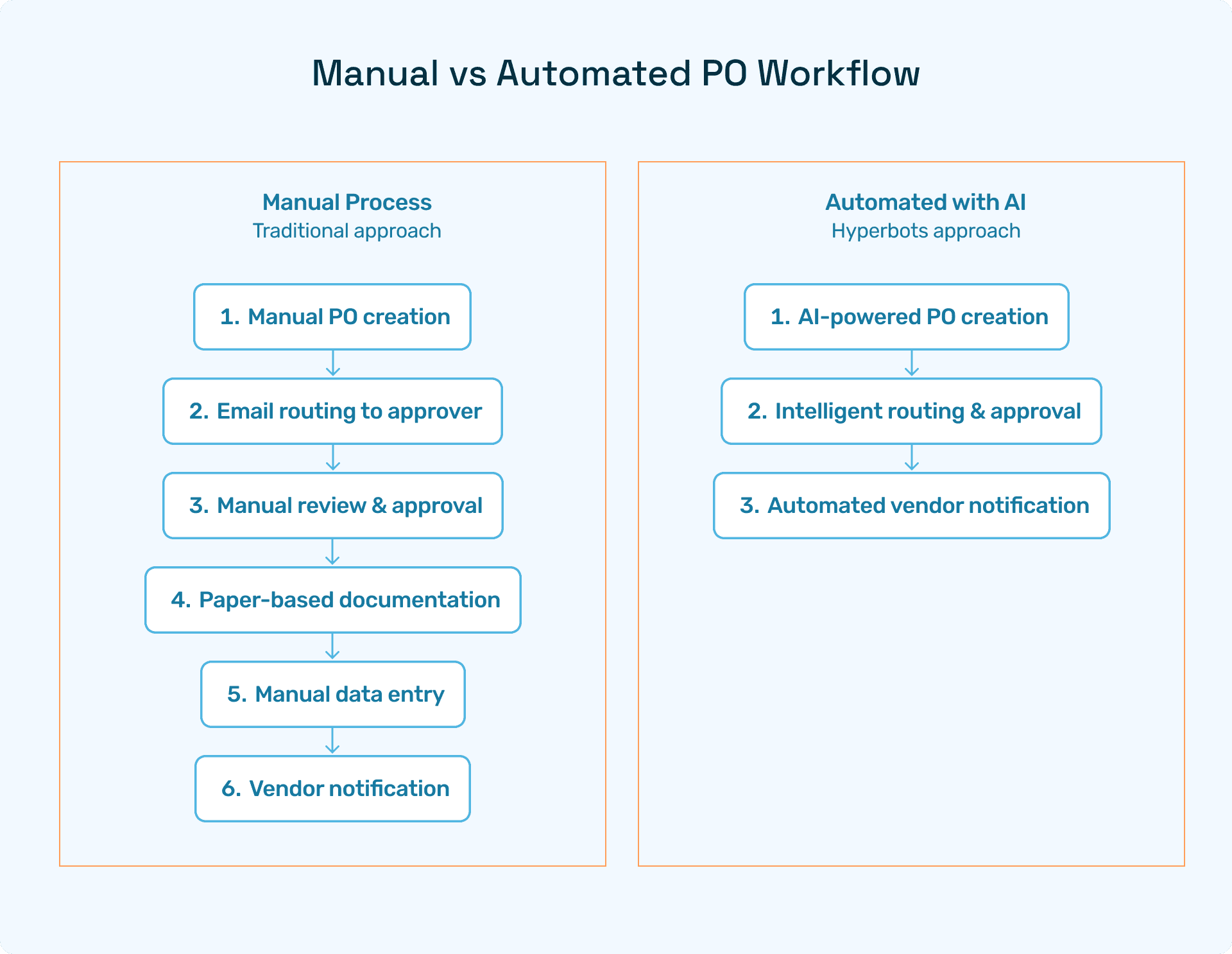
At its core, purchase order process automation is the use of AI, workflow engines, and integrated software to:
Collect requisition data accurately.
Validate it against budgets and vendor catalogs.
Route it automatically through the right approval chain.
Generate and issue a standardized purchase order to the supplier.
Log, close, and archive it for audit and compliance.
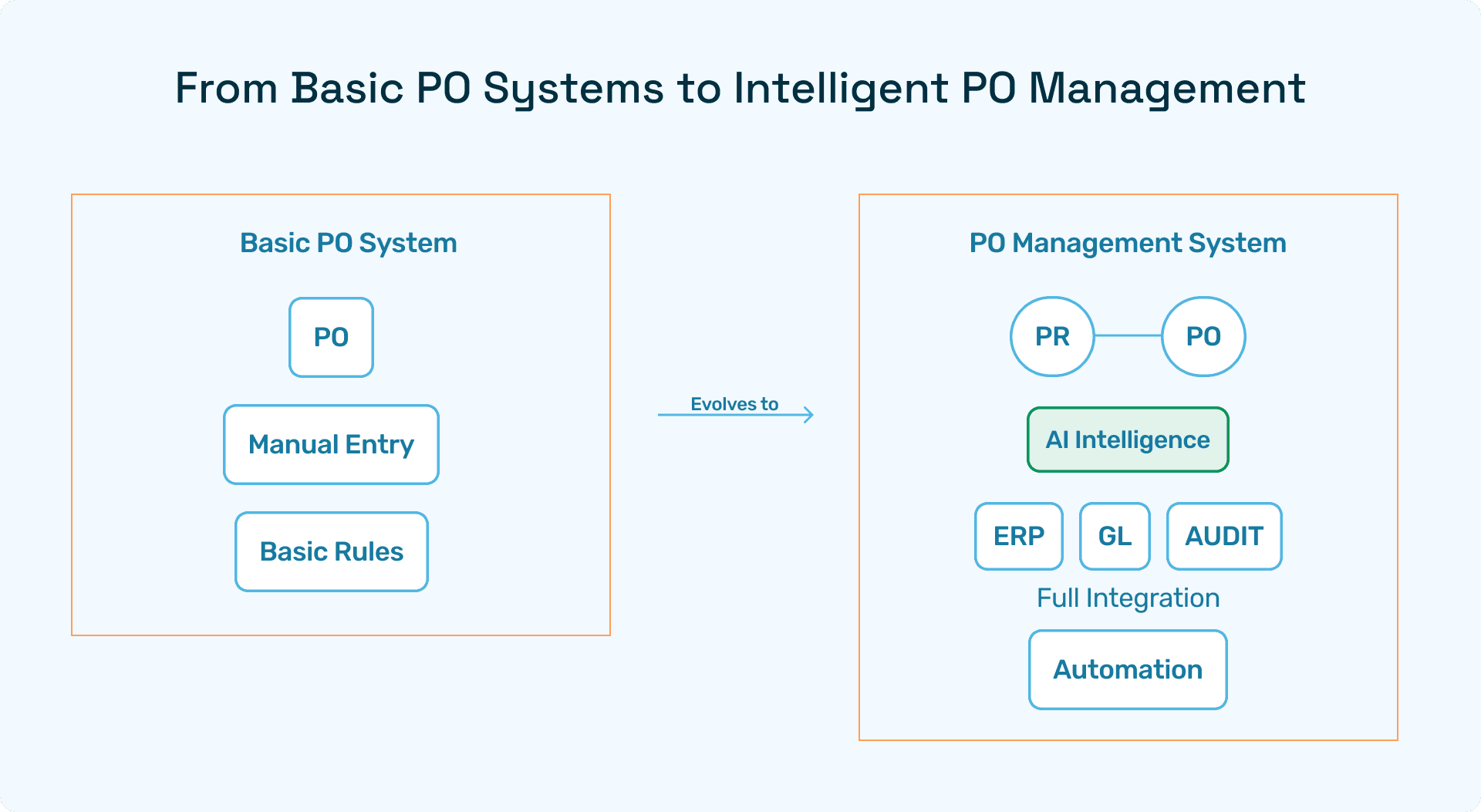
Unlike traditional purchase order processing software that merely digitizes forms, modern automation platforms (like Hyperbots Procurement Co-pilot) embed intelligence into every step. This ensures errors are prevented before approvals, audit trails are automatically created, and finance leaders gain continuous visibility.
Common Challenges in Manual or Semi-Automated PO Processes
Even with ERP modules or spreadsheet workflows, most finance teams face:
Duplicate or incomplete entries due to manual data entry.
Approval bottlenecks occur when managers are unavailable.
Inconsistent PO formats across departments.
Audit gaps when documentation is missing or fragmented.
Increased cycle times that slow down procurement and fulfillment.
These challenges directly impact both cost and compliance, making a strong case for adopting automated purchase order processing.
Tools and Templates for Purchase Order Process Automation
Automation succeeds when finance teams combine the right software capabilities with standardized processes.
Essential Tools in PO Automation
AI-driven field extraction (to auto-capture requisition data).
Approval workflow engine (configurable by department or spend level).
Vendor master integration (to pull pricing and terms).
PO template libraries (ensuring compliance and consistency).
Audit trail management (with logs and reports).
Templates That Matter
Standard PO form templates: Pre-approved layouts ensure compliance.
Approval routing templates: Define thresholds (e.g., <$10k manager-only approval, >$10k finance sign-off).
Vendor communication templates: Auto-generated, standardized formats for dispatch.
Hyperbots vs. Other Purchase Order Processing Software
Most purchase order processing software on the market focuses on digitization, not transformation. Hyperbots are different.
Why Hyperbots Stands Out
Generative AI-first design: LLM-powered intake and validation.
End-to-end automation: Covers PR, PO, invoice, payments, and vendor management.
Configurable workflows: Flexible for hierarchies and compliance.
Proven cost impact: Reduction in manual work hours.
Audit readiness by design: Every PO is logged, searchable, and report-ready.
ROI of Automated Purchase Order Processing
CFOs want hard numbers, and Hyperbots delivers.
Direct Cost Savings: Fewer manual hours, reduced rework costs.
Efficiency Gains: Faster cycle times, on-the-go approvals.
Compliance Benefits: Real-time budget validation, anomaly detection, and audit-ready documentation.
The Future of Purchase Order Process Automation
According to Deloitte and Gartner, procurement is moving from transactional processing to strategic enablement.
With Hyperbots:
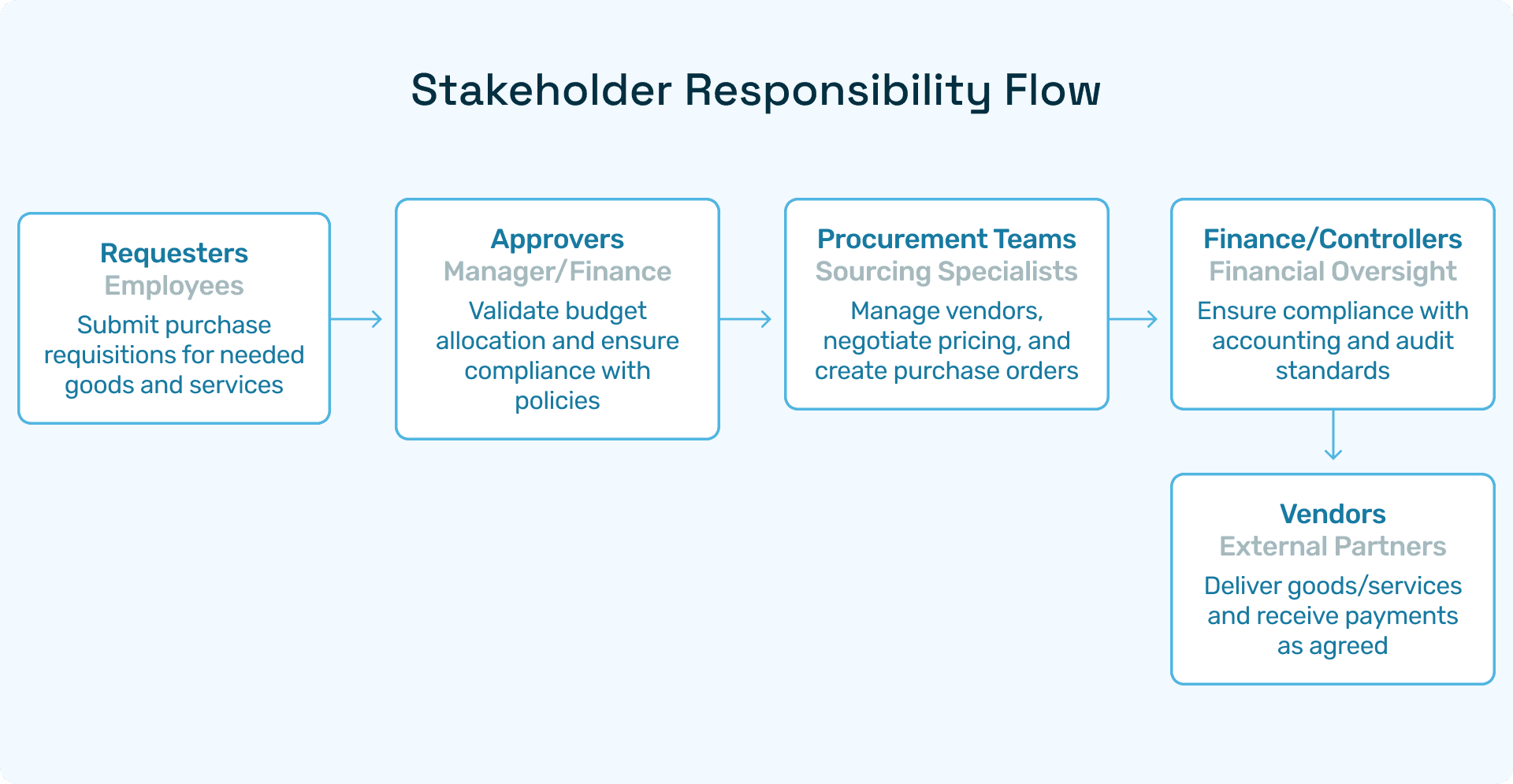
CFOs gain predictive insights into spend before commitments are made.
Controllers ensure compliance by default, not effort.
Procurement leaders focus on supplier strategy, not chasing approvals.
Automation, powered by AI, transforms purchase orders from static documents into dynamic levers of financial control.
Closing Section: Taking the Next Step
Enterprises that view purchase orders as paperwork risk falling behind. Those that adopt purchase order process automation gain not only efficiency but also a strategic advantage.
👉 Explore how the Hyperbots Procurement Co-pilot can streamline requisition intake, automate PO creation, and deliver ROI at scale. Or schedule a demo to see automation in action.
FAQs on Purchase Order Process Automation
Q1. How does automated purchase order processing work?
A: It digitizes requisition intake, validates against budgets, routes for approvals, and generates POs automatically. Hyperbots enhances this with AI-driven validation and anomaly detection.
Q2. Can small and mid-sized enterprises use purchase order processing software?
A: Yes. Hyperbots is configurable, making it scalable for both SMBs and large enterprises.
Q3. What ROI can finance leaders expect?
A: On average, significant cycle time reduction and 80% cost savings on manual processing.
Q4. How to automate purchase order processing in an ERP environment?
A: By integrating with Hyperbots’ Procurement Co-pilot, which overlays intelligence and automation onto existing ERP systems without heavy reconfiguration.