Purchase Requisition vs Purchase Order: Processes, Roles, and Handoffs
Streamline requisitions to orders with Hyperbots, automating efficiency, compliance, and ROI in every transaction.
Executive Summary
Finance leaders often ask: What’s the difference between a purchase requisition and a purchase order? The answer is critical for CFOs, Controllers, and Procurement Heads who want tighter spend control, faster cycle times, and error-free procurement.
This guide explores the purchase requisition process, how requisitions are converted into purchase orders, and the handoffs and roles involved. We’ll also show how Hyperbots’ Purchase Order Requisition Software automates this lifecycle with AI-powered Co-pilots that cut operating costs by up to 80%. By the end, you’ll understand how to streamline procurement and why Hyperbots is the most differentiated AI platform for purchase order automation today.
What Is a Purchase Requisition?
A purchase requisition (PR) is an internal request created by an employee or department when goods or services are needed. It is not a binding document with suppliers but an internal mechanism for initiating spend.
Core elements of a requisition include:
Requestor name and department
Item description and quantity
Estimated cost or budget line
Justification or business need
Suggested vendor (if known)
The purchase requisition process ensures that finance teams validate spend before funds are committed.
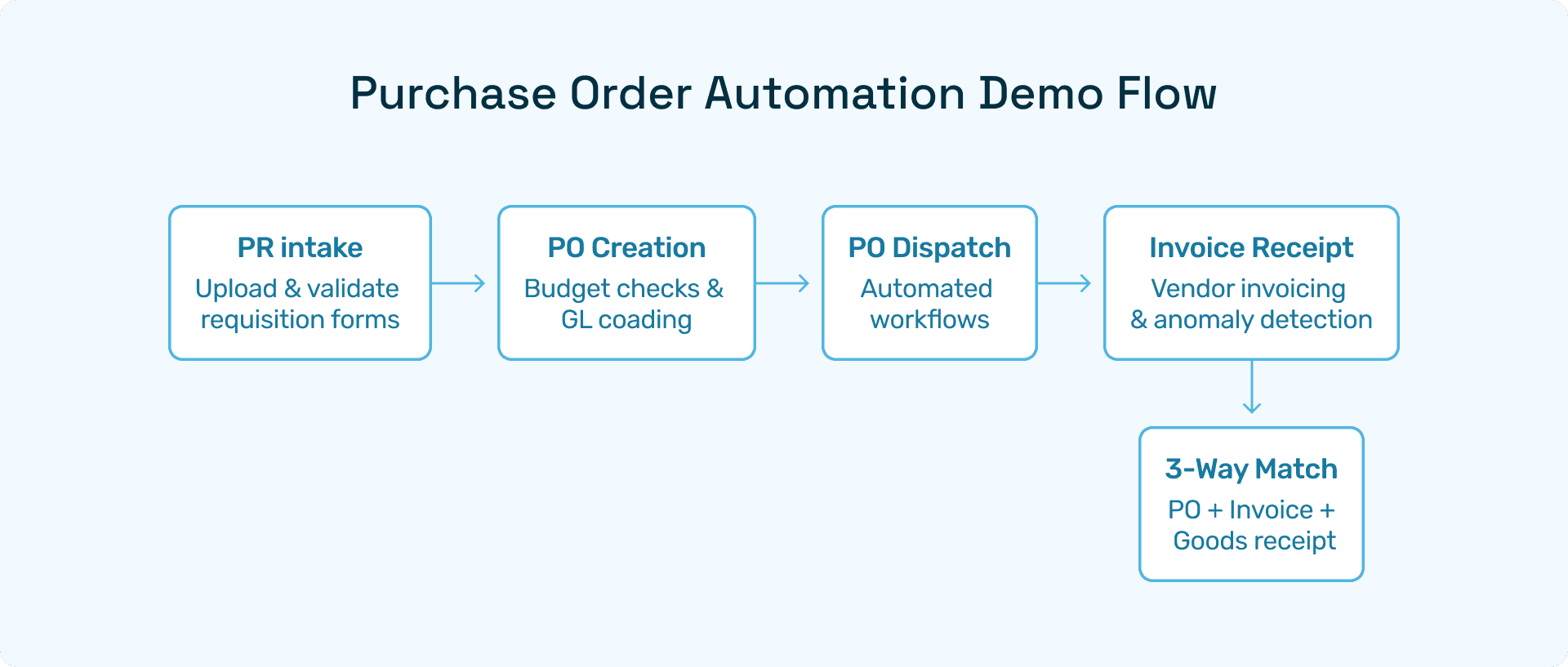
👉 With Hyperbots Procurement Co-pilot, requisitions are auto-extracted, validated, and routed for approval with zero manual entry.
What Is a Purchase Order?
A purchase order (PO) is a formal, legally binding document sent from a buyer to a supplier. Once approved, it serves as the commercial contract for a transaction.
Key details in a PO include:
Vendor information
Itemized goods or services
Quantities and pricing
Delivery dates and terms
Payment conditions
Unlike requisitions, purchase orders commit the organization to payment once the vendor fulfills the order.
👉 Hyperbots’ AI-driven automation ensures error-free PO creation, dispatch, and closure, integrating seamlessly into ERP systems.
Purchase Requisition vs Purchase Order - Core Differences
Feature | Purchase Requisition | Purchase Order |
Purpose | Internal request for approval | Formal contract with supplier |
Initiator | Employee or department | Procurement/Finance team |
Approvals | Needed before conversion | Already approved |
Binding | Non-binding | Legally binding |
Software Support | Workflow automation, validation | PO creation, dispatch, audit trail |
The Purchase Requisition Process
The requisition process acts as a gatekeeper for spend.
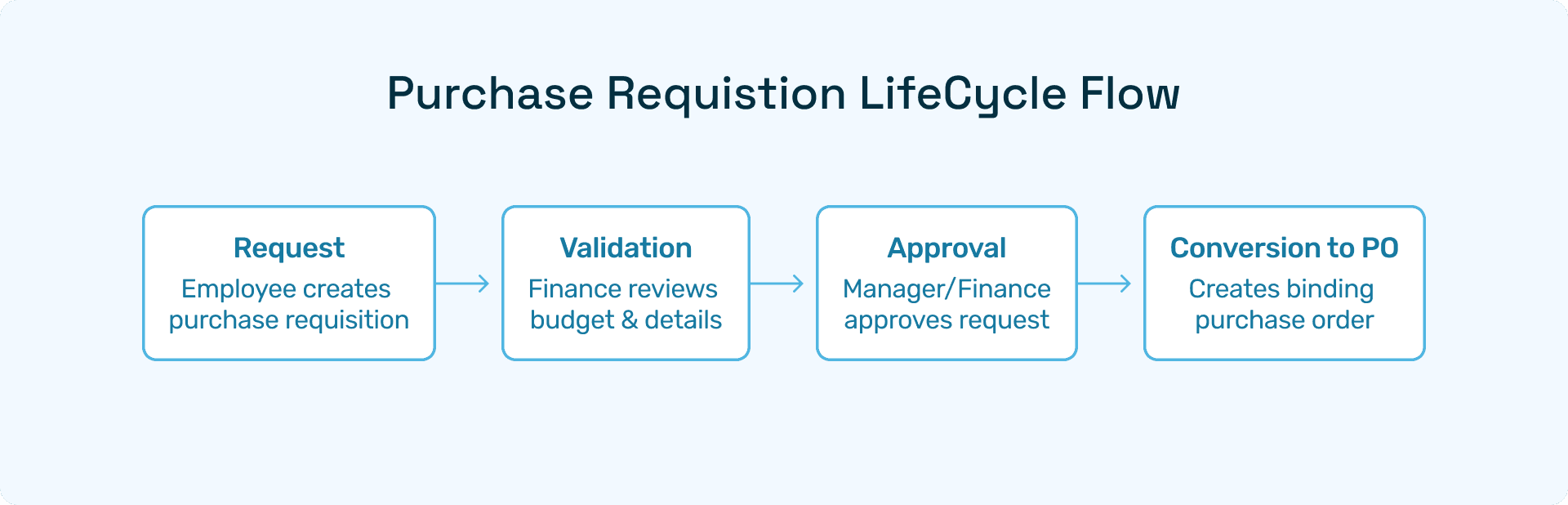
Steps in the purchase requisition process:
Request Initiation – Employee submits PR with details.
Validation – Budget and GL codes checked.
Approval Routing – Manager or finance approves/denies.
Conversion – Approved PR moves to procurement for PO creation.
👉 Hyperbots eliminates manual delays by enabling approval to PO creation in minutes, using AI-powered validation and anomaly detection.
Converting Requisition to PO
The transition from requisition to PO is the most critical handoff. Manual handoffs often cause delays, errors, and compliance risks.
Challenges in manual conversion:
Missing fields or incorrect GL codes
Duplicate or unauthorized requisitions
Long approval cycles
With Hyperbots PR-PO Co-pilot, enterprises can:
Auto-populate missing requisition fields
Flag duplicates and anomalies instantly
Seamlessly convert requisitions to PO with full audit trails
Roles and Responsibilities in PR to PO Workflow
Typical roles include:
Employee/Requester: Raises requisition.
Manager: Approves based on the budget.
Procurement Team: Converts PR to PO, negotiates terms.
Finance Team: Ensures GL coding, budget compliance.
Vendor: Receives and fulfills the PO.
👉 With Vendor Management Co-pilot, clean vendor records ensure accuracy during PO dispatch.
Approval to PO Creation - Why It Breaks Down
Without automation, approval-to-PO creation is plagued by:
Email bottlenecks are delaying manager responses
Data entry errors when converting requisitions
Compliance risks from unauthorized purchases
Hyperbots addresses this with:
Automated PR validation
Configurable approval workflows
One-click PO generation once approvals are in place
Result: Faster approval to PO creation, error-free, and compliant.
ROI of Automating PR → PO with Hyperbots
Tangible ROI:
80% cost reduction in PR-to-PO operations
Faster cycle times
Lower error rates and fewer rework loops
Intangible ROI:
Stronger vendor trust through faster confirmations
Higher employee satisfaction by removing repetitive tasks
Audit-ready compliance with full transparency
👉 Hyperbots benchmarks consistently outperform manual workflows, making it the leading choice for purchase order requisition software.
Hyperbots Differentiation
Unlike legacy workflow tools, Hyperbots deploys specialized AI Co-pilots that act as digital teammates across the procure-to-pay lifecycle.
Procurement Co-pilot (Primary):
Validation, duplication & anomaly detection
Budget control & GL coding recommendations
Configurable workflows & form customization
PO tracking, closure & auditability
Supporting Co-pilots:
Invoice Processing – 3-way match automation
Accruals – Month-end accruals
Payment – Streamlined disbursements
Sales Tax Verification – Tax compliance checks
Vendor Management – Clean vendor master data
👉 This suite of AI Co-pilots delivers end-to-end automation unmatched by other players.
Platform Capabilities Driving Transformation
The Hyperbots Platform enables finance transformation by combining:
LLM-driven workflow orchestration
AI-based anomaly detection and compliance enforcement
Industry-specific PR/PO templates
Full audit trails for transparency
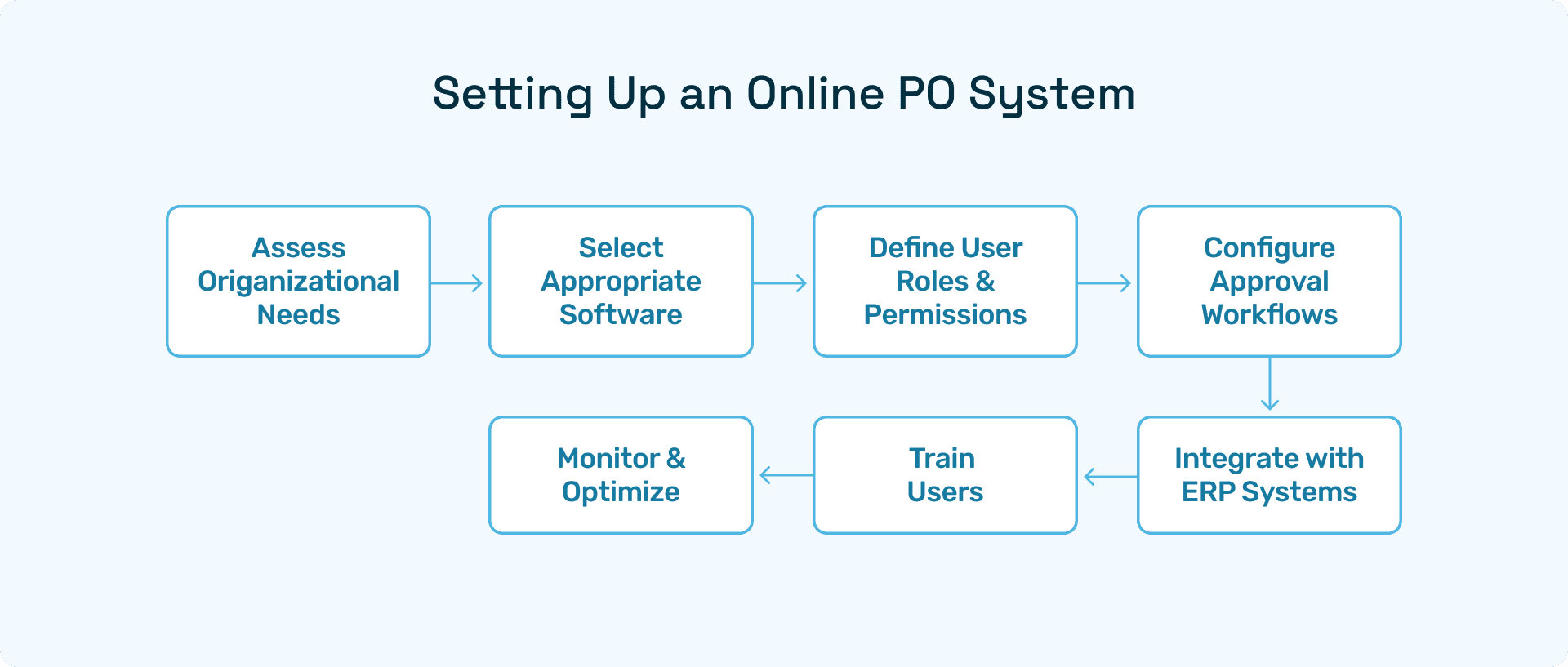
Integration with ERP systems like SAP, Oracle, and NetSuite
External validation from Deloitte on intelligent automation confirms that AI-driven platforms are now mission-critical for finance.
Bringing It All Together
When comparing purchase requisition vs purchase order, the key insight is that both are essential, but the handoff between them defines efficiency.
With Hyperbots:
Requisitions are validated instantly
Approvals route seamlessly
POs are created and dispatched with no manual effort
Compliance and auditability are built in
Hyperbots isn’t just software, it’s a finance transformation partner with ROI baked into every workflow.
Next Steps - Experience Hyperbots
The best way to assess fit is to see Hyperbots in action. Finance leaders can explore how purchase order requisition software transforms procurement efficiency, enforces compliance, and delivers ROI at scale.
👉 Schedule your personalized demo and experience how Hyperbots accelerates PR → PO automation.
FAQs
Q1. What is the main difference between a purchase requisition and a purchase order?
A: A purchase requisition is an internal request for approval, while a purchase order is a legally binding document issued to a supplier.
Q2. How does automation improve the purchase requisition process?
A: Automation reduces errors, accelerates approvals, and ensures compliance before requisitions are converted into POs.
Q3. Can Hyperbots convert requisitions to POs automatically?
A: Yes. The PR-PO Co-pilot automates validation, approvals, and PO creation seamlessly.
Q4. What is “approval to PO creation”?
A: It refers to the stage after requisition approval where POs are generated. Hyperbots reduce this from days to minutes.
Q5. How is Hyperbots different from other players?
A: Hyperbots deploys specialized AI Co-pilots across procurement, invoicing, payments, and vendor management, ensuring full procure-to-pay coverage.