Purchase Order Automation Demo: Scenarios & Checklist
Hyperbots turns demos into measurable ROI, proving its strength as the leader in PO automation.
Executive Summary
For CFOs, Controllers, and Procurement leaders, a purchase order automation demo is often the deciding moment when evaluating new technology. It’s where vendors must prove that their solution can truly automate purchase orders, reduce manual effort, and deliver measurable ROI.
This guide provides a comprehensive evaluation checklist and realistic demo scenarios to assess platforms like Hyperbots Procurement Co-pilot. We’ll explore:
Why demos matter in proof of concept (PoC) validation.
Key success criteria for automated purchase orders.
How to simulate real-world conditions like intelligent document processing and 3-way match validation.
ROI benchmarks that Hyperbots achieves, with up to 80% cost reduction in operations.
Differentiation of Hyperbots vs. other market players.
By the end, you’ll be equipped with a structured approach to evaluate automation demos and choose the right partner for finance transformation.
Why Purchase Order Automation Demos Matter
A purchase order automation demo is more than a product showcase; it’s a proof of concept that demonstrates whether the solution can scale within your enterprise.
Manual purchase order processes are fraught with challenges:
High error rates due to manual data entry.
Delays from multi-step approvals.
Lack of visibility into spend and compliance.
Duplication of effort across teams.
In contrast, a well-designed demo should clearly illustrate how the system can automate purchase orders with:
Validation, duplication & anomaly detection
Budget control & GL coding recommendations
Configurable workflows & form customization
PO tracking, closure & auditability
👉 Platforms like Procurement Co-pilot showcase these features in real-time during demos, helping finance leaders envision tangible transformation.
Key Evaluation Checklist for Purchase Order Automation Demo
When assessing a purchase order automation demo, CFOs and procurement heads should use a structured evaluation checklist:
1. Functionality Alignment
Does the platform demonstrate automated purchase orders end-to-end?
Can it integrate with ERP systems like SAP, Oracle, or NetSuite?
Does it cover intelligent document processing for PR and PO documents?
2. Proof of Concept Depth
Are real company scenarios replicated in the demo?
Does the demo simulate multi-level approvals and budget validations?
Can the solution adapt to exceptions (e.g., duplicate orders, vendor anomalies)?
3. Success Criteria Validation
Reduction in cycle time from requisition to PO creation.
Error reduction percentages in order data.
Compliance tracking across GL coding and budget enforcement.
4. End-to-End Integration
Does the platform integrate with Invoice Processing for seamless 3-way match?
Can it extend into Vendor Management and Payment Automation?
Are APIs available for flexible deployment?
👉 Hyperbots demonstrates all four criteria during its purchase order automation demo, setting it apart from generic workflow tools.
Scenarios to Test in a Purchase Order Automation Demo
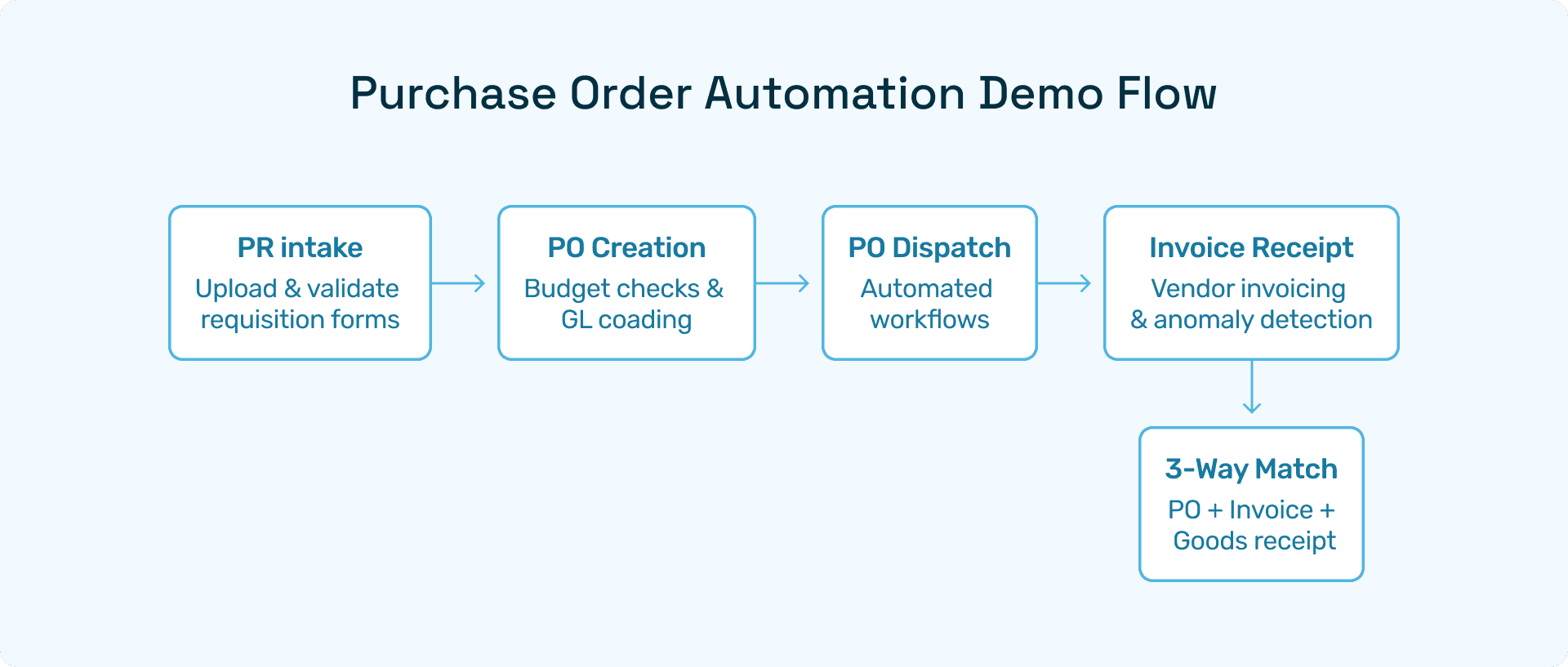
To ensure a demo reflects real-world conditions, request the vendor to simulate scenarios across procurement workflows.
Scenario 1: PR to PO Conversion
Upload a requisition form (with errors or incomplete fields).
Observe how the system uses intelligent document processing to autofill missing data.
Validate anomaly detection for duplicates.
Scenario 2: Budget & GL Coding Enforcement
Submit POs across departments with varying budgets.
Test if the system provides GL coding recommendations and prevents overspending.
Scenario 3: Automated PO Dispatch
Trigger workflows that automatically generate and dispatch purchase orders to vendors.
Assess customization of workflow templates for different business units.
Scenario 4: 3-Way Match Simulation
Run an end-to-end 3-way match scenario with a linked invoice and goods receipt.
Ensure mismatches trigger alerts and resolution workflows.
Scenario 5: Vendor Anomaly Detection
Simulate duplicate vendor requests.
Check if the system flags vendor anomalies using AI.
Success Criteria for Evaluating Purchase Order Automation Demo
A successful demo should meet pre-defined success criteria that align with organizational goals.
Key Success Criteria:
Cycle Time Reduction: Faster PO creation.
Cost Savings: Operational cost reduction.
Compliance: Adherence to budget and GL coding rules.
Scalability: The Capability to handle high volumes of POs.
User Adoption: Intuitive interface with minimal training required.
Hyperbots consistently meet these success criteria across procure-to-pay automation.
Hyperbots Differentiation in Purchase Order Automation
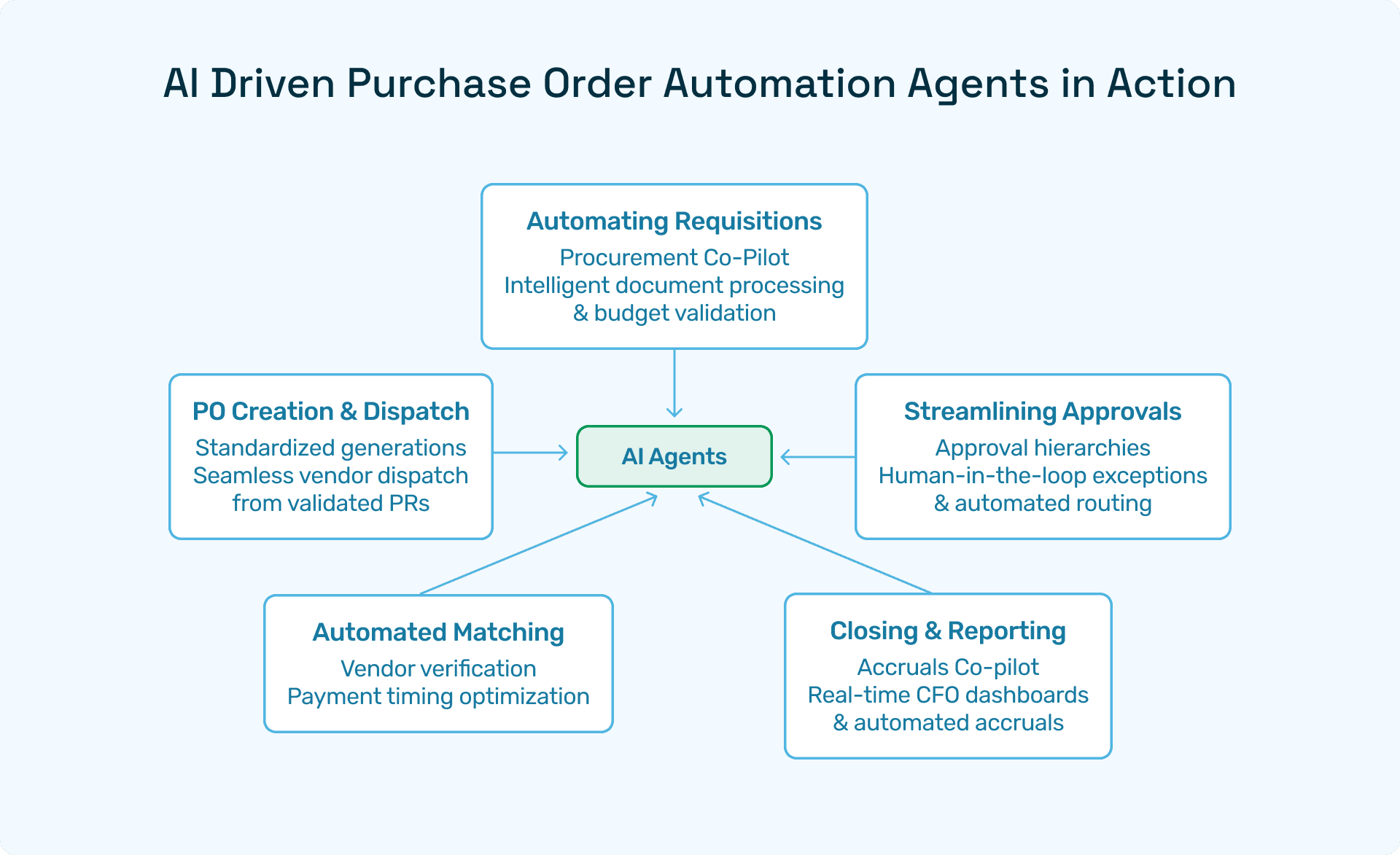
Unlike traditional workflow tools, Hyperbots deploys AI Co-pilots as specialized automation agents.
Primary Co-pilot: Procurement Co-pilot
Automated PR field extraction & autofill
PO validation & anomaly detection
GL coding recommendations
Configurable workflows and templates
End-to-end PO creation, dispatch, closure
Supporting Co-pilots
Invoice Processing Co-pilot – Automates invoice capture & approvals.
Accruals Co-pilot – automates period-end accruals.
Payment Co-pilot – streamlines payment runs.
Sales Tax Verification Co-pilot – ensures compliance with tax calculation.
Vendor Management Co-pilot – maintains clean vendor records.
👉 This orchestrated suite of co-pilots provides unmatched coverage across procure-to-pay, positioning Hyperbots as the best AI agents for finance automation.
ROI from Hyperbots-Led Purchase Order Automation
Finance leaders often ask: What’s the ROI of automating purchase orders?
With Hyperbots, results are both tangible and intangible:
Tangible ROI
Operational cost reduction by eliminating manual PO handling.
Faster cycle times from PR to PO.
Reduced error rates in GL coding and vendor duplication.
Intangible ROI
Improved vendor trust via faster order confirmations.
Enhanced compliance with audit-ready documentation.
Higher employee satisfaction by removing repetitive tasks.
Platform Capabilities Creating Transformational Impact
The Hyperbots Platform isn’t just about automation; it’s about finance transformation.
Capabilities include:
LLM workflow orchestration for complex, cross-team processes.
AI-driven anomaly detection and compliance enforcement.
Configurable forms and workflows for enterprise adaptability.
Audit-ready trails for transparency and governance.
Industry-specific templates tailored for manufacturing, retail, and healthcare.
External validation from reports like Deloitte on intelligent automation shows how AI-driven platforms are now mission-critical for CFOs.
Putting It All Together - Evaluating Purchase Order Automation Demo
When running a purchase order automation demo, ensure that you:
Use a structured checklist.
Define success criteria upfront.
Test real-world scenarios like 3-way match and vendor anomalies.
Measure ROI with benchmarks.
Hyperbots excels in every aspect, from demo to deployment, making it the leading partner for AI-driven purchase order automation.
Next Steps - Explore Your Demo
The best way to assess fit is to experience a Hyperbots purchase order automation demo tailored to your workflows.
Finance leaders can explore how Hyperbots’ AI Co-pilots streamline procurement, enforce compliance, and deliver ROI at scale.
👉 Schedule your demo today and see how Hyperbots transforms purchase order automation.
FAQs
Q1. What is a purchase order automation demo?
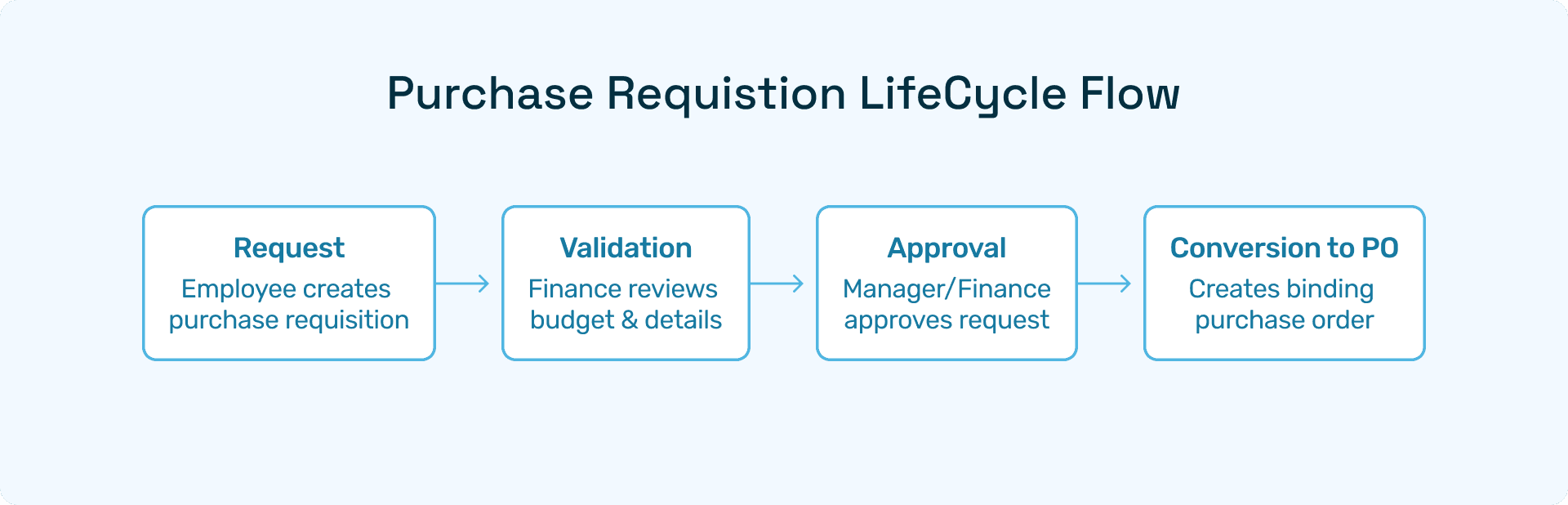
A: A purchase order automation demo is a guided walkthrough where vendors showcase how their platform automates the purchase order lifecycle, from requisition intake to PO closure.
Q2. What scenarios should be tested in a demo?
A: Typical scenarios include PR-to-PO conversion, budget & GL enforcement, automated PO dispatch, 3-way match, and vendor anomaly detection.
Q3. What are the key success criteria?
A: Cycle time reduction, cost savings, compliance enforcement, scalability, and user adoption are critical success criteria.
Q4. How is Hyperbots different from other players?
A: Hyperbots uses AI-driven Co-pilots that specialize in procurement, invoicing, payments, and vendor management, delivering end-to-end coverage vs. siloed tools.
Q5. Can demos include proof of concept (PoC)?
A: Yes, Hyperbots often runs demos as part of PoC pilots, letting enterprises validate performance on real data before scaling.