Purpose of the Purchase Order Process and Business Outcomes
Beyond just paperwork: Explore the essential strategic role of a robust Purchase Order (PO) process in managing financial risk, controlling spend, and driving measurable, positive business outcomes across your organization.
Executive Summary
The purpose of the purchase order process extends far beyond simple transaction documentation. In today's competitive business landscape, organizations that master purchase order processing can achieve up to 80% operational cost reduction while maintaining strict compliance and vendor relationship standards. This comprehensive guide explores what is the process of purchase order, examines purchase order processing meaning, and demonstrates how AI-powered automation transforms traditional procurement workflows into strategic business advantages.
Modern finance leaders recognize that effective purchase order management directly impacts cash flow, supplier relationships, and organizational efficiency. Companies implementing advanced purchase order processing systems report significant improvements in cycle times, approval workflows, and spend visibility—critical factors that determine competitive positioning in today's market.
What is the Process of Purchase Order? A Foundation for Business Success
Purchase Order Processing Meaning and Core Components
Purchase order processing represents a systematic approach to managing procurement requests from initiation through fulfillment. The process encompasses request creation, approval workflows, vendor communication, and fulfillment tracking. Understanding what is purchase order processing explained in detail requires examining each stage's contribution to overall business outcomes.
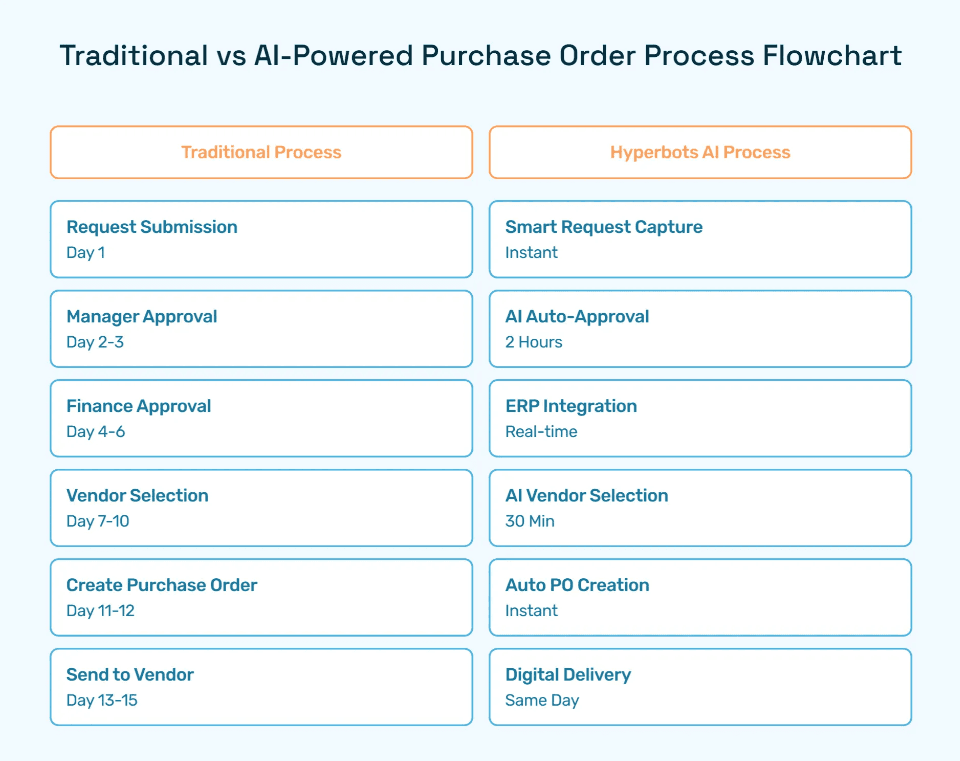
The traditional purchase order process typically involves:
• Request Initiation: Department heads or authorized personnel submit procurement requests
• Approval Routing: Multi-level approval workflows based on spending thresholds and organizational policies
• Vendor Selection: Evaluation of suppliers based on cost, quality, and delivery capabilities
• Purchase Order Creation: Formal documentation detailing specifications, quantities, and terms
• Order Transmission: Communication of requirements to selected vendors
• Receipt and Verification: Confirmation of goods/services delivery against original specifications
• Invoice Processing: Matching purchase orders with invoices for payment authorization
Each component serves specific business purposes while contributing to broader organizational objectives including cost control, compliance maintenance, and supplier relationship management.
The Strategic Purpose of Purchase Order Process in Enterprise Operations
Financial Control and Budget Management
The primary purpose of the purchase order process centers on establishing robust financial controls that protect organizational resources while enabling operational efficiency. Purchase orders create legally binding commitments that prevent unauthorized spending and ensure budget adherence across departments.
Organizations implementing systematic purchase order processes report average cost savings of 12-15% annually through improved vendor negotiations, reduced maverick spending, and enhanced contract compliance. These financial benefits compound over time, creating substantial competitive advantages.
Vendor Relationship Optimization
Effective purchase order processing strengthens supplier partnerships through clear communication channels and standardized expectations. Well-structured purchase orders reduce vendor confusion, minimize delivery errors, and establish accountability frameworks that benefit both parties.
Key vendor relationship benefits include:
• Clear Specifications: Detailed purchase orders eliminate ambiguity and reduce order fulfillment errors
• Payment Certainty: Formal documentation provides vendors with confidence in payment terms
• Performance Tracking: Systematic processes enable objective vendor performance evaluation
• Dispute Resolution: Comprehensive documentation facilitates rapid resolution of delivery or quality issues
Compliance and Risk Management
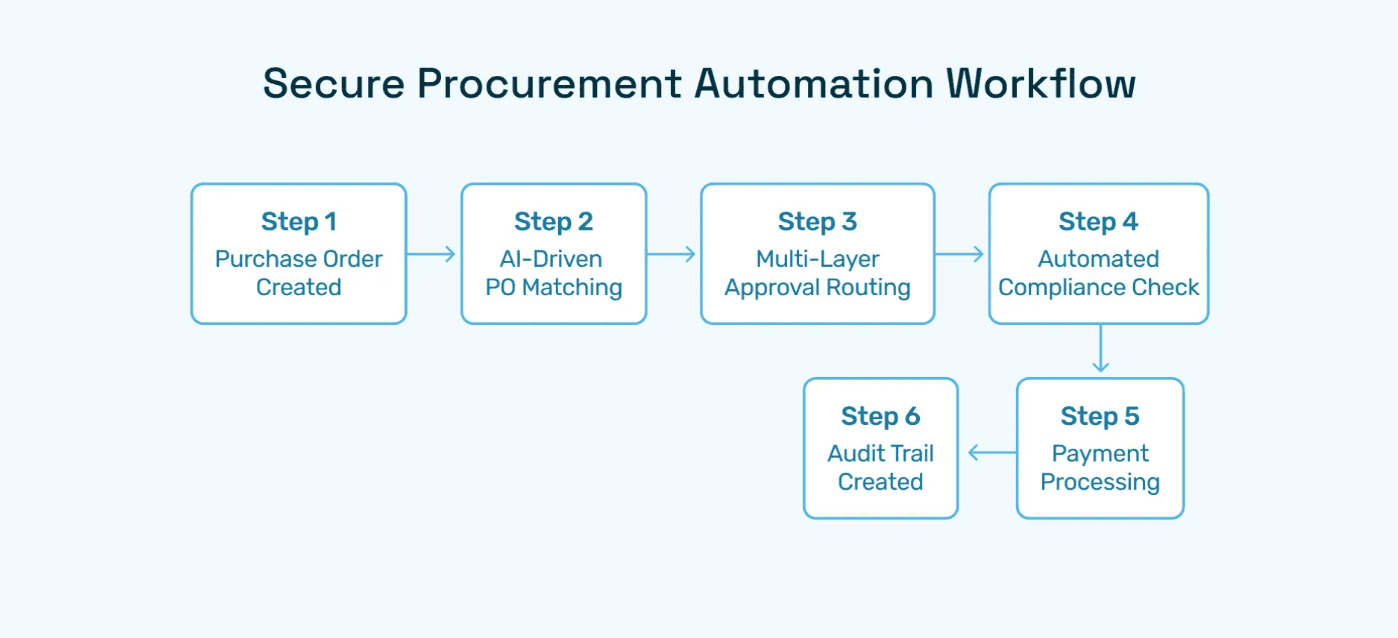
Modern regulatory environments demand rigorous procurement documentation for audit purposes and compliance verification. The purpose of the purchase order process includes creating audit trails that demonstrate adherence to internal policies and external regulations.
Organizations face increasing scrutiny regarding procurement practices, particularly in regulated industries such as healthcare, financial services, and government contracting. Comprehensive purchase order processes provide necessary documentation while reducing compliance risks.
Business Outcomes Driven by Optimized Purchase Order Processing
Operational Efficiency Improvements
Companies that optimize their purchase order processes experience measurable improvements in operational metrics. Purchase order processing meaning extends beyond transaction management to encompass broader organizational efficiency gains.
Research indicates that organizations with mature purchase order processes achieve:
• Reduced Cycle Times: Faster processing from request to purchase order generation
• Improved Accuracy: Reduction in order errors and related rework
• Enhanced Visibility: Real-time tracking of procurement status and spending patterns
• Resource Optimization: Reduction in manual processing requirements
Strategic Financial Impact
The financial implications of effective purchase order processing extend across multiple business dimensions. Organizations implementing comprehensive systems report improved cash flow management, better supplier terms negotiation, and reduced operational costs.
Key financial outcomes include:
• Cost Avoidance: Prevention of unauthorized purchases and budget overruns
• Early Payment Discounts: Systematic processing enables capture of vendor discounts
• Working Capital Optimization: Improved payment timing and cash flow management
• Procurement Analytics: Data-driven insights for strategic sourcing decisions
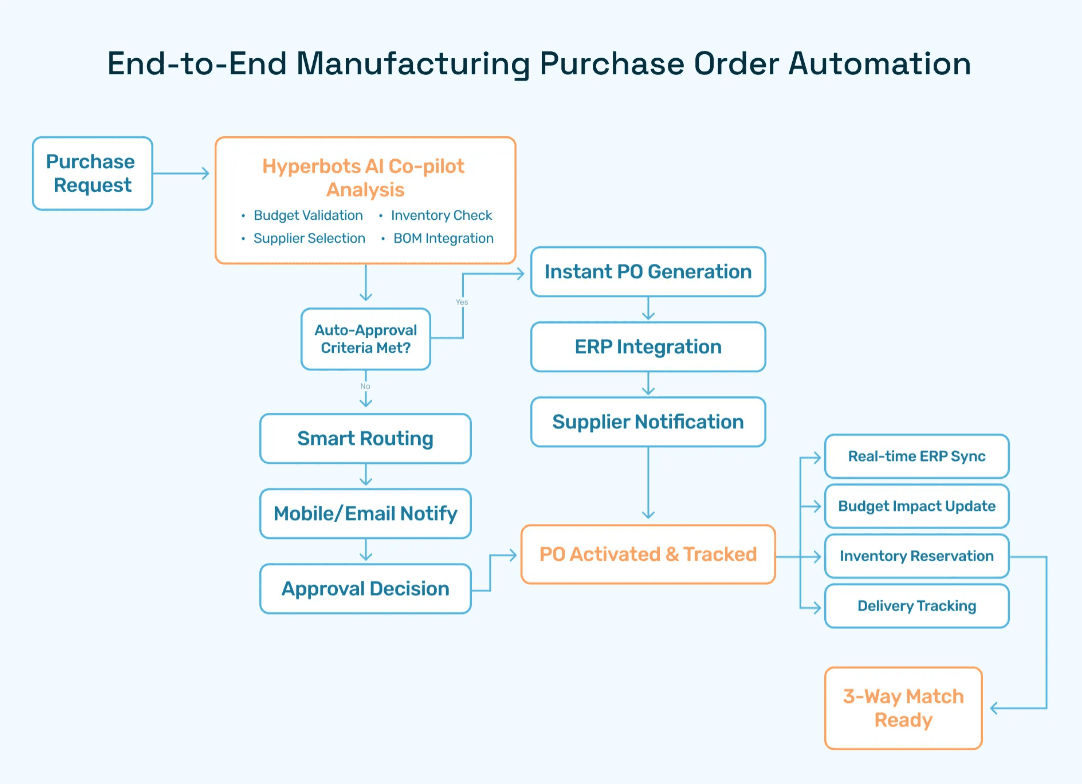
Hyperbots Platform Capabilities: Transformational Impact on Purchase Order Automation
AI-Powered Procurement Copilot Advantages
Hyperbots Procurement Copilot represents the next generation of purchase order automation, delivering unprecedented efficiency gains through artificial intelligence integration. The platform's comprehensive approach addresses traditional procurement challenges while creating new competitive advantages.
Distinctive Capabilities:
• ERP-Synced Approvals: Instant integration with existing enterprise systems eliminates data silos.
• Intelligent Routing: AI-powered approval workflows adapt to organizational hierarchies and spending policies.
• Real-time Visibility: Finance teams receive immediate spend analytics and compliance reporting.
• Cycle Time Reduction: Automated processing shrinks request-to-purchase order timelines by up to 80%.
End-to-End Procure-to-Pay Integration
Unlike traditional point solutions, Hyperbots provides comprehensive automation across the entire procurement lifecycle through integrated AI copilots:
• Invoice Processing Copilot: Seamless three-way matching and payment authorization.
• Vendor Management Copilot: Automated supplier onboarding and performance tracking.
• Procurement Analytics: Advanced reporting and predictive insights for strategic decision-making.
This integrated approach eliminates common inefficiencies associated with disparate systems while providing unified visibility across procurement operations.
Market Differentiation and Competitive Advantages
Hyperbots distinguishes itself from traditional procure-to-pay solutions through several key differentiators:
AI-First Architecture: Built specifically for artificial intelligence integration rather than retrofitted legacy systems
Industry-Specific Optimization: Tailored workflows for different business sectors and regulatory requirements
Scalable Implementation: Rapid deployment without extensive IT infrastructure investments Continuous Learning: Machine learning algorithms improve processing accuracy and efficiency over time
Quantified ROI Improvements Through Hyperbots Purchase Order Automation
Tangible Cost Reduction Metrics
Organizations implementing Hyperbots AI copilots report substantial measurable improvements across multiple procurement dimensions. The platform's comprehensive automation delivers quantifiable returns that exceed traditional software investments.
Documented ROI Improvements:
• Operational Cost Reduction: Elimination of manual processing overhead and associated labor costs
• Faster Approval Cycles: AI-powered routing accelerates decision-making across organizational levels
• Reduction in Processing Errors: Automated validation prevents common mistakes and rework requirements
• Improvement in Vendor Compliance: Systematic monitoring ensures adherence to contract terms and delivery schedules
Intangible Business Value Creation
Beyond direct cost savings, Hyperbots automation creates strategic value through enhanced organizational capabilities:
Enhanced Decision-Making: Real-time analytics provide finance leaders with unprecedented visibility into spending patterns and procurement performance
Improved Vendor Relationships: Consistent, professional communication through automated systems strengthens supplier partnerships
Risk Mitigation: Comprehensive audit trails and compliance monitoring reduce regulatory and financial risks
Strategic Focus: Automation frees procurement professionals to concentrate on strategic sourcing and vendor relationship management rather than administrative tasks
Best Practices for Maximizing Purchase Order Process Effectiveness
Technology Selection Criteria
Finance leaders evaluating purchase order automation solutions should prioritize platforms that demonstrate:
• Integration Capabilities: Seamless connection with existing ERP and financial systems
• Scalability: Ability to accommodate organizational growth and changing requirements
• User Experience: Intuitive interfaces that encourage adoption across all organizational levels
• Analytics and Reporting: Comprehensive visibility into procurement performance and spending patterns
Organizational Change Management
Successful purchase order process optimization requires strategic change management approaches:
Executive Sponsorship: Senior leadership commitment ensures organizational alignment and resource availability
Cross-Functional Collaboration: Procurement, finance, and IT teams must coordinate implementation efforts
Training and Support: Comprehensive user education maximizes system utilization and benefits realization
Performance Monitoring: Regular assessment of key metrics ensures continuous improvement and optimization
Future Trends in Purchase Order Processing
Artificial Intelligence Integration
The evolution of purchase order processing increasingly incorporates advanced AI capabilities that enhance traditional automation. Machine learning algorithms analyze historical purchasing patterns to predict optimal vendor selection, pricing negotiations, and delivery schedules.
Predictive analytics enable proactive procurement management, identifying potential supply chain disruptions before they impact operations. Organizations leveraging AI-powered purchase order processing gain competitive advantages through superior supplier relationship management and cost optimization.
Blockchain and Digital Contracts
Emerging technologies promise additional improvements in purchase order processing through enhanced security and transparency. Blockchain-based systems create immutable audit trails while smart contracts automate compliance verification and payment authorization.
These technological advances support the fundamental purpose of the purchase order process while adding new dimensions of security and efficiency that benefit all stakeholders.
Ready to Transform Your Purchase Order Processing?
Modern organizations cannot afford inefficient procurement processes that drain resources and limit competitive positioning. Hyperbots AI copilots deliver proven results through comprehensive automation that addresses traditional pain points while creating new strategic capabilities.
Finance leaders seeking to optimize their purchase order processes should evaluate solutions that provide immediate ROI while supporting long-term organizational growth. The integrated approach offered by Hyperbots ensures maximum value realization across all procurement dimensions.
Frequently Asked Questions
Q1: What is the main purpose of the purchase order process?
A: The primary purpose of the purchase order process is to establish financial control, ensure compliance, and optimize vendor relationships while providing clear documentation for all procurement activities. It serves as a legal contract between buyers and suppliers while maintaining budget discipline across the organization.
Q2: How does purchase order processing reduce operational costs?
A: Purchase order processing reduces costs through improved vendor negotiations, elimination of maverick spending, reduced processing errors, and streamlined approval workflows.
Q3: What makes AI-powered purchase order processing different from traditional systems?
A: AI-powered systems like Hyperbots provide intelligent routing, predictive analytics, and continuous learning capabilities that traditional systems cannot match. They adapt to organizational patterns while providing real-time insights for strategic decision-making.
Q4: What integration capabilities are essential for purchase order processing systems?
A: Essential integrations include ERP systems, financial management platforms, vendor portals, and analytics tools. Seamless data flow between systems eliminates manual data entry while providing comprehensive visibility across procurement operations.