QuickBooks and Xero: Purchase Order Process for Mid-sized Businesses
Streamline purchase orders in QuickBooks and Xero with best practices and AI automation for mid-sized businesses.
Executive Summary
The purchase order process in QuickBooks and Xero represents a critical operational component for mid-sized businesses seeking to streamline procurement workflows and maintain financial control. This comprehensive guide examines both platforms' purchase order capabilities, comparing their strengths, limitations, and implementation strategies.
Mid-sized businesses processing 500+ purchase orders monthly face unique challenges: manual approval bottlenecks, ERP integration complexities, and limited real-time spend visibility. While QuickBooks and Xero offer foundational purchase order functionality, modern AI-powered solutions like Hyperbots' Procurement Co-pilot deliver transformational improvements, reducing operational costs by up to 80% through intelligent automation.
Key takeaways include comparative analysis of QuickBooks versus Xero purchase order workflows, implementation best practices for purchase order process for small business environments, and strategic recommendations for leveraging AI automation to achieve scalable procurement excellence.
Understanding Purchase Order Processes in Modern Business Operations
Purchase orders serve as legally binding documents that formalize purchasing agreements between buyers and suppliers. For mid-sized businesses, establishing a robust best practice purchase order process ensures financial compliance, inventory accuracy, and vendor relationship management.
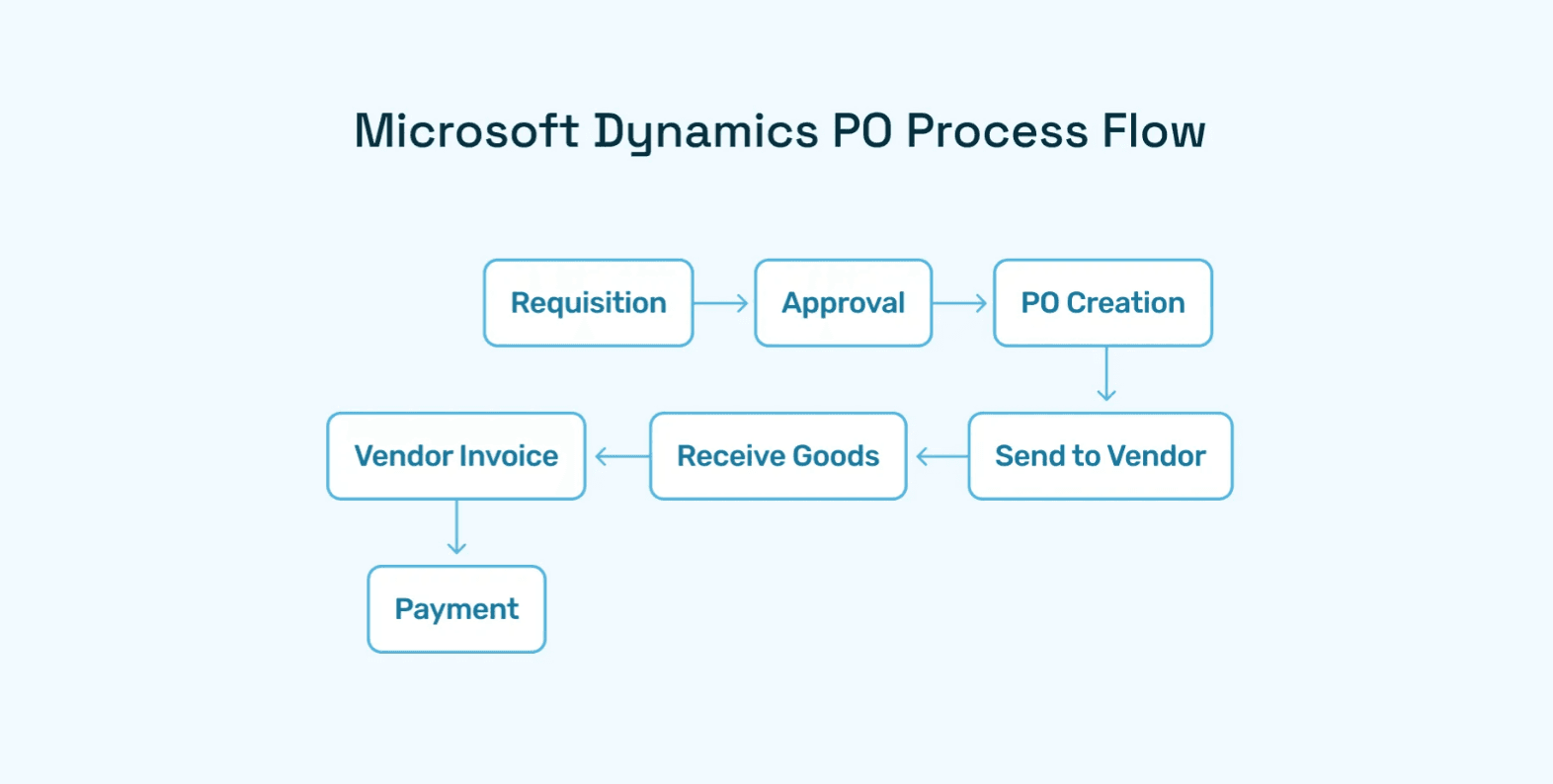
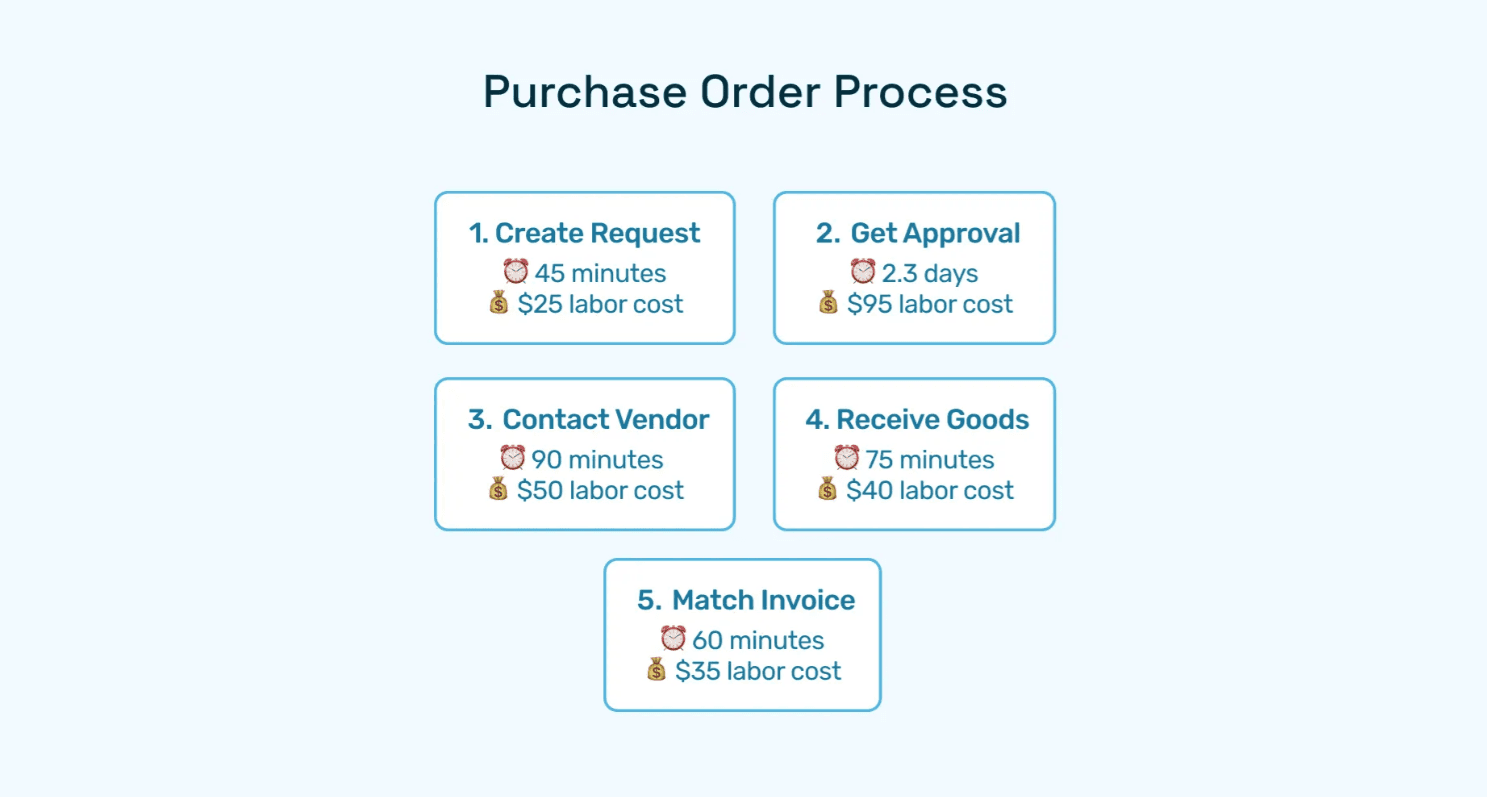
The traditional purchase order workflow encompasses five critical stages: requisition creation, approval routing, vendor communication, goods receipt, and invoice matching. However, manual execution of these processes typically consumes 40-60% of procurement team bandwidth, creating operational inefficiencies that compound as business volume scales.
Research indicates that organizations implementing structured purchase order processes achieve 25% reduction in maverick spending and 35% improvement in payment terms compliance. These metrics underscore the strategic importance of selecting appropriate software platforms and optimization methodologies.
QuickBooks Purchase Order Process: Features and Capabilities
Core QuickBooks Purchase Order Functionality
The purchase order process in QuickBooks provides essential features for small to mid-sized business requirements. QuickBooks Desktop and Online versions support purchase order creation, customization, and basic approval workflows, though capabilities vary significantly between editions.
QuickBooks Online Advanced includes purchase order approval routing, allowing businesses to establish multi-level authorization requirements. Users can configure automatic approval thresholds, ensuring purchases below specified amounts bypass manual review while larger expenditures receive appropriate oversight.
Key QuickBooks purchase order features include:
• Template customization with company branding and field modifications
• Vendor integration linking purchase orders directly to supplier records
• Inventory connectivity automatically updating stock levels upon receipt
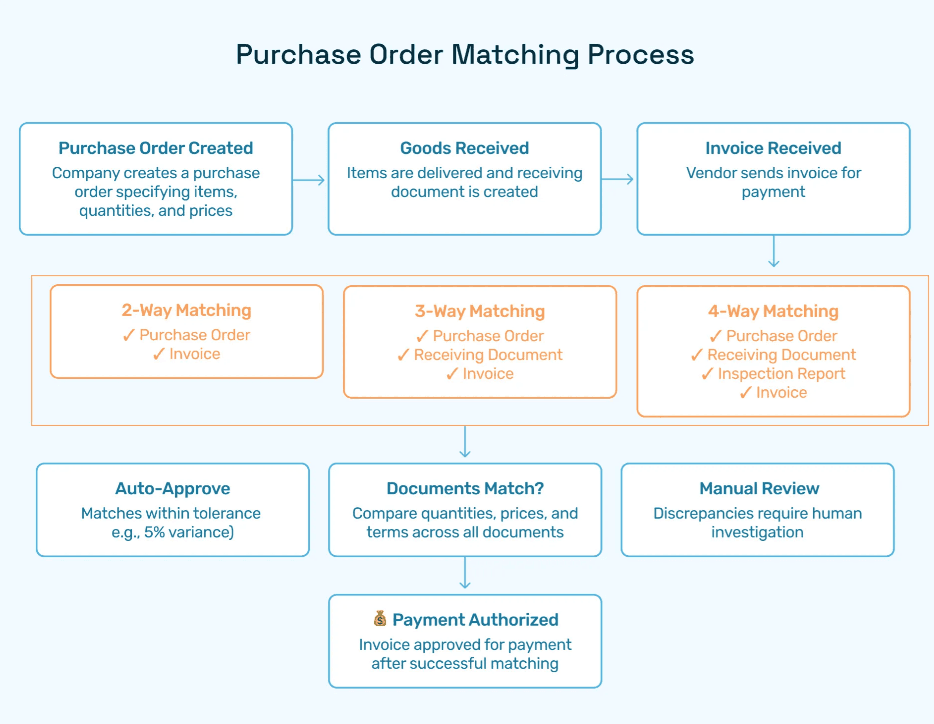
• Three-way matching comparing purchase orders, receipts, and invoices
• Basic reporting tracking open orders and spending analytics
QuickBooks Purchase Order Workflow Implementation
Implementing purchase order processes in QuickBooks requires systematic configuration of company preferences, user permissions, and approval hierarchies. The platform supports role-based access controls, enabling organizations to restrict purchase order creation and approval capabilities to authorized personnel.
The standard QuickBooks workflow begins with requisition entry, where users specify items, quantities, and preferred suppliers. The system then routes requests through designated approval chains based on predetermined criteria such as amount thresholds or department classifications.
Upon approval, QuickBooks generates formatted purchase orders for transmission to vendors via email or print. The platform maintains order status tracking, providing visibility into pending deliveries and enabling proactive supplier communication.
Xero Purchase Order Process: Platform Analysis and Workflow
Xero Purchase Order System Architecture
The Xero purchase order process emphasizes cloud-native functionality and integration capabilities, positioning itself as a modern alternative to traditional accounting platforms. Xero's purchase order module integrates seamlessly with inventory management, project tracking, and financial reporting systems.
Xero's architecture supports unlimited user access without per-seat licensing, enabling broader organizational participation in purchase order workflows. This approach particularly benefits mid-sized businesses seeking to democratize procurement processes while maintaining centralized financial control.
Notable Xero purchase order capabilities include:
• Multi-currency support for international supplier relationships
• Project-based ordering linking purchases to specific jobs or initiatives
• Advanced approval workflows with conditional routing logic
• Real-time collaboration enabling supplier interaction within the platform
• Comprehensive audit trails documenting all purchase order modifications
Optimizing Xero Purchase Order Workflows
Xero's purchase order optimization involves leveraging the platform's automation features and third-party integrations. The system supports recurring purchase orders for regular supplier relationships, reducing administrative overhead for routine procurement activities.
Integration with Xero's inventory management module enables automatic reorder point triggers, ensuring stock availability while minimizing carrying costs. This functionality proves particularly valuable for businesses managing complex product portfolios or seasonal demand fluctuations.
The platform's mobile accessibility allows authorized personnel to review and approve purchase orders remotely, accelerating approval cycles and reducing process bottlenecks. Xero's notification system ensures stakeholders receive timely updates on purchase order status changes.
Comparative Analysis: QuickBooks vs. Xero Purchase Order Capabilities
Feature Comparison Matrix
When evaluating QuickBooks versus Xero for purchase order management, several key differentiators emerge. QuickBooks excels in local market integration and accountant familiarity, while Xero provides superior cloud-native functionality and international business support.
Approval Workflows:
QuickBooks: Basic multi-level approvals with amount-based routing
Xero: Advanced conditional workflows with complex approval logic
Integration Capabilities:
QuickBooks: Strong integration with Intuit ecosystem and popular business applications
Xero: Extensive third-party marketplace with 800+ certified integrations
Reporting and Analytics:
QuickBooks: Standard purchase order reports with limited customization
Xero: Advanced analytics with real-time dashboards and custom report builders
User Experience:
QuickBooks: Familiar interface with extensive training resources
Xero: Modern, intuitive design with mobile-first approach
Implementation Considerations for Mid-sized Businesses
Mid-sized businesses must evaluate purchase order platform selection based on growth trajectory, industry requirements, and existing technology infrastructure. Companies processing fewer than 200 purchase orders monthly may find QuickBooks sufficient, while organizations with higher volumes or international operations typically benefit from Xero's advanced capabilities.
Consider these implementation factors:
• Scalability requirements and projected transaction growth
• Integration needs with existing ERP or inventory systems
• User adoption preferences and training resource availability
• Compliance requirements specific to industry or geographic location
• Total cost of ownership including licensing, implementation, and maintenance
Best Practice Purchase Order Process Framework
Establishing Effective Purchase Order Policies
A best practice purchase order process begins with clearly defined policies governing authorization levels, vendor qualification criteria, and documentation requirements. Organizations should establish spending thresholds that balance control with operational efficiency, typically implementing multi-tier approval structures.
Effective purchase order policies address:
• Authorization matrices specifying approval requirements by amount and category
• Vendor management standards for supplier qualification and performance monitoring
• Documentation requirements ensuring adequate audit trails and compliance support
• Exception handling procedures for urgent or non-standard purchase requests
• Performance metrics defining success criteria and continuous improvement targets
Process Optimization Strategies
Optimizing purchase order processes requires systematic analysis of current workflows, identification of bottlenecks, and implementation of targeted improvements. Leading organizations achieve 40-60% cycle time reductions through strategic automation and process redesign.
Key optimization strategies include:
Automated Approval Routing: Implement system-driven approval workflows that eliminate manual routing decisions and reduce processing delays.
Supplier Integration: Establish electronic purchase order transmission and acknowledgment processes, reducing communication overhead and improving accuracy.
Exception-Based Processing: Configure systems to automatically approve routine purchases within established parameters, focusing manual attention on high-value or unusual transactions.
Real-Time Visibility: Deploy dashboards providing stakeholders with current purchase order status, enabling proactive management and vendor communication.
Hyperbots Platform Capabilities: Transformational Purchase Order Automation
Procurement Co-pilot Architecture and Functionality
Hyperbots' Procurement Co-pilot represents the next generation of purchase order automation, leveraging artificial intelligence to deliver unprecedented efficiency improvements. The platform integrates seamlessly with existing ERP systems, including QuickBooks and Xero, while providing advanced automation capabilities that traditional platforms cannot match.
The Procurement Co-pilot's AI-driven approach transforms purchase order processes through:
• Intelligent Request Processing: Natural language understanding converts informal purchase requests into structured purchase orders, eliminating manual data entry
• Dynamic Approval Routing: Machine learning algorithms optimize approval workflows based on historical patterns and real-time constraints
• Predictive Analytics: AI models forecast demand patterns and suggest optimal purchasing strategies
• Automated Vendor Management: Intelligent supplier selection based on performance history, pricing, and availability
This comprehensive automation reduces purchase order processing time from hours to minutes while maintaining compliance and financial control.
Integration Excellence and ERP Synchronization
Hyperbots' platform differentiates itself through superior integration capabilities, providing real-time synchronization with over 50 ERP systems including QuickBooks, Xero, NetSuite, and SAP. Unlike traditional solutions requiring complex custom integrations, Hyperbots deploys pre-built connectors that enable rapid implementation.
The platform's integration architecture ensures:
Bidirectional Data Flow: Real-time synchronization between Hyperbots and existing financial systems, eliminating data silos and ensuring consistency across platforms.
Automated Reconciliation: AI-powered matching algorithms compare purchase orders, receipts, and invoices, identifying discrepancies and routing exceptions for manual review.
Compliance Automation: Built-in controls ensure all purchase orders meet regulatory requirements and internal policies, reducing audit risk and improving financial governance.
Universal API Support: RESTful APIs enable integration with custom applications and emerging technologies, future-proofing procurement investments.
Hyperbots Competitive Differentiation in Procure-to-Pay Automation
Market Leadership in AI-Driven Procurement
Hyperbots distinguishes itself from traditional procure-to-pay vendors through comprehensive AI integration and user-centric design. While competitors focus on workflow automation, Hyperbots delivers cognitive automation that adapts to organizational preferences and continuously improves performance.
Key differentiators include:
Native AI Architecture: Purpose-built AI models specifically trained for procurement processes, delivering superior accuracy compared to generic automation platforms.
Conversational Interface: Natural language processing enables users to create purchase orders through simple descriptions, eliminating complex form completion.
Predictive Intelligence: Machine learning algorithms anticipate procurement needs and recommend optimal purchasing strategies based on historical patterns and market conditions.
Comprehensive Co-pilot Suite: Integrated Invoice Processing, Vendor Management, and Procurement Co-pilots provide end-to-end procure-to-pay automation.
Implementation Roadmap for Purchase Order Process Optimization
Assessment and Planning Phase
Successful purchase order process optimization begins with comprehensive current-state assessment and strategic planning. Organizations should evaluate existing workflows, technology infrastructure, and stakeholder requirements before selecting optimization strategies.
The assessment phase includes:
Process Mapping: Document current purchase order workflows, identifying bottlenecks, manual touchpoints, and improvement opportunities.
Technology Audit: Evaluate existing systems' capabilities, integration requirements, and upgrade possibilities.
Stakeholder Analysis: Identify key users, decision-makers, and success metrics for purchase order optimization initiatives.
ROI Modeling: Develop a quantified business case comparing current costs with projected improvements from process optimization.
Platform Selection and Implementation Strategy
Platform selection requires careful evaluation of technical capabilities, integration requirements, and organizational fit. Mid-sized businesses should prioritize solutions offering rapid deployment, intuitive user experience, and scalable functionality.
Implementation best practices include:
• Phased Rollout: Begin with pilot departments before organization-wide deployment
• User Training: Invest in comprehensive training programs ensuring successful adoption
• Change Management: Communicate benefits and provide ongoing support during transition
• Performance Monitoring: Establish metrics tracking implementation success and continuous improvement opportunities
Advancing Your Purchase Order Process: Next Steps in Procurement Excellence
The evolution from manual purchase order processes to AI-driven automation represents a strategic imperative for mid-sized businesses seeking competitive advantage. Whether optimizing existing QuickBooks or Xero implementations or exploring advanced AI solutions, organizations must prioritize procurement excellence to achieve sustainable growth.
Hyperbots' Procurement Co-pilot offers a transformational approach to purchase order automation, delivering measurable improvements in efficiency, accuracy, and strategic value. The platform's comprehensive capabilities, rapid implementation, and proven ROI make it the optimal choice for organizations seeking procurement leadership.
To explore how Hyperbots can transform your purchase order processes and deliver quantified business value, visit our Procurement Co-pilot product page or schedule a personalized demonstration with our procurement automation specialists. Discover why leading finance and procurement organizations trust Hyperbots to power their digital transformation initiatives.
Frequently Asked Questions
Q1: What are the key differences between QuickBooks and Xero purchase order processes?
A: QuickBooks provides basic purchase order functionality with strong local market integration, while Xero offers advanced cloud-native features including multi-currency support and unlimited user access. Xero typically better serves international businesses and organizations requiring complex approval workflows.
Q2: How long does it take to implement purchase order process improvements?
A: Implementation timelines vary by solution complexity. Basic QuickBooks or Xero optimization takes 2-4 weeks, while comprehensive AI automation platforms deploy within 2-4 weeks with full functionality.
Q3: How does AI-powered purchase order automation differ from traditional workflow tools?
A: AI automation provides cognitive capabilities including natural language processing, predictive analytics, and adaptive learning. Unlike traditional tools requiring manual configuration, AI platforms continuously improve performance based on usage patterns and organizational preferences.
Q4: What are the essential features for mid-sized business purchase order processes?
A: Essential features include multi-level approval workflows, ERP integration capabilities, real-time reporting, mobile accessibility, and comprehensive audit trails. Advanced organizations benefit from AI-powered automation, predictive analytics, and supplier performance optimization.