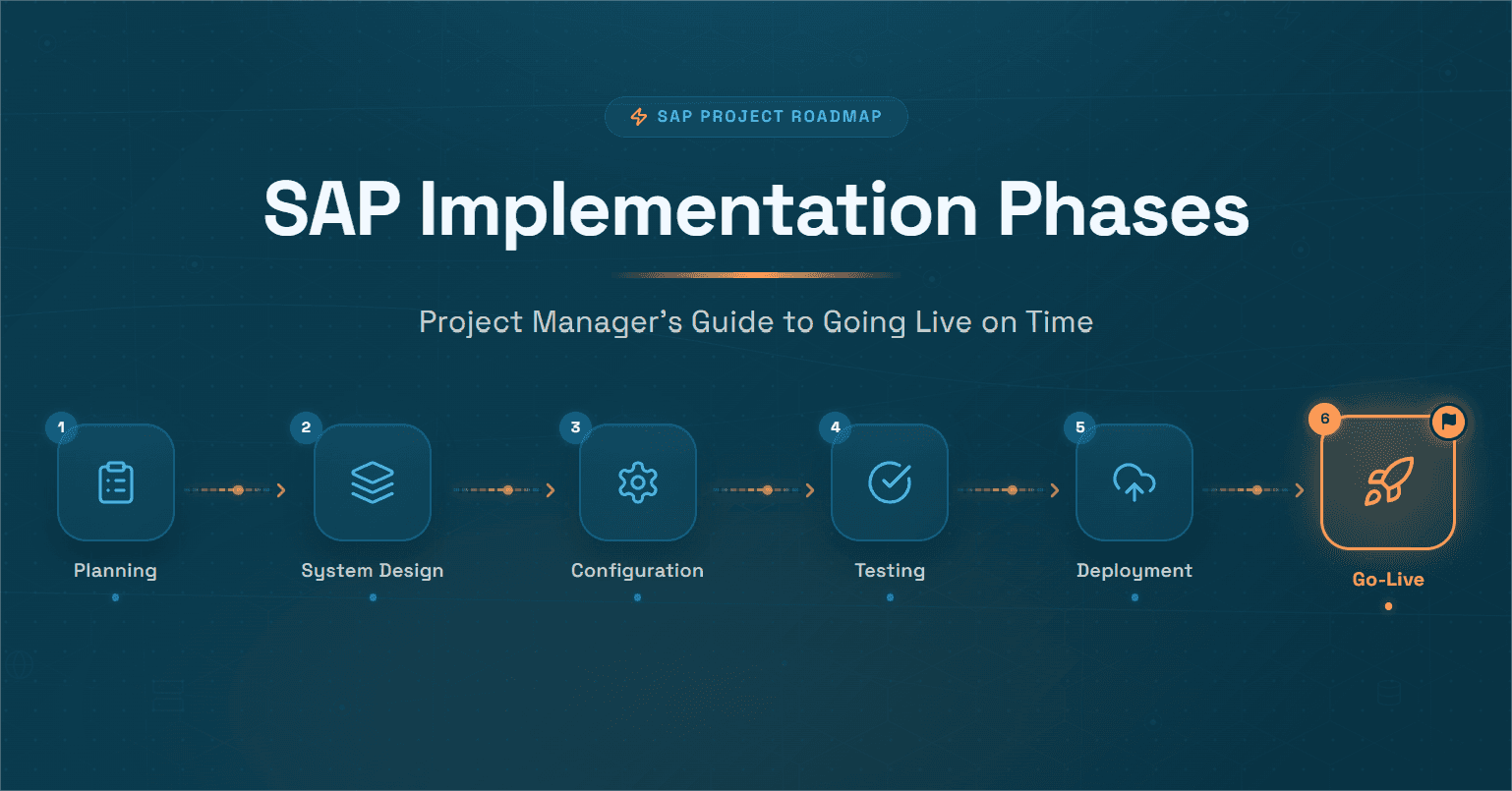
SAP S/4HANA Order to Cash: How the O2C Process Works and Why Cash Still Gets Delayed
A Step-by-Step Breakdown of the O2C Lifecycle in S/4HANA — Where Cash Gets Stuck, Why It Happens, and How AI Fixes It
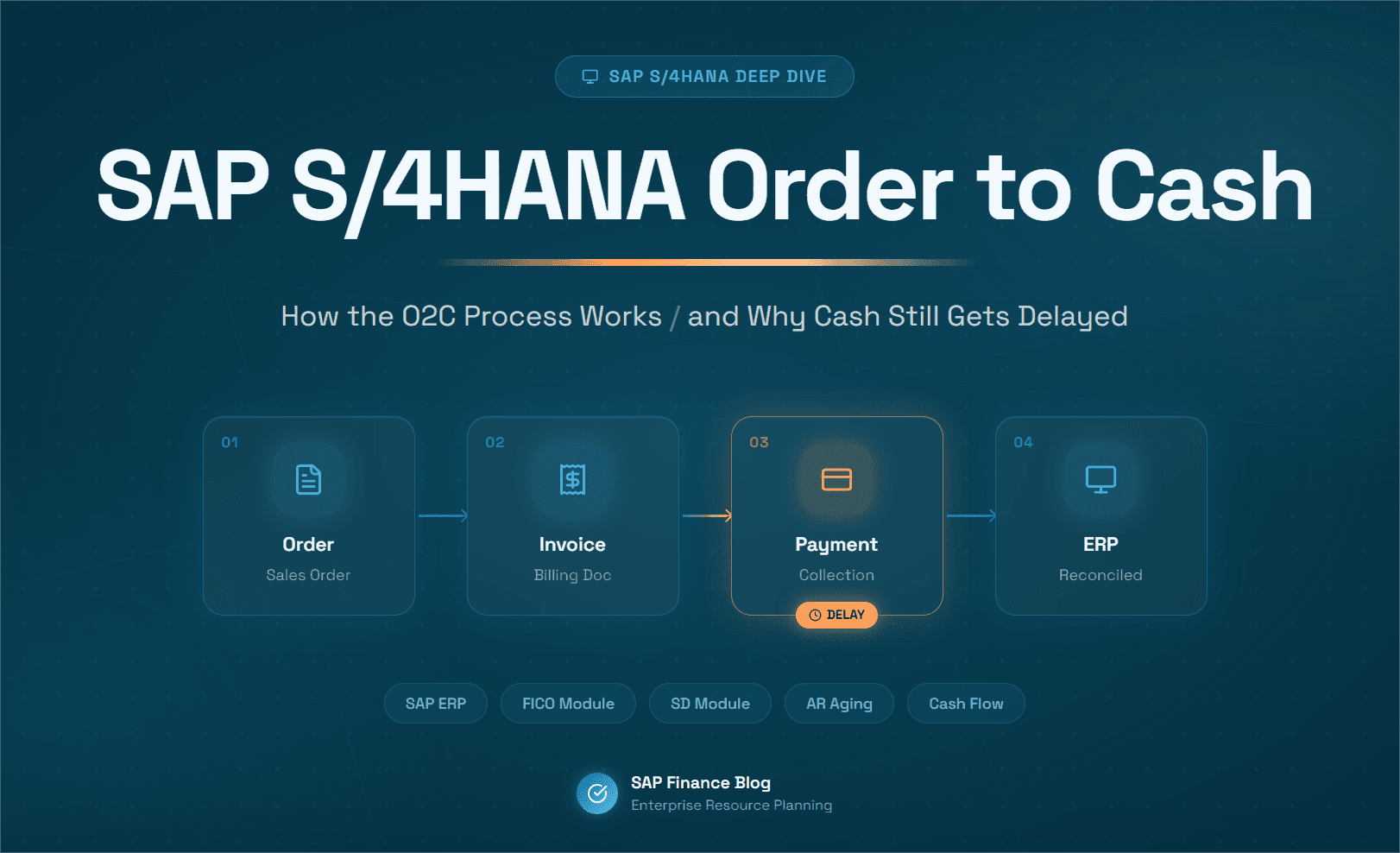
For most businesses running SAP S/4HANA, the order to cash lifecycle looks clean on paper. A customer places an order, the order gets fulfilled, an invoice goes out, and payment comes in. Simple. Linear. Predictable.
The reality is messier. Cash gets delayed at nearly every stage of the O2C process in S/4HANA not because the ERP is broken, but because the process involves far more human judgment, manual intervention, and exception handling than most finance and operations leaders realize. Disputes sit unresolved. Collections teams chase the same invoices twice. Cash application backlogs mean your AR aging looks worse than it actually is. And the root causes are almost always buried deep in the process steps that happen between "invoice sent" and "cash received."
This guide walks through how SAP S/4HANA order to cash actually works step by step, module by module and identifies precisely where delays occur and why, and shows how intelligent automation from Hyperbots closes the gap between what S/4HANA promises and what finance teams experience on the ground.
The SAP S/4HANA Order to Cash Process: Step by Step
Understanding where delays occur in the O2C process in S/4HANA requires a clear picture of how each step works within the platform.
Step 1: Sales Order Creation
The order to cash lifecycle begins with sales order creation in SAP SD. When a customer order is received via EDI, a customer portal, email, or manual entry, a sales order is created in S/4HANA capturing the customer, requested materials or services, quantities, pricing, delivery date, and payment terms.
S/4HANA's credit management functionality runs an automatic credit check at this stage, comparing the customer's outstanding balance and open orders against their assigned credit limit. Orders that pass are released automatically; orders that breach credit limits are blocked and routed to a credit manager for review.
This is the first point where delays can enter the process. Manual credit review queues build up. Credit limits that haven't been reviewed in months flag good customers incorrectly. Orders sit blocked while the credit team catches up and the customer experience suffers before fulfillment has even begun.
Step 2: Delivery and Goods Issue
Once the sales order is released, a delivery document is created in SAP SD triggering the warehouse fulfillment process. The warehouse picks, packs, and ships the goods and when the shipment leaves the facility, a goods issue (GI) posting is made in S/4HANA. This GI posting reduces inventory in the system and creates the cost of goods sold in an accounting entry in the universal journal (ACDOCA).
Timing matters here. Delays in posting the goods issue, whether due to warehouse backlogs, system access issues, or manual posting processes, directly delay the invoice, because billing in S/4HANA cannot be triggered until the GI is posted. A one-day delay in goods issue posting is a one-day delay in invoicing. At scale, these delays are rarely isolated.
Step 3: Billing and Invoice Generation
After a goods issue, the billing process creates a customer invoice in SAP SD, which simultaneously posts the accounts receivable entry in FI. S/4HANA supports multiple billing types like standard invoices, pro forma invoices, credit memos, debit memos, and milestone billing for project-based customers and can automate invoice generation through billing runs that process large volumes of due billing documents in batch.
For businesses with complex billing requirements such as volume-based pricing, project milestone billing, intercompany billing, or customer-specific invoice layouts, the billing configuration in S/4HANA can be intricate. Errors in pricing conditions, missing customer master data, or incomplete delivery information cause billing blocks that stop invoices from being generated and sent.
These billing blocks are one of the most common and underappreciated sources of order to cash lifecycle delay. They accumulate quietly in the system until someone runs a blocked billing report by which point, days or weeks of invoicing delay have already occurred.
Step 4: Accounts Receivable and Collections
Once the invoice is posted in FI-AR, the O2C process in S/4HANA moves into accounts receivable management. The AR module tracks open items by customer, manages payment terms and due dates, and provides the aging analysis that collections teams use to prioritize follow-up activity.
S/4HANA's collections management functionality, part of the FSCM (Financial Supply Chain Management) suite, allows organizations to define collections strategies, assign customers to worklists based on risk scoring and outstanding balance, and track contact history and dispute status against open invoices.
In practice, most collections teams using S/4HANA operate far below the platform's capabilities. Worklists are worked inconsistently. Follow-up activities are logged manually or not at all. Dispute resolution involves email chains that live outside the system. And the ones who most need proactive collections contact often get the least attention because the team is overwhelmed by volume.
This is where Days Sales Outstanding (DSO) balloons. Not because the ERP lacks capability, but because the collections process remains fundamentally dependent on human bandwidth that is almost always insufficient for the volume of open items.
Step 5: Payment Processing and Cash Application
When a customer payment arrives, whether by ACH, wire transfer, check, or card, it must be matched to the correct open invoices in SAP AR and cleared. This cash application process is deceptively complex in practice.
Customers pay late. They pay partial amounts. They deduct early payment discounts without notice. They combine multiple invoices in a single remittance without clear line-item detail. They send remittance advice separately from the payment or not at all.
Each of these scenarios requires someone on the AR team to research the payment, interpret the remittance, and manually apply the cash to the correct open items. In high-volume environments, cash application backlogs routinely mean that payments received on Monday are not applied until Thursday or Friday, artificially inflating AR aging, overstating DSO, and potentially triggering unnecessary collection calls to customers who have already paid.
Step 6: Dispute Management and Resolution
Customer disputes such as deductions, short payments, pricing disagreements, proof of delivery requests are the final major source of order to cash lifecycle delay. In S/4HANA, the dispute management module within FSCM allows organizations to create and track dispute cases linked to specific open items, assign ownership, and manage resolution workflows.
The challenge is that dispute resolution is inherently cross-functional, it requires input from sales, logistics, finance, and sometimes the customer directly. Without tight process discipline and clear SLAs for dispute resolution, cases age. Deductions sit unresolved for weeks or months, tying up cash and consuming disproportionate staff time relative to their dollar value.
Why Cash Gets Delayed Even in S/4HANA Environments
The SAP S/4HANA order to cash process is architecturally sound. The platform has the capability to manage every step of the O2C lifecycle with precision. So why do most organizations using S/4HANA still struggle with DSO, cash application backlogs, and collections inefficiency?
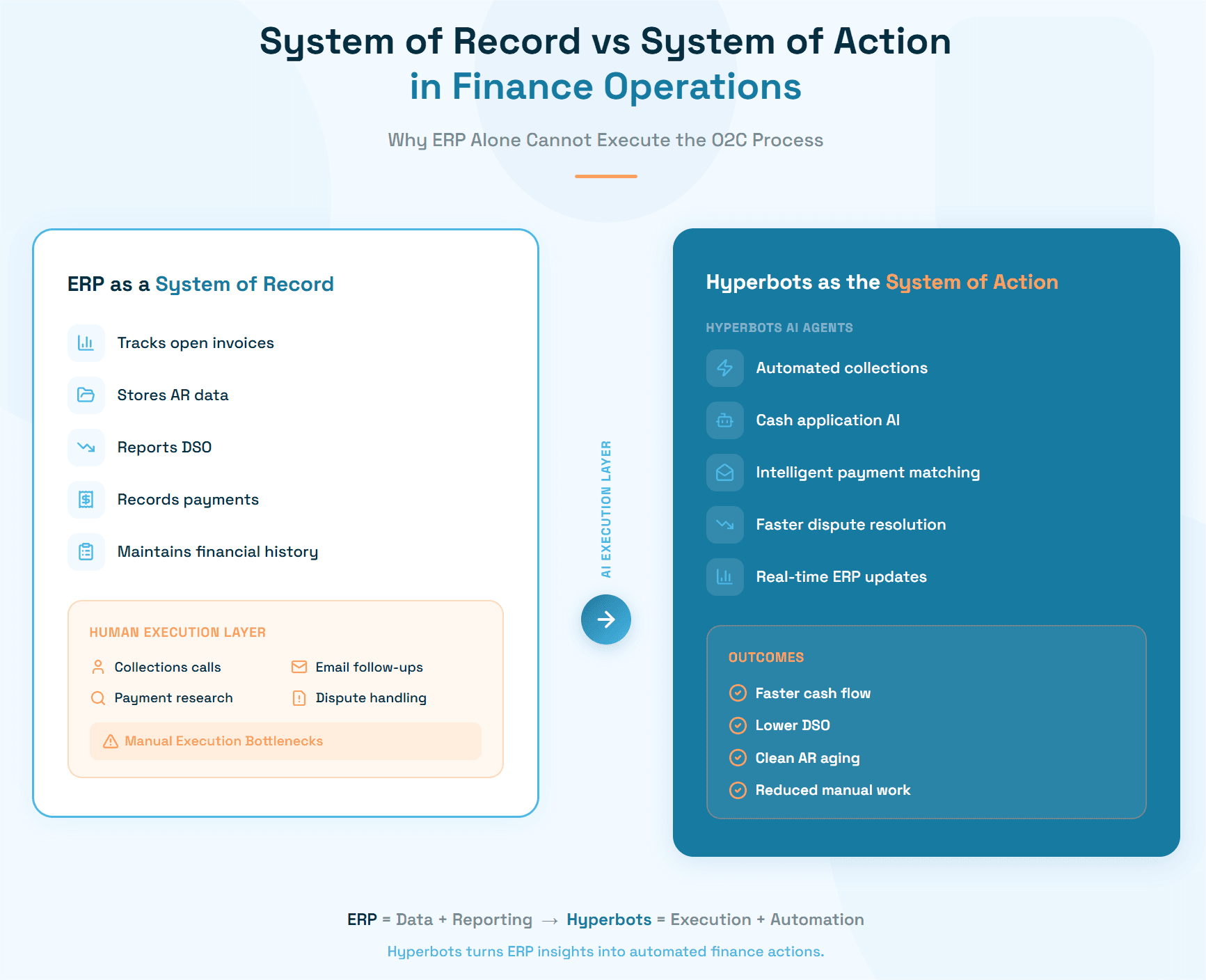
The answer is consistent across industries: S/4HANA is a system of record, not a system of action. It stores, organizes, and reports on O2C data with exceptional accuracy. But it relies entirely on human teams to act on that data to work the collections worklist, to apply the cash, to resolve the disputes, to release the billing blocks. And human teams, no matter how skilled, are limited by bandwidth, inconsistency, and the sheer volume of exceptions that accumulate in any high-transaction O2C environment.
The organizations that close this gap are the ones that layer intelligent automation on top of S/4HANA, not to replace the ERP, but to give it the execution engine it was never designed to include.
Hyperbots + SAP S/4HANA Order to Cash: Closing the Gap Between Record and Action
Hyperbots is a proprietary Agentic AI platform built exclusively for finance and accounting, with native integration connectors for SAP S/4HANA that provide real-time, bidirectional read-and-write access to your O2C data, open items, customer master records, dispute cases, remittance information, payment status, and AR aging, all within your existing S/4HANA environment.
Hyperbots deploys finance-trained AI agents across the order to cash lifecycle, automating the workflows that create delays and consume disproportionate staff time at every stage of the process.
Collections Automation: Hyperbots' Collections Co-Pilot autonomously orchestrates the entire collections lifecycle within S/4HANA with dynamic prioritization of open items, AI-driven dunning and follow-up communications (email and phone), dispute detection, promise-to-pay management, and real-time ERP updates. The result: Days Sales Outstanding (DSO) reduced by up to 40% and cost to collect reduced by 70%. Collections teams shift from reactive invoice chasing to exception management which include the cases that genuinely require human judgment.
Cash Application Automation: Hyperbots' Cash Application Co-Pilot automates end-to-end cash application within S/4HANA, extracting remittance data from bank statements and email attachments, intelligently matching payments to open invoices even in complex partial-payment and deduction scenarios, handling exceptions autonomously, and posting cleared items directly to SAP AR. The outcome: 80% straight-through processing (STP) of incoming payments, reconciliation costs reduced by 80%, and unapplied cash brought below 10%. Payments received on Monday are applied on Monday and not Thursday.
Hyperbots deploys in as little as 3-4 weeks and begins delivering measurable O2C improvements from the first month of operation without disrupting existing S/4HANA configurations, workflows, or authorization models.
S/4HANA Gives You the O2C Framework – Hyperbots Executes It
The SAP S/4HANA order to cash process is one of the most sophisticated O2C frameworks available in enterprise software today. When every step fires cleanly, credit checks, delivery, billing, collections, cash application, dispute resolution, it is genuinely impressive in its integration and real-time visibility.
The problem is that every step rarely fires cleanly. Exceptions accumulate. Manual queues build. Cash gets delayed not because S/4HANA failed, but because the human execution layer between the ERP and the customer couldn't keep pace with the volume and complexity of the process.
Hyperbots closes that gap by transforming the order to cash lifecycle from a process your team manages manually into one your AI agents execute autonomously, with humans intervening only where genuine business judgment is required.
The math is compelling: 40% reduction in DSO, 70% lower cost to collect, 80% straight-through cash application, all delivered within your existing S/4HANA environment, live in weeks, not months.
Book a personalized demo and let a Hyperbots Financial Technology Consultant show you exactly where your O2C process in S/4HANA is losing cash and what it looks like when AI fixes it.
Frequently Asked Questions (FAQs)
What is the order to cash process in SAP S/4HANA?
A: The order to cash (O2C) process in SAP S/4HANA is the end-to-end business workflow that begins when a customer places an order and ends when payment is received, applied, and reconciled in your books. It spans six core steps within S/4HANA: sales order creation and credit check in SAP SD, delivery and goods issue posting, billing and invoice generation, accounts receivable management and collections via FSCM, payment processing and cash application, and dispute management and resolution. Because the process touches multiple integrated modules such as SD, FI-AR, and FSCM simultaneously, it is one of the most cross-functional and delay-prone workflows in any S/4HANA environment.
Why does cash get delayed in the SAP S/4HANA order to cash process?
A: Cash gets delayed in the SAP S/4HANA O2C process not because the ERP lacks capability, but because S/4HANA is fundamentally a system of record, not a system of action. It stores and reports on O2C data with precision, but relies entirely on human teams to act on that data, working collections worklists, applying cash, resolving disputes, and releasing billing blocks. Common delay points include manual credit review queues at sales order creation, goods issue posting backlogs that delay invoicing, billing blocks caused by pricing errors or missing master data, under-resourced collections teams unable to keep pace with open item volumes, and cash application backlogs that artificially inflate AR aging and DSO.
What causes high DSO in SAP S/4HANA environments?
A: High Days Sales Outstanding (DSO) in SAP S/4HANA environments is typically caused by a combination of process gaps rather than a single failure point. The most common root causes are: inconsistent collections follow-up due to worklist overload, cash application backlogs that make paid invoices appear open in AR aging, unresolved dispute cases that sit in FSCM without clear ownership or SLAs, and billing blocks that delay invoice generation, pushing the payment clock back before the invoice has even been sent. In most cases, DSO inflation is not a data problem; S/4HANA has the data. It is an execution problem, the human bandwidth required to act on that data consistently is rarely sufficient at scale.
How can cash application be automated in SAP S/4HANA?
A: Cash application in SAP S/4HANA can be automated using AI-powered platforms like Hyperbots, which integrate directly with SAP AR via native bidirectional connectors. Hyperbots' Cash Application Co-Pilot automates the full cash application lifecycle, extracting remittance data from bank statements and email attachments, intelligently matching payments to open invoices even in complex partial-payment and deduction scenarios, handling exceptions autonomously, and posting cleared items directly to SAP AR in real time. This approach achieves up to 80% straight-through processing (STP) of incoming payments, reduces reconciliation costs by 80%, and brings unapplied cash below 10% thus eliminating the multi-day backlogs that inflate DSO and trigger unnecessary collection activity against customers who have already paid.
How does AI improve the order to cash lifecycle in SAP S/4HANA?
A: AI improves the order to cash lifecycle in SAP S/4HANA by providing the execution engine the ERP was never designed to include. While S/4HANA manages and reports on O2C data with precision, AI platforms like Hyperbots act on that data autonomously, orchestrating collections workflows, applying cash, detecting disputes, and managing promise-to-pay tracking without relying on human bandwidth. The measurable outcomes for S/4HANA users integrating Hyperbots include a 40% reduction in Days Sales Outstanding, a 70% reduction in cost to collect, and 80% straight-through processing of incoming payments, all delivered within the existing S/4HANA environment without disrupting configurations, workflows, or authorization models, and live in as little as 3–4 weeks.