SLA and Exception Management in Purchase Order Tracking
Hyperbots’ PO tracking system drives efficiency, compliance, and vendor trust through intelligent automation and monitoring.
Executive Summary
Finance leaders and procurement heads are under mounting pressure to ensure purchase orders (POs) are processed with accuracy, compliance, and speed. Yet, manual systems often fail to meet expectations, delays, missing audit trails, and a lack of visibility can lead to compliance breaches, vendor disputes, and financial inefficiencies. This is where a purchase order tracking system with service-level agreement (SLA) monitoring and exception handling transforms operations, as they issue PO tracking alerts, automatically escalate issues, and maintain a complete audit trail for governance.
With its AI-powered Procurement Co-Pilot and supporting suite of automation tools, Hyperbots delivers the most comprehensive purchase order processing software in the market. Enterprises using Hyperbots have reported up to 80% operational cost reductions, faster PO cycle times, and fewer compliance errors, setting a new standard for procurement efficiency.
What Is a Purchase Order Tracking System?
A purchase order tracking system is a digital platform that monitors every stage of the PO lifecycle, from requisition to approval to dispatch. Its goal is to ensure transparency, timely approvals, and full compliance with procurement policies.
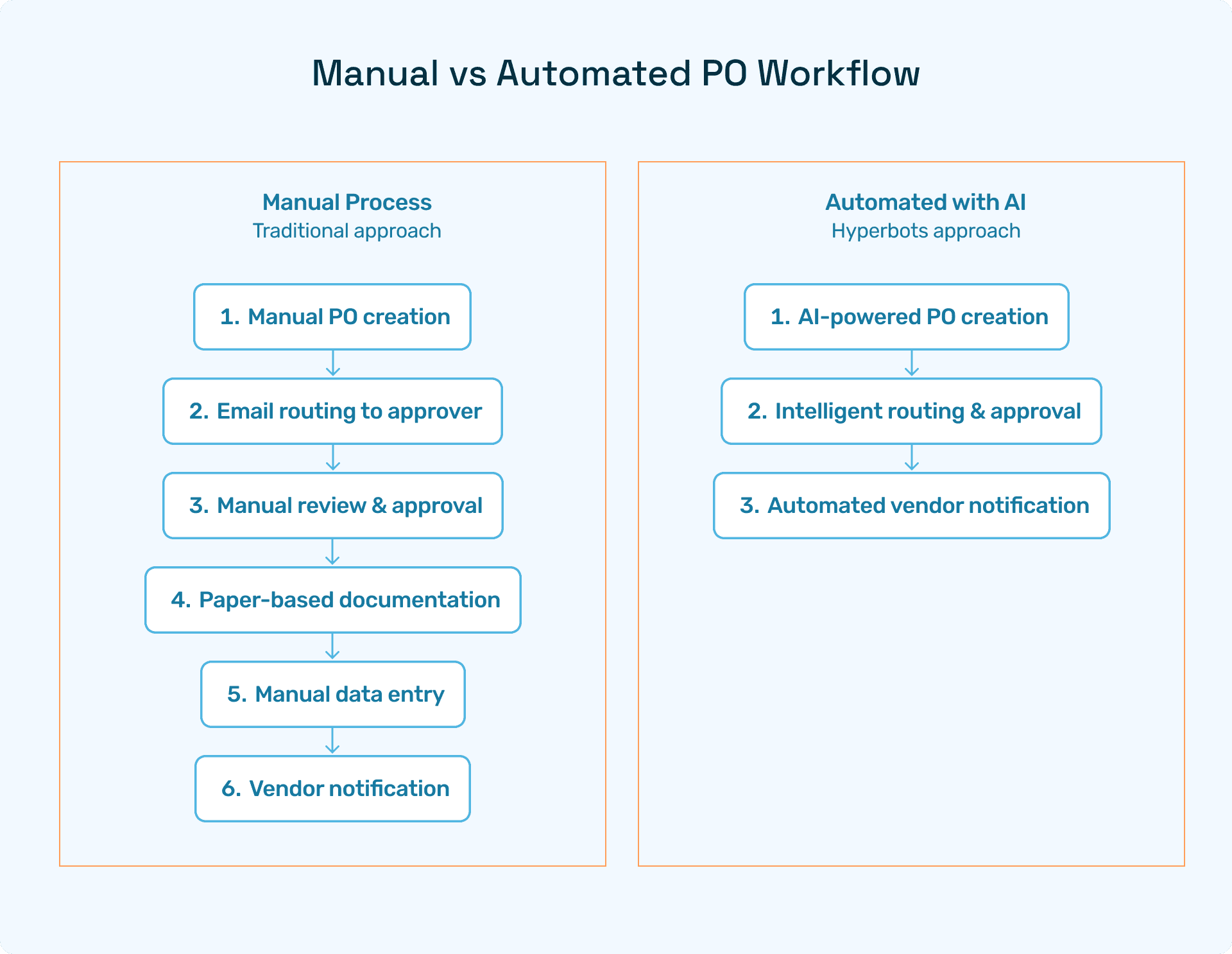
Without automation, procurement teams often rely on spreadsheets, emails, or ERP add-ons. These methods:
Delay PO approvals when requests get stuck in inboxes
Lack of visibility for vendors and finance teams
Struggle with compliance during audits
Fail to capture exceptions (e.g., duplicate requests, incorrect GL coding, over-budget purchases)
By contrast, automated systems provide:
PO tracking alerts when SLAs are breached
Exception handling workflows to address mismatches quickly
Audit trails that satisfy both internal and external auditors
ERP integration for real-time budget checks and vendor compliance
The Role of SLAs in Purchase Order Tracking
In procurement, service-level agreements (SLAs) set performance standards for PO processing. Examples include:
Manager approvals within 24 hours of submission
Finance reviews are completed within 48 hours
Vendor invoices are validated within 2 days of receipt
By embedding SLA monitoring into a purchase order tracking system, organizations can:
Enhance compliance: Ensure every PO meets internal and regulatory standards
Reduce cycle times: Escalate approvals automatically when deadlines are missed
Strengthen vendor trust: Deliver predictable timelines for PO approvals and payments
According to Deloitte, procurement automation improves SLA adherence and reduces cycle times by up to 50%, directly improving supplier relationships.
Exception Management in PO Tracking
Even the most well-designed processes face disruptions. Exception handling is the structured way of identifying, escalating, and resolving issues in PO workflows.
Common Exceptions in PO Tracking
Duplicate POs created by manual entry
Budget violations due to missing real-time checks
GL coding errors during requisition
Vendor compliance issues with unapproved suppliers
Delayed approvals breaching SLA timelines
A system without automated exception handling risks compliance penalties and weak governance. With tools like Hyperbots, however, exceptions are automatically flagged, routed, and resolved before they affect downstream processes.
Core Features of an SLA-Enabled Purchase Order Tracking System
PO Tracking Alerts
Real-time notifications notify stakeholders of SLA breaches.
Automatic escalation rules ensure approvals aren’t delayed.
Exception Handling
AI-driven detection of duplicate entries.
Routing exceptions directly to the right approvers.
Purchase Order Processing Software
Seamless conversion of requisitions into approved POs.
Integrated vendor management for faster dispatch.
Audit Trail
Every approval, change, and exception is logged automatically.
Full visibility for compliance and audit readiness.
How Hyperbots AI Co-Pilots Elevate PO Tracking
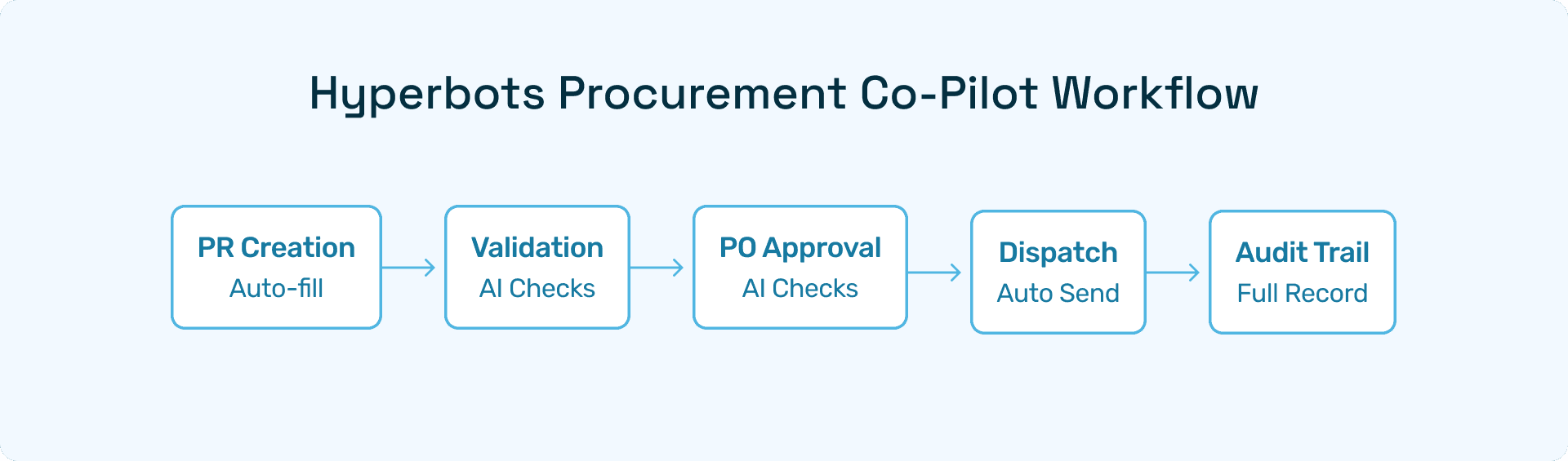
Procurement Co-Pilot
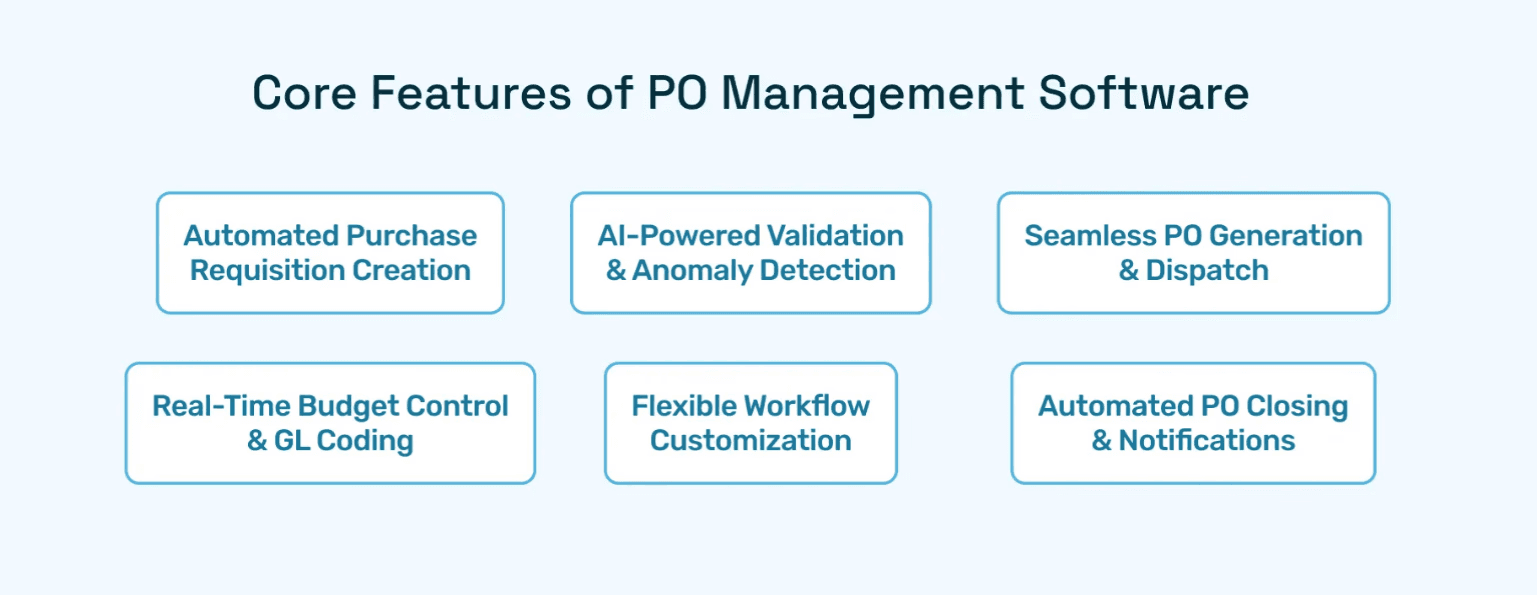
The Procurement Co-Pilot covers the entire PO lifecycle:
Automated field extraction & PR autofill
Validation, duplication & anomaly detection
Budget control & GL coding recommendations
Configurable PR/PO workflows
Automated PO creation & dispatch
End-to-end audit trail with PO closing
Invoice Processing Co-Pilot
Ensures accuracy with three-way matching of POs, goods receipts, and invoices—automatically flagging mismatches or duplicates.
Vendor Management Co-Pilot
Validates vendor data, tracks performance, and ensures SLA compliance for supplier relationships.
Supporting Co-Pilots
Accruals Co-Pilot – Automates expense recognition for accurate closing.
Payments Co-Pilot – Ensures timely, SLA-compliant vendor payments.
Sales Tax Verification Co-Pilot – Validates tax compliance.
Together, these Co-Pilots deliver end-to-end automation across procure-to-pay, something no other provider offers.
SLA Monitoring and Exception Handling with Hyperbots vs. Others
Most PO automation tools focus on digitizing workflows. Hyperbots goes further with:
AI-first automation: Beyond rules, it learns from historical data.
Contextual intelligence: Recommends GL coding and vendor choices.
Unified suite: Six Co-Pilots ensure full coverage of procure-to-pay.
Scalability: Handles both mid-market and enterprise-grade operations.
Other providers often require multiple add-ons, lack exception handling depth, and can’t provide full auditability. Hyperbots’ integration-first approach ensures SLAs and exceptions are managed across the entire lifecycle.
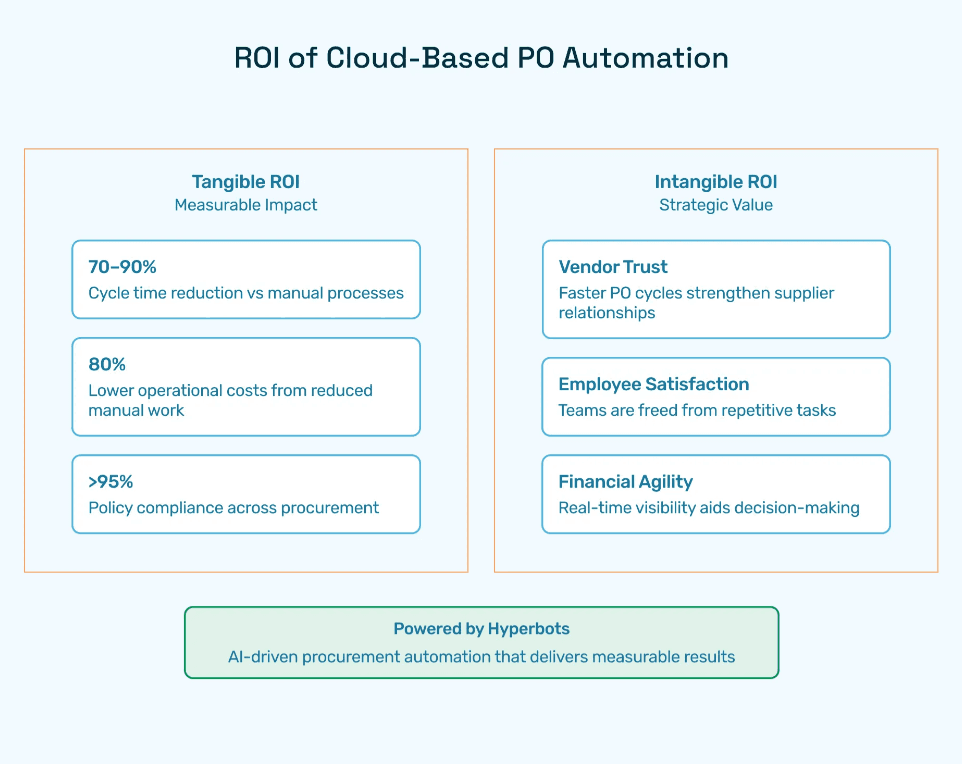
ROI of SLA & Exception Management in PO Tracking
Tangible ROI
80% reduction in PO creation & dispatch time
Reduction of PR creation time to 5 minutes
Intangible ROI
Fewer compliance errors from exception handling
Stronger vendor trust with SLA-backed transparency
Improved compliance with financial and tax regulations
Enhanced employee productivity with automation
Hyperbots Platform Capabilities: Creating Transformational Impact
The Hyperbots platform delivers transformation beyond basic automation.
Unified AI Co-Pilots across procurement, payments, tax, and vendor management
No-code configurability for rapid implementation
Cloud-native scalability for enterprise-grade performance
Finance-centric AI tailored to CFO and controller needs
Strategic Takeaways for Finance Leaders
Automating purchase order tracking with SLA monitoring and exception handling is no longer optional. It ensures:
Faster cycle times with PO tracking alerts
Compliance through proactive exception handling
Governance with a complete audit trail
Strong ROI with reduced costs and improved vendor satisfaction
Enterprises looking to move beyond manual inefficiencies should explore the Hyperbots Procurement Co-Pilot for procurement resilience and transformation.
👉 Explore the Hyperbots Platform or schedule a demo today to see the transformation in action.
FAQs
Q1: What is SLA in purchase order tracking?
A: SLA in PO tracking defines performance standards (like approval timelines) that ensure compliance, accountability, and efficiency.
Q2: How do PO tracking alerts improve compliance?
A: PO tracking alerts notify stakeholders of SLA breaches, preventing delays and ensuring timely action.
Q3: Why is exception handling critical in procurement?
A: Exception handling identifies and resolves mismatches, duplicate POs, and compliance risks before they disrupt financial operations.
Q4: How does purchase order processing software ensure audit trail accuracy?
A: By automatically logging every step of the PO lifecycle, it ensures transparency with audit trails for internal and external audits.
Q5: What benefits can I expect from Hyperbots’ purchase order tracking system?
A: Most enterprises achieve cost savings, faster approval times, and stronger compliance.