Automating Purchase Order Approvals: Policies, Routing, and SLAs with Power Automate
Shrink approval cycles and costs with AI-driven purchase order automation.
Executive Summary
Purchase order (PO) approvals are one of the most common sources of friction in procurement. Manual routing through emails and spreadsheets delays cycle times, increases compliance risks, and frustrates finance teams. Power Automate purchase order approval workflows solve these challenges by digitizing routing, embedding policies, and enforcing service-level agreements (SLAs).
This blog explains:
What automated PO approvals are and how Power Automate workflows handle them
The role of policies, routing, and SLAs in automation
Benefits and ROI of approval automation
Why Hyperbots’ Procurement Copilot and supporting AI Co-Pilots deliver the highest efficiency and compliance for finance teams
By adopting AI-driven workflows, CFOs, Controllers, and Procurement Leaders can reduce approval bottlenecks, shrink cycle times, and cut procurement costs by 80%.
Introduction: Why Purchase Order Approvals Need Automation
Manual PO approvals are notorious bottlenecks. Requests often get lost in inboxes, approvers miss deadlines, and policy exceptions slip through unnoticed. The result is:
Procurement delays that slow operations
Increased operational costs due to inefficiencies
Frustrated finance teams juggling spreadsheets
Heightened compliance risks
According to the Deloitte 2025 Global Chief Procurement Officer Survey, organizations that adopt digital procurement technologies achieve significantly better performance across cost savings, compliance, and supplier satisfaction compared to peers relying on manual processes.
This is where purchase order approvals automation steps in. By embedding rules, routing, and SLAs into centralized workflows, finance teams gain both speed and control.
What Is Purchase Order Approval Automation?
Purchase order approval automation refers to the use of workflow platforms like Power Automate combined with AI-driven systems to manage the entire PO approval lifecycle without manual intervention.
Instead of relying on emails and ad hoc signatures, automated workflows ensure that:
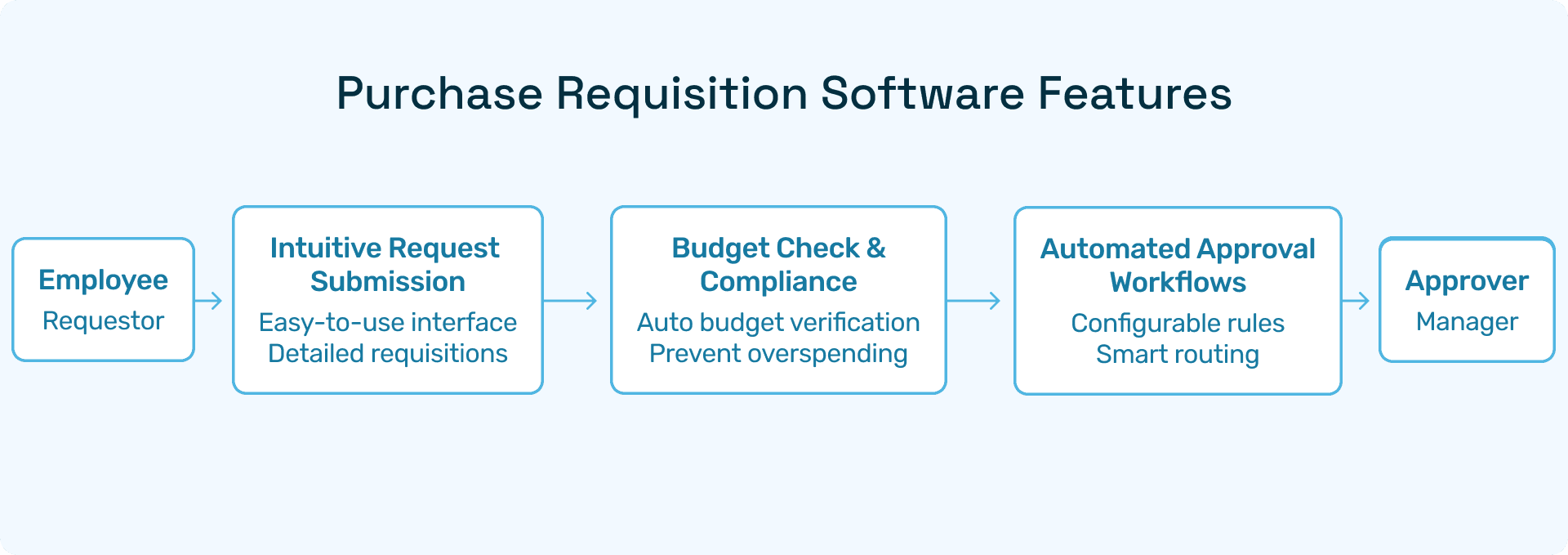
Requests are validated against budgets and policies before submission
Approval routing is automatically triggered based on role, spend threshold, or compliance rules
Approvers receive instant notifications via email, Teams, or mobile apps
Approved POs sync instantly with ERP systems such as SAP, Oracle, NetSuite, or Microsoft Dynamics
By shifting from spreadsheets to automated routing, businesses reduce approval bottlenecks, improve compliance, and create real-time spend visibility.
Power Automate Workflows for Automating Purchase Order Approvals
Microsoft’s Power Automate platform is a widely adopted tool for designing purchase order workflows. Its strength lies in enabling finance teams to build rule-based, event-driven automations without deep coding.
A typical power automate purchase order approval workflow includes:
Trigger Event → A new PO request is submitted in ERP or procurement system.
Validation Layer → Workflow checks compliance with policies (budget, vendor, contract).
Approval Routing → System routes the request to the right approver(s) based on thresholds.
Notifications → Approvers receive real-time alerts on Teams, Outlook, or mobile.
SLA Tracking → Deadlines are enforced; overdue approvals are auto-escalated.
ERP Sync → Once approved, the PO is automatically logged in enterprise systems.
Policies Governing Automated Purchase Order Approvals
Policies form the backbone of purchase order approvals automation. Embedding policies into workflows ensures compliance and removes ambiguity. Examples include:
Spend Thresholds → Low-value POs (e.g., <$1,000) auto-approved; higher-value escalated.
Budget Checks → Validation against allocated department budgets.
Vendor Compliance → Approval restricted to pre-approved or certified vendors.
Contract Adherence → Purchases validated against existing contracts.
Smart Routing in Automated PO Approvals
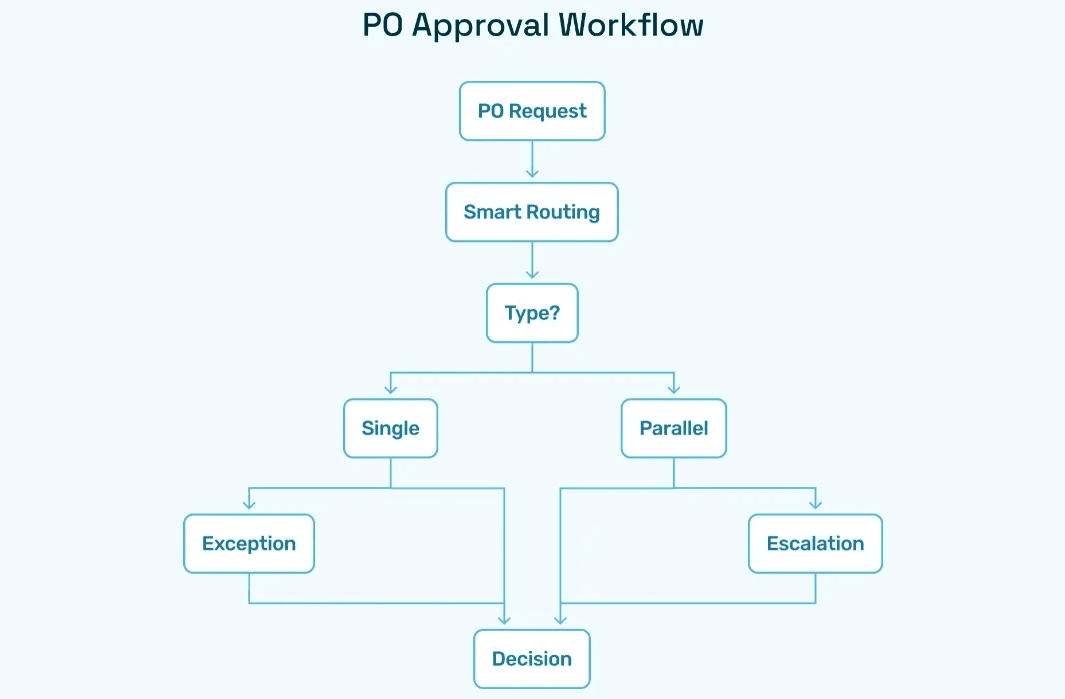
Routing is where automation delivers its most visible impact. Without automation, requests often sit idle until someone manually forwards them. With smart routing:
Threshold-Based Routing → Small purchases auto-approved; large ones routed to CFO.
Role-Based Routing → Department heads approve POs for their teams.
Escalation Paths → If approvers are unavailable, requests are automatically escalated.
SLAs in Automated Purchase Order Workflows
Service-Level Agreements (SLAs) ensure accountability in procurement. In manual processes, SLA adherence is nearly impossible to enforce. Automated workflows solve this.
Typical enterprise SLA goals for PO approvals:
Low-Value POs → <12 hours
Medium-Value POs → <24 hours
High-Value POs → <48 hours
With automation, SLAs are built into workflows via:
Automated reminders before SLA breaches
Auto-escalation after SLA expiry
Dashboards showing SLA compliance rates in real time
Hyperbots adds AI-driven SLA intelligence, predicting potential breaches and rerouting approvals proactively.
Benefits of Purchase Order Approvals Automation
Leading industry providers like IBM highlight that advanced purchase order automation features such as three-way matching, mobile/cloud access, and intelligent validation help organizations cut down on duplicate data entry, accelerate approvals, and strengthen compliance. (IBM on Purchase Order Automation)
Organizations adopting power automate workflows for automating purchase order approvals realize immediate benefits:
Faster Cycle Times → Shrink PO approvals from weeks to hours.
Cost Savings → Eliminate manual effort, reducing procurement costs by up to 80%.
Compliance Assurance → Policies embedded into workflows prevent off-policy purchases.
Real-Time Visibility → Dashboards for CFOs, Controllers, and Procurement Heads.
Supplier Trust → Faster approvals → timely payments → stronger vendor relationships.
ROI of Automating Purchase Order Approvals
Intangible ROI's of Procurement Automation
Stronger supplier partnerships: Faster, error-free processes build trust and reliability with vendors.
Greater employee satisfaction: Less manual work and fewer approvals bottlenecks free teams to focus on strategic tasks.
Smarter financial decisions: Real-time spend visibility and insights enable proactive budgeting and cost management.
Operational confidence: Automated workflows and SLA adherence reduce stress and improve organizational accountability.
Faster organizational agility: Accelerated approval cycles and streamlined processes allow teams to respond quickly to business needs.
According to McKinsey’s report “Shifting the Dial in Procurement”, digital levers like automation and analytics can unlock 3–10% in annual cost savings for procurement functions.
Why Hyperbots Leads in Purchase Order Approval Automation
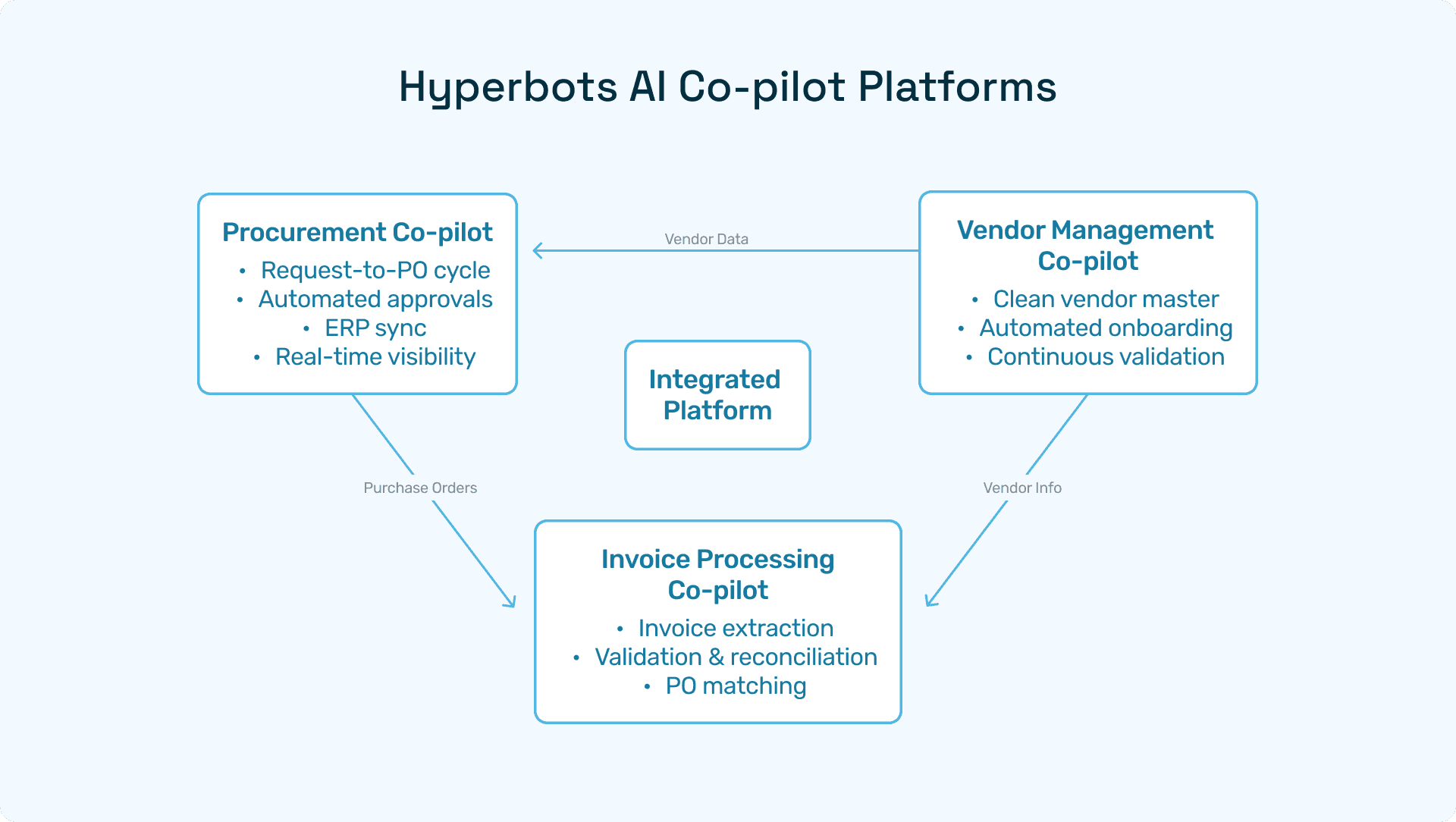
While many vendors offer workflow automation, Hyperbots differentiates itself through its AI Co-Pilot architecture.
Hyperbots Procurement Copilot delivers:
Instant ERP-synced approvals
AI-based policy validations
Cycle time reduction
Real-time spend visibility
Supporting Co-Pilots in Procure-to-Pay:
Invoice Processing Copilot → Automates invoice validation and matching
Vendor Management Copilot → Simplifies onboarding and compliance
Accruals Copilot → Real-time expense visibility
Payments Copilot → Secure, policy-compliant disbursements
Hyperbots Platform Capabilities: Transforming PO Approvals
The Hyperbots Agentic AI Platform provides capabilities unmatched by rule-based competitors:
Unstructured Data Handling → Scanned invoices, contracts, PDFs.
Deep ERP Integration → SAP, Oracle, NetSuite, Microsoft Dynamics.
Predictive Intelligence → Anomaly detection, redaction, forecasting.
Human-in-the-Loop → CFO override ensures governance while maintaining speed.
Hyperbots-Led ROI: Real-World Impact
Enterprises deploying Hyperbots report measurable gains:
80% cycle time reduction
Up to 80% cost savings
FAQs on Purchase Order Approvals Automation
Q1. What is power automate purchase order approval?
It’s the automation of PO validation, routing, and approval workflows using Microsoft Power Automate or AI-driven platforms like Hyperbots.
Q2. How does approval routing automation work?
Routing rules are set based on thresholds, roles, and exceptions. AI-enabled platforms like Hyperbots dynamically reroute requests if approvers are unavailable.
Q3. What role do SLAs play?
SLAs define approval timeframes. Automated workflows enforce them with reminders and escalations.
Q4. How is Hyperbots different from other vendors?
Hyperbots combines deep ERP integration with AI Co-Pilots for smarter routing, predictive insights, and human-in-loop flexibility.
Q5. What ROI can CFOs expect?
Most enterprises see ROI in 6-9 months, with immediate cost savings and faster approvals.
Moving Forward: Automating Purchase Order Approvals with Hyperbots
Procurement leaders can no longer afford slow, manual approval processes. With Power Automate workflows enhanced by Hyperbots’ AI Co-Pilots, enterprises achieve unmatched efficiency, compliance, and ROI.
👉 Explore Hyperbots Procurement Copilot today or schedule a demo with our experts.