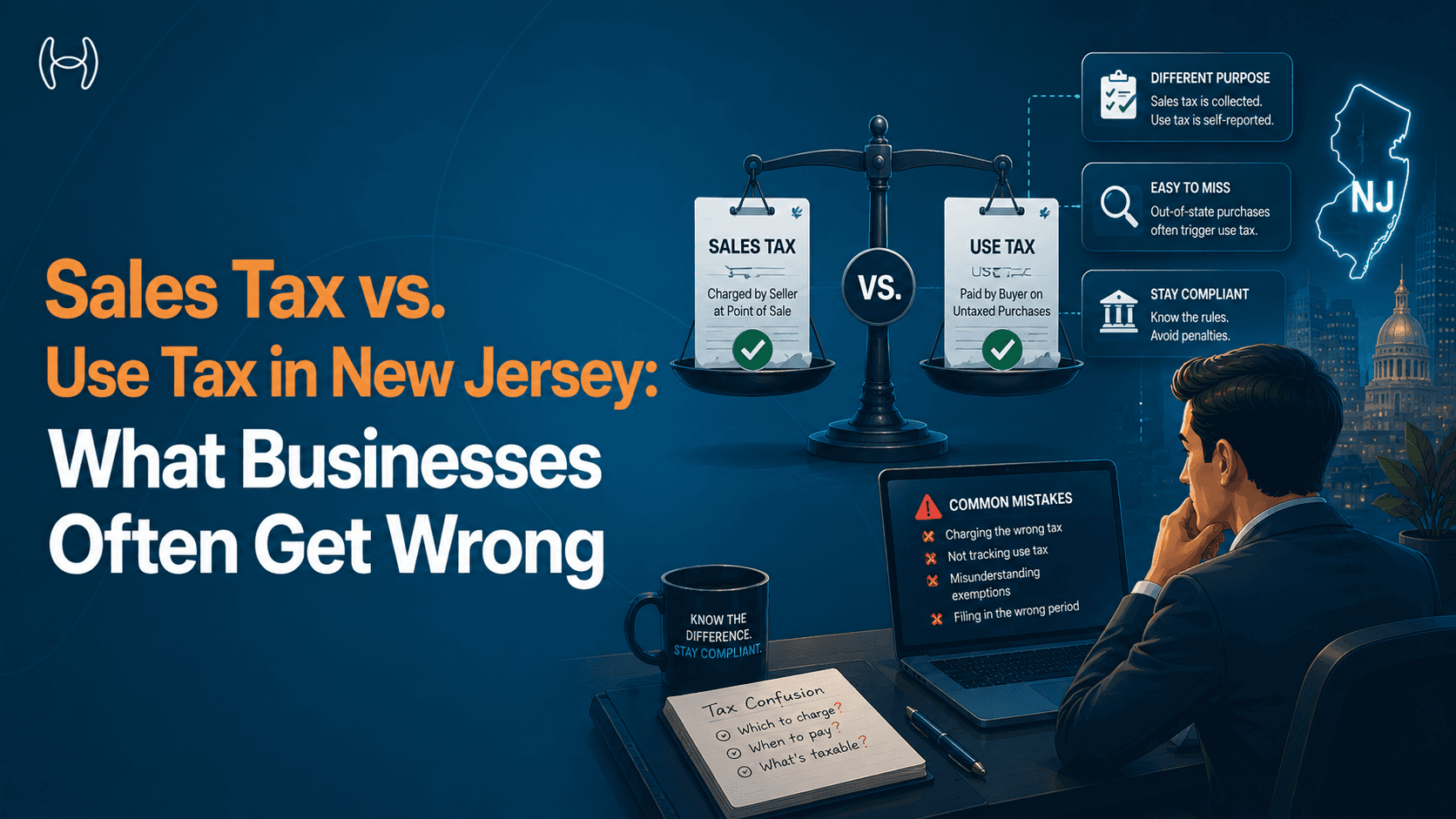
Top Sales Tax Compliance Mistakes Businesses Make and How to Fix Them
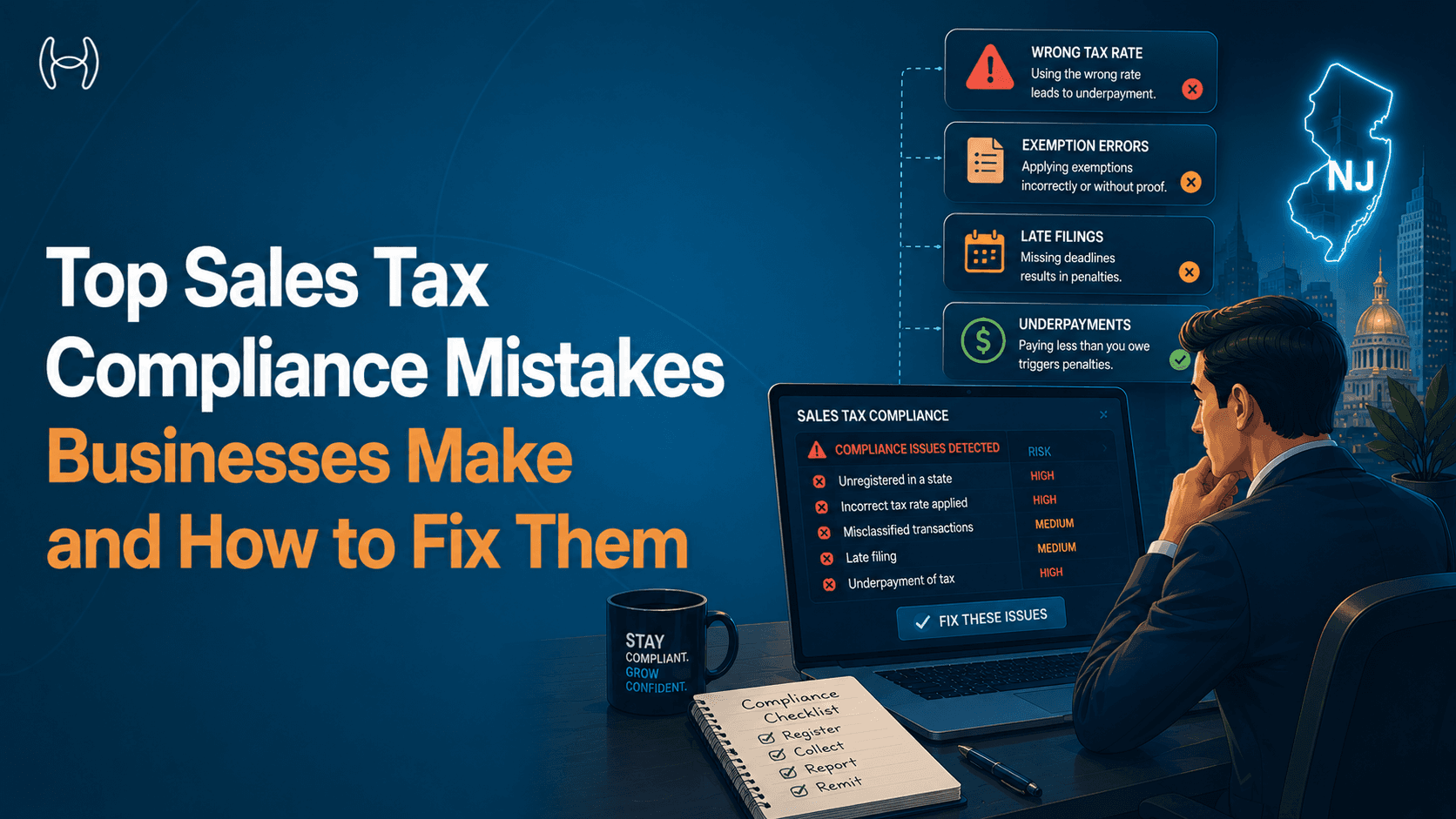
Sales tax compliance looks straightforward until you are the one responsible for it. There is a rate, a list of taxable items, a filing deadline. What could go wrong?
Quite a lot, as it turns out. Sales tax errors are among the most common findings in financial audits, and they are not limited to small businesses or inexperienced teams. Companies with dedicated finance functions, established AP processes, and good ERP systems still make the same mistakes repeatedly. Not because they do not know the rules, but because the rules are more nuanced than they appear, they vary across jurisdictions, and they change. Applying them correctly across every transaction, every month, at volume, is harder than it looks.
This blog covers the five most common sales tax compliance mistakes businesses make, why each one happens, and what it takes to prevent them consistently.
Mistake 1: Applying the Wrong Tax Rate
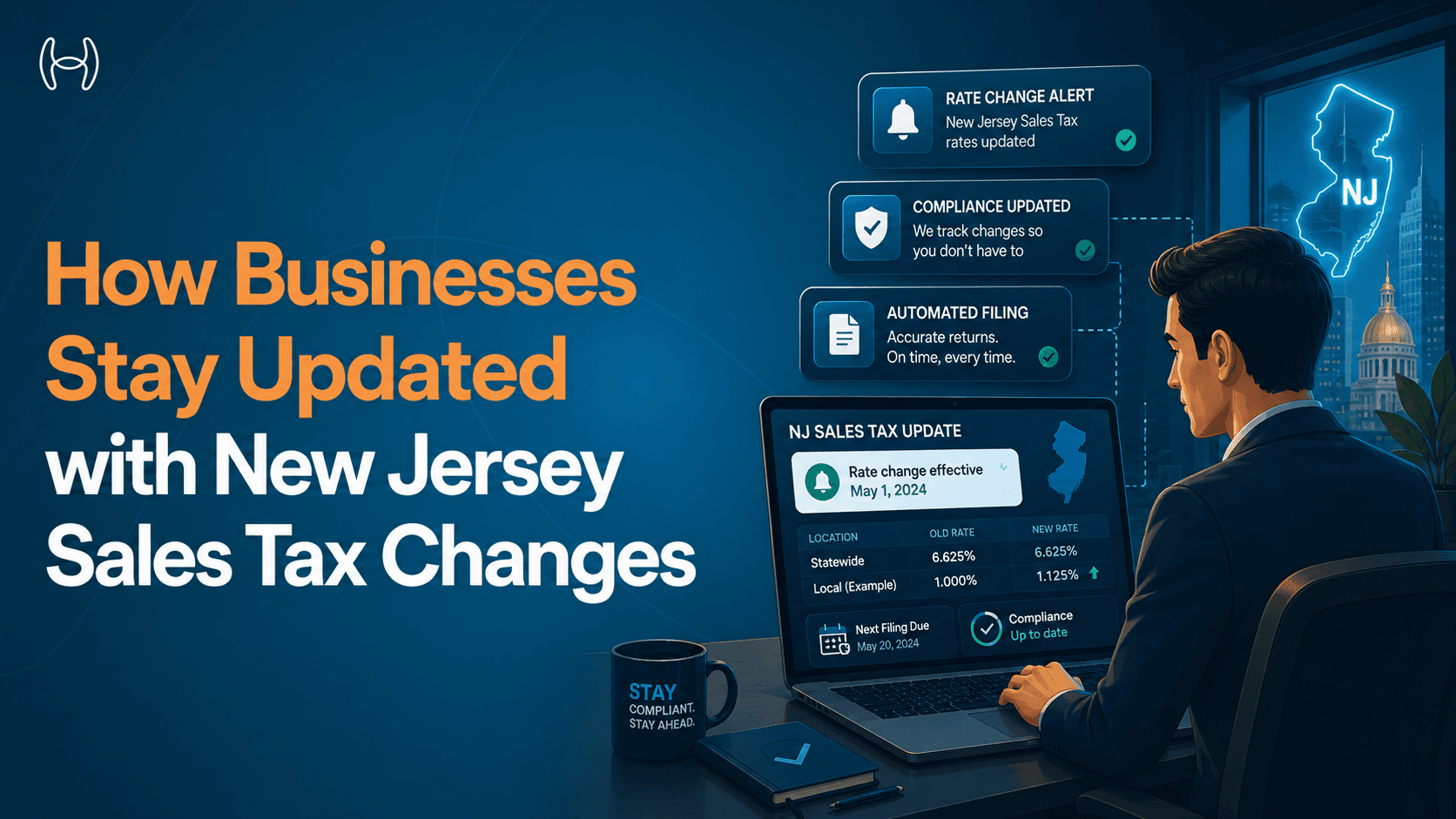
This is the most basic error and the most common. A business applies a rate that is outdated, incorrect for the jurisdiction, or pulled from the wrong level of a multi-tier tax structure.
The United States has over 13,000 sales tax jurisdictions. Most transactions involve a stacked rate: state, county, and in some cases city, all combined. Getting that right requires knowing the exact delivery address and the current rate at every level. Applying the state rate alone produces systematic errors at scale. Businesses that hard-code rates at implementation and never update them compound this over time.
Special zones add a further layer. Many states designate enterprise zones, manufacturing zones, or tax increment districts with reduced rates for qualifying transactions. A transaction that qualifies for a reduced zone rate but is processed at the standard state rate creates an overcharge. The reverse creates an underpayment liability.
Rate Error Type | What Goes Wrong | Consequence |
Outdated state rate | Rate change not reflected in system | Overcharge or underpayment across all transactions |
Missing local surtax | Only state rate applied, not county or city add-on | Systematic underpayment, audit liability |
Special zone rate missed | Standard rate applied to qualifying zone transaction | Customer overcharge or underpayment |
Wrong jurisdiction | Rate of seller's state applied instead of buyer's state | Incorrect tax collected, remitted to wrong authority |
Mistake 2: Missing or Misapplying Exemptions
Every state has exemptions. The categories vary, the documentation requirements vary, and the conditions vary. Businesses that apply exemptions based on broad category assumptions rather than transaction-level analysis will consistently get them wrong in both directions.
Overclaiming is common in manufacturing. Equipment used partly in production and partly in administration does not fully qualify for a production exemption. Auditors know exactly where to look for this. Resale certificates are another source: an exemption collected once from a customer cannot be applied to everything that customer ever purchases. The exemption applies only when the goods are actually resold.
Underclaiming is equally costly. A business that fails to collect an exemption certificate from a qualifying customer charges them tax they do not owe. A business that does not know its raw material purchases qualify for a manufacturing inputs exemption overpays on every qualifying purchase.
The documentation requirement is non-negotiable. In most states a valid exemption certificate, specific to the type of exemption claimed, must be collected at the time of the transaction and kept on file. If the certificate is not there in an audit, the exemption is disallowed and the seller owes the tax plus interest and penalties.
Exemption Type | Common Error | What Is Required |
Resale | Applied to purchases later used internally | Transaction-level review; use tax assessed when goods change use |
Manufacturing inputs | Not claimed when it should be | Knowledge of state-specific production input rules |
Nonprofit | Applied without valid certificate | State-specific exemption certificate on file |
Government purchases | Applied to non-qualifying transactions | Verification that purchase is for official government use |
Agricultural | Applied to equipment with mixed use | Determination of primary use and applicable state rules |
Mistake 3: Incorrect Tax Treatment of Digital Goods and Services
This is the fastest-growing category of sales tax error. As businesses spend more on software, subscriptions, and cloud services, the tax treatment of those purchases has not kept pace with how finance teams process them.
States have taken very different positions on digital goods. Some tax electronically delivered software identically to physical software. Some tax SaaS subscriptions. Some exempt all of it. A business that applies a blanket rule, either that all digital purchases are taxable or that digital services are intangible and therefore not taxable, will be wrong for a meaningful portion of transactions in any multi-state operation.
SaaS subscriptions are the most commonly mistreated category. Whether a SaaS subscription is taxable depends on how the destination state classifies it. Some states treat it as prewritten software and tax it. Others treat it as a service and do not. The same product, billed identically, can be taxable in one state and exempt in another.
Cloud infrastructure and data storage are even more variable. Applying a single treatment to all cloud spend is almost certainly wrong for a multi-state business.
Transaction date matters too. For subscription services, the tax point is typically each billing date, not the contract start date. A classification or rate change mid-subscription applies from that point forward. Businesses that set tax treatment once at contract signing and never revisit it will miss these changes.
Mistake 4: Cross-State Transaction Errors
Businesses that sell to customers in multiple states, buy from vendors across state lines, or have inventory and employees crossing borders are operating in a multi-jurisdiction environment. Most of their errors come from applying single-jurisdiction logic to multi-jurisdiction transactions.
Sales tax nexus is the connection between a business and a state that creates a tax obligation. Physical nexus, having employees, property, or inventory in a state, has always triggered this. Economic nexus, crossing a revenue or transaction threshold from remote sales, has applied in most states since the 2018 South Dakota v. Wayfair Supreme Court decision. Most states set the threshold at $100,000 in annual sales or 200 transactions, though thresholds and what counts toward them vary by state. A business that crosses a threshold and does not register is accumulating uncollected tax liability on every subsequent sale.
Most states use destination-based sourcing: the rate and rules of the state where goods are delivered apply. A few states use origin-based sourcing. Applying the wrong sourcing logic produces systematic errors across every cross-state transaction.
When a business buys from an out-of-state vendor who does not collect sales tax, use tax is typically owed to the buyer's own state on that purchase. Businesses that process invoices with no tax line as simply non-taxable, without checking whether use tax applies, are building an unrecorded liability with every such purchase.
For a detailed breakdown of how sales tax and use tax interact, particularly for businesses operating in and around New Jersey, the New Jersey State Sales Tax guide covers the mechanics in full.
Cross-State Scenario | Common Error | Correct Treatment |
Remote sales crossing nexus threshold | No registration, no collection | Register in that state, collect from threshold date |
Goods delivered to buyer's state | Seller's state rate applied | Destination state rate applies |
Purchase from out-of-state vendor, no sales tax charged | Processed as non-taxable | Assess use tax at buyer's state rate |
Employee purchases goods in another state, brings to office | No tax review | Assess use tax if other state's rate was lower than home state rate |
Drop shipment to customer in third state | Seller's rate applied | Third-party destination state rate applies |
Mistake 5: Poor Record Keeping
The first four mistakes are errors of application. This one is an error of discipline, and it is the one that turns a manageable audit into a serious one.
A sales tax audit is a documentation exercise as much as a tax review. Auditors request invoices, exemption certificates, use tax filings, and evidence that the tax treatment applied to each transaction was based on a documented determination. If the documentation exists, the conversation is about specific errors. If it does not, the auditor makes assumptions, and those assumptions are rarely favorable.
Audit lookback periods vary by state, typically between three and seven years. The specific gaps that cause the most problems are exemption certificates missing or not matched to transactions, tax adjustments with no documented reason, no use tax records at all for out-of-state purchases, and inconsistent classification of the same item type across different periods. Inconsistency is often treated as evidence of unreliable processes, even when the correct rate was applied most of the time.
Handling overcharged sales tax invoices and handling tax liability for undercharged sales tax invoices both depend on having clean records from the start. Without them, identifying overcharges and undercharges becomes reconstruction rather than review.
How Hyperbots Addresses Each of These Mistakes
Each of these five mistakes has a process failure at its root. Rates are not validated. Exemptions are applied by category rather than by transaction. Digital goods are processed under blanket rules. Cross-state logic is applied inconsistently. Records are maintained informally. Hyperbots' Sales Tax Verification Co-Pilot addresses all five at the point of invoice processing, before errors become liabilities.
Rate validation happens on every invoice. The Co-Pilot validates the tax rate charged against the correct rate for the delivery jurisdiction. Invoices where the rate does not match the expected rate are flagged before approval and payment, not discovered in an audit.
Exemption handling works at the line-item level. The system classifies each line item against applicable tax categories and flags mismatches where an exemption has been applied to a non-qualifying item, or where a taxable item has been processed as exempt. A single invoice with ten line items, some taxable and some exempt, is handled correctly across every line.
Digital goods classification uses category-specific logic rather than blanket rules. The Co-Pilot distinguishes between taxable specified digital products and non-taxable service categories based on the destination state's rules, applying the correct treatment to each line item without manual lookup.
Cross-state transaction logic is built into the Co-Pilot's address extraction and validation. For every invoice, the system extracts and validates the origin and destination addresses and applies the correct jurisdiction's tax rules to that transaction. For businesses managing tax across multiple entities and states, each entity operates under its own applicable rules without manual intervention to switch between them.
Record keeping is automatic. Every invoice processed generates a timestamped audit trail covering the tax determination made, the line items reviewed, exceptions flagged, and how each exception was resolved. When an auditor requests documentation, it is already organized and complete. No reconstruction required.
The Sales Tax Verification Co-Pilot processes invoices with 99.8% extraction accuracy. Up to 80% of invoices move through the full cycle without manual intervention. Invoice processing costs are reduced by up to 80% compared to manual review processes. The system goes live in one month, with no custom model training required, and connects to your existing ERP from day one.
For a real-world example of the financial impact, see how a CFO eliminated $200K in tax leakage using Hyperbots' automated tax verification.
Quick Reference: The Five Mistakes and How to Fix Them
Mistake | Root Cause | Fix |
Wrong tax rate applied | Hard-coded rates, local surtaxes not tracked | Validate against current address-level rate on every transaction |
Exemptions misapplied or missed | Category-level rules, missing certificates | Apply item-level analysis; collect and maintain certificates |
Digital goods taxed incorrectly | Blanket rules applied across all digital spend | Classify each product or service by destination state definition |
Cross-state transaction errors | Single-jurisdiction logic, nexus not monitored | Apply destination-based rules; track economic nexus by state |
Poor record keeping | No systematic documentation process | Maintain invoice-level records with documented tax determination |
Frequently Asked Questions
What is the most common sales tax mistake businesses make?
Applying the wrong tax rate is the most frequent error. It usually happens when a business hard-codes rates into its system and does not update them when state or local rates change, or when local surtaxes and special zone rates are not factored into the transaction-level rate calculation. Because the error applies to every transaction in the affected jurisdiction, it compounds quickly.
Do exemption certificates expire?
It depends on the state. Some states, like New Jersey, issue certificates that do not have a fixed expiration date but require the information to remain accurate and current. Other states issue certificates with defined validity periods, often one to three years, after which the certificate must be renewed. The safest approach is to review certificates periodically and update them whenever a customer's status or the nature of the purchases changes.
Is a SaaS subscription always subject to sales tax?
No. Whether a SaaS subscription is taxable depends entirely on how the destination state classifies it. Some states treat it as prewritten software and tax it. Others treat it as a service and exempt it. A few states have no sales tax at all. The correct determination requires state-by-state analysis of the specific product, not a blanket rule applied across all subscriptions.
What is economic nexus and how does it affect my business?
Economic nexus is the obligation to collect and remit sales tax in a state based on your revenue or transaction volume in that state, even if you have no physical presence there. Since the 2018 South Dakota v. Wayfair Supreme Court decision, most states have adopted economic nexus thresholds, commonly $100,000 in annual sales or 200 transactions. Once you cross a state's threshold, you are required to register, collect, and remit sales tax in that state. Failing to monitor these thresholds means you may be accumulating an uncollected tax liability without knowing it.
What is the difference between sales tax and use tax?
Sales tax is collected by the seller from the buyer at the point of sale and remitted to the state. Use tax is a self-assessed tax owed by the buyer when sales tax was not collected by the seller, typically on out-of-state purchases of taxable goods or services used within the buyer's state. Both taxes apply at the same rate and cover the same categories of taxable transactions. The obligation shifts from seller to buyer when the seller does not collect.
How far back can a state audit my sales tax records?
Most states have a standard lookback period of three years from the date a return was filed or was due. Several states extend this to six or seven years when there is evidence of substantial underreporting or fraud. This means records need to be maintained, organized, and retrievable for a significant period. Documentation gaps from several years ago can still create audit exposure today.
What happens if we have been applying the wrong rate for several years?
The exposure depends on whether the error resulted in underpayment or overpayment. Underpayment creates a back-tax liability plus interest and potentially penalties for the full period the error was in place, going back as far as the state's lookback period allows. Overpayment means you may be eligible for a refund, though refund claims are also subject to time limits that vary by state. Voluntary disclosure programs in many states allow businesses to come forward proactively and often reduce or eliminate penalties.
The Bottom Line
Sales tax errors are not random. They follow predictable patterns, and those patterns repeat because the underlying process failures that cause them are never fixed. Rate lookups stay manual. Exemptions stay category-level. Digital purchases get blanket treatment. Cross-state logic stays approximate. Records stay informal.
The businesses that come out of audits cleanly are the ones with consistent, documented processes applied to every transaction. That consistency is what automation delivers, not occasionally, but on every invoice, every period, regardless of volume.
See it in action with a demo or start your free trial today.