How Healthcare Companies Use Automated POs: Transforming Healthcare Procurement Automation
Unlock 80% cost savings and rapid compliance with AI-powered healthcare procurement automation for hospitals and medical teams
Executive Summary
Healthcare procurement automation has revolutionized how hospitals and medical organizations manage purchase orders, approvals, and vendor management. By leveraging intelligent hospital purchase order software and advanced medical procurement automation platforms like Hyperbots, finance teams are cutting cycle times by achieving unmatched accuracy and compliance. This comprehensive guide reveals how AI-driven POs set new benchmarks for speed and savings, positioning Hyperbots as the top choice for finance leaders seeking procurement excellence.
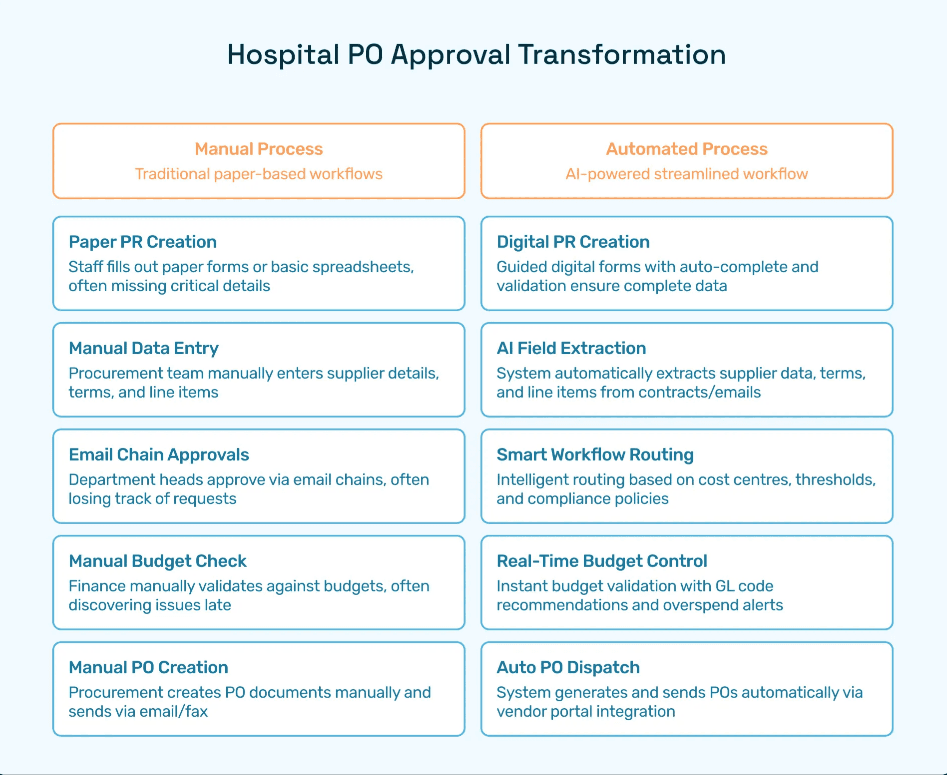
The Challenge of Manual Healthcare Procurement
Healthcare organizations have long relied on outdated procurement methods—paper files, spreadsheets, and endless email threads—to handle critical purchases, from lifesaving medical equipment to routine pharmaceutical supplies. While this traditional approach may have worked decades ago, today’s high-volume, fast-paced healthcare environment exposes its cracks. Manual procurement not only slows down operations but also introduces risks that affect financial health, compliance, and ultimately, patient care.
Why manual processes fall short:
Approval delays: Urgent equipment purchases, such as ventilators or diagnostic tools, often stall when approvals sit in inboxes or require multiple signatures. These delays can directly impact patient outcomes.
Data errors and lost audit trails: Re-keying information from one system to another increases the likelihood of mistakes. Missing documents or incomplete audit trails also make it harder for organizations to stay accountable.
Compliance and regulatory risk: Healthcare procurement involves strict regulations, including HIPAA-sensitive vendor interactions. Manual processes lack the built-in safeguards to ensure consistent compliance.
Operational inefficiency: As hospitals and clinics grow, procurement needs scale dramatically. Paper and spreadsheet-based systems cannot keep up, leading to higher overhead costs and stressed procurement teams.
The ripple effects:
Strained vendor relationships due to late payments or mismatched orders.
Cash flow disruption when errors slow down invoicing and reimbursements.
Audit unpreparedness, leaving organizations vulnerable during inspections.
In an era where healthcare providers must balance cost efficiency with quality care, manual procurement becomes a liability rather than a backbone. Automating procurement not only reduces errors and delays but also equips healthcare organizations with the scalability and compliance assurance they need to thrive in a demanding environment. The shift is no longer optional—it’s essential for sustainability and patient trust.
What Is Healthcare Procurement Automation?
Healthcare procurement automation is the digital transformation of the purchasing process—replacing manual spreadsheets, paper forms, and scattered email approvals with intelligent, software-driven workflows. Instead of relying on staff to manually validate documents, chase approvals, or re-enter data into multiple systems, automation streamlines every step—from requisition to reconciliation. This ensures accuracy, compliance, and speed while freeing healthcare professionals to focus on patient care rather than paperwork.
How healthcare procurement automation works:
Guided digital intake forms: Staff can quickly submit new purchase requests through structured digital forms. These forms capture all necessary details upfront—eliminating back-and-forth emails and reducing errors caused by incomplete information.
Intelligent field extraction: Advanced software can read and extract key details from supplier contracts, PDFs, and emails. This removes the burden of manual data entry and ensures that supplier information, pricing, and terms flow directly into the system with accuracy.
Automated approval workflows: Instead of waiting days for a paper form to circulate, approvals are routed instantly to the right stakeholders. Built-in budget checks, policy validations, and compliance rules ensure requests meet organizational standards before moving forward.
Real-time ERP synchronization: Automated systems integrate directly with hospital ERPs and finance tools, ensuring that procurement data is always current, transparent, and auditable. This enables finance teams to maintain accurate ledgers without extra reconciliation work.
Auditable reporting: Every request, approval, and transaction is logged automatically, creating a clear audit trail for compliance. This reduces risk during regulatory inspections and builds organizational confidence in procurement integrity.
Gartner emphasizes that strategic sourcing is a standardized and systematic approach to supply chain management that formalizes the way information is gathered and used. This enables organizations to leverage their consolidated purchasing power to find the best possible value in the marketplace. The integration of automated supplier scorecards, as highlighted by Gartner, drives supplier innovation, cost optimization, and supply base efficiency, aligning with the benefits of procurement automation in healthcare.
Why it matters in healthcare:
Automation doesn’t just improve operational efficiency—it directly impacts patient outcomes and financial sustainability. Hospitals and clinics gain:
Faster turnaround times for urgent equipment and supply purchases.
Lower error rates by eliminating manual data entry and lost paperwork.
Improved compliance with healthcare regulations, including HIPAA and vendor security requirements.
Stronger financial control with real-time visibility into spending and budgets.
Automating procurement enables healthcare organizations to shift from reactive, error-prone processes to proactive, scalable systems that support both operational efficiency and high-quality patient care. It’s not just a technology upgrade—it’s a strategic shift toward smarter, safer, and more sustainable healthcare delivery.
Hospital Purchase Order Software: Core Features for Healthcare
Procurement in healthcare isn’t just about purchasing supplies—it’s about ensuring that hospitals have the right equipment, medicines, and consumables available at the right time. Manual processes often slow things down, increase errors, and introduce compliance risks. Modern hospital purchase order (PO) software, like Hyperbots, transforms this process by bringing automation, accuracy, and transparency into everyday purchasing.
These core features that make such software indispensable in healthcare:
Automated PR Creation
Hospitals generate hundreds of purchase requisitions (PRs) daily. With guided, digital forms, staff can quickly raise requests without worrying about missing details or making data entry mistakes. This ensures that all critical information—items, urgency, vendor details—is captured upfront, speeding up the intake process and reducing approval delays.
Intelligent Field Extraction
Instead of manually entering data from supplier contracts or emails, the software automatically extracts details like line items, payment terms, and delivery addresses. This reduces human error, ensures accuracy, and saves procurement teams valuable time that can be redirected to strategic tasks.
Flexible Approvals
Every department in a hospital may follow a different approval chain. Advanced PO software allows customization of approval workflows based on cost centers, spend thresholds, or compliance policies. This flexibility ensures that requests are routed to the right people, reducing bottlenecks and maintaining compliance.
Budget Controls
Financial discipline is critical in healthcare procurement. The software validates purchase requests against budgets in real time, recommends General Ledger (GL) codes, and flags potential overspending. This gives finance teams visibility and ensures hospitals remain within budget without delaying critical orders.
Vendor Portal
A dedicated vendor portal allows suppliers to track order status, update compliance documents, and receive real-time notifications. This reduces endless email exchanges, strengthens supplier relationships, and ensures smoother collaboration between hospitals and vendors.
Automated PO Dispatch and Closure
Once approvals are in place, the system automatically generates purchase orders, sends them to vendors, and integrates with invoices for reconciliation. When delivery and invoices are matched, the PO closes automatically—leaving behind a complete, auditable trail.
The result: Hospitals gain speed, accuracy, and transparency across procurement. By automating repetitive tasks and ensuring compliance, purchase order software empowers healthcare providers to focus more on patient care and less on administrative hurdles.
Deloitte discusses how generative AI can impact various digital procurement tools through high-impact use cases. The adoption of AI in procurement enhances efficiencies, unlocks value, and revolutionizes what's possible across source-to-pay processes. This aligns with the claims of improved operational efficiency and cost savings through automation in healthcare procurement.
Medical Procurement Automation: End-to-End Processes
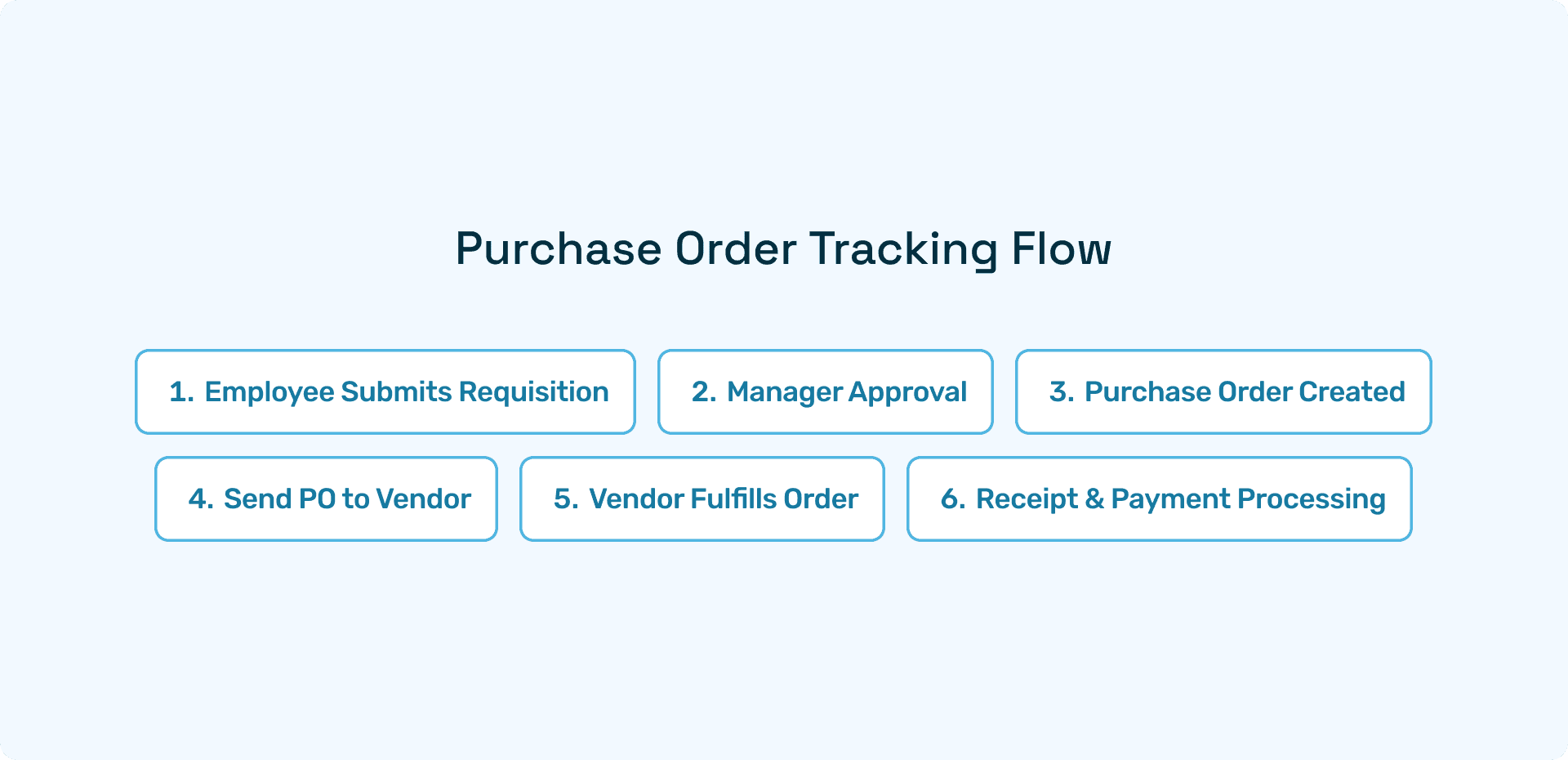
Medical procurement automation addresses these challenges by streamlining the entire process, from requisition to payment, through intelligent, end-to-end workflows. Here’s how it works step by step:
Digital Purchase Requests (PRs):
Employees can submit requests through guided digital forms that capture all required details—such as item specifications, vendor preferences, and urgency level. This eliminates incomplete submissions and reduces administrative back-and-forth.
AI-Powered Validation:
AI agents automatically fill in missing details and cross-check requests against budgets, contracts, and vendor agreements. This ensures compliance and financial control before approvals even begin.
Automated Approval Routing:
Requests are routed instantly to the right stakeholders based on predefined policies, cost centers, or approval hierarchies. If a request falls outside policy, it triggers an exception workflow for human review—balancing automation with oversight.
PO Creation and Dispatch:
Once approved, purchase orders are auto-generated using configurable templates and sent directly to vendors. This accelerates the procurement cycle and ensures that vendor communication is standardized and error-free.
Automated Invoice Validation (3-Way Match):
The system validates invoices by matching them against purchase orders and goods receipts. This three-way match prevents overpayments, duplicate payments, or discrepancies, ensuring financial integrity and vendor trust.
Centralized Audit Trails and Compliance Reporting:
Every action—from request submission to final payment—is logged automatically, creating a transparent audit trail. This not only simplifies regulatory compliance but also improves readiness for internal and external audits.
Why it matters:
Automating medical procurement end to end has made healthcare organizations minimize manual intervention, reduce errors, and ensure real-time visibility across financial and operational workflows. The result is faster procurement cycles, lower costs, stronger compliance, and—most importantly—uninterrupted access to the medical supplies and equipment that healthcare providers need to deliver quality patient care.
The Future of AI in Healthcare Procurement
While automation has already transformed procurement by digitizing approvals, validations, and purchase order dispatch, the next frontier is AI-driven intelligence that doesn’t just process requests—it anticipates them. Hospitals are beginning to explore how predictive AI, demand forecasting, and adaptive decision-making can revolutionize procurement by ensuring supplies are always available when needed.
1. Predictive Procurement
Instead of reacting to purchase requests, AI can analyze patterns such as patient admission rates, historical consumption of pharmaceuticals, and equipment usage data to forecast future needs. For example, if admissions for respiratory illnesses typically spike in winter, the system can automatically suggest higher stock levels for ventilators and related medicines in advance. This proactive approach minimizes last-minute emergency orders, which are often more expensive and logistically challenging.
2. Demand Forecasting with External Data
AI doesn’t just rely on internal hospital data. It can incorporate external signals—like regional health trends, epidemiological data, or even global supply chain disruptions—to forecast demand more accurately. During a pandemic, for instance, AI could predict shortages of PPE and help hospitals secure contracts early, avoiding the price surges and scarcities that plagued many providers.
3. Smarter Vendor Selection and Risk Mitigation
Future AI systems will not only automate vendor selection but also evaluate supplier reliability using past delivery performance, pricing stability, and compliance history. Machine learning models can flag high-risk suppliers and recommend alternatives, ensuring procurement continuity even when one vendor fails.
4. Dynamic Budget Optimization
AI can also support finance leaders by recommending budget reallocations in real time. If a department’s projected needs decrease, those savings can be redirected to higher-demand areas, optimizing hospital spending without compromising patient care.
5. Resilient and Sustainable Supply Chains
Beyond efficiency, AI will play a role in building more sustainable procurement ecosystems. It can recommend environmentally friendly suppliers, identify opportunities for waste reduction, and help healthcare organizations align with ESG (Environmental, Social, Governance) goals—an emerging priority in healthcare finance.
The Road Ahead
The future of AI in healthcare procurement is about moving from automation to true intelligence. By predicting needs, managing risks, and optimizing budgets, AI transforms procurement into a strategic advantage rather than an operational burden. Hospitals that adopt these advanced capabilities will not only save costs but also safeguard patient care by ensuring uninterrupted access to critical supplies—even in times of uncertainty.
Best Practices for Implementing Healthcare Procurement Automation
Automation can deliver significant savings, compliance assurance, and faster procurement cycles—but only if it’s implemented strategically. Many hospitals underestimate the cultural and operational shifts required to move from paper-based procurement to a fully automated system. By following a structured rollout approach, healthcare organizations can reduce disruptions, encourage adoption, and maximize ROI.
1. Stakeholder Training
Successful automation starts with people, not technology. Finance teams, procurement staff, and clinical departments must be comfortable using the new system. Training programs should go beyond technical instructions and emphasize the benefits: faster approvals, fewer errors, and more visibility. When staff see automation as a tool that reduces their workload rather than a disruption, adoption rates rise significantly.
2. Change Management
Hospitals often rely on long-standing manual processes, and shifting to digital-first procurement requires thoughtful change management. Leaders should communicate the vision clearly, set expectations, and address concerns early. Establishing “automation champions” within departments helps encourage buy-in and ensures that feedback loops are in place during rollout. This cultural shift is just as important as the technology itself.
3. Data Readiness
Automation is only as good as the data it runs on. Before implementation, hospitals must clean and standardize vendor records, contract details, and budget codes. Inconsistent or duplicate entries can cause errors that undermine trust in the system. A data readiness phase ensures the automation platform starts on a solid foundation, making workflows smoother and more reliable from day one.
4. Phased Adoption
Instead of automating everything at once, hospitals should begin with high-volume, high-impact purchases—such as pharmaceuticals or recurring consumables. Once the system proves reliable in these areas, it can scale to more specialized categories like medical equipment, service contracts, or grant-funded projects. This phased approach reduces risk and allows staff to adapt gradually, building confidence along the way.
Why best practices matter:
Without proper planning, automation projects can stall due to resistance, poor data quality, or overwhelmed staff. By focusing on training, cultural alignment, clean data, and phased adoption, healthcare organizations can unlock the full potential of procurement automation. The result is faster cycle times, stronger compliance, and sustainable ROI—while ensuring that technology truly supports the ultimate goal: better patient care.
How Hyperbots AI Co-Pilots Lead Healthcare Procurement Automation
Hospitals operate under tight timelines and strict compliance requirements, making procurement one of the most challenging administrative functions. Manual methods or rigid rule-based systems often create delays, errors, and unnecessary overhead. Hyperbots AI Co-Pilots, purpose-built for healthcare, bring intelligence and adaptability to procurement, going far beyond simple automation. These AI agents don’t just follow rules—they learn, optimize, and scale with your hospital’s needs.
Here’s how each Co-Pilot transforms the procurement process:
Shrinks request-to-PO cycle time with guided digital intake forms.
Automates approval routing across departments, cost centers, and policies.
Syncs directly with hospital ERP systems for real-time spend visibility.
Helps finance leaders control costs while ensuring speed and compliance.
Performs automated three-way matching between invoices, POs, and goods receipts.
Flags discrepancies for review, reducing human effort while minimizing risks.
Ensures validations are compliant with HIPAA and medical vendor policies.
Cuts invoice turnaround time, leading to faster and more accurate payments.
Onboards and verifies new vendors against compliance and certification standards.
Continuously monitors vendors for risks like fraud, duplicates, or expired credentials.
Reduces administrative overhead by keeping supplier data clean and audit-ready.
Strengthens trust with vendors through transparent and reliable processes.
Accruals and Payments Co-Pilots
Automate accrual posting for accurate financial reporting.
Reconcile pending liabilities and streamline vendor payments.
Ensure all payments align with regulatory requirements and hospital policies.
Improve vendor relationships by delivering timely and accurate payments.
Why It Matters
By deploying these Co-Pilots together, hospitals achieve:
End-to-end automation from request to payment.
Reduced compliance risks and audit readiness by design.
Real-time financial visibility and budget control.
More time for staff to focus on patient care, not paperwork.
Hyperbots AI Co-Pilots make healthcare procurement smarter, faster, and more resilient—helping providers adapt to challenges without compromising on compliance or quality.
Key Hyperbots Differentiators
In the rapidly evolving world of healthcare procurement, not all automation platforms are created equal. Hyperbots stands out due to its unique combination of agentic AI, deep ERP integration, and scalable design, delivering measurable impact across hospitals and healthcare organizations. Here’s a closer look at the differentiators that set Hyperbots apart:
Multi-ERP Integration
Hyperbots seamlessly connects with major ERP platforms such as SAP, Oracle, NetSuite, and Microsoft Dynamics, allowing hospitals to maintain a single source of truth for financial and operational data. Deep integration ensures real-time synchronization of budgets, purchase orders, and invoices, enabling faster decision-making and eliminating reconciliation bottlenecks.Unlimited User Access
Unlike platforms that charge per seat, Hyperbots supports enterprise-scale collaboration without restrictions. Hospitals can onboard multiple departments, vendors, and stakeholders without worrying about licensing costs, encouraging wider adoption and consistent use across the organization.Audit-Ready Records
Every action—whether it’s a purchase request, approval, or modification—is logged automatically. These records are fully reportable and easily auditable, ensuring transparency, regulatory compliance, and readiness for internal or external inspections.
Hyperbots combines these differentiators to deliver operational efficiency, risk mitigation, and enterprise scalability, making it a preferred choice for healthcare organizations looking to modernize procurement while maintaining full control and compliance.
Hyperbots Platform Capabilities: Transformational Impact in Healthcare
Hyperbots’ platform transforms health finance operations by combining domain-trained AI models, flexible workflows, and 24/7 automated agents:
Intelligent Data Capture: Parses contracts, forms, and invoices with multimodal vision-language models for >99% accuracy.
Self-Learning Models: AI adapts to changing hospital policies, budget rules, and reporting needs—no code required.
Human-in-the-Loop Control: Exception handling and approval hierarchies deliver the needed oversight for healthcare procurement teams.
Process-Specific Adaptation: Customizable for procurement of medical equipment, pharmaceuticals, service contracts, and grants.
ROI from Hyperbots-Led PO Automation
When finance leaders evaluate purchase order automation, the first question is simple: what’s the ROI? With Hyperbots, the answer is both measurable and transformative. The platform delivers savings you can quantify in hard dollars, along with intangible benefits that reshape how procurement and finance teams work.
Implementing Hyperbots' Procurement copilot deliver significant ROI and transforms procurement operations by providing:
Over 80% reduction in PO creation & dispatch time
5 minute PR creation time
At least a 10% reduction in cash outflows
Accurate and timely automatic communication with vendors
100% automation of forms and other information verification
Granular and customized workflow for each process
Improved vendor relationships due to predictable approval timelines.
By leveraging AI-driven PO tracking, companies not only achieve quantifiable cost savings but also strengthen operational resilience and supplier collaboration. Hyperbots’ integrated platform ensures that these benefits scale across departments, projects, and business units, turning procurement into a high-value function rather than a bottleneck.
Frequently Asked Questions
Q1. What is healthcare procurement automation?
Healthcare procurement automation refers to using AI-powered software to digitize every step of purchase order creation, approval, vendor validation, and payment for medical organizations.
Q2. How does automation improve hospital purchase order software?
It automates intake, validation, approval routing, and PO dispatch, minimizing manual errors and enabling audit-ready digital records.
Q3. Can Hyperbots integrate with our current ERP or procurement system?
Yes. Hyperbots supports deep integrations with all major ERPs (SAP, Oracle, Dynamics, NetSuite, and more).
Q4. Is Hyperbots platform secure and compliant for healthcare data?
The platform meets all major compliance standards, including HIPAA and SOX, with explainable AI and full audit trails.
Q5. How much can hospitals save using Hyperbots AI Co-pilots?
Most healthcare providers achieve 70–90% faster cycle times and over 80% cost savings compared to manual or basic digital systems.